The US invokes Section 301 tariffs on forced labor, but multiple loopholes have sparked legal controversy.
2026-06-10 10:11:30
After the U.S. Supreme Court rejected a broad global tariff proposal, the U.S. has turned to alternative approaches to advance trade restrictions.
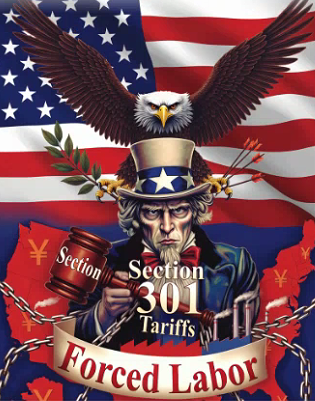
The Office of the United States Trade Representative recently announced plans to impose tariffs of up to 12.5% on 59 countries and the European Union, citing Section 301 of the Trade Act of 1974. The U.S. cited the failure of these economies to control imports of products involving forced labor as the pretext for these new regulations. However, in reality, the U.S. itself has numerous loopholes in enforcement and tracing procedures, making the legitimacy of these unilateral tariff measures questionable and facing serious legal challenges.
U.S. Trade Representative Jamieson Greer stated that the failure of major trading partners to effectively prevent the influx of forced labor goods into the market, creating an unfair competitive environment for American workers, is the core reason for the U.S. initiating tariff measures.
In fact, forced labor is a long-standing global problem that persists, and even though the International Labour Organization conventions have been widely recognized and signed worldwide, the phenomenon continues to spread in global supply chains.
According to the International Labour Organization, 27.6 million people worldwide suffer from forced labor every day, with over 80% of these cases concentrated in the private sector, and the remainder involving forced slavery. Illegal profits generated from forced labor amount to as much as $236 billion annually, with the mining, manufacturing, and food service industries being particularly affected. The United States enacted relevant regulations to regulate such practices long ago; Section 307 of the Tariff Act of 1930 and related regional import restriction laws are among the strictest control rules globally, and these provisions have gradually influenced multilateral trade agreements such as the USMCA.
As a major importer of high-risk goods, the United States has consistently struggled to control the importation of products made with forced labor.
A report from the U.S. Department of Homeland Security's Operations Analysis Center shows that in 2021, the U.S. imported 23% of high-risk goods globally, far exceeding its 13% share of total global imports, with a large influx of goods of questionable origin. The U.S. Congress, while reviewing related legislation, also acknowledged that issues such as import fraud, the development of cross-border e-commerce, and insufficient traceability technology seriously hinder law enforcement.
Several lawmakers confirmed at the hearing that even after the relevant laws are implemented, illicit goods continue to flow into the United States. Although U.S. Customs and Border Protection has increased its inspection efforts and once seized $961 million worth of problematic goods at a single port in a year, the cumbersome process for companies to prove compliance, along with high warehousing and legal costs, puts enormous pressure on importers and exporters.
The complex layers of supply chains and multiple intermediaries, influenced by globalization and specialization, have made labor tracing extremely difficult. Industry expert Desirée LeClerq states that intermediaries are the primary group responsible for the illegal profiteering from forced labor, while also deliberately concealing violations. Brandon Daniels, a supply chain risk management professional, believes that corporate self-regulation can only play a limited role and cannot address the root cause of the problem.
Legal experts generally believe that this large-scale unilateral tariff measure is unprecedented. Previously, Section 301 was mostly used on a case-by-case basis for a single trade issue, but the current government has significantly increased the frequency of its use. According to the rules, the standard investigation period for this type of case is 12 months; this investigation, covering nearly 60 economies, reached a conclusion in less than three months, raising widespread questions about the procedural compliance.
Industry insiders point out that the US's rhetoric is inherently contradictory . On the one hand, it acknowledges the continuous influx of illegal goods, while on the other hand, it claims efficient law enforcement within its own borders, using this to criticize other countries for regulatory deficiencies. The logic of its argument is inconsistent. Several law firms analyze that the US's conclusion that trade activities are unreasonable simply because other countries have not imposed import bans represents a completely new legal interpretation and has significant flaws.
Based on various perspectives , this tariff policy, which is based on Section 301 and is supported by existing trade laws, has obvious problems in its investigation process, reasoning, and scope of application.
Industry experts unanimously believe that this large-scale unilateral imposition of tariffs will inevitably face retaliation and legal action from many countries in the short term, making it difficult for the new round of US trade restrictions to be implemented smoothly.
The Office of the United States Trade Representative recently announced plans to impose tariffs of up to 12.5% on 59 countries and the European Union, citing Section 301 of the Trade Act of 1974. The U.S. cited the failure of these economies to control imports of products involving forced labor as the pretext for these new regulations. However, in reality, the U.S. itself has numerous loopholes in enforcement and tracing procedures, making the legitimacy of these unilateral tariff measures questionable and facing serious legal challenges.
Wielding tariffs under the guise of labor issues, the global situation of forced labor is dire.
U.S. Trade Representative Jamieson Greer stated that the failure of major trading partners to effectively prevent the influx of forced labor goods into the market, creating an unfair competitive environment for American workers, is the core reason for the U.S. initiating tariff measures.
In fact, forced labor is a long-standing global problem that persists, and even though the International Labour Organization conventions have been widely recognized and signed worldwide, the phenomenon continues to spread in global supply chains.
According to the International Labour Organization, 27.6 million people worldwide suffer from forced labor every day, with over 80% of these cases concentrated in the private sector, and the remainder involving forced slavery. Illegal profits generated from forced labor amount to as much as $236 billion annually, with the mining, manufacturing, and food service industries being particularly affected. The United States enacted relevant regulations to regulate such practices long ago; Section 307 of the Tariff Act of 1930 and related regional import restriction laws are among the strictest control rules globally, and these provisions have gradually influenced multilateral trade agreements such as the USMCA.
Its own law enforcement is in trouble, and its control loopholes are difficult to fill.
As a major importer of high-risk goods, the United States has consistently struggled to control the importation of products made with forced labor.
A report from the U.S. Department of Homeland Security's Operations Analysis Center shows that in 2021, the U.S. imported 23% of high-risk goods globally, far exceeding its 13% share of total global imports, with a large influx of goods of questionable origin. The U.S. Congress, while reviewing related legislation, also acknowledged that issues such as import fraud, the development of cross-border e-commerce, and insufficient traceability technology seriously hinder law enforcement.
Several lawmakers confirmed at the hearing that even after the relevant laws are implemented, illicit goods continue to flow into the United States. Although U.S. Customs and Border Protection has increased its inspection efforts and once seized $961 million worth of problematic goods at a single port in a year, the cumbersome process for companies to prove compliance, along with high warehousing and legal costs, puts enormous pressure on importers and exporters.
The complex layers of supply chains and multiple intermediaries, influenced by globalization and specialization, have made labor tracing extremely difficult. Industry expert Desirée LeClerq states that intermediaries are the primary group responsible for the illegal profiteering from forced labor, while also deliberately concealing violations. Brandon Daniels, a supply chain risk management professional, believes that corporate self-regulation can only play a limited role and cannot address the root cause of the problem.
The investigation process has been heavily criticized, and the tariff measures may face legal resistance.
Legal experts generally believe that this large-scale unilateral tariff measure is unprecedented. Previously, Section 301 was mostly used on a case-by-case basis for a single trade issue, but the current government has significantly increased the frequency of its use. According to the rules, the standard investigation period for this type of case is 12 months; this investigation, covering nearly 60 economies, reached a conclusion in less than three months, raising widespread questions about the procedural compliance.
Industry insiders point out that the US's rhetoric is inherently contradictory . On the one hand, it acknowledges the continuous influx of illegal goods, while on the other hand, it claims efficient law enforcement within its own borders, using this to criticize other countries for regulatory deficiencies. The logic of its argument is inconsistent. Several law firms analyze that the US's conclusion that trade activities are unreasonable simply because other countries have not imposed import bans represents a completely new legal interpretation and has significant flaws.
Based on various perspectives , this tariff policy, which is based on Section 301 and is supported by existing trade laws, has obvious problems in its investigation process, reasoning, and scope of application.
Industry experts unanimously believe that this large-scale unilateral imposition of tariffs will inevitably face retaliation and legal action from many countries in the short term, making it difficult for the new round of US trade restrictions to be implemented smoothly.
- Risk Warning and Disclaimer
- The market involves risk, and trading may not be suitable for all investors. This article is for reference only and does not constitute personal investment advice, nor does it take into account certain users’ specific investment objectives, financial situation, or other needs. Any investment decisions made based on this information are at your own risk.