Gold Trading Alert: The Battle Resumes! Tomahawk Missiles vs. Closing the Strait of Hormuz – Gold Prices Plunge Over 4% and Continue to Fall; Is the $4,000 Level in Danger?
2026-06-11 07:53:58
Amid a rapidly deteriorating global geopolitical situation, spot gold continued its sharp decline in early Asian trading on Thursday (June 11), briefly touching $4023.85 per ounce, its lowest level since November 11, 2025. Gold prices fell more than 4% on Wednesday, closing at $4071.15 per ounce, marking the largest single-day drop since the beginning of the year when it hit a record high of $5596, and also the lowest closing price in nearly six months. Trump's "fierce strikes" against Iran, Iran's closure of the Strait of Hormuz pushing up oil prices, US inflation rising to 4.2% in May, and the probability of a Fed rate hike in December remaining above 70%, coupled with a stronger dollar, all contributed to short-term downward pressure on gold prices.
On Wednesday, US President Trump reiterated his tough stance, stating that the US would launch a "fierce strike" against Iran if it failed to reach an agreement in negotiations. This statement quickly translated into action, with the US military, acting on Trump's orders, launching a new round of attacks on multiple targets, including air defense systems and radar stations, near the Strait of Hormuz. In response, Iran's Supreme Joint Military Command announced the closure of the Strait of Hormuz, declaring any vessels attempting to pass through subject to attack, and has already launched missiles and drones at nearby US ships.
This strategic waterway is a vital choke point for global oil transportation, accounting for approximately one-fifth of global daily oil consumption. Upon the announcement of the blockade, international oil prices surged, with WTI crude rising by about 4% to $93.645 per barrel, and Brent crude approaching the $94 mark. The soaring energy prices directly boosted global inflation expectations, and market concerns about the Federal Reserve maintaining high interest rates or even raising them intensified sharply, thus significantly suppressing gold, a traditional safe-haven asset.
US President Trump stated that US warplanes are conducting missions over Iran and that the US military has launched 49 Tomahawk missiles. Israel was not involved in the attack on Iran.
Trump revealed that he had spoken directly with Iranian officials and said that Iran had requested the U.S. to stop the bombing and that the bombing operation would end soon.
According to Fox News, Trump is open to the possibility of further strikes against Iran in the future.
Trump also revealed that the U.S. military had secretly escorted ships carrying over 100 million barrels of crude oil through the Strait of Hormuz, which alleviated some supply anxieties but failed to halt the overall upward trend in oil prices. Iran, meanwhile, accused the U.S. military of violating international law by attacking water facilities and stated that the war would not be confined to the region, further exacerbating market uncertainty.
However, Trump also stated that the latest strikes were limited retaliation, not a full-scale war. Investors should continue to monitor further developments in the Middle East.
Simultaneously escalating geopolitical tensions are putting pressure on the latest US inflation data. The US Labor Department reported that the Consumer Price Index (CPI) rose 4.2% year-on-year in May, the highest level since April 2023, primarily driven by soaring energy costs. Core CPI rose 0.2% month-on-month and 2.9% year-on-year, slightly below some expectations, but the resilience of service prices and rental inflation continues to unsettle the market.
According to the CME Group's FedWatch tool, traders now expect a 72% probability of a Fed rate hike in December. This shift in expectations contrasts sharply with the market's widespread bets on rate cuts at the beginning of the year. The dollar index weakened initially after the release of inflation data, then fluctuated upwards, closing near 100.04. Treasury yields rose slightly, with the 10-year Treasury yield climbing to 4.54%. A strong dollar and a high real interest rate environment naturally put pressure on gold, as the opportunity cost of holding non-interest-bearing gold increases significantly.
Independent metals trader Tai Wong pointed out that after last week's strong non-farm payroll data coupled with Trump's threatening remarks, the market desperately needed positive news to support gold prices, but the current reality is the opposite. Paul Wong of Sprott Asset Management cautioned that despite short-term consolidation, gold prices remain supported in the long term by central bank gold purchases and concerns about currency devaluation.
Gold, as a classic safe-haven asset, should typically benefit from geopolitical conflicts. However, the unique circumstances of the current Middle East situation have altered this narrative. The conflict has directly driven up energy prices, translating into inflationary pressures and reinforcing hawkish expectations from the Federal Reserve. This has partially offset gold's safe-haven appeal with the "interest rate hike panic." Investors are now closely watching Thursday's release of the US Producer Price Index (PPI) to further assess the path of monetary policy.
Despite this, gold prices have not completely lost support. Analysts generally believe that continued central bank gold purchases and global currency devaluation pressures still provide a safety net. Meanwhile, diplomatic efforts have not completely ceased; the Qatari delegation continues to mediate between the US and Iran, and Trump has revealed that Iran has requested a ceasefire, suggesting a possible temporary de-escalation of the conflict. If the situation de-escalates substantially, a pullback in oil prices will alleviate inflationary pressures, and gold is expected to see a corrective rebound.
From a technical perspective, gold prices have broken below multi-month support levels, indicating short-term oversold conditions. However, a clear signal of geopolitical easing or a more dovish stance from the Federal Reserve is needed to confirm a bottom. In the long term, continued geopolitical uncertainty, rising inflation, and the global trend of de-dollarization continue to provide a structural bull market foundation for gold.
In conclusion, the current decline in gold prices is the result of a confluence of factors: escalating conflict in the Middle East, rebounding inflation, and expectations of a Federal Reserve rate hike. The Trump administration's hardline stance, Iran's strong response, and the risk of a blockade of the Strait of Hormuz will continue to dominate short-term market sentiment. Investors should be wary of the transmission effects of further increases in oil prices on the global economy, as well as any changes in signals from the Federal Reserve's meeting next week.
However, historical experience shows that similar geopolitical conflicts often initially suppress gold prices, but then turn into a positive factor as the risk premium is gradually digested. Currently, gold prices are relatively low, and for medium- to long-term investors, buying on dips still offers a high safety margin, provided they manage their positions carefully. Future price movements will depend on the progress of US-Iran negotiations, oil price trends, and the Federal Reserve's actual actions. The market is at a critical turning point; any diplomatic breakthrough or easing of conflict could trigger a rapid reversal in gold prices.
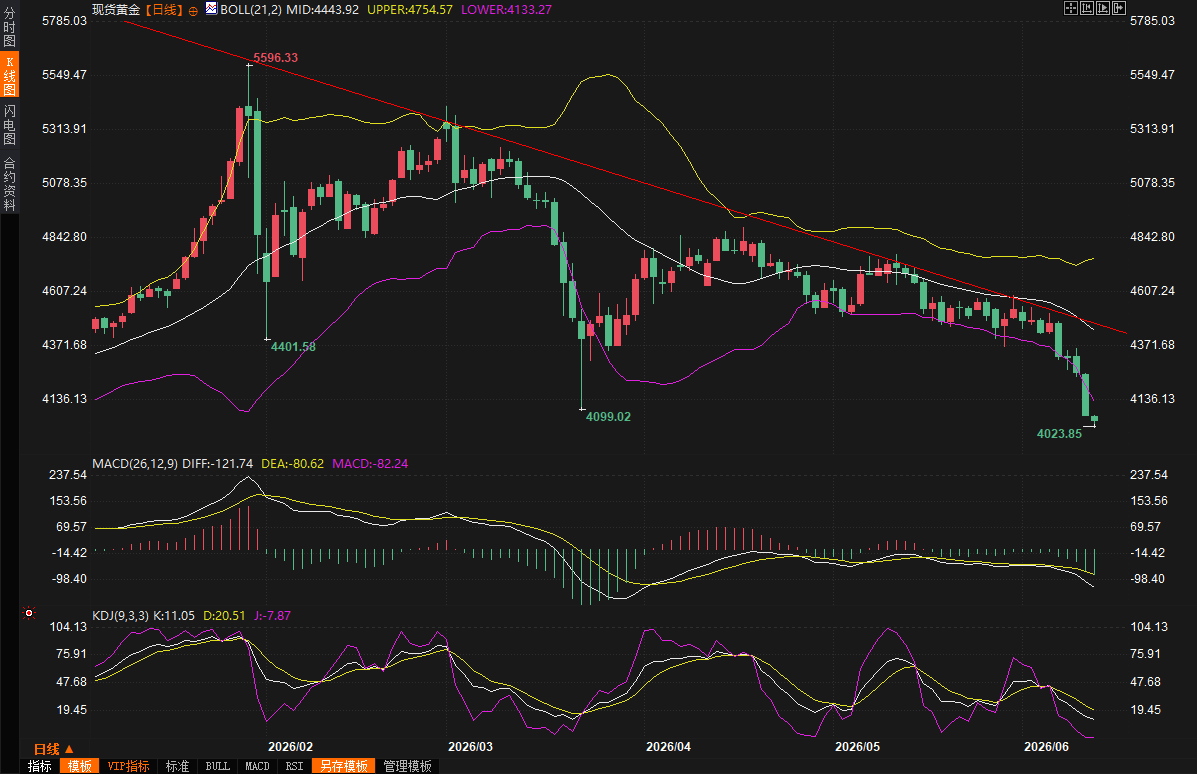
(Spot gold daily chart, source: FX678)
At 07:51 Beijing time, spot gold was trading at $4050.33 per ounce.
Escalating Conflict: The Direct Impact of Trump's "Strike" Threat and the Strait of Hormuz Blockade
On Wednesday, US President Trump reiterated his tough stance, stating that the US would launch a "fierce strike" against Iran if it failed to reach an agreement in negotiations. This statement quickly translated into action, with the US military, acting on Trump's orders, launching a new round of attacks on multiple targets, including air defense systems and radar stations, near the Strait of Hormuz. In response, Iran's Supreme Joint Military Command announced the closure of the Strait of Hormuz, declaring any vessels attempting to pass through subject to attack, and has already launched missiles and drones at nearby US ships.
This strategic waterway is a vital choke point for global oil transportation, accounting for approximately one-fifth of global daily oil consumption. Upon the announcement of the blockade, international oil prices surged, with WTI crude rising by about 4% to $93.645 per barrel, and Brent crude approaching the $94 mark. The soaring energy prices directly boosted global inflation expectations, and market concerns about the Federal Reserve maintaining high interest rates or even raising them intensified sharply, thus significantly suppressing gold, a traditional safe-haven asset.
US President Trump stated that US warplanes are conducting missions over Iran and that the US military has launched 49 Tomahawk missiles. Israel was not involved in the attack on Iran.
Trump revealed that he had spoken directly with Iranian officials and said that Iran had requested the U.S. to stop the bombing and that the bombing operation would end soon.
According to Fox News, Trump is open to the possibility of further strikes against Iran in the future.
Trump also revealed that the U.S. military had secretly escorted ships carrying over 100 million barrels of crude oil through the Strait of Hormuz, which alleviated some supply anxieties but failed to halt the overall upward trend in oil prices. Iran, meanwhile, accused the U.S. military of violating international law by attacking water facilities and stated that the war would not be confined to the region, further exacerbating market uncertainty.
However, Trump also stated that the latest strikes were limited retaliation, not a full-scale war. Investors should continue to monitor further developments in the Middle East.
Inflation data coupled with policy expectations: the probability of a Fed rate hike remains high.
Simultaneously escalating geopolitical tensions are putting pressure on the latest US inflation data. The US Labor Department reported that the Consumer Price Index (CPI) rose 4.2% year-on-year in May, the highest level since April 2023, primarily driven by soaring energy costs. Core CPI rose 0.2% month-on-month and 2.9% year-on-year, slightly below some expectations, but the resilience of service prices and rental inflation continues to unsettle the market.
According to the CME Group's FedWatch tool, traders now expect a 72% probability of a Fed rate hike in December. This shift in expectations contrasts sharply with the market's widespread bets on rate cuts at the beginning of the year. The dollar index weakened initially after the release of inflation data, then fluctuated upwards, closing near 100.04. Treasury yields rose slightly, with the 10-year Treasury yield climbing to 4.54%. A strong dollar and a high real interest rate environment naturally put pressure on gold, as the opportunity cost of holding non-interest-bearing gold increases significantly.
Independent metals trader Tai Wong pointed out that after last week's strong non-farm payroll data coupled with Trump's threatening remarks, the market desperately needed positive news to support gold prices, but the current reality is the opposite. Paul Wong of Sprott Asset Management cautioned that despite short-term consolidation, gold prices remain supported in the long term by central bank gold purchases and concerns about currency devaluation.
Safe haven vs. interest rate hike: The battle between bulls and bears under short-term pressure on gold.
Gold, as a classic safe-haven asset, should typically benefit from geopolitical conflicts. However, the unique circumstances of the current Middle East situation have altered this narrative. The conflict has directly driven up energy prices, translating into inflationary pressures and reinforcing hawkish expectations from the Federal Reserve. This has partially offset gold's safe-haven appeal with the "interest rate hike panic." Investors are now closely watching Thursday's release of the US Producer Price Index (PPI) to further assess the path of monetary policy.
Despite this, gold prices have not completely lost support. Analysts generally believe that continued central bank gold purchases and global currency devaluation pressures still provide a safety net. Meanwhile, diplomatic efforts have not completely ceased; the Qatari delegation continues to mediate between the US and Iran, and Trump has revealed that Iran has requested a ceasefire, suggesting a possible temporary de-escalation of the conflict. If the situation de-escalates substantially, a pullback in oil prices will alleviate inflationary pressures, and gold is expected to see a corrective rebound.
From a technical perspective, gold prices have broken below multi-month support levels, indicating short-term oversold conditions. However, a clear signal of geopolitical easing or a more dovish stance from the Federal Reserve is needed to confirm a bottom. In the long term, continued geopolitical uncertainty, rising inflation, and the global trend of de-dollarization continue to provide a structural bull market foundation for gold.
Outlook: Short-term risks remain, but long-term investment value is becoming increasingly apparent.
In conclusion, the current decline in gold prices is the result of a confluence of factors: escalating conflict in the Middle East, rebounding inflation, and expectations of a Federal Reserve rate hike. The Trump administration's hardline stance, Iran's strong response, and the risk of a blockade of the Strait of Hormuz will continue to dominate short-term market sentiment. Investors should be wary of the transmission effects of further increases in oil prices on the global economy, as well as any changes in signals from the Federal Reserve's meeting next week.
However, historical experience shows that similar geopolitical conflicts often initially suppress gold prices, but then turn into a positive factor as the risk premium is gradually digested. Currently, gold prices are relatively low, and for medium- to long-term investors, buying on dips still offers a high safety margin, provided they manage their positions carefully. Future price movements will depend on the progress of US-Iran negotiations, oil price trends, and the Federal Reserve's actual actions. The market is at a critical turning point; any diplomatic breakthrough or easing of conflict could trigger a rapid reversal in gold prices.
(Spot gold daily chart, source: FX678)
At 07:51 Beijing time, spot gold was trading at $4050.33 per ounce.
- Risk Warning and Disclaimer
- The market involves risk, and trading may not be suitable for all investors. This article is for reference only and does not constitute personal investment advice, nor does it take into account certain users’ specific investment objectives, financial situation, or other needs. Any investment decisions made based on this information are at your own risk.