The Bank of Japan's interest rate decision faces a crucial test: how to balance raising rates to combat inflation with stabilizing the yen?
2026-06-12 21:49:05
Next week, the Bank of Japan will face a crucial decision on monetary policy in a complex environment.
Soaring energy prices, a weakening yen, and potential political intervention have made this two-day policy meeting a crucial test of the central bank's resolve—the market widely expects the central bank to raise interest rates to a 31-year high since 1995 to address price shocks triggered by the Middle East conflict.
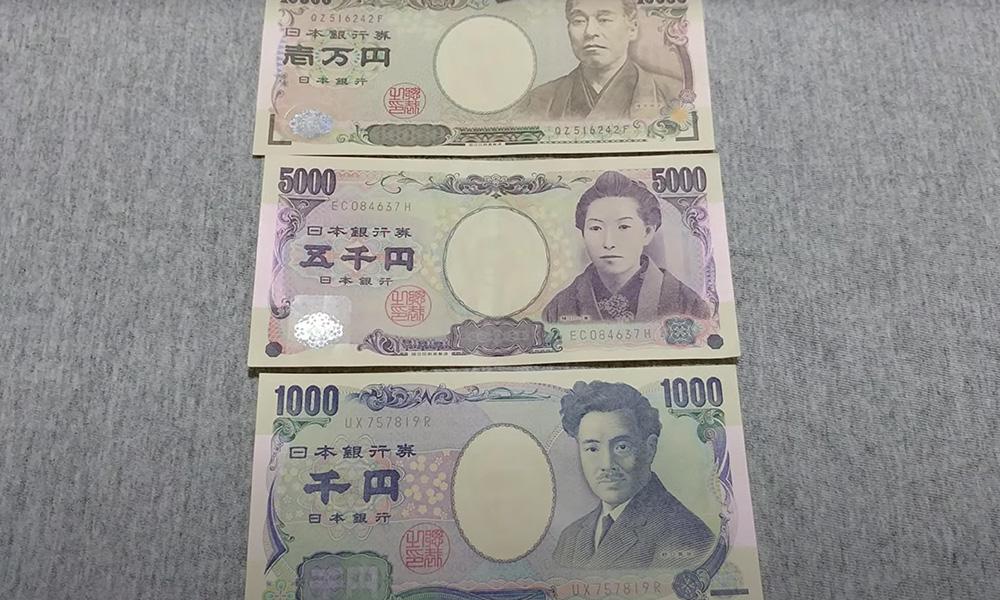
While high inflation provides a clear justification for tightening, this decision still carries hidden risks: Japan's economic recovery has just begun to show signs of recovery, and raising interest rates could stifle economic growth, weaken investment activity, and cast a shadow over the recovery process.
According to widespread market forecasts, the Bank of Japan will announce a 25 basis point rate hike at the close of its meeting on Tuesday, raising the policy rate to 1%, which would be the first rate hike since last December.
Currently, the market has largely priced in this tightening expectation, reflecting policymakers' growing concerns about the accelerated rise in core inflation following the last interest rate meeting at the end of April.
The core motivation behind this interest rate hike is not simply the hope that a 25 basis point increase can completely quell the war-induced oil price shock inflation. According to sources, the Bank of Japan values the support the rate hike will provide for the yen – a weaker yen has significantly increased import costs, exacerbating the burden on businesses and people's lives, and the rate hike is expected to alleviate this pressure.
At the same time, adjusting the real interest rate is also an important consideration: Japan's real interest rate is still in deep negative territory, far below the neutral level that neither inhibits nor stimulates the economy.
Policymakers are concerned that if inflation rises more than expected, they may be forced to take more aggressive interest rate hikes in the future, and therefore have chosen to tighten policy moderately at this time.
Signals from the bond market should not be ignored either. The recent rapid rise in Japanese government bond yields, in addition to inflation concerns and a deteriorating fiscal situation, has led some investors to question the independence of the Bank of Japan.
It is widely believed that Prime Minister Sanae Takashi, who favors loose monetary policy, may pressure the central bank to maintain low interest rates in order to boost domestic investment.
In response, Central Bank Governor Kazuo Ueda recently emphasized that maintaining market confidence in the central bank's ability to manage inflation is crucial; otherwise, government bond yields could surge further, exacerbating market volatility.
It is worth noting that Kazuo Ueda will be absent from this policy meeting due to hospitalization, which adds uncertainty to an already tense market.
However, Yusuke Matsuo, an economist at Mizuho Securities, pointed out that Kazuo Ueda and his deputies hold highly aligned positions. With Deputy Governor Shinichi Uchida hosting the post-meeting press conference, his statements are likely to remain consistent with the governor's tone. Therefore, the central bank's overall communication stance is not expected to change significantly, and the governor's absence is not anticipated to alter the final interest rate decision.
For the Japanese yen, this interest rate decision will be a key indicator of its short-term trend.
If the Bank of Japan raises interest rates to 1% as expected, it will narrow the interest rate differential with other major economies, providing much-needed support for the yen and easing its continued depreciation pressure.
However, if the central bank releases dovish follow-up policy guidance after the interest rate hike, or if market concerns about Japan's economic recovery outweigh the positive effects of the rate hike, the yen's rebound may be limited. In any case, this policy game balancing inflation, growth, and exchange rates will directly determine the yen's future trajectory and bring significant variables to the global foreign exchange market.
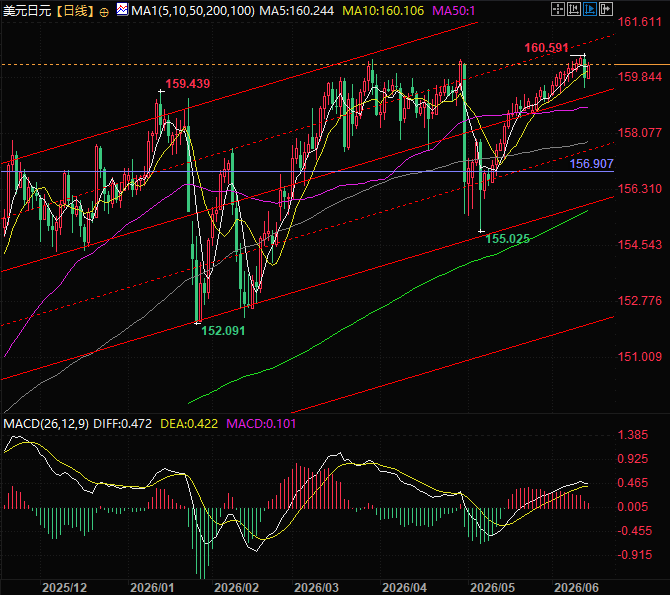
(USD/JPY daily chart, source: FX678)
At 21:48 Beijing time, the USD/JPY exchange rate was 160.29.
Soaring energy prices, a weakening yen, and potential political intervention have made this two-day policy meeting a crucial test of the central bank's resolve—the market widely expects the central bank to raise interest rates to a 31-year high since 1995 to address price shocks triggered by the Middle East conflict.
Interest rate hike expectations are clear: a tug-of-war between a 31-year high and recovery risks?
While high inflation provides a clear justification for tightening, this decision still carries hidden risks: Japan's economic recovery has just begun to show signs of recovery, and raising interest rates could stifle economic growth, weaken investment activity, and cast a shadow over the recovery process.
According to widespread market forecasts, the Bank of Japan will announce a 25 basis point rate hike at the close of its meeting on Tuesday, raising the policy rate to 1%, which would be the first rate hike since last December.
Currently, the market has largely priced in this tightening expectation, reflecting policymakers' growing concerns about the accelerated rise in core inflation following the last interest rate meeting at the end of April.
Key drivers of interest rate hikes: stabilizing the yen, adjusting interest rates, and preventing aggressive tightening?
The core motivation behind this interest rate hike is not simply the hope that a 25 basis point increase can completely quell the war-induced oil price shock inflation. According to sources, the Bank of Japan values the support the rate hike will provide for the yen – a weaker yen has significantly increased import costs, exacerbating the burden on businesses and people's lives, and the rate hike is expected to alleviate this pressure.
At the same time, adjusting the real interest rate is also an important consideration: Japan's real interest rate is still in deep negative territory, far below the neutral level that neither inhibits nor stimulates the economy.
Policymakers are concerned that if inflation rises more than expected, they may be forced to take more aggressive interest rate hikes in the future, and therefore have chosen to tighten policy moderately at this time.
Market Confidence Crisis: The Controversy Over Treasury Yields and Central Bank Independence?
Signals from the bond market should not be ignored either. The recent rapid rise in Japanese government bond yields, in addition to inflation concerns and a deteriorating fiscal situation, has led some investors to question the independence of the Bank of Japan.
It is widely believed that Prime Minister Sanae Takashi, who favors loose monetary policy, may pressure the central bank to maintain low interest rates in order to boost domestic investment.
In response, Central Bank Governor Kazuo Ueda recently emphasized that maintaining market confidence in the central bank's ability to manage inflation is crucial; otherwise, government bond yields could surge further, exacerbating market volatility.
The governor's absence will not disrupt the overall situation; the policy tone is expected to remain unchanged?
It is worth noting that Kazuo Ueda will be absent from this policy meeting due to hospitalization, which adds uncertainty to an already tense market.
However, Yusuke Matsuo, an economist at Mizuho Securities, pointed out that Kazuo Ueda and his deputies hold highly aligned positions. With Deputy Governor Shinichi Uchida hosting the post-meeting press conference, his statements are likely to remain consistent with the governor's tone. Therefore, the central bank's overall communication stance is not expected to change significantly, and the governor's absence is not anticipated to alter the final interest rate decision.
The key anchor for the yen's exchange rate: the battle between bulls and bears after the interest rate hike?
For the Japanese yen, this interest rate decision will be a key indicator of its short-term trend.
If the Bank of Japan raises interest rates to 1% as expected, it will narrow the interest rate differential with other major economies, providing much-needed support for the yen and easing its continued depreciation pressure.
However, if the central bank releases dovish follow-up policy guidance after the interest rate hike, or if market concerns about Japan's economic recovery outweigh the positive effects of the rate hike, the yen's rebound may be limited. In any case, this policy game balancing inflation, growth, and exchange rates will directly determine the yen's future trajectory and bring significant variables to the global foreign exchange market.
(USD/JPY daily chart, source: FX678)
At 21:48 Beijing time, the USD/JPY exchange rate was 160.29.
- Risk Warning and Disclaimer
- The market involves risk, and trading may not be suitable for all investors. This article is for reference only and does not constitute personal investment advice, nor does it take into account certain users’ specific investment objectives, financial situation, or other needs. Any investment decisions made based on this information are at your own risk.