Will the joint Anglo-French mission be able to open the Strait of Hormuz as scheduled?
2026-06-17 16:51:08
On Wednesday (June 17) during the European session, international oil prices remained volatile. US crude oil futures fell by more than 1% at one point before rebounding to above $75.50 per barrel, while Brent crude oil narrowed its losses to around $79.30 per barrel.
The wide fluctuations in oil prices during the day reflect the market's conflicted sentiment regarding the prospects of a US-Iran agreement.
On Tuesday, Swiss Broadcasting Corporation reported that the Swiss Foreign Ministry confirmed that a framework agreement between the United States and Iran would be signed on the 19th at Biergen Hill near Lucerne in central Switzerland.
With the signing location and date finalized, shipping safety in the Strait of Hormuz has become the focus of attention for all parties.
France and Britain have been forming a joint military alliance since March aimed at helping to restore shipping traffic in the Strait of Hormuz.
With the US and Iran reaching a preliminary agreement to end the Middle East conflict, the mission is ready. The French nuclear-powered aircraft carrier Charles de Gaulle has been deployed near the Arabian Peninsula since mid-May, Britain has dispatched destroyers, and Italy and Germany have provided minesweepers. The core objectives of the mission are to clear Iranian-laid mines and provide escort for the approximately 2,000 stranded oil tankers and cargo ships to restore confidence in shipping.
However, the US-Iran agreement is only a temporary ceasefire for 60 days, and mine clearance operations face enormous logistical challenges. The shipping industry remains cautious about security risks, and it will take time for ships to return to the strait on a large scale.
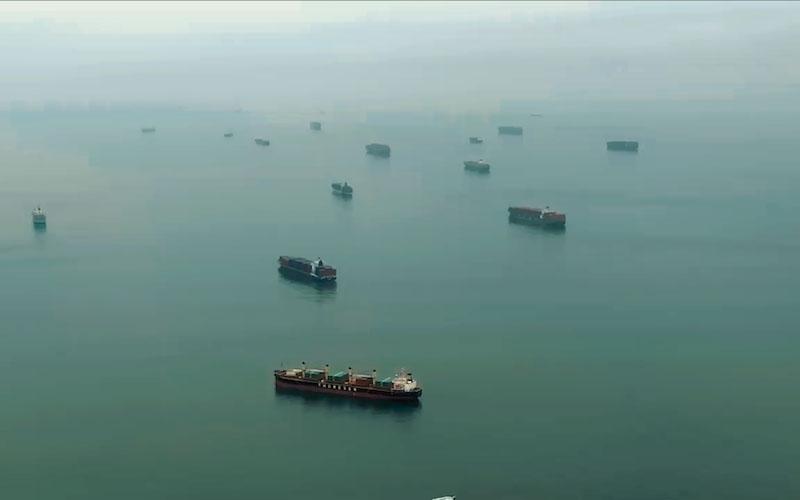
France and Britain have been forming a joint alliance since March to help restore access to the shipping lane that carries about 20% of the world’s oil trade.
French President Emmanuel Macron said on Monday that about 20 countries have made concrete contributions, with four of them "already deployed in the region." France has contributed the most resources—the nuclear-powered aircraft carrier Charles de Gaulle has been deployed to waters near the Arabian Peninsula since mid-May.
Macron stated that the aircraft carrier could be deployed within two to three days, while acknowledging that the US might not even accept the aid offer. French Defense Minister Vatlin said on Tuesday that two additional minesweepers were already in position and ready for deployment.
In May, the UK announced the deployment of a destroyer to the region; Italy provided two minesweepers; and German Foreign Minister Waldfol stated that a minesweeper currently in the Mediterranean would participate in mine clearance operations once the fighting was confirmed to have ended.
International risk expert Stefan Odran said the mission’s main objective was to “reassure maritime stakeholders and get them to agree to send the ships back to the Gulf.”
This deployment aims to clear Iranian-laid mines—the U.S. Navy has relatively limited resources for minesweeping. O'Delong stated that the more countries involved in minesweeping—and European countries are quite professional in this area—the faster the waterways will be cleared.
According to the British and French authorities, these warships can also provide escort for the approximately 2,000 oil tankers and cargo ships stranded in the Gulf waiting to pass.
Atlantic Council maritime security expert Elizabeth Blau pointed out that even in peacetime, this is a massive logistical undertaking. Macron stated that Oman has agreed to cooperate in escorting Western navies.
Despite Trump's statement that the Strait of Hormuz would be "fully open" starting Friday, Iran's Mehr News Agency, citing the contents of a memorandum of understanding between the two sides, stipulated that the Strait of Hormuz would be "reopened within 30 days."
The memorandum of understanding does not permanently end the conflict; it merely buys an additional 60 days for negotiations, perpetuating uncertainty that is detrimental to business activities.
The Strait of Hormuz remains a key negotiating lever for Tehran. Iranian officials have indicated they may impose tolls or "service fees" on ships passing through this crucial waterway.
Geopolitical analysts suggest that Iran may be reluctant to allow mine-clearing operations in order to "force ships" to navigate along its coastline—currently only a limited number of vessels are allowed to pass through the area.
Blau emphasized that the agreement announced on Monday "is not a permanent peace." "What really matters is how ship owners view this agreement. If they don't have confidence in fundamental change, they won't be lining up to sail their ships out of the Persian Gulf."
Shipping and seafarers associations say that not enough details have been provided by the parties to prompt ships to begin leaving port.
Jacob Larsen, Chief Safety Officer of BIMCO (the International Shipping Association), pointed out that the statement "failed to provide sufficient information on key aspects such as timing and safe routes. We still believe there is a high risk in commencing operations at this stage."
With the US-Iran framework agreement imminent, a joint European fleet led by France and the UK is preparing to conduct mine-clearing and escort operations in the Strait of Hormuz. The participation of 20 countries demonstrates the international community's willingness to restore stability to the energy corridor. However, the nature of the 60-day temporary ceasefire, Israel's non-participation, and unclear details pose challenges to restoring confidence in the shipping industry. The progress of reopening the Strait of Hormuz will directly impact global oil prices and energy security; the subsequent signing of the agreement in Switzerland and its actual implementation warrant continued monitoring.
Q1: What were the specific time and place of the signing of the US-Iran framework agreement?
A: According to the Swiss Foreign Ministry, the agreement will be formally signed on June 19 at Biergen Hill near Lucerne in central Switzerland. This is a provisional memorandum of understanding that extends the April ceasefire by 60 days, allowing time for negotiations on a permanent ceasefire, and plans to initiate substantive consultations on issues such as the Iranian nuclear issue after its signing.
Q2: What roles do France and the United Kingdom play in the mission in the Strait of Hormuz?
A: France and the United Kingdom are at the core of the joint military alliance. France has deployed the nuclear-powered aircraft carrier Charles de Gaulle and minesweepers, the United Kingdom has sent destroyers, and Italy and Germany have also provided minesweepers. The mission focuses on clearing mines and escorting approximately 2,000 stranded vessels, with the goal of quickly restoring the passage of shipping lanes that account for about 20% of global oil trade.
Q3: What are the main challenges faced in mine clearance and escort missions?
A: Challenges include logistical difficulties, uncertainty surrounding the 60-day provisional agreement, and the possibility that Iran may retain partial control or impose tolls. Experts point out that even in peacetime, the cleanup operation requires significant resources and time, and restoring shipowners' confidence in security guarantees will be a key bottleneck.
Q4: What are the potential impacts of the agreement on the global energy market?
A: If the Strait of Hormuz reopens smoothly, it will significantly increase oil supply and alleviate energy price pressures. However, due to the temporary nature of the agreement and ongoing geopolitical risks (such as Iran's warning to Israel), the recovery of the shipping industry will be a gradual process, and oil prices will continue to be affected by the details of implementation and the actual resumption of navigation in the short term.
Q5: How does the international community view this joint military operation?
A: The participation of approximately 20 countries reflects a shared desire to restore shipping stability, with Oman providing cooperation. However, analysts believe the agreement is not a permanent peace, and the real test lies in shipowner confidence. If Iran and the West disagree on mine clearance, or if the Israel-Lebanon conflict escalates, the mission will become even more difficult.
At 16:40 Beijing time on June 17, US crude oil futures were trading at $75.75 per barrel.
The wide fluctuations in oil prices during the day reflect the market's conflicted sentiment regarding the prospects of a US-Iran agreement.
On Tuesday, Swiss Broadcasting Corporation reported that the Swiss Foreign Ministry confirmed that a framework agreement between the United States and Iran would be signed on the 19th at Biergen Hill near Lucerne in central Switzerland.
With the signing location and date finalized, shipping safety in the Strait of Hormuz has become the focus of attention for all parties.
France and Britain have been forming a joint military alliance since March aimed at helping to restore shipping traffic in the Strait of Hormuz.
With the US and Iran reaching a preliminary agreement to end the Middle East conflict, the mission is ready. The French nuclear-powered aircraft carrier Charles de Gaulle has been deployed near the Arabian Peninsula since mid-May, Britain has dispatched destroyers, and Italy and Germany have provided minesweepers. The core objectives of the mission are to clear Iranian-laid mines and provide escort for the approximately 2,000 stranded oil tankers and cargo ships to restore confidence in shipping.
However, the US-Iran agreement is only a temporary ceasefire for 60 days, and mine clearance operations face enormous logistical challenges. The shipping industry remains cautious about security risks, and it will take time for ships to return to the strait on a large scale.
Participation in national and resource allocation
France and Britain have been forming a joint alliance since March to help restore access to the shipping lane that carries about 20% of the world’s oil trade.
French President Emmanuel Macron said on Monday that about 20 countries have made concrete contributions, with four of them "already deployed in the region." France has contributed the most resources—the nuclear-powered aircraft carrier Charles de Gaulle has been deployed to waters near the Arabian Peninsula since mid-May.
Macron stated that the aircraft carrier could be deployed within two to three days, while acknowledging that the US might not even accept the aid offer. French Defense Minister Vatlin said on Tuesday that two additional minesweepers were already in position and ready for deployment.
In May, the UK announced the deployment of a destroyer to the region; Italy provided two minesweepers; and German Foreign Minister Waldfol stated that a minesweeper currently in the Mediterranean would participate in mine clearance operations once the fighting was confirmed to have ended.
Mission Objectives
International risk expert Stefan Odran said the mission’s main objective was to “reassure maritime stakeholders and get them to agree to send the ships back to the Gulf.”
This deployment aims to clear Iranian-laid mines—the U.S. Navy has relatively limited resources for minesweeping. O'Delong stated that the more countries involved in minesweeping—and European countries are quite professional in this area—the faster the waterways will be cleared.
According to the British and French authorities, these warships can also provide escort for the approximately 2,000 oil tankers and cargo ships stranded in the Gulf waiting to pass.
Atlantic Council maritime security expert Elizabeth Blau pointed out that even in peacetime, this is a massive logistical undertaking. Macron stated that Oman has agreed to cooperate in escorting Western navies.
Expected impact and geopolitical considerations
Despite Trump's statement that the Strait of Hormuz would be "fully open" starting Friday, Iran's Mehr News Agency, citing the contents of a memorandum of understanding between the two sides, stipulated that the Strait of Hormuz would be "reopened within 30 days."
The memorandum of understanding does not permanently end the conflict; it merely buys an additional 60 days for negotiations, perpetuating uncertainty that is detrimental to business activities.
The Strait of Hormuz remains a key negotiating lever for Tehran. Iranian officials have indicated they may impose tolls or "service fees" on ships passing through this crucial waterway.
Geopolitical analysts suggest that Iran may be reluctant to allow mine-clearing operations in order to "force ships" to navigate along its coastline—currently only a limited number of vessels are allowed to pass through the area.
Blau emphasized that the agreement announced on Monday "is not a permanent peace." "What really matters is how ship owners view this agreement. If they don't have confidence in fundamental change, they won't be lining up to sail their ships out of the Persian Gulf."
Shipping industry reaction: cautious wait-and-see
Shipping and seafarers associations say that not enough details have been provided by the parties to prompt ships to begin leaving port.
Jacob Larsen, Chief Safety Officer of BIMCO (the International Shipping Association), pointed out that the statement "failed to provide sufficient information on key aspects such as timing and safe routes. We still believe there is a high risk in commencing operations at this stage."
Editor's Summary
With the US-Iran framework agreement imminent, a joint European fleet led by France and the UK is preparing to conduct mine-clearing and escort operations in the Strait of Hormuz. The participation of 20 countries demonstrates the international community's willingness to restore stability to the energy corridor. However, the nature of the 60-day temporary ceasefire, Israel's non-participation, and unclear details pose challenges to restoring confidence in the shipping industry. The progress of reopening the Strait of Hormuz will directly impact global oil prices and energy security; the subsequent signing of the agreement in Switzerland and its actual implementation warrant continued monitoring.
Frequently Asked Questions
Q1: What were the specific time and place of the signing of the US-Iran framework agreement?
A: According to the Swiss Foreign Ministry, the agreement will be formally signed on June 19 at Biergen Hill near Lucerne in central Switzerland. This is a provisional memorandum of understanding that extends the April ceasefire by 60 days, allowing time for negotiations on a permanent ceasefire, and plans to initiate substantive consultations on issues such as the Iranian nuclear issue after its signing.
Q2: What roles do France and the United Kingdom play in the mission in the Strait of Hormuz?
A: France and the United Kingdom are at the core of the joint military alliance. France has deployed the nuclear-powered aircraft carrier Charles de Gaulle and minesweepers, the United Kingdom has sent destroyers, and Italy and Germany have also provided minesweepers. The mission focuses on clearing mines and escorting approximately 2,000 stranded vessels, with the goal of quickly restoring the passage of shipping lanes that account for about 20% of global oil trade.
Q3: What are the main challenges faced in mine clearance and escort missions?
A: Challenges include logistical difficulties, uncertainty surrounding the 60-day provisional agreement, and the possibility that Iran may retain partial control or impose tolls. Experts point out that even in peacetime, the cleanup operation requires significant resources and time, and restoring shipowners' confidence in security guarantees will be a key bottleneck.
Q4: What are the potential impacts of the agreement on the global energy market?
A: If the Strait of Hormuz reopens smoothly, it will significantly increase oil supply and alleviate energy price pressures. However, due to the temporary nature of the agreement and ongoing geopolitical risks (such as Iran's warning to Israel), the recovery of the shipping industry will be a gradual process, and oil prices will continue to be affected by the details of implementation and the actual resumption of navigation in the short term.
Q5: How does the international community view this joint military operation?
A: The participation of approximately 20 countries reflects a shared desire to restore shipping stability, with Oman providing cooperation. However, analysts believe the agreement is not a permanent peace, and the real test lies in shipowner confidence. If Iran and the West disagree on mine clearance, or if the Israel-Lebanon conflict escalates, the mission will become even more difficult.
At 16:40 Beijing time on June 17, US crude oil futures were trading at $75.75 per barrel.
- Risk Warning and Disclaimer
- The market involves risk, and trading may not be suitable for all investors. This article is for reference only and does not constitute personal investment advice, nor does it take into account certain users’ specific investment objectives, financial situation, or other needs. Any investment decisions made based on this information are at your own risk.