From anticipation of rate cuts to fears of rate hikes, investors have comprehensively revised their expectations for Federal Reserve policy.
2026-06-17 18:05:49
In early 2026, market investors generally predicted that the Federal Reserve would cut interest rates two to three times that year. Now, this trading logic has completely failed. In just six months, the Fed's dovish policy orientation has completely reversed. The CME Group's FedWatch Tool shows that the market is currently pricing in a 70% probability of a December rate hike, and the previously widely anticipated rate cuts have completely failed to materialize.
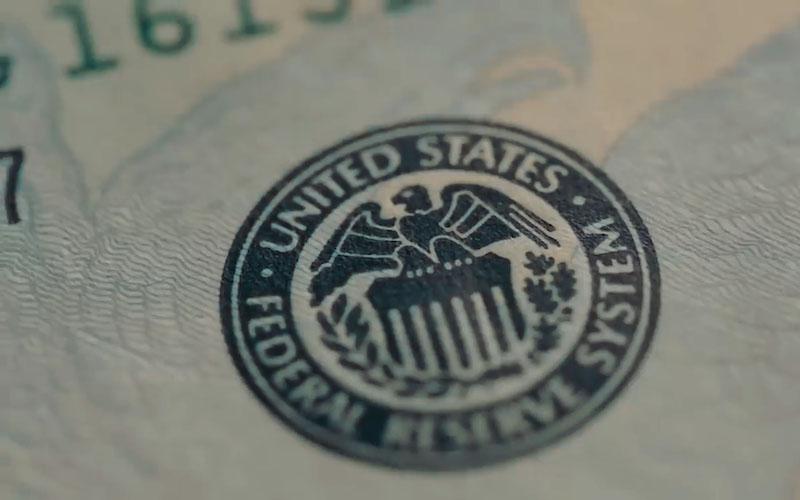
This marks the most dramatic shift in Federal Reserve policy expectations in recent years: investors have gone from anticipating monetary easing and a market recovery to anticipating monetary tightening and market pressure. The market generally believes that the Fed's June Federal Open Market Committee meeting will maintain interest rates unchanged; the real key lies in the direction and timing of subsequent policy adjustments.
This reversal of expectations stemmed primarily from two key sets of economic data: May's employment figures significantly exceeded expectations, and the subsequently released Consumer Price Index (CPI) confirmed that inflation had not cooled. The combined effect of these two data points led to a comprehensive repricing of all asset classes, including stocks, bonds, foreign exchange, and commodities, with no exceptions.
The Federal Reserve's two core policy objectives are full employment and price stability. Currently, the US job market remains hot and inflation is persistently high; neither of these core indicators supports the Fed initiating a rate-cutting easing cycle.
The US added 172,000 non-farm payroll jobs in May, far exceeding market expectations; the unemployment rate remained stable at 4.3%, and wage growth also remained robust. Detailed sector data shows that the healthcare, leisure and hospitality, and government sectors continued to steadily expand hiring. Overall, the data indicates that the US labor market has not only not weakened, but has shown no signs of cooling.
The continued strength of the labor market in the first half of the year was the core reason why expectations of interest rate cuts completely subsided . From a market perspective, stable employment directly supports household consumption capacity; even with rising credit costs, economic consumption demand can remain resilient. Looking at the Federal Reserve's historical policies, it has never initiated interest rate cuts in such a tight labor market environment. Subsequent policy will likely be either to wait for weaker data or to directly raise interest rates to tighten monetary policy.
The US CPI rose sharply in May, with the annual inflation rate hitting a three-year high. Energy prices surged due to geopolitical tensions with Iran; however, core inflation remained high after excluding volatile food and energy prices, with service sector prices being the main driver of inflation.
Current economic data provides ample support for the Federal Reserve's hawkish policy. The notion of "high interest rates remaining in the long term" is no longer a controversial view in the market, but has become the mainstream prediction in the industry.
US utilities, real estate investment trusts (REITs), and small-cap stocks—sectors sensitive to interest rates—were hit hardest. High financing costs are squeezing the profit margins of highly leveraged companies. Dividend yields that were attractive just six months ago are now completely outmatched by the over 4.5% risk-free yield on US Treasury bonds. The continued rise in risk-free interest rates has fundamentally overturned the valuation logic of income-generating stocks.
The bond market reacted most quickly, with existing bonds generally showing paper losses, while new investors were able to lock in high yields rarely seen in years. Funds began a large-scale rotation; since the release of the May employment data, market funds have been continuously flowing out of interest rate-sensitive stocks and into fixed-income assets.
Over the past two years, the artificial intelligence (AI) sector has remained incredibly hot, driving the semiconductor sector to lead the market. This long-term bull market is based on two core factors: first, the continued high-speed growth in demand for AI; and second, the expectation that the Federal Reserve will cut interest rates, supporting the sector's high valuation.
From June 5th to June 11th, the Philadelphia Semiconductor Index fell into a technical correction phase, and the two major semiconductor ETFs experienced significant sell-offs. Shares of core semiconductor companies such as Nvidia, AMD, Broadcom, and Micron Technology all declined. Investors are generally concerned that the high-interest-rate environment may slow the pace of artificial intelligence infrastructure construction, and high financing costs will continue to suppress the expansion of data center investment.
Trillion-dollar tech giants like Microsoft, Amazon, and Meta have followed the semiconductor sector in a correction. While these companies' AI business expansion relies primarily on their own cash flow and relies almost entirely on debt financing, the overall market demand for higher returns has still compressed the valuation space of these giants, rendering their robust balance sheets insufficient as a safe haven.
Market expectations have completely shifted from "interest rate cuts are imminent" to "interest rate hikes are expected," forcing all growth stock investors to reassess and reprice the value of assets with long-term earnings potential.
Market Outlook
During this period, every employment and inflation data point, as well as news regarding Middle Eastern oil and geopolitical developments, directly impacted the Federal Reserve's policy decisions. The market's core focus has shifted: investors are no longer predicting the timing of rate cuts, but instead are betting heavily on when the first rate hike will occur.
This marks the most dramatic shift in Federal Reserve policy expectations in recent years: investors have gone from anticipating monetary easing and a market recovery to anticipating monetary tightening and market pressure. The market generally believes that the Fed's June Federal Open Market Committee meeting will maintain interest rates unchanged; the real key lies in the direction and timing of subsequent policy adjustments.
This reversal of expectations stemmed primarily from two key sets of economic data: May's employment figures significantly exceeded expectations, and the subsequently released Consumer Price Index (CPI) confirmed that inflation had not cooled. The combined effect of these two data points led to a comprehensive repricing of all asset classes, including stocks, bonds, foreign exchange, and commodities, with no exceptions.
The Federal Reserve's two core policy objectives are full employment and price stability. Currently, the US job market remains hot and inflation is persistently high; neither of these core indicators supports the Fed initiating a rate-cutting easing cycle.
The US added 172,000 non-farm payroll jobs in May, far exceeding market expectations; the unemployment rate remained stable at 4.3%, and wage growth also remained robust. Detailed sector data shows that the healthcare, leisure and hospitality, and government sectors continued to steadily expand hiring. Overall, the data indicates that the US labor market has not only not weakened, but has shown no signs of cooling.
The continued strength of the labor market in the first half of the year was the core reason why expectations of interest rate cuts completely subsided . From a market perspective, stable employment directly supports household consumption capacity; even with rising credit costs, economic consumption demand can remain resilient. Looking at the Federal Reserve's historical policies, it has never initiated interest rate cuts in such a tight labor market environment. Subsequent policy will likely be either to wait for weaker data or to directly raise interest rates to tighten monetary policy.
The US CPI rose sharply in May, with the annual inflation rate hitting a three-year high. Energy prices surged due to geopolitical tensions with Iran; however, core inflation remained high after excluding volatile food and energy prices, with service sector prices being the main driver of inflation.
Current economic data provides ample support for the Federal Reserve's hawkish policy. The notion of "high interest rates remaining in the long term" is no longer a controversial view in the market, but has become the mainstream prediction in the industry.
US utilities, real estate investment trusts (REITs), and small-cap stocks—sectors sensitive to interest rates—were hit hardest. High financing costs are squeezing the profit margins of highly leveraged companies. Dividend yields that were attractive just six months ago are now completely outmatched by the over 4.5% risk-free yield on US Treasury bonds. The continued rise in risk-free interest rates has fundamentally overturned the valuation logic of income-generating stocks.
The bond market reacted most quickly, with existing bonds generally showing paper losses, while new investors were able to lock in high yields rarely seen in years. Funds began a large-scale rotation; since the release of the May employment data, market funds have been continuously flowing out of interest rate-sensitive stocks and into fixed-income assets.
Over the past two years, the artificial intelligence (AI) sector has remained incredibly hot, driving the semiconductor sector to lead the market. This long-term bull market is based on two core factors: first, the continued high-speed growth in demand for AI; and second, the expectation that the Federal Reserve will cut interest rates, supporting the sector's high valuation.
From June 5th to June 11th, the Philadelphia Semiconductor Index fell into a technical correction phase, and the two major semiconductor ETFs experienced significant sell-offs. Shares of core semiconductor companies such as Nvidia, AMD, Broadcom, and Micron Technology all declined. Investors are generally concerned that the high-interest-rate environment may slow the pace of artificial intelligence infrastructure construction, and high financing costs will continue to suppress the expansion of data center investment.
Trillion-dollar tech giants like Microsoft, Amazon, and Meta have followed the semiconductor sector in a correction. While these companies' AI business expansion relies primarily on their own cash flow and relies almost entirely on debt financing, the overall market demand for higher returns has still compressed the valuation space of these giants, rendering their robust balance sheets insufficient as a safe haven.
Market expectations have completely shifted from "interest rate cuts are imminent" to "interest rate hikes are expected," forcing all growth stock investors to reassess and reprice the value of assets with long-term earnings potential.
Market Outlook
During this period, every employment and inflation data point, as well as news regarding Middle Eastern oil and geopolitical developments, directly impacted the Federal Reserve's policy decisions. The market's core focus has shifted: investors are no longer predicting the timing of rate cuts, but instead are betting heavily on when the first rate hike will occur.
- Risk Warning and Disclaimer
- The market involves risk, and trading may not be suitable for all investors. This article is for reference only and does not constitute personal investment advice, nor does it take into account certain users’ specific investment objectives, financial situation, or other needs. Any investment decisions made based on this information are at your own risk.