Is the Strait of Hormuz "revived"? With the cancellation of the US-Iran-Switzerland summit, could a reversal be brewing in oil prices around $80?
2026-06-19 15:59:10
On Friday, June 19, the pricing focus of international oil prices shifted from supply disruptions to supply recovery. Brent crude traded around $80 per barrel, down nearly 9% for the week; U.S. crude hovered around $76 per barrel. The premium for the Strait of Hormuz blockade, which had previously supported a rapid rise in oil prices, narrowed significantly. However, the sudden cancellation of the scheduled follow-up talks between the U.S. and Iran, and the continued security situation in Lebanon, mean that the market cannot yet equate the restoration of passage through the strait with a full normalization of the supply chain.
The immediate cause of this round of crude oil sell-off is not a sudden deterioration in global demand, but rather that the most extreme supply disruption scenarios are being rapidly removed from pricing models. The Strait of Hormuz normally transports approximately 20 million barrels of crude oil and refined products daily, accounting for about 20% of global oil consumption. During the conflict, traffic volume dropped to extremely low levels, putting pressure on the spot market, refinery procurement, and marine insurance simultaneously, and driving crude oil futures to quickly incorporate high risk premiums.
With some oil tankers resuming transit through the Strait of Hormuz, market concerns about a potential supply disruption have eased. On June 18, several vessels, including three Saudi oil tankers, passed through or departed the strait, with the three tankers carrying a combined 6 million barrels of crude oil. US Vice President Vance previously stated that 12.5 million barrels of oil passed through the strait overnight. Even though this figure is still lower than the normal daily average of approximately 20 million barrels, it is enough to change market expectations regarding the speed of supply recovery.

Futures prices have therefore given back most of the gains made after the outbreak of the conflict. The core logic is that oil prices previously reflected the risk of continued lockdowns, while they are now reflecting the probability of a gradual resumption of shipping. As long as traffic continues to increase, the supply premium in near-month contracts will be further compressed.
The reopening of the strait is only the first step in restoring crude oil supply. Long-delayed tankers need to re-queue, oil fields that have ceased or reduced production need to gradually resume operations, and ports, pipelines, storage facilities, and loading systems must be re-coordinated. Any delay in any of these areas could lead to a significant discrepancy between nominal export capacity and actual shipments.
More importantly, shipping companies are not simultaneously assessing safety conditions. Some shipowners prefer to wait until more vessels have cleared the waterway before resuming normal routes, as insurance rates, crew safety, channel clearing, and potential mine risks have not yet completely disappeared. Jan Lindbergh, CEO of ship management company D/S Norden, recently stated that all parties want vessels to leave as soon as possible, but there is no need to be among the first to try; the resumption of passage can build confidence, but that confidence remains fragile.
This means that the market is no longer focused on whether the strait is open, but rather on whether the daily throughput can remain consistently close to normal levels. A daily throughput of over 10 million barrels only proves that the waterway has temporary transport capacity, not that commercial shipping, insurance coverage, and port operations have fully recovered.
The US-Iran interim arrangement set a 60-day implementation window, originally planned to discuss Straits management, security arrangements, and a long-term agreement through subsequent talks. However, Vance cancelled his trip to Switzerland, and the talks scheduled for June 19th did not take place. The interruption of technical negotiations does not necessarily mean the interim arrangement is immediately invalidated, but it will reduce market confidence in the agreement's sustainability.
Meanwhile, Israeli military operations continue in Lebanon, and a halt to related hostilities is considered a crucial part of the temporary arrangement. If regional security incidents persist, tanker traffic, insurance quotes, and shipowner risk appetite could all deteriorate again. The crude oil market is currently in a phase where policy signals, shipping traffic, and security incidents are all being priced in; any fluctuation in any of these factors could rapidly alter short-term volatility.
It is worth noting that producers have begun adjusting their shipping plans. Abu Dhabi National Oil Company has notified customers to resume loading crude oil from Persian Gulf ports, indicating that upstream companies are preparing for the normalization of exports. However, there is still a time lag between the resumption of loading and the completion of exports, and the actual supply needs to be further confirmed through port loading, tanker departures, and destination unloading data.
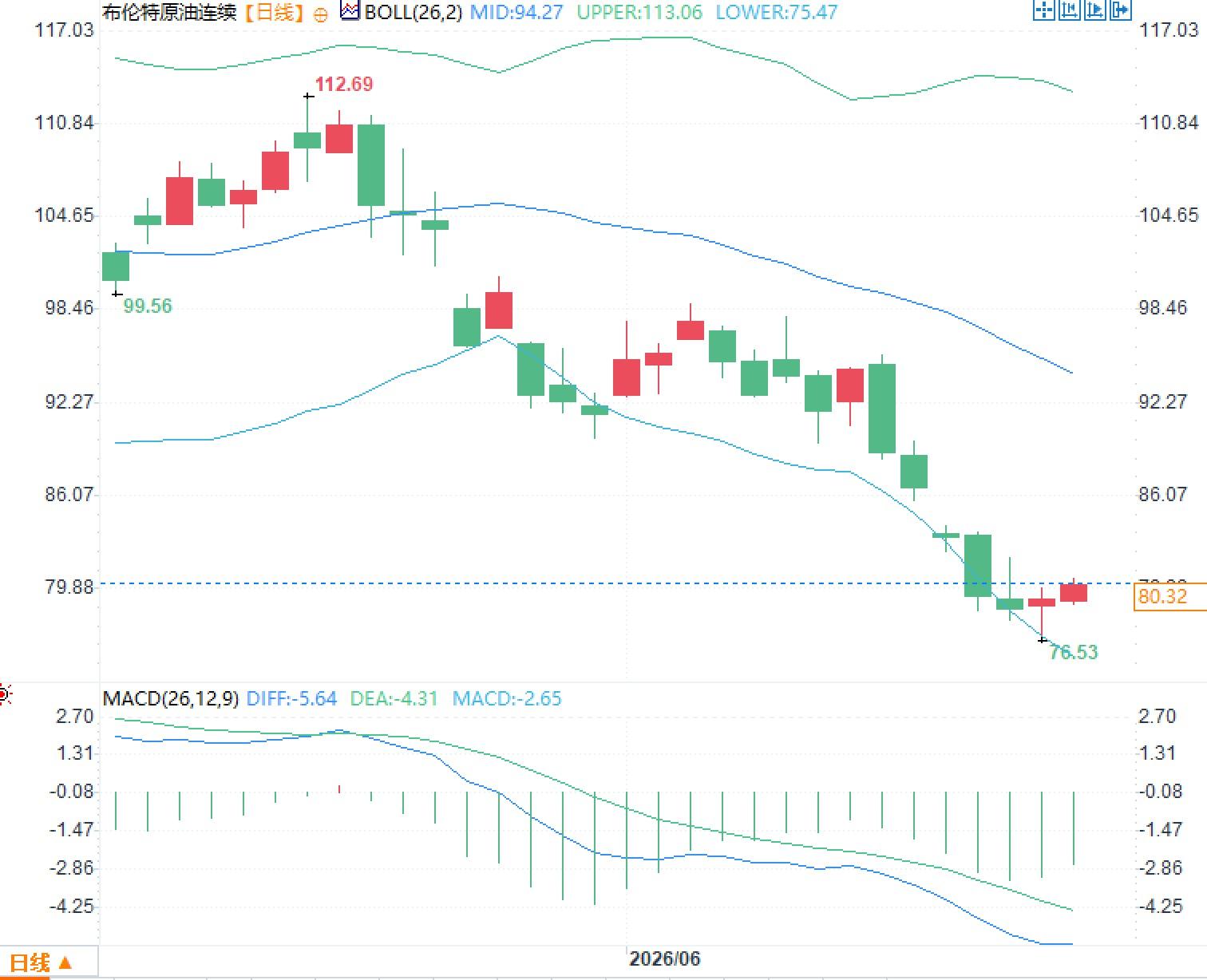
Brent crude oil prices, currently hovering around $80/barrel, have already factored in a significant portion of the anticipated reopening of the Straits, but have not yet fully accounted for the risk of supply chain disruptions. If traffic volume continues to approach normal levels in the coming days, backlogged tankers can leave port smoothly, marine insurance costs will decrease, and the tightness in the spot market will ease significantly. The near-month premium in the term structure may also continue to narrow.
Conversely, if subsequent negotiations remain stalled, shipping safety incidents recur, or shipowners reduce passage due to excessive risk, the market will reassess the amount of deliverable crude oil. Even if nominal production capacity remains unchanged, transportation constraints will still create regional supply mismatches and drive up immediate procurement costs.
The immediate cause of this round of crude oil sell-off is not a sudden deterioration in global demand, but rather that the most extreme supply disruption scenarios are being rapidly removed from pricing models. The Strait of Hormuz normally transports approximately 20 million barrels of crude oil and refined products daily, accounting for about 20% of global oil consumption. During the conflict, traffic volume dropped to extremely low levels, putting pressure on the spot market, refinery procurement, and marine insurance simultaneously, and driving crude oil futures to quickly incorporate high risk premiums.
With some oil tankers resuming transit through the Strait of Hormuz, market concerns about a potential supply disruption have eased. On June 18, several vessels, including three Saudi oil tankers, passed through or departed the strait, with the three tankers carrying a combined 6 million barrels of crude oil. US Vice President Vance previously stated that 12.5 million barrels of oil passed through the strait overnight. Even though this figure is still lower than the normal daily average of approximately 20 million barrels, it is enough to change market expectations regarding the speed of supply recovery.
Futures prices have therefore given back most of the gains made after the outbreak of the conflict. The core logic is that oil prices previously reflected the risk of continued lockdowns, while they are now reflecting the probability of a gradual resumption of shipping. As long as traffic continues to increase, the supply premium in near-month contracts will be further compressed.
The reopening of the strait is only the first step in restoring crude oil supply. Long-delayed tankers need to re-queue, oil fields that have ceased or reduced production need to gradually resume operations, and ports, pipelines, storage facilities, and loading systems must be re-coordinated. Any delay in any of these areas could lead to a significant discrepancy between nominal export capacity and actual shipments.
More importantly, shipping companies are not simultaneously assessing safety conditions. Some shipowners prefer to wait until more vessels have cleared the waterway before resuming normal routes, as insurance rates, crew safety, channel clearing, and potential mine risks have not yet completely disappeared. Jan Lindbergh, CEO of ship management company D/S Norden, recently stated that all parties want vessels to leave as soon as possible, but there is no need to be among the first to try; the resumption of passage can build confidence, but that confidence remains fragile.
This means that the market is no longer focused on whether the strait is open, but rather on whether the daily throughput can remain consistently close to normal levels. A daily throughput of over 10 million barrels only proves that the waterway has temporary transport capacity, not that commercial shipping, insurance coverage, and port operations have fully recovered.
The US-Iran interim arrangement set a 60-day implementation window, originally planned to discuss Straits management, security arrangements, and a long-term agreement through subsequent talks. However, Vance cancelled his trip to Switzerland, and the talks scheduled for June 19th did not take place. The interruption of technical negotiations does not necessarily mean the interim arrangement is immediately invalidated, but it will reduce market confidence in the agreement's sustainability.
Meanwhile, Israeli military operations continue in Lebanon, and a halt to related hostilities is considered a crucial part of the temporary arrangement. If regional security incidents persist, tanker traffic, insurance quotes, and shipowner risk appetite could all deteriorate again. The crude oil market is currently in a phase where policy signals, shipping traffic, and security incidents are all being priced in; any fluctuation in any of these factors could rapidly alter short-term volatility.
It is worth noting that producers have begun adjusting their shipping plans. Abu Dhabi National Oil Company has notified customers to resume loading crude oil from Persian Gulf ports, indicating that upstream companies are preparing for the normalization of exports. However, there is still a time lag between the resumption of loading and the completion of exports, and the actual supply needs to be further confirmed through port loading, tanker departures, and destination unloading data.
Brent crude oil prices, currently hovering around $80/barrel, have already factored in a significant portion of the anticipated reopening of the Straits, but have not yet fully accounted for the risk of supply chain disruptions. If traffic volume continues to approach normal levels in the coming days, backlogged tankers can leave port smoothly, marine insurance costs will decrease, and the tightness in the spot market will ease significantly. The near-month premium in the term structure may also continue to narrow.
Conversely, if subsequent negotiations remain stalled, shipping safety incidents recur, or shipowners reduce passage due to excessive risk, the market will reassess the amount of deliverable crude oil. Even if nominal production capacity remains unchanged, transportation constraints will still create regional supply mismatches and drive up immediate procurement costs.
- Risk Warning and Disclaimer
- The market involves risk, and trading may not be suitable for all investors. This article is for reference only and does not constitute personal investment advice, nor does it take into account certain users’ specific investment objectives, financial situation, or other needs. Any investment decisions made based on this information are at your own risk.