Crude oil trading alert: The US-Iran agreement disrupted market sentiment, causing oil prices to open higher but then fall back, with short-term adjustments expected to continue.
2026-06-22 10:00:21
International oil prices opened significantly higher in Asian trading on Monday, with West Texas Intermediate (WTI) crude oil jumping more than $1 at the open, briefly retesting the $78 mark. However, as market sentiment cooled, oil prices failed to extend their gains further, with some profit-taking appearing at higher levels, causing prices to reverse course and fall during the session, currently trading around $75.80.

The recent surge in oil prices was primarily driven by renewed tensions in the Middle East. Iran closed the Strait of Hormuz again last Saturday in response to a new round of Israeli military operations in Lebanon. Following the announcement, the market quickly priced in potential supply risks, pushing crude oil prices higher in the short term. The Strait of Hormuz handles approximately 20% of global seaborne crude oil transport and is one of the most crucial shipping lanes in the global energy supply system. Because the region connects major Middle Eastern oil-producing countries with international markets, its operation often directly impacts global energy supply expectations. Therefore, whenever tensions escalate, the market typically raises risk premiums rapidly.
Meanwhile, US President Trump stated that the US might take stronger measures against Iran and its affiliated armed groups. These remarks further escalated regional tensions and reignited market concerns about a deterioration in relations between the two countries.
It is noteworthy that just a week prior, the United States and Iran had signed a memorandum of understanding on the Strait of Hormuz issue and planned to launch 60 days of follow-up negotiations. However, after the United States issued a tough statement, Iranian negotiators withdrew from the relevant consultations held in Switzerland, raising doubts in the market about whether the two sides can continue to advance peace talks in the future.
However, judging from market reactions, investors are relatively cautious in pricing in this round of geopolitical risks. Although oil prices rose rapidly in response to the news, a sustained one-sided upward trend did not materialize. Some analysts believe that the market has not yet seen any signs of a large-scale disruption to actual supply; therefore, the risk premium is more driven by short-term sentiment than by a fundamental change in fundamentals.
Furthermore, as expectations of supply recovery following the easing of tensions in the Middle East gradually materialize, the global crude oil market remains in a phase of supply-demand rebalancing. If the Strait of Hormuz closure is short-lived and the US and Iran subsequently return to negotiations, market concerns about supply risks may be further alleviated.
In the coming period, changes in US-Iran relations, the navigation situation in the Strait of Hormuz, and developments in Lebanon will remain important factors influencing oil price trends. In the absence of new evidence of supply disruptions, the market may continue to engage in a back-and-forth struggle between geopolitical news and fundamental expectations.
From a daily chart perspective, although WTI crude oil gapped up at the open due to geopolitical news, the price failed to break through the previous key resistance area, indicating that selling pressure remains. Currently, oil prices are still trading within a short-term consolidation channel, and the rebound is more of a technical correction driven by news than a trend reversal signal. Key resistance levels to watch are the $78.00 to $79.50 area; failure to hold above this level could lead to a return to a consolidation trend. Support levels to watch are $75.00 and $74.50; a break below these levels could allow bears to regain control of the market.
Observing the 4-hour chart, oil prices gapped up at the open and quickly entered a consolidation phase, with a clear lack of willingness to chase the price higher. The short-term price center of gravity continues to show a slow downward trend, reflecting the market's cautious attitude towards the persistence of geopolitical risks. If the price fails to effectively break through the $78 level, a further gap-filling and retest of support around $75 cannot be ruled out. Overall, short-term fluctuations are mainly influenced by news, but the technical structure has not yet escaped the weak and volatile pattern; the judgment of limited rebounds and a downward trend remains unchanged.
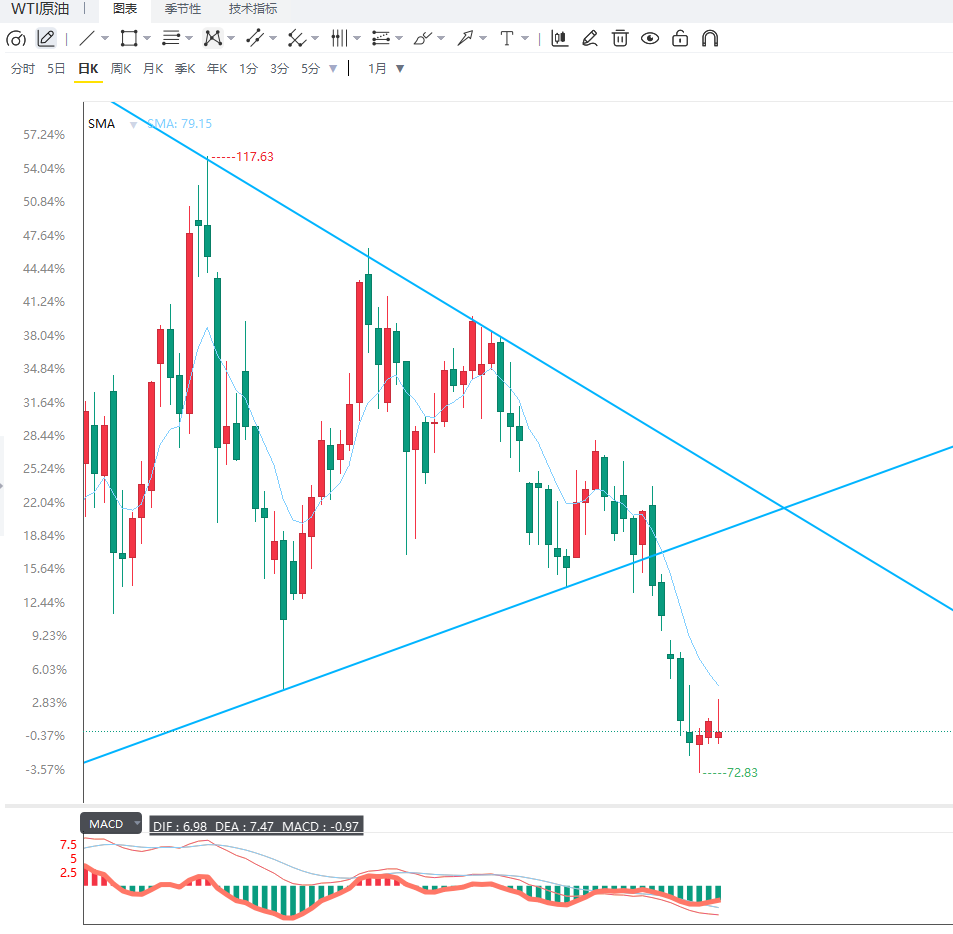
Editor's Summary : Iran's renewed closure of the Strait of Hormuz has brought renewed focus to global oil supply security, driving a gap-up opening in WTI crude oil prices at the start of the week. However, market performance suggests this rebound is more driven by sentiment stemming from geopolitical risks than by a substantial shift in fundamentals. While the prospects for US-Iran negotiations have been turbulent, there are no clear signs of disruption to the global oil supply system, thus the market remains cautious about the sustainability of high oil prices. Short-term geopolitical tensions will continue to increase market volatility, but in the absence of new supply shocks, the overall downward trend in oil prices is not yet over. The market is expected to continue its weak and volatile trading pattern, and investors should pay close attention to developments in the Middle East and the actual impact on the supply side.
The recent surge in oil prices was primarily driven by renewed tensions in the Middle East. Iran closed the Strait of Hormuz again last Saturday in response to a new round of Israeli military operations in Lebanon. Following the announcement, the market quickly priced in potential supply risks, pushing crude oil prices higher in the short term. The Strait of Hormuz handles approximately 20% of global seaborne crude oil transport and is one of the most crucial shipping lanes in the global energy supply system. Because the region connects major Middle Eastern oil-producing countries with international markets, its operation often directly impacts global energy supply expectations. Therefore, whenever tensions escalate, the market typically raises risk premiums rapidly.
Meanwhile, US President Trump stated that the US might take stronger measures against Iran and its affiliated armed groups. These remarks further escalated regional tensions and reignited market concerns about a deterioration in relations between the two countries.
It is noteworthy that just a week prior, the United States and Iran had signed a memorandum of understanding on the Strait of Hormuz issue and planned to launch 60 days of follow-up negotiations. However, after the United States issued a tough statement, Iranian negotiators withdrew from the relevant consultations held in Switzerland, raising doubts in the market about whether the two sides can continue to advance peace talks in the future.
However, judging from market reactions, investors are relatively cautious in pricing in this round of geopolitical risks. Although oil prices rose rapidly in response to the news, a sustained one-sided upward trend did not materialize. Some analysts believe that the market has not yet seen any signs of a large-scale disruption to actual supply; therefore, the risk premium is more driven by short-term sentiment than by a fundamental change in fundamentals.
Furthermore, as expectations of supply recovery following the easing of tensions in the Middle East gradually materialize, the global crude oil market remains in a phase of supply-demand rebalancing. If the Strait of Hormuz closure is short-lived and the US and Iran subsequently return to negotiations, market concerns about supply risks may be further alleviated.
In the coming period, changes in US-Iran relations, the navigation situation in the Strait of Hormuz, and developments in Lebanon will remain important factors influencing oil price trends. In the absence of new evidence of supply disruptions, the market may continue to engage in a back-and-forth struggle between geopolitical news and fundamental expectations.
From a daily chart perspective, although WTI crude oil gapped up at the open due to geopolitical news, the price failed to break through the previous key resistance area, indicating that selling pressure remains. Currently, oil prices are still trading within a short-term consolidation channel, and the rebound is more of a technical correction driven by news than a trend reversal signal. Key resistance levels to watch are the $78.00 to $79.50 area; failure to hold above this level could lead to a return to a consolidation trend. Support levels to watch are $75.00 and $74.50; a break below these levels could allow bears to regain control of the market.
Observing the 4-hour chart, oil prices gapped up at the open and quickly entered a consolidation phase, with a clear lack of willingness to chase the price higher. The short-term price center of gravity continues to show a slow downward trend, reflecting the market's cautious attitude towards the persistence of geopolitical risks. If the price fails to effectively break through the $78 level, a further gap-filling and retest of support around $75 cannot be ruled out. Overall, short-term fluctuations are mainly influenced by news, but the technical structure has not yet escaped the weak and volatile pattern; the judgment of limited rebounds and a downward trend remains unchanged.
Editor's Summary : Iran's renewed closure of the Strait of Hormuz has brought renewed focus to global oil supply security, driving a gap-up opening in WTI crude oil prices at the start of the week. However, market performance suggests this rebound is more driven by sentiment stemming from geopolitical risks than by a substantial shift in fundamentals. While the prospects for US-Iran negotiations have been turbulent, there are no clear signs of disruption to the global oil supply system, thus the market remains cautious about the sustainability of high oil prices. Short-term geopolitical tensions will continue to increase market volatility, but in the absence of new supply shocks, the overall downward trend in oil prices is not yet over. The market is expected to continue its weak and volatile trading pattern, and investors should pay close attention to developments in the Middle East and the actual impact on the supply side.
- Risk Warning and Disclaimer
- The market involves risk, and trading may not be suitable for all investors. This article is for reference only and does not constitute personal investment advice, nor does it take into account certain users’ specific investment objectives, financial situation, or other needs. Any investment decisions made based on this information are at your own risk.