The Hormuz blockade lasted for three months, forcing the Middle East's energy landscape to "relocate." Can the "Four Seas Initiative" balance the flow of Middle Eastern energy?
2026-06-22 10:37:11
Previously, the market generally believed that a complete blockade of the Strait of Hormuz was just an extreme assumption. However, geopolitical conflicts have brought this core global energy shipping route to a standstill, disrupting one-fifth of the world's crude oil and liquefied natural gas transportation, and causing huge economic losses on both the energy supply and demand sides.
In the aftermath of the crisis, Middle Eastern oil and gas exporting countries have focused on expanding pipelines and constructing new routes in an attempt to build diversified transportation channels and fundamentally avoid the supply risks caused by relying on a single shipping route, thus reshaping the regional energy transportation landscape.
Following the Straits blockade, countries with alternative land pipelines immediately adjusted their export routes, with Saudi Arabia's East-West Pipeline, built years ago, becoming the core buffer. The country diverted all its Persian Gulf crude oil exports to the Red Sea, rapidly increasing the pipeline's daily throughput to 7 million barrels. The only bottleneck restricting capacity release was the loading and unloading facilities at Yanbu port, for which Saudi Aramco plans to complete expansion as soon as possible.
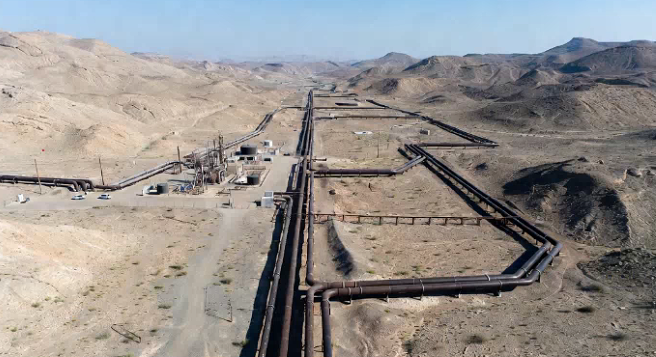
When analyzing the Middle East alternative energy corridor, industry analyst Ron Bousso noted that the construction of this east-west pipeline was originally a strategic project initiated in the 1980s in anticipation of the risk of blockade of the strait. This crisis has fully demonstrated the long-term value of a diversified transportation layout.
The UAE has an existing pipeline that reaches the port of Fujairah on the other side of the Strait of Hormuz. To further diversify risks, the country plans to build a new pipeline that will double the current daily capacity from 1.8 million barrels to 3.6 million barrels. The project has a tight schedule and is expected to be completed by the end of next year.
Iraq relies on the Persian Gulf shipping route for over 90% of its crude oil exports, making it one of the hardest-hit countries by the blockade. Before the conflict, the country exported over 3.3 million barrels of crude oil per day, but during the crisis, production plummeted from 4 million barrels to just over 1 million barrels, leading to a precipitous drop in fiscal revenue and forcing it to prioritize domestic energy supplies. Iraq plans to increase the daily capacity of the Kirkuk-Ceyhan pipeline from 200,000 barrels to 770,000 barrels in the short term, while also planning a pipeline network connecting Mediterranean ports in Syria and Jordan, completely bypassing the Strait of Hormuz tanker shipping system.
The New Route Institute, an industry think tank, has proposed a transnational pipeline plan to build a transportation network connecting Middle Eastern oil fields with Mediterranean ports, transforming Turkey and Syria into regional energy hubs. The institute states that the easing of tensions in Syria presents a crucial window of opportunity for transformation, enabling the Levant region to shift from an energy conflict zone to an intercontinental transport corridor. Despite external controversies surrounding the stability of local governance, the ruling party intends to leverage energy transit revenue to stimulate the economy.
The plan, named the Four Seas Initiative, has multiple strategic implications: it helps Europe reduce its dependence on energy imports from Russia and Iran, solidifies the US's commercial advantage in core infrastructure in the Middle East, supports Syria's reconstruction through pipeline transit fees, and builds a geopolitical balance system that is long biased towards the West. The project has a total investment of approximately US$100 billion and is highly compatible with Türkiye's development path of building a natural gas hub.
Not all Middle Eastern countries possess the resources to independently construct alternative pipelines. Kuwait and Qatar lack land-based transport routes, and to bypass the Strait of Hormuz, they must rely on the existing pipeline networks of Saudi Arabia and the UAE. For Qatar, geopolitical differences present significant obstacles to cross-border pipeline cooperation, making the diversification of its supply channels far more difficult than in other Gulf countries.
In summary , this disruption to shipping through the Straits has become a significant turning point in the Middle East's energy landscape. Saudi Arabia, the UAE, and Iraq have rapidly enhanced their supply resilience through pipeline expansion, and the long-term planning of transcontinental pipelines is altering regional energy flows. While the current geopolitical tensions have eased temporarily, significantly reducing the probability of another complete blockade of the Straits, countries will not halt their efforts to diversify transportation routes to mitigate future energy shocks from unforeseen geopolitical risks.
In the aftermath of the crisis, Middle Eastern oil and gas exporting countries have focused on expanding pipelines and constructing new routes in an attempt to build diversified transportation channels and fundamentally avoid the supply risks caused by relying on a single shipping route, thus reshaping the regional energy transportation landscape.
Saudi Arabia's mature pipelines played a backup role, proactively mitigating short-term crises.
Following the Straits blockade, countries with alternative land pipelines immediately adjusted their export routes, with Saudi Arabia's East-West Pipeline, built years ago, becoming the core buffer. The country diverted all its Persian Gulf crude oil exports to the Red Sea, rapidly increasing the pipeline's daily throughput to 7 million barrels. The only bottleneck restricting capacity release was the loading and unloading facilities at Yanbu port, for which Saudi Aramco plans to complete expansion as soon as possible.
When analyzing the Middle East alternative energy corridor, industry analyst Ron Bousso noted that the construction of this east-west pipeline was originally a strategic project initiated in the 1980s in anticipation of the risk of blockade of the strait. This crisis has fully demonstrated the long-term value of a diversified transportation layout.
The UAE and Iraq are accelerating pipeline expansion to reduce their reliance on the Persian Gulf shipping lanes.
The UAE has an existing pipeline that reaches the port of Fujairah on the other side of the Strait of Hormuz. To further diversify risks, the country plans to build a new pipeline that will double the current daily capacity from 1.8 million barrels to 3.6 million barrels. The project has a tight schedule and is expected to be completed by the end of next year.
Iraq relies on the Persian Gulf shipping route for over 90% of its crude oil exports, making it one of the hardest-hit countries by the blockade. Before the conflict, the country exported over 3.3 million barrels of crude oil per day, but during the crisis, production plummeted from 4 million barrels to just over 1 million barrels, leading to a precipitous drop in fiscal revenue and forcing it to prioritize domestic energy supplies. Iraq plans to increase the daily capacity of the Kirkuk-Ceyhan pipeline from 200,000 barrels to 770,000 barrels in the short term, while also planning a pipeline network connecting Mediterranean ports in Syria and Jordan, completely bypassing the Strait of Hormuz tanker shipping system.
The transnational "Four Seas Initiative" has been launched to create a transcontinental energy corridor in the Mediterranean.
The New Route Institute, an industry think tank, has proposed a transnational pipeline plan to build a transportation network connecting Middle Eastern oil fields with Mediterranean ports, transforming Turkey and Syria into regional energy hubs. The institute states that the easing of tensions in Syria presents a crucial window of opportunity for transformation, enabling the Levant region to shift from an energy conflict zone to an intercontinental transport corridor. Despite external controversies surrounding the stability of local governance, the ruling party intends to leverage energy transit revenue to stimulate the economy.
The plan, named the Four Seas Initiative, has multiple strategic implications: it helps Europe reduce its dependence on energy imports from Russia and Iran, solidifies the US's commercial advantage in core infrastructure in the Middle East, supports Syria's reconstruction through pipeline transit fees, and builds a geopolitical balance system that is long biased towards the West. The project has a total investment of approximately US$100 billion and is highly compatible with Türkiye's development path of building a natural gas hub.
The layouts in Kuwait and Qatar have inherent weaknesses, and the obstacles to diversification are significant.
Not all Middle Eastern countries possess the resources to independently construct alternative pipelines. Kuwait and Qatar lack land-based transport routes, and to bypass the Strait of Hormuz, they must rely on the existing pipeline networks of Saudi Arabia and the UAE. For Qatar, geopolitical differences present significant obstacles to cross-border pipeline cooperation, making the diversification of its supply channels far more difficult than in other Gulf countries.
In summary , this disruption to shipping through the Straits has become a significant turning point in the Middle East's energy landscape. Saudi Arabia, the UAE, and Iraq have rapidly enhanced their supply resilience through pipeline expansion, and the long-term planning of transcontinental pipelines is altering regional energy flows. While the current geopolitical tensions have eased temporarily, significantly reducing the probability of another complete blockade of the Straits, countries will not halt their efforts to diversify transportation routes to mitigate future energy shocks from unforeseen geopolitical risks.
- Risk Warning and Disclaimer
- The market involves risk, and trading may not be suitable for all investors. This article is for reference only and does not constitute personal investment advice, nor does it take into account certain users’ specific investment objectives, financial situation, or other needs. Any investment decisions made based on this information are at your own risk.