The widening interest rate differential between the US and Japan, coupled with safe-haven inflows, has pushed the USD/JPY exchange rate close to the 162 mark.
2026-06-22 13:28:38
The US dollar extended its gains against the Japanese yen in Asian trading on Monday, rising back above 161.50, just shy of the high reached last week that was the highest level since July 2025. Despite ongoing discussions about possible intervention by Japanese authorities in the currency market, capital flows and interest rate differentials continue to dominate market movements.

Japanese Finance Minister Katayama reiterated on Monday that the government would closely monitor foreign exchange market fluctuations and take appropriate measures to address abnormal exchange rate changes if necessary. However, such statements failed to effectively prevent the yen from weakening further, and the market's reaction to official verbal intervention was clearly limited.
The core factor currently suppressing the yen remains the energy risk stemming from the escalating tensions in the Middle East. As an economy heavily reliant on energy imports, Japan is particularly sensitive to changes in international energy supply. With the Strait of Hormuz closing again, the market is concerned that rising energy import costs could put new pressure on Japan's economic recovery.
The Strait of Hormuz handles approximately 20% of global seaborne crude oil transport, and Japan's energy supply is heavily reliant on this passage. Iran announced the re-closure of the Strait of Hormuz and accused the United States and Israel of violating the ceasefire agreement, while Israel continued its military operations in Lebanon. US President Trump warned that the US might take new military action if armed groups continue to attack Israel. These factors have fueled a continued rise in risk aversion in the market.
Meanwhile, the positive impact of the Bank of Japan's further tightening of monetary policy is being gradually digested by the market. Last week, the Bank of Japan raised its policy rate to 1.00%, the highest level since 1995. The meeting minutes showed that some members supported a faster pace of rate hikes to prevent potential inflation overshooting. Furthermore, the Bank of Japan's deputy governor stated that the bank will continue to normalize its policy based on changes in the economic, inflation, and financial environments.
However, even with the Bank of Japan maintaining a hawkish stance, a significant interest rate differential remains between the US and Japan. Currently, the US federal funds rate is hovering between 3.50% and 3.75%, far exceeding Japanese interest rates. The US-Japan interest rate differential still exceeds 250 basis points, and carry trade demand continues to support the appreciation of the US dollar against the Japanese yen.
On the other hand, the Federal Reserve kept interest rates unchanged last week, but its overall policy tone was clearly hawkish. With energy price volatility increasing future inflation risks, the market is beginning to reassess the possibility of further tightening of US policy. Some investors have already bet that the Fed still has room for further rate hikes.
The US dollar index remained strong, supported by safe-haven demand and expectations of high interest rates, further pushing the dollar higher against the yen. The market generally believes that with the Bank of Japan's interest rate hikes significantly slower than the Federal Reserve's, the yen is unlikely to escape its weak trend in the short term.
The market focus will continue to be on developments in the Middle East, whether the Japanese government will take actual intervention measures in the foreign exchange market, and changes in expectations regarding the Federal Reserve's policy. If the US dollar remains strong and the Japanese authorities do not take any substantial action, the USD/JPY pair may continue to challenge the 162 level.
From a daily chart perspective, the USD/JPY pair continues its upward trend since the beginning of the year and is approaching the key resistance zone near the 162 level again. The price continues to trade above major moving averages, maintaining a healthy bullish trend. Although the 161.80-162.00 area presents strong psychological resistance and is also a potentially sensitive area for market intervention, the bulls remain in control until the overall trend changes. On the upside, watch for resistance at 162.00 and 163.50; a break above these levels could open up further upside potential. On the downside, key support levels are 160.00 and 158.80; as long as prices remain above these levels, the medium-term uptrend is expected to continue.
From the 4-hour chart, the exchange rate has resumed its upward momentum after a brief consolidation, with short-term moving averages continuing their bullish alignment. The rising price center indicates continued active buying pressure. However, as the exchange rate approaches the 162 level, caution is warranted regarding potential short-term volatility due to verbal or even actual intervention by Japanese authorities. A break above 162.00 could lead to a further test of the 163.00 to 163.50 area; conversely, intervention news could trigger a rapid pullback to around 160.00 for support. Overall, the trend remains bullish, but the risk of volatility at higher levels has significantly increased.
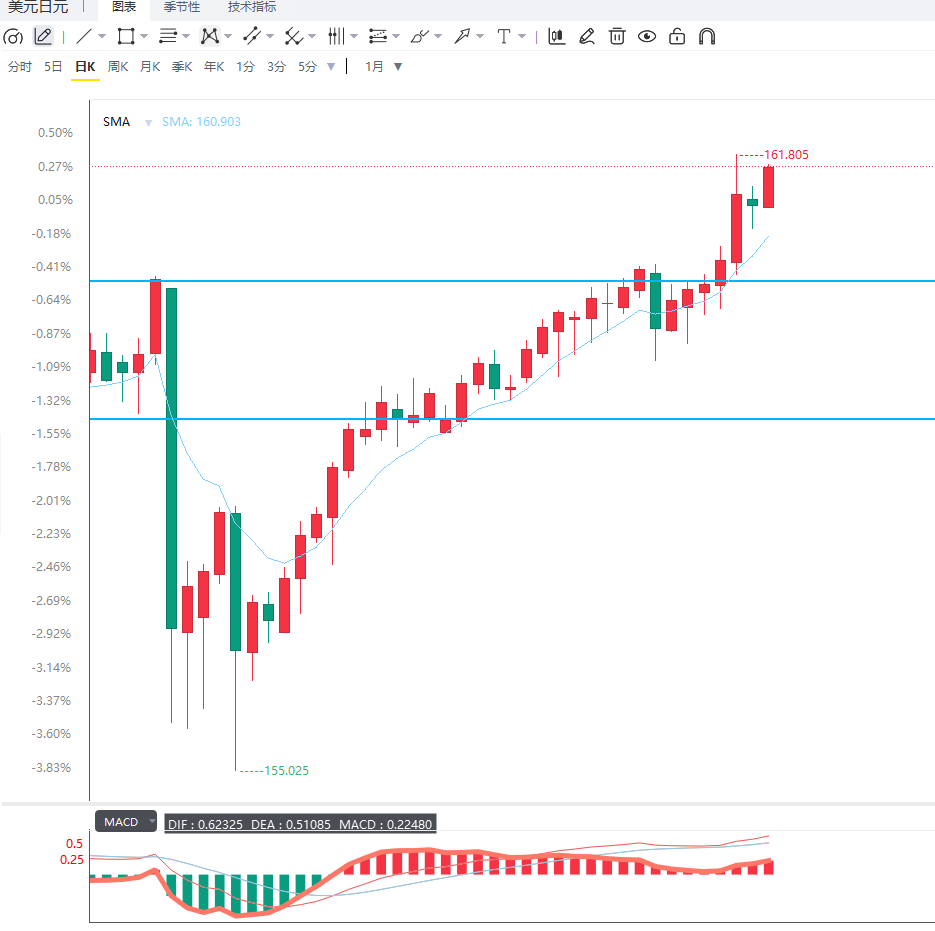
Editor's Summary : The core driver of the continued rise in the USD/JPY exchange rate remains the interest rate differential between the US and Japan, coupled with increased demand for the US dollar as a safe haven. Although the Bank of Japan has initiated a further interest rate hike cycle, the tightening力度 is far from sufficient to narrow the interest rate gap with the US. Meanwhile, escalating tensions in the Middle East and the resulting energy risks are increasing market concerns about the Japanese economic outlook, further weakening the yen's performance. In the short term, the 162 level will be the focus of market attention; a break above this level could attract more trend-following funds. However, given the rising risk of intervention by Japanese authorities, investors should remain wary of the risks associated with significant exchange rate fluctuations while chasing the rally.
Japanese Finance Minister Katayama reiterated on Monday that the government would closely monitor foreign exchange market fluctuations and take appropriate measures to address abnormal exchange rate changes if necessary. However, such statements failed to effectively prevent the yen from weakening further, and the market's reaction to official verbal intervention was clearly limited.
The core factor currently suppressing the yen remains the energy risk stemming from the escalating tensions in the Middle East. As an economy heavily reliant on energy imports, Japan is particularly sensitive to changes in international energy supply. With the Strait of Hormuz closing again, the market is concerned that rising energy import costs could put new pressure on Japan's economic recovery.
The Strait of Hormuz handles approximately 20% of global seaborne crude oil transport, and Japan's energy supply is heavily reliant on this passage. Iran announced the re-closure of the Strait of Hormuz and accused the United States and Israel of violating the ceasefire agreement, while Israel continued its military operations in Lebanon. US President Trump warned that the US might take new military action if armed groups continue to attack Israel. These factors have fueled a continued rise in risk aversion in the market.
Meanwhile, the positive impact of the Bank of Japan's further tightening of monetary policy is being gradually digested by the market. Last week, the Bank of Japan raised its policy rate to 1.00%, the highest level since 1995. The meeting minutes showed that some members supported a faster pace of rate hikes to prevent potential inflation overshooting. Furthermore, the Bank of Japan's deputy governor stated that the bank will continue to normalize its policy based on changes in the economic, inflation, and financial environments.
However, even with the Bank of Japan maintaining a hawkish stance, a significant interest rate differential remains between the US and Japan. Currently, the US federal funds rate is hovering between 3.50% and 3.75%, far exceeding Japanese interest rates. The US-Japan interest rate differential still exceeds 250 basis points, and carry trade demand continues to support the appreciation of the US dollar against the Japanese yen.
On the other hand, the Federal Reserve kept interest rates unchanged last week, but its overall policy tone was clearly hawkish. With energy price volatility increasing future inflation risks, the market is beginning to reassess the possibility of further tightening of US policy. Some investors have already bet that the Fed still has room for further rate hikes.
The US dollar index remained strong, supported by safe-haven demand and expectations of high interest rates, further pushing the dollar higher against the yen. The market generally believes that with the Bank of Japan's interest rate hikes significantly slower than the Federal Reserve's, the yen is unlikely to escape its weak trend in the short term.
The market focus will continue to be on developments in the Middle East, whether the Japanese government will take actual intervention measures in the foreign exchange market, and changes in expectations regarding the Federal Reserve's policy. If the US dollar remains strong and the Japanese authorities do not take any substantial action, the USD/JPY pair may continue to challenge the 162 level.
From a daily chart perspective, the USD/JPY pair continues its upward trend since the beginning of the year and is approaching the key resistance zone near the 162 level again. The price continues to trade above major moving averages, maintaining a healthy bullish trend. Although the 161.80-162.00 area presents strong psychological resistance and is also a potentially sensitive area for market intervention, the bulls remain in control until the overall trend changes. On the upside, watch for resistance at 162.00 and 163.50; a break above these levels could open up further upside potential. On the downside, key support levels are 160.00 and 158.80; as long as prices remain above these levels, the medium-term uptrend is expected to continue.
From the 4-hour chart, the exchange rate has resumed its upward momentum after a brief consolidation, with short-term moving averages continuing their bullish alignment. The rising price center indicates continued active buying pressure. However, as the exchange rate approaches the 162 level, caution is warranted regarding potential short-term volatility due to verbal or even actual intervention by Japanese authorities. A break above 162.00 could lead to a further test of the 163.00 to 163.50 area; conversely, intervention news could trigger a rapid pullback to around 160.00 for support. Overall, the trend remains bullish, but the risk of volatility at higher levels has significantly increased.
Editor's Summary : The core driver of the continued rise in the USD/JPY exchange rate remains the interest rate differential between the US and Japan, coupled with increased demand for the US dollar as a safe haven. Although the Bank of Japan has initiated a further interest rate hike cycle, the tightening力度 is far from sufficient to narrow the interest rate gap with the US. Meanwhile, escalating tensions in the Middle East and the resulting energy risks are increasing market concerns about the Japanese economic outlook, further weakening the yen's performance. In the short term, the 162 level will be the focus of market attention; a break above this level could attract more trend-following funds. However, given the rising risk of intervention by Japanese authorities, investors should remain wary of the risks associated with significant exchange rate fluctuations while chasing the rally.
- Risk Warning and Disclaimer
- The market involves risk, and trading may not be suitable for all investors. This article is for reference only and does not constitute personal investment advice, nor does it take into account certain users’ specific investment objectives, financial situation, or other needs. Any investment decisions made based on this information are at your own risk.