The euro's decline against the dollar has temporarily halted as it approaches key support; oversold conditions may trigger a short-term rebound.
2026-06-22 16:37:17
The euro has been under pressure against the US dollar recently, experiencing a technical rebound after falling to 1.1416 last week, but it remains weak overall. With short-term profit-taking and short-term technical indicators entering oversold territory, short-term selling pressure has eased, and the exchange rate has temporarily entered a consolidation phase.

From a market perspective, the US dollar continues to be supported by both safe-haven demand and the Federal Reserve's hawkish stance. The ongoing tensions in the Middle East and persistent energy supply risks have reignited market expectations of future inflationary pressures, further reinforcing expectations that the Fed will maintain its high-interest-rate policy. The US dollar index remains firmly above the 100 mark, continuing to exert downward pressure on the euro.
Meanwhile, although the European Central Bank (ECB) signaled further interest rate hikes, concerns about slowing economic growth in the Eurozone continued to limit the euro's performance. Markets began to worry that continued policy tightening could put greater pressure on economic activity, thus the ECB's hawkish stance had a relatively limited positive impact on the euro.
The current market trading logic remains dominated by a strong US dollar, with the euro's rebound largely a technical correction after being oversold. Looking at fund flows, investors remain cautious about allocating assets to euros. Although inflationary pressures in the Eurozone have recently eased, compared to the US, European economic growth momentum remains insufficient, leading to continued support for the US dollar due to the divergence in monetary policy expectations between the US and Europe.
Analysts believe that the euro has entered a clearly oversold zone after its rapid decline against the US dollar, thus requiring short-term consolidation. As the downward momentum gradually slows, the exchange rate may fluctuate within the current range over the next one to two trading days. However, the medium-term trend remains downward until a key resistance level is effectively broken.
Market participants generally believe that future trends will still depend on the performance of the US dollar and changes in interest rate expectations in Europe and the US. If US economic data continues to be resilient and the Federal Reserve maintains a hawkish stance, the dollar's advantage is expected to persist, thus limiting the euro's upside potential. In addition, investors will also be focusing on inflation data from Europe and the US, speeches by Federal Reserve officials, and policy signals from the European Central Bank this week to assess future changes in the monetary policy paths of both sides.
From a daily chart perspective, the EUR/USD pair has weakened after breaking below its previous consolidation range and is currently trading below major moving averages, maintaining an overall bearish trend. Although the price found support near 1.1416 and rebounded, the medium-term downtrend remains intact. The Relative Strength Index (RSI) has entered oversold territory, and the downward momentum is slowing, indicating a need for technical correction. Key support levels to watch are the 1.1410-1.1390 area, a crucial defense line for the current downtrend. A decisive break below this level could open up further downside potential, targeting 1.1300 and even 1.1210. On the upside, watch the 1.1495 and 1.1530 resistance areas. Only a break and hold above 1.1530 would invalidate the short-term downside target.
From the 4-hour chart, the EUR/USD pair has entered a consolidation phase after a rapid decline, with short-term bearish momentum clearly weakening. The current price is fluctuating around 1.1450, indicating a short-term need for oversold correction. It is expected that the pair will likely maintain a consolidation pattern between 1.1435 and 1.1495 for the next one to two trading days. Until a clear trend reversal occurs, any rebounds should be considered part of the correction process. If the pair retraces to the 1.1410 area and stabilizes, a temporary bottom may form; however, a break below the 1.1390 support level could trigger a new round of accelerated declines.
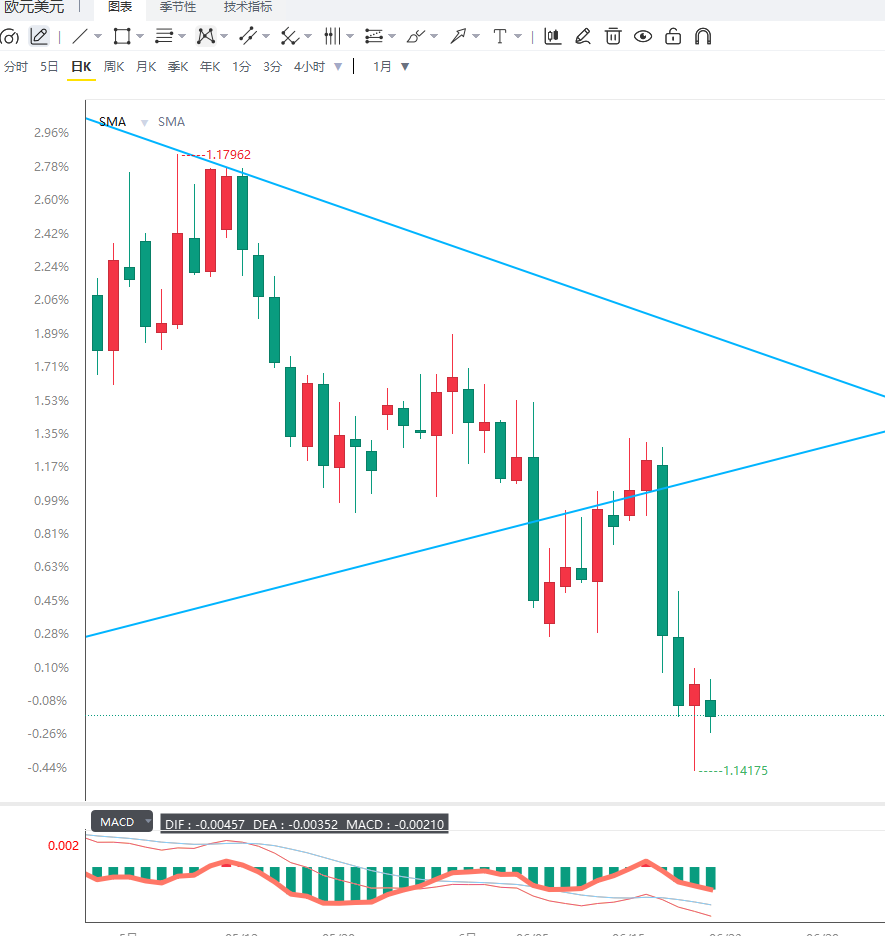
Editor's Summary : The euro/dollar exchange rate is currently in an oversold correction phase, with short-term downward momentum weakening, but the overall bearish structure remains unchanged. The dollar remains strong, supported by safe-haven demand and hawkish expectations from the Federal Reserve, while economic growth pressures in the Eurozone continue to limit the euro's performance. Technically, the 1.1410-1.1390 area is a crucial support zone determining the future direction. The exchange rate may enter a period of consolidation in the short term, but if this key support level is breached, the medium-term downside potential will open up further. Investors should focus on the performance of the support zone and changes in the dollar's movement at this stage.
From a market perspective, the US dollar continues to be supported by both safe-haven demand and the Federal Reserve's hawkish stance. The ongoing tensions in the Middle East and persistent energy supply risks have reignited market expectations of future inflationary pressures, further reinforcing expectations that the Fed will maintain its high-interest-rate policy. The US dollar index remains firmly above the 100 mark, continuing to exert downward pressure on the euro.
Meanwhile, although the European Central Bank (ECB) signaled further interest rate hikes, concerns about slowing economic growth in the Eurozone continued to limit the euro's performance. Markets began to worry that continued policy tightening could put greater pressure on economic activity, thus the ECB's hawkish stance had a relatively limited positive impact on the euro.
The current market trading logic remains dominated by a strong US dollar, with the euro's rebound largely a technical correction after being oversold. Looking at fund flows, investors remain cautious about allocating assets to euros. Although inflationary pressures in the Eurozone have recently eased, compared to the US, European economic growth momentum remains insufficient, leading to continued support for the US dollar due to the divergence in monetary policy expectations between the US and Europe.
Analysts believe that the euro has entered a clearly oversold zone after its rapid decline against the US dollar, thus requiring short-term consolidation. As the downward momentum gradually slows, the exchange rate may fluctuate within the current range over the next one to two trading days. However, the medium-term trend remains downward until a key resistance level is effectively broken.
Market participants generally believe that future trends will still depend on the performance of the US dollar and changes in interest rate expectations in Europe and the US. If US economic data continues to be resilient and the Federal Reserve maintains a hawkish stance, the dollar's advantage is expected to persist, thus limiting the euro's upside potential. In addition, investors will also be focusing on inflation data from Europe and the US, speeches by Federal Reserve officials, and policy signals from the European Central Bank this week to assess future changes in the monetary policy paths of both sides.
From a daily chart perspective, the EUR/USD pair has weakened after breaking below its previous consolidation range and is currently trading below major moving averages, maintaining an overall bearish trend. Although the price found support near 1.1416 and rebounded, the medium-term downtrend remains intact. The Relative Strength Index (RSI) has entered oversold territory, and the downward momentum is slowing, indicating a need for technical correction. Key support levels to watch are the 1.1410-1.1390 area, a crucial defense line for the current downtrend. A decisive break below this level could open up further downside potential, targeting 1.1300 and even 1.1210. On the upside, watch the 1.1495 and 1.1530 resistance areas. Only a break and hold above 1.1530 would invalidate the short-term downside target.
From the 4-hour chart, the EUR/USD pair has entered a consolidation phase after a rapid decline, with short-term bearish momentum clearly weakening. The current price is fluctuating around 1.1450, indicating a short-term need for oversold correction. It is expected that the pair will likely maintain a consolidation pattern between 1.1435 and 1.1495 for the next one to two trading days. Until a clear trend reversal occurs, any rebounds should be considered part of the correction process. If the pair retraces to the 1.1410 area and stabilizes, a temporary bottom may form; however, a break below the 1.1390 support level could trigger a new round of accelerated declines.
Editor's Summary : The euro/dollar exchange rate is currently in an oversold correction phase, with short-term downward momentum weakening, but the overall bearish structure remains unchanged. The dollar remains strong, supported by safe-haven demand and hawkish expectations from the Federal Reserve, while economic growth pressures in the Eurozone continue to limit the euro's performance. Technically, the 1.1410-1.1390 area is a crucial support zone determining the future direction. The exchange rate may enter a period of consolidation in the short term, but if this key support level is breached, the medium-term downside potential will open up further. Investors should focus on the performance of the support zone and changes in the dollar's movement at this stage.
- Risk Warning and Disclaimer
- The market involves risk, and trading may not be suitable for all investors. This article is for reference only and does not constitute personal investment advice, nor does it take into account certain users’ specific investment objectives, financial situation, or other needs. Any investment decisions made based on this information are at your own risk.