Why did gold rise against the trend despite a more hawkish Fed and weaker oil prices?
2026-06-22 19:01:31
On Monday, June 22, precious metals pricing saw an unusual combination of "cooling safe-haven demand and a gold rebound." By the European session, spot gold had risen to approximately $4205 per ounce, up about 1.3% on the day, ending a three-day losing streak. Brent crude oil fell back to approximately $79.3 per barrel, down about 1.4% on the day. The first round of high-level talks between the US and Iran in Switzerland achieved some progress, with the 60-day roadmap and shipping communication mechanism reducing expectations of supply disruptions. However, the 10-year US Treasury yield still rose to approximately 4.49%, indicating that the market has not yet accepted the linear narrative that "falling oil prices equal easing inflationary pressures."
Typically, a decrease in regional tensions weakens gold's safe-haven premium. However, the core issue in this round is not simply safe-haven demand, but rather the repricing of energy prices, inflation paths, and policy interest rates. Previously, the rapid rise in crude oil prices increased expectations for transportation, chemical, and end-user prices, leading the interest rate market to increase the probability of interest rate hikes. Gold was simultaneously under the dual pressure of rising real interest rates and funds being drawn away by energy commodities.
The pullback in Brent crude oil has two main impacts: first, it reduces the tail risk of inflation; second, it lowers the concentration of long positions in the energy sector, leading some short-term funds to return to the more liquid gold. Therefore, the rise in gold is more likely due to fund rotation and short covering than an escalation of risk events. The continued rise in bond yields indicates that easing conditions have not been confirmed simultaneously on the interest rate front. Gold is currently correcting for previously over-priced pessimistic expectations, rather than completing a trend reversal.
The Federal Reserve maintained its target range for the federal funds rate at 3.50% to 3.75% at its June meeting, and emphasized that inflation remains above the 2% target. Interest rate futures pricing indicates that the probability of at least one rate hike before December has risen to approximately 89%. Federal Reserve Chairman Kevin Warsh stated at a press conference on June 17 that the committee is roughly divided on the direction of interest rates at the end of the year, and there is still no consensus on whether the energy shock will create a second round of inflation.
This means that market pricing is tighter than the consensus within policymakers. For gold, the key is not whether nominal interest rates rise, but whether real interest rates fall. If falling oil prices lead to a downward revision of inflation expectations, but Treasury yields remain high, real interest rates may actually rise, increasing the cost of holding gold. The current dollar index is around 100.85, also indicating that the gold rebound has not yet received support from the exchange rate side.
Gold's medium-term resilience still stems from structural allocation demand, but marginal funding is slowing. Global physically backed gold ETFs saw net outflows of approximately $2 billion in May, with holdings falling to 4,121 tons, a 0.4% decrease month-over-month. However, year-to-date cumulative inflows remain at approximately $17 billion. Average daily ETF turnover declined by 26% month-over-month to approximately $6 billion, indicating that institutions have not withdrawn but are awaiting clearer interest rate catalysts.
A recent reserve management survey shows that 45% of surveyed central banks expect to increase their gold holdings over the next 12 months, while only 1% expect to decrease them. The long-term demand base remains, but it's not enough to automatically translate into a short-term trend. Some institutions have proposed an upside scenario of $5200/ounce for gold prices in the second half of the year, contingent on a renewed and sustained net inflow into ETFs, a genuine decline in oil prices suppressing interest rate expectations, and a halt in the rise of real yields. Without any of these conditions, gold is more likely to remain in a highly volatile range.
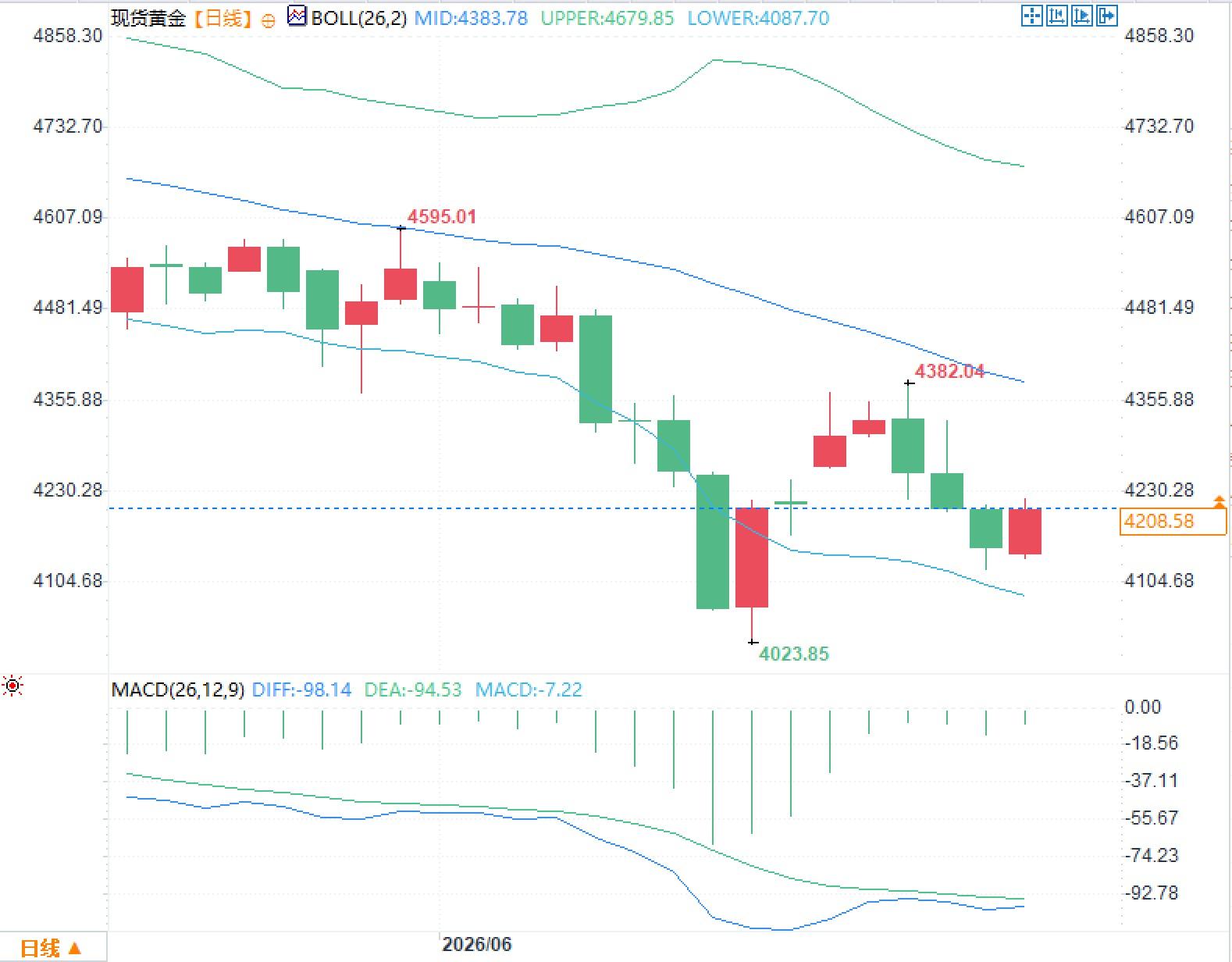
The stabilization of gold prices today is essentially due to a reordering of macroeconomic variables: a decline in safe-haven premiums, a decrease in energy inflation premiums, and improved capital rotation, but the constraint of real interest rates remains unresolved. The most informative factor is not the single-day price increase, but whether oil prices, the two-year US Treasury yield, inflation expectations, and ETF flows can move in the same direction.
Frequently Asked Questions Question 1: Why is gold still rising when easing of negotiations usually weakens safe-haven demand?
A: The previous round of gold price declines was mainly suppressed by rising oil prices, increased expectations of interest rate hikes, and a shift of funds towards energy stocks. After oil prices fell, the tail risk of inflation decreased, the bullish sentiment in energy stocks cooled, and short covering and capital inflows jointly drove the recovery in gold prices. Therefore, the rise does not equate to a rise in safe-haven demand, nor can it be used to confirm a reversal of the medium-term trend.
Question 2: Does the continued decline in oil prices necessarily benefit gold?
A: Not necessarily. If inflation expectations decline faster than US Treasury yields, real interest rates will rise, and gold may still be under pressure. Only when oil prices fall further, lowering expectations for policy interest rates and leading to a decline in short-term yields, will the cost of holding gold substantially improve. Looking solely at oil prices can easily lead to misjudging the direction of transmission.
Typically, a decrease in regional tensions weakens gold's safe-haven premium. However, the core issue in this round is not simply safe-haven demand, but rather the repricing of energy prices, inflation paths, and policy interest rates. Previously, the rapid rise in crude oil prices increased expectations for transportation, chemical, and end-user prices, leading the interest rate market to increase the probability of interest rate hikes. Gold was simultaneously under the dual pressure of rising real interest rates and funds being drawn away by energy commodities.
The pullback in Brent crude oil has two main impacts: first, it reduces the tail risk of inflation; second, it lowers the concentration of long positions in the energy sector, leading some short-term funds to return to the more liquid gold. Therefore, the rise in gold is more likely due to fund rotation and short covering than an escalation of risk events. The continued rise in bond yields indicates that easing conditions have not been confirmed simultaneously on the interest rate front. Gold is currently correcting for previously over-priced pessimistic expectations, rather than completing a trend reversal.
The Federal Reserve maintained its target range for the federal funds rate at 3.50% to 3.75% at its June meeting, and emphasized that inflation remains above the 2% target. Interest rate futures pricing indicates that the probability of at least one rate hike before December has risen to approximately 89%. Federal Reserve Chairman Kevin Warsh stated at a press conference on June 17 that the committee is roughly divided on the direction of interest rates at the end of the year, and there is still no consensus on whether the energy shock will create a second round of inflation.
This means that market pricing is tighter than the consensus within policymakers. For gold, the key is not whether nominal interest rates rise, but whether real interest rates fall. If falling oil prices lead to a downward revision of inflation expectations, but Treasury yields remain high, real interest rates may actually rise, increasing the cost of holding gold. The current dollar index is around 100.85, also indicating that the gold rebound has not yet received support from the exchange rate side.
Gold's medium-term resilience still stems from structural allocation demand, but marginal funding is slowing. Global physically backed gold ETFs saw net outflows of approximately $2 billion in May, with holdings falling to 4,121 tons, a 0.4% decrease month-over-month. However, year-to-date cumulative inflows remain at approximately $17 billion. Average daily ETF turnover declined by 26% month-over-month to approximately $6 billion, indicating that institutions have not withdrawn but are awaiting clearer interest rate catalysts.
A recent reserve management survey shows that 45% of surveyed central banks expect to increase their gold holdings over the next 12 months, while only 1% expect to decrease them. The long-term demand base remains, but it's not enough to automatically translate into a short-term trend. Some institutions have proposed an upside scenario of $5200/ounce for gold prices in the second half of the year, contingent on a renewed and sustained net inflow into ETFs, a genuine decline in oil prices suppressing interest rate expectations, and a halt in the rise of real yields. Without any of these conditions, gold is more likely to remain in a highly volatile range.
The stabilization of gold prices today is essentially due to a reordering of macroeconomic variables: a decline in safe-haven premiums, a decrease in energy inflation premiums, and improved capital rotation, but the constraint of real interest rates remains unresolved. The most informative factor is not the single-day price increase, but whether oil prices, the two-year US Treasury yield, inflation expectations, and ETF flows can move in the same direction.
Frequently Asked Questions Question 1: Why is gold still rising when easing of negotiations usually weakens safe-haven demand?
A: The previous round of gold price declines was mainly suppressed by rising oil prices, increased expectations of interest rate hikes, and a shift of funds towards energy stocks. After oil prices fell, the tail risk of inflation decreased, the bullish sentiment in energy stocks cooled, and short covering and capital inflows jointly drove the recovery in gold prices. Therefore, the rise does not equate to a rise in safe-haven demand, nor can it be used to confirm a reversal of the medium-term trend.
Question 2: Does the continued decline in oil prices necessarily benefit gold?
A: Not necessarily. If inflation expectations decline faster than US Treasury yields, real interest rates will rise, and gold may still be under pressure. Only when oil prices fall further, lowering expectations for policy interest rates and leading to a decline in short-term yields, will the cost of holding gold substantially improve. Looking solely at oil prices can easily lead to misjudging the direction of transmission.
- Risk Warning and Disclaimer
- The market involves risk, and trading may not be suitable for all investors. This article is for reference only and does not constitute personal investment advice, nor does it take into account certain users’ specific investment objectives, financial situation, or other needs. Any investment decisions made based on this information are at your own risk.