Japanese intervention warnings pressure the USD/JPY pair, which is expected to remain volatile at high levels in the short term.
2026-06-23 10:12:31
On Tuesday, during Asian trading hours, the US dollar traded in a narrow range around 161.55 against the Japanese yen (USD/JPY). Despite the dollar's overall relative strength, escalating concerns about potential Japanese government intervention in the currency market limited further upside potential for the exchange rate.

On the news front, the latest round of talks between the United States and Iran in Switzerland has made positive progress, improving market risk appetite to some extent. US Vice President Vance stated that despite remaining differences and pressures during the negotiations, both sides have made "significant progress." Meanwhile, Iranian Foreign Minister Abbas Araqchi also stated that the consultations have yielded important results. The market believes that if the two sides ultimately reach a broader agreement, it could help ease tensions in the Middle East and reduce supply risks facing the global energy market.
As geopolitical risk premiums have declined, market demand for safe-haven assets has subsided, which has somewhat weakened the yen's appeal as a traditional safe-haven currency. However, the yen's recent continued weakness has drawn serious attention from the Japanese government. On Monday, the Japanese Finance Minister stated explicitly that the government is closely monitoring foreign exchange market fluctuations and is prepared to take appropriate measures to address abnormal exchange rate volatility if necessary. This statement has been widely interpreted by the market as another warning of government intervention. With the USD/JPY exchange rate approaching levels seen during the Japanese government's foreign exchange market intervention last year, investors remain highly vigilant regarding potential intervention.
In fact, as the USD/JPY exchange rate continues to approach the 162 mark , market discussions regarding intervention by the Japanese authorities have increased significantly. Some institutions believe that even if the Bank of Japan's monetary policy adjustments are limited, the Japanese Ministry of Finance may still stabilize the exchange rate by directly buying yen to prevent further increases in import costs and exacerbate domestic inflationary pressures.
On the other hand, expectations surrounding Federal Reserve policy continue to be a significant factor supporting the US dollar. Last week, the Fed announced it would maintain the federal funds rate at 3.50%-3.75% , but its latest economic projections and the remarks made by new Chairman Kevin Warsh during his first meeting both signaled a hawkish stance. The market believes that the Fed's concerns about inflation risks have increased, and policymakers have not ruled out the possibility of further tightening. As a result, US Treasury yields have remained high, supporting the US dollar index.
Interest rate pricing indicates that traders generally expect the Federal Reserve to raise interest rates by 25 basis points at its September meeting, with some investors even believing that action could be taken as early as next month's meeting. This expectation keeps the US-Japan interest rate differential at a high level, continuing to attract funds to dollar assets and thus supporting the dollar-yen exchange rate at its high level.
From a global market perspective, the core logic influencing the USD/JPY exchange rate remains centered around two main themes. On one hand, expectations of a hawkish Federal Reserve policy are driving the dollar's strength; on the other hand, the rising risk of Japanese government intervention is exerting significant downward pressure on the exchange rate. With these two forces interacting, the USD/JPY exchange rate is likely to continue its high-level, wide-range fluctuation pattern in the short term.
From a technical perspective, on the daily chart, USD/JPY remains in a clear uptrend, with the price consistently trading above major moving averages, and the medium-to-long-term bullish structure remains unchanged. The MACD indicator remains above the zero line, and although the red momentum bars have somewhat converged, the overall bullish advantage persists. The market is currently focused on the psychological resistance level of 162.00. A decisive break and hold above this level could lead to further gains towards 163.50 and 165.00 . However, given the significantly increased risk of intervention from Japanese authorities, caution is advised when chasing the price higher. Support levels are located around 160.00 and 158.80 ; a break below these levels could trigger a more significant pullback.
From a 4-hour chart perspective, USD/JPY has recently shown signs of consolidation at high levels. The MACD lines are gradually converging at high levels, indicating a slowdown in short-term bullish momentum. The price is currently fluctuating around 161.50, suggesting the market is awaiting new directional guidance. If it can regain a foothold above 162.00 , it may continue its upward trend and test new highs for the year; conversely, if it breaks below the 160.80 support level, it may initiate a phase of correction and fall back towards the 159.50 area. From a short-term structural perspective, the exchange rate is more likely to maintain high-level consolidation before breaking through the previous high.
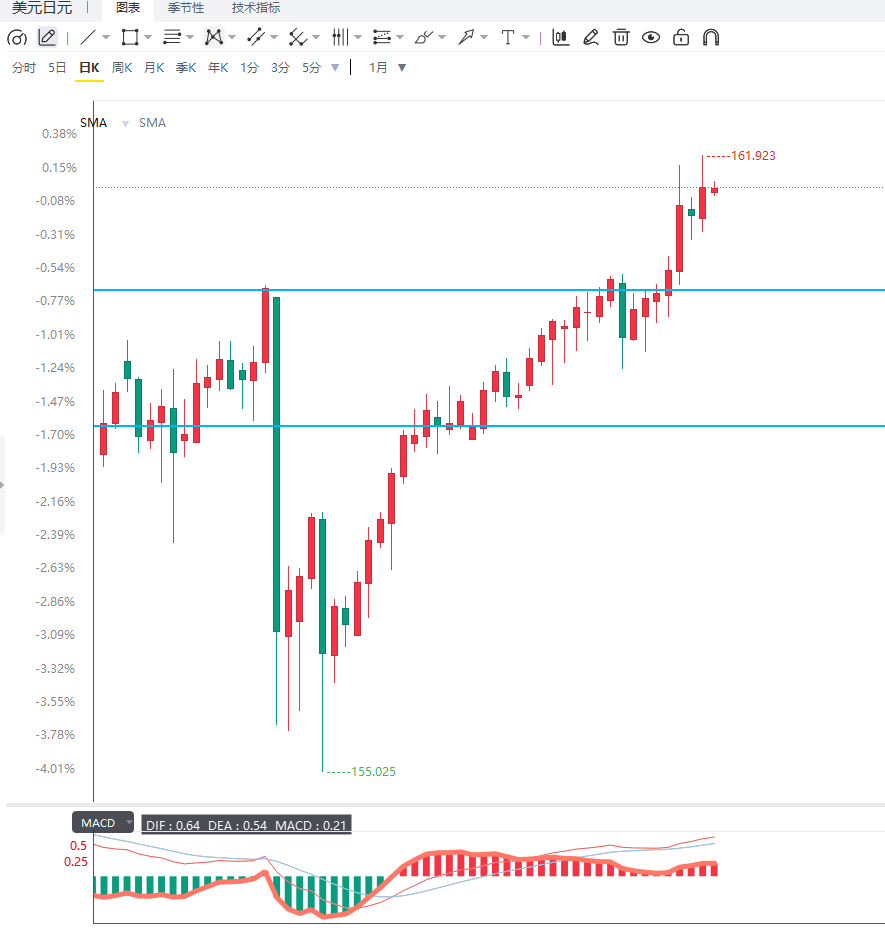
Editor's Summary : The current USD/JPY exchange rate is influenced by both hawkish expectations from the Federal Reserve and the risk of Japanese intervention. While the outlook for US interest rates continues to support the dollar's strength, the likelihood of Japanese government action has increased significantly as the exchange rate approaches the 162 level. In the short term, the market will focus on the progress of US-Iran negotiations, speeches by Federal Reserve officials, and the latest statements from the Japanese Ministry of Finance. If expectations of a US interest rate hike strengthen further, USD/JPY still has a chance to reach new highs; however, if the Japanese authorities intervene or release stronger signals, the exchange rate may face the risk of a rapid correction.
On the news front, the latest round of talks between the United States and Iran in Switzerland has made positive progress, improving market risk appetite to some extent. US Vice President Vance stated that despite remaining differences and pressures during the negotiations, both sides have made "significant progress." Meanwhile, Iranian Foreign Minister Abbas Araqchi also stated that the consultations have yielded important results. The market believes that if the two sides ultimately reach a broader agreement, it could help ease tensions in the Middle East and reduce supply risks facing the global energy market.
As geopolitical risk premiums have declined, market demand for safe-haven assets has subsided, which has somewhat weakened the yen's appeal as a traditional safe-haven currency. However, the yen's recent continued weakness has drawn serious attention from the Japanese government. On Monday, the Japanese Finance Minister stated explicitly that the government is closely monitoring foreign exchange market fluctuations and is prepared to take appropriate measures to address abnormal exchange rate volatility if necessary. This statement has been widely interpreted by the market as another warning of government intervention. With the USD/JPY exchange rate approaching levels seen during the Japanese government's foreign exchange market intervention last year, investors remain highly vigilant regarding potential intervention.
In fact, as the USD/JPY exchange rate continues to approach the 162 mark , market discussions regarding intervention by the Japanese authorities have increased significantly. Some institutions believe that even if the Bank of Japan's monetary policy adjustments are limited, the Japanese Ministry of Finance may still stabilize the exchange rate by directly buying yen to prevent further increases in import costs and exacerbate domestic inflationary pressures.
On the other hand, expectations surrounding Federal Reserve policy continue to be a significant factor supporting the US dollar. Last week, the Fed announced it would maintain the federal funds rate at 3.50%-3.75% , but its latest economic projections and the remarks made by new Chairman Kevin Warsh during his first meeting both signaled a hawkish stance. The market believes that the Fed's concerns about inflation risks have increased, and policymakers have not ruled out the possibility of further tightening. As a result, US Treasury yields have remained high, supporting the US dollar index.
Interest rate pricing indicates that traders generally expect the Federal Reserve to raise interest rates by 25 basis points at its September meeting, with some investors even believing that action could be taken as early as next month's meeting. This expectation keeps the US-Japan interest rate differential at a high level, continuing to attract funds to dollar assets and thus supporting the dollar-yen exchange rate at its high level.
From a global market perspective, the core logic influencing the USD/JPY exchange rate remains centered around two main themes. On one hand, expectations of a hawkish Federal Reserve policy are driving the dollar's strength; on the other hand, the rising risk of Japanese government intervention is exerting significant downward pressure on the exchange rate. With these two forces interacting, the USD/JPY exchange rate is likely to continue its high-level, wide-range fluctuation pattern in the short term.
From a technical perspective, on the daily chart, USD/JPY remains in a clear uptrend, with the price consistently trading above major moving averages, and the medium-to-long-term bullish structure remains unchanged. The MACD indicator remains above the zero line, and although the red momentum bars have somewhat converged, the overall bullish advantage persists. The market is currently focused on the psychological resistance level of 162.00. A decisive break and hold above this level could lead to further gains towards 163.50 and 165.00 . However, given the significantly increased risk of intervention from Japanese authorities, caution is advised when chasing the price higher. Support levels are located around 160.00 and 158.80 ; a break below these levels could trigger a more significant pullback.
From a 4-hour chart perspective, USD/JPY has recently shown signs of consolidation at high levels. The MACD lines are gradually converging at high levels, indicating a slowdown in short-term bullish momentum. The price is currently fluctuating around 161.50, suggesting the market is awaiting new directional guidance. If it can regain a foothold above 162.00 , it may continue its upward trend and test new highs for the year; conversely, if it breaks below the 160.80 support level, it may initiate a phase of correction and fall back towards the 159.50 area. From a short-term structural perspective, the exchange rate is more likely to maintain high-level consolidation before breaking through the previous high.
Editor's Summary : The current USD/JPY exchange rate is influenced by both hawkish expectations from the Federal Reserve and the risk of Japanese intervention. While the outlook for US interest rates continues to support the dollar's strength, the likelihood of Japanese government action has increased significantly as the exchange rate approaches the 162 level. In the short term, the market will focus on the progress of US-Iran negotiations, speeches by Federal Reserve officials, and the latest statements from the Japanese Ministry of Finance. If expectations of a US interest rate hike strengthen further, USD/JPY still has a chance to reach new highs; however, if the Japanese authorities intervene or release stronger signals, the exchange rate may face the risk of a rapid correction.
- Risk Warning and Disclaimer
- The market involves risk, and trading may not be suitable for all investors. This article is for reference only and does not constitute personal investment advice, nor does it take into account certain users’ specific investment objectives, financial situation, or other needs. Any investment decisions made based on this information are at your own risk.