Why is the oil market frequently experiencing "over-expectations"? The trading logic is changing.
2026-06-23 15:00:01
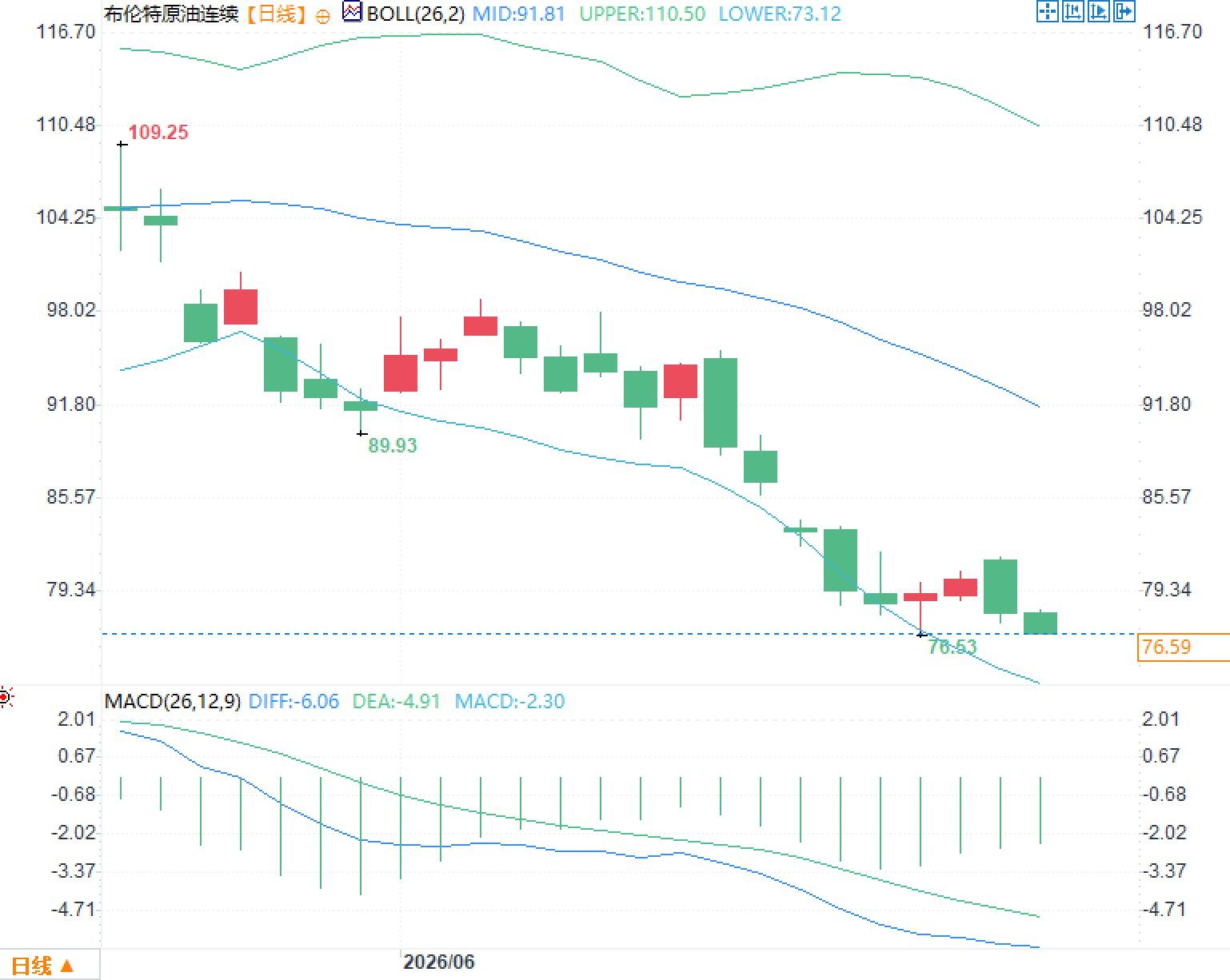
On Tuesday, June 23, the crude oil market experienced a significant pullback due to a combination of marginal easing of geopolitical tensions and a rapid correction in supply expectations. Brent crude oil, after a period of adjustment, reached the $76.50 per barrel area, while WTI crude oil weakened to around $73. This followed a 3.3% drop in the previous trading day, marking a relatively significant single-day decline in the past week. The core price drivers were progress in negotiations surrounding the situation with Iran and the US's phased approval for the sale of some crude oil and refined products, leading the market to repric the potential return of supply.
The direct trigger for this round of oil price adjustments stemmed from the combined effect of strengthened negotiation signals and the "temporary supply release" from the policy side. The 60-day sales permits are considered a short-term supply flexibility tool, covering some Iranian crude oil and petroleum product transactions, and to some extent reducing the market's expected premium for limited supply.
From a pricing mechanism perspective, the pricing of geopolitical risks in the crude oil market typically exhibits a non-linear characteristic: risk premiums rise rapidly when conflicts escalate, while premiums tend to fall back more quickly when negotiations enter a substantial phase. This round of adjustments reflects this characteristic, with the market anticipating a "supply reversion," leading to a simultaneous loosening of the forward price structure.
Supply-side changes are another key variable in the current market. Recently, many oil-producing countries in the Persian Gulf region have improved the efficiency of crude oil transportation by optimizing shipping and export routes, resulting in an overall recovery in shipments. Meanwhile, Iranian crude oil shipments exceeded 30 million barrels in the past week, indicating a significant increase in export activity.
Qatar's increased frequency of liquefied natural gas (LNG) empty vessels entering the Strait of Hormuz indicates that the LNG transportation chain is gradually returning to normal operation. Improved transparency regarding the positions of vessels passing through the strait also reflects a decline in shipping risk premiums. This change is exerting temporary downward pressure on the global energy transportation cost structure.
In terms of futures structure, the Brent near-month spread has gradually narrowed and is now close to flat, indicating a significant easing of the tightness in the spot market. In some Middle Eastern benchmark crudes, such as Dubai crude and Murban crude, the spread structure has even shifted to a forward premium structure, suggesting a reversal in market expectations regarding short-term supply tightness.
Traders have generally noted the market's characteristic of "expectations leading the way," meaning that prices have already reflected expectations of easing before actual supply changes have been fully realized. This structure often leads to temporary over-adjustments. The current market pullback is more akin to a rebalancing of previous risk premiums than the formation of a unidirectional trend.
Despite the positive signals from the negotiations, the core differences have not disappeared, and there is still considerable uncertainty on key issues such as technical arrangements for the nuclear issue, the pace of sanctions adjustments, and regional ceasefire arrangements.
Meanwhile, discussions concerning the safety of passage through the Strait of Hormuz remain sensitive. Historically, this waterway has repeatedly caused temporary disruptions to energy transport due to conflicts and tensions, significantly impacting the global energy supply chain. Furthermore, other geopolitical variables in the region have increased the uncertainty surrounding the supply recovery path, making the current price correction still highly volatile.
Question 1: What are the main driving factors behind the current decline in oil prices?
A: The core reason is the decline in geopolitical risk premiums due to progress in negotiations, as well as the revision of supply expectations due to the release of short-term sales permits. The market has priced in the marginal increase in supply in advance.
Question 2: Have the changes on the supply side resulted in substantial improvement?
A: Currently, the recovery is more reflected in the pace of transportation and exports, as well as increased shipments in some regions, but overall it is still in the expectation-driven stage and has not yet fully translated into stable incremental supply.
Question 3: What are the key variables for subsequent price fluctuations?
A: The key factors are the pace of negotiation progress, the path of sanctions adjustment, and changes in the safety of passage through the Strait of Hormuz. These factors will continue to influence the risk premium reassessment process.
I. Pricing Restructuring Based on Geopolitical Easing Expectations and Policy Window
The direct trigger for this round of oil price adjustments stemmed from the combined effect of strengthened negotiation signals and the "temporary supply release" from the policy side. The 60-day sales permits are considered a short-term supply flexibility tool, covering some Iranian crude oil and petroleum product transactions, and to some extent reducing the market's expected premium for limited supply.
From a pricing mechanism perspective, the pricing of geopolitical risks in the crude oil market typically exhibits a non-linear characteristic: risk premiums rise rapidly when conflicts escalate, while premiums tend to fall back more quickly when negotiations enter a substantial phase. This round of adjustments reflects this characteristic, with the market anticipating a "supply reversion," leading to a simultaneous loosening of the forward price structure.
II. Signals of Marginal Expansion of Supply Chains and Recovery of Transportation Chains in the Persian Gulf
Supply-side changes are another key variable in the current market. Recently, many oil-producing countries in the Persian Gulf region have improved the efficiency of crude oil transportation by optimizing shipping and export routes, resulting in an overall recovery in shipments. Meanwhile, Iranian crude oil shipments exceeded 30 million barrels in the past week, indicating a significant increase in export activity.
Qatar's increased frequency of liquefied natural gas (LNG) empty vessels entering the Strait of Hormuz indicates that the LNG transportation chain is gradually returning to normal operation. Improved transparency regarding the positions of vessels passing through the strait also reflects a decline in shipping risk premiums. This change is exerting temporary downward pressure on the global energy transportation cost structure.
III. Changes in Term Structure and Correction of Market "Overpricing"
In terms of futures structure, the Brent near-month spread has gradually narrowed and is now close to flat, indicating a significant easing of the tightness in the spot market. In some Middle Eastern benchmark crudes, such as Dubai crude and Murban crude, the spread structure has even shifted to a forward premium structure, suggesting a reversal in market expectations regarding short-term supply tightness.
Traders have generally noted the market's characteristic of "expectations leading the way," meaning that prices have already reflected expectations of easing before actual supply changes have been fully realized. This structure often leads to temporary over-adjustments. The current market pullback is more akin to a rebalancing of previous risk premiums than the formation of a unidirectional trend.
IV. Uncertainties surrounding the negotiation path and key geopolitical variables remain unresolved.
Despite the positive signals from the negotiations, the core differences have not disappeared, and there is still considerable uncertainty on key issues such as technical arrangements for the nuclear issue, the pace of sanctions adjustments, and regional ceasefire arrangements.
Meanwhile, discussions concerning the safety of passage through the Strait of Hormuz remain sensitive. Historically, this waterway has repeatedly caused temporary disruptions to energy transport due to conflicts and tensions, significantly impacting the global energy supply chain. Furthermore, other geopolitical variables in the region have increased the uncertainty surrounding the supply recovery path, making the current price correction still highly volatile.
V. Frequently Asked Questions
Question 1: What are the main driving factors behind the current decline in oil prices?
A: The core reason is the decline in geopolitical risk premiums due to progress in negotiations, as well as the revision of supply expectations due to the release of short-term sales permits. The market has priced in the marginal increase in supply in advance.
Question 2: Have the changes on the supply side resulted in substantial improvement?
A: Currently, the recovery is more reflected in the pace of transportation and exports, as well as increased shipments in some regions, but overall it is still in the expectation-driven stage and has not yet fully translated into stable incremental supply.
Question 3: What are the key variables for subsequent price fluctuations?
A: The key factors are the pace of negotiation progress, the path of sanctions adjustment, and changes in the safety of passage through the Strait of Hormuz. These factors will continue to influence the risk premium reassessment process.
- Risk Warning and Disclaimer
- The market involves risk, and trading may not be suitable for all investors. This article is for reference only and does not constitute personal investment advice, nor does it take into account certain users’ specific investment objectives, financial situation, or other needs. Any investment decisions made based on this information are at your own risk.