Gold falls to $4,100: Deutsche Bank cuts 22% of its forecast, $4,800 dream shattered?
2026-06-23 15:52:24
This week, the precious metals market continued its repricing process after a pullback from its highs. On Tuesday, June 23rd, during the European session, spot gold prices dipped to around $4105 per ounce, a significant retreat from the earlier highs this year. Simultaneously, market expectations for the monetary policy paths of major economies continued to adjust, coupled with the interconnected changes in risk assets and the interest rate environment, causing gold's financial and safe-haven attributes to switch rapidly between different drivers. Against this backdrop, several large institutions reassessed the medium-term price path of precious metals, and market sentiment showed signs of cooling in the short term.
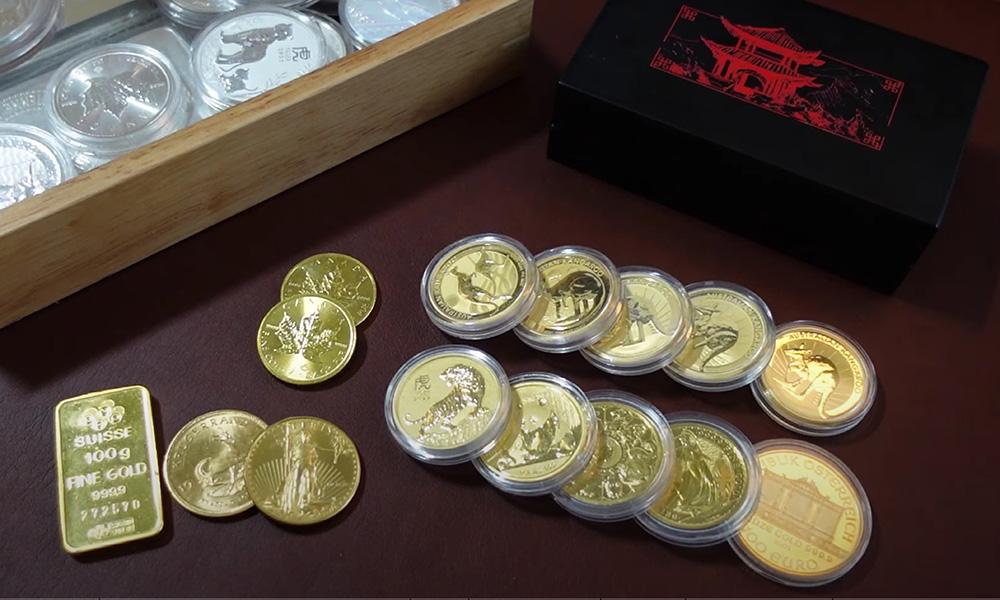
Deutsche Bank recently significantly lowered its gold price forecast, with a maximum reduction of 22%. The latest forecast shows that the third-quarter gold price target has been adjusted to $4,300 per ounce, a decrease of more than one-fifth from the previous expectation, while the fourth-quarter target has been adjusted to $4,800, a reduction of approximately 17%. Although the adjusted range is still higher than the current market price level, the overall path has clearly become more conservative.
Meanwhile, Goldman Sachs had previously adjusted its year-end forecast, lowering its target price to around $4,900 and explicitly stating that under the current interest rate path assumptions, the easing cycle lacks room for further advancement. The consensus among institutions is shifting from "continued upward expectations" to "high-level consolidation and rebalancing."
The current gold price adjustment is primarily driven by the repricing of monetary policy expectations. Market sentiment regarding the future interest rate path of major economies' central banks has become more cautious, and the Federal Reserve meeting minutes revealed that policymakers remain vigilant about the pace of inflation changes, significantly delaying expectations of interest rate cuts.
During this process, the prolonged period of high interest rates increased the opportunity cost of holding non-yielding assets, directly suppressing the financial appeal of gold. At the same time, some Federal Reserve officials signaled an openness to further interest rate hikes, causing the market to reprice the tail risks of rising interest rates.
In scenario simulations, if multiple interest rate hikes occur in the future, some institutions estimate that gold may fall back to the $3,800 area, indicating that the interest rate path remains the dominant variable.
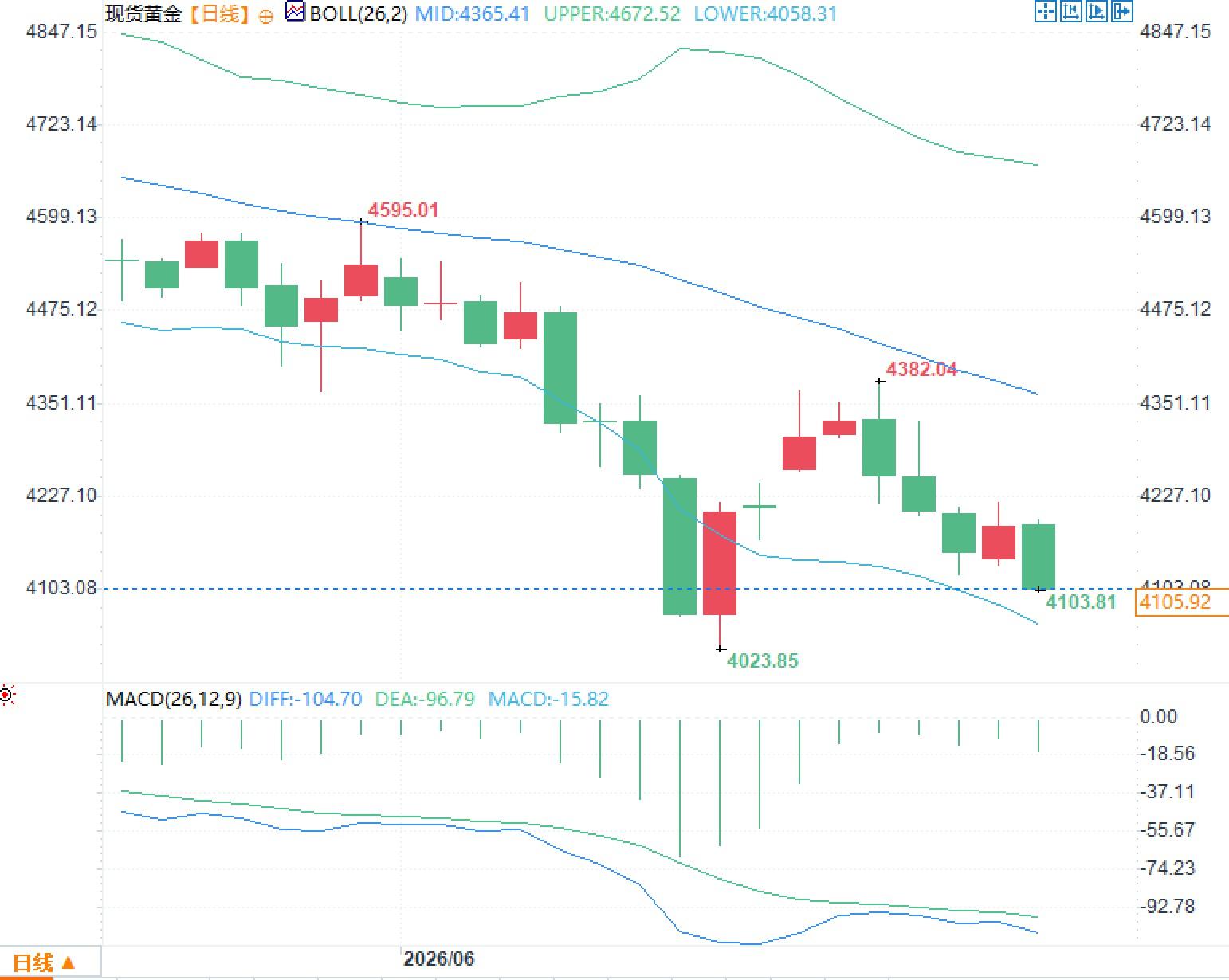
From a funding structure perspective, gold ETFs have seen continuous net outflows, indicating a decline in the participation of medium- to long-term allocation funds. This change weakens gold's important stabilizing role when prices are high, making prices more sensitive to short-term marginal information.
Meanwhile, demand for physical holdings and trading has also diverged. The price spread structure between spot and futures markets in some areas shows narrowing arbitrage opportunities, failing to generate significant incremental buying support. Overall, traditional funding support for precious metals is at a relatively low level.
It is worth noting that despite significant short-term capital outflows, gold purchases by some central banks have remained relatively stable, providing a floor for prices.
Recent macroeconomic data has been relatively stable, further cooling market pricing in recession risks. In an environment of relatively stable performance for risk assets, the safe-haven demand for gold has weakened marginally.
Furthermore, while geopolitical risks have temporarily boosted energy and inflation expectations, they have not led to a sustained inflow of safe-haven funds into the gold market. On the contrary, the rebalancing between inflation expectations and interest rate paths has caused precious metals to repeatedly switch between two opposing logics, resulting in high volatility but insufficient trend.
Under this structure, gold prices are more likely to be driven by policy signals and marginal changes in data, rather than by a single risk event.
What is the core driver of the current decline in gold prices?
A: The main factors are the repricing of monetary policy expectations, the prolonged period of high interest rates, and the continuous outflow of funds from ETFs, all of which have weakened the support of the financial attributes.
Why have institutions lowered their gold price forecasts, yet the prices remain higher than current levels?
A: Despite increased short-term pressure, there is still demand from the central bank and room for potential policy shifts in the long term. Therefore, the overall path will remain on an upward trajectory, but the slope will slow down.
What are the key points to watch for in the future trend of gold?
A: The key factors are changes in the interest rate path, whether the flow of funds has stopped falling, and whether there are trend changes in macroeconomic data. These factors will determine whether prices break out of the trading range.
Downward revisions in institutional forecasts trigger pricing reassessment
Deutsche Bank recently significantly lowered its gold price forecast, with a maximum reduction of 22%. The latest forecast shows that the third-quarter gold price target has been adjusted to $4,300 per ounce, a decrease of more than one-fifth from the previous expectation, while the fourth-quarter target has been adjusted to $4,800, a reduction of approximately 17%. Although the adjusted range is still higher than the current market price level, the overall path has clearly become more conservative.
Meanwhile, Goldman Sachs had previously adjusted its year-end forecast, lowering its target price to around $4,900 and explicitly stating that under the current interest rate path assumptions, the easing cycle lacks room for further advancement. The consensus among institutions is shifting from "continued upward expectations" to "high-level consolidation and rebalancing."
Monetary policy repricing becomes a core variable
The current gold price adjustment is primarily driven by the repricing of monetary policy expectations. Market sentiment regarding the future interest rate path of major economies' central banks has become more cautious, and the Federal Reserve meeting minutes revealed that policymakers remain vigilant about the pace of inflation changes, significantly delaying expectations of interest rate cuts.
During this process, the prolonged period of high interest rates increased the opportunity cost of holding non-yielding assets, directly suppressing the financial appeal of gold. At the same time, some Federal Reserve officials signaled an openness to further interest rate hikes, causing the market to reprice the tail risks of rising interest rates.
In scenario simulations, if multiple interest rate hikes occur in the future, some institutions estimate that gold may fall back to the $3,800 area, indicating that the interest rate path remains the dominant variable.
Changes in fund flows weaken short-term support.
From a funding structure perspective, gold ETFs have seen continuous net outflows, indicating a decline in the participation of medium- to long-term allocation funds. This change weakens gold's important stabilizing role when prices are high, making prices more sensitive to short-term marginal information.
Meanwhile, demand for physical holdings and trading has also diverged. The price spread structure between spot and futures markets in some areas shows narrowing arbitrage opportunities, failing to generate significant incremental buying support. Overall, traditional funding support for precious metals is at a relatively low level.
It is worth noting that despite significant short-term capital outflows, gold purchases by some central banks have remained relatively stable, providing a floor for prices.
Risk appetite and macroeconomic data together suppress price elasticity
Recent macroeconomic data has been relatively stable, further cooling market pricing in recession risks. In an environment of relatively stable performance for risk assets, the safe-haven demand for gold has weakened marginally.
Furthermore, while geopolitical risks have temporarily boosted energy and inflation expectations, they have not led to a sustained inflow of safe-haven funds into the gold market. On the contrary, the rebalancing between inflation expectations and interest rate paths has caused precious metals to repeatedly switch between two opposing logics, resulting in high volatility but insufficient trend.
Under this structure, gold prices are more likely to be driven by policy signals and marginal changes in data, rather than by a single risk event.
Frequently Asked Questions
What is the core driver of the current decline in gold prices?
A: The main factors are the repricing of monetary policy expectations, the prolonged period of high interest rates, and the continuous outflow of funds from ETFs, all of which have weakened the support of the financial attributes.
Why have institutions lowered their gold price forecasts, yet the prices remain higher than current levels?
A: Despite increased short-term pressure, there is still demand from the central bank and room for potential policy shifts in the long term. Therefore, the overall path will remain on an upward trajectory, but the slope will slow down.
What are the key points to watch for in the future trend of gold?
A: The key factors are changes in the interest rate path, whether the flow of funds has stopped falling, and whether there are trend changes in macroeconomic data. These factors will determine whether prices break out of the trading range.
- Risk Warning and Disclaimer
- The market involves risk, and trading may not be suitable for all investors. This article is for reference only and does not constitute personal investment advice, nor does it take into account certain users’ specific investment objectives, financial situation, or other needs. Any investment decisions made based on this information are at your own risk.