The US-Iran political maneuvering of negotiating while simultaneously exchanging barbs is suspicious.
2026-06-23 21:44:28
The current global geopolitical landscape presents a stark contrast: the US negotiating team continues to conduct on-the-ground consultations, steadily advancing the US-Iran ceasefire and reconciliation, gradually lifting restrictions on the circulation of Iranian crude oil, and unfreezing some overseas assets, accelerating the finalization of a bilateral agreement with substantial concessions;
At the same time, the US president continued to speak out publicly on social media platforms and frequently issued strong warnings against Iran, constantly stirring up online public opinion confrontation between the US and Iran and creating hot spots for the Middle East game.
Why this contradictory approach of "pragmatic negotiations at the table, coupled with a strong online rhetoric"?
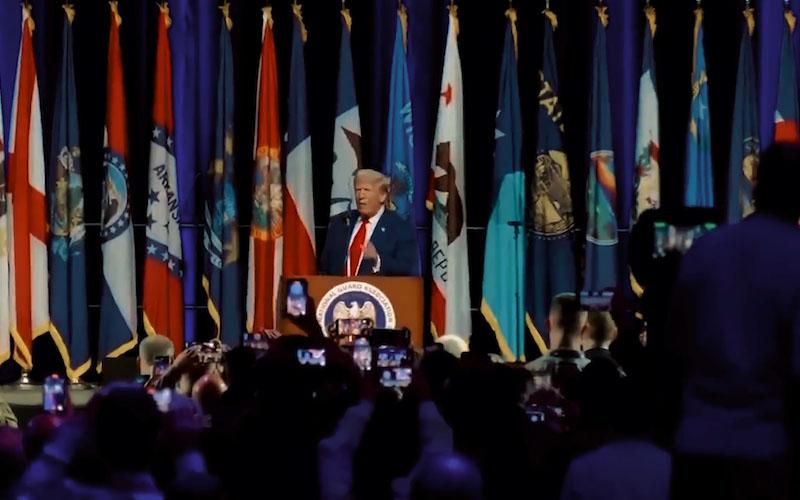
This article argues that this is neither a fragmentation of diplomatic decision-making nor an unpredictable way of doing things by the US president, but rather a sophisticated top-level design that takes into account European geopolitical reputation, dispels domestic political attacks, maintains the image of a strong American diplomacy, and safeguards the bottom line of "America First." At the same time, it cleverly resolves the diplomatic and public opinion pressure brought about by the current political divisions in Europe.
The current geopolitical situation in Europe: political parties prioritize self-interest, not a failure of US European strategy.
Over the past decade, the United States has cultivated populist right-wing circles in Europe, built a transatlantic ideological cooperation system, and supported the growth of the influence of patriotic parties in Europe. This strategy has always served the three core objectives of NATO defense sharing, Middle East policy coordination, and the unification of transatlantic trade rules, and its underlying strategic logic has not failed.
At present, the core far-right leaders of Italy, France, and Germany have adjusted their positions, actively distancing themselves from the United States and publicly expressing their differences. In essence, they are choosing to cut ties with the United States in order to protect their votes.
With several EU countries scheduled to hold elections in 2027, right-wing parties in Western Europe face structural constraints stemming from voters' resentment towards the United States: their own centrist and middle-class voters generally resist energy inflation driven by the Middle East conflict and resent the United States' unilateral diplomacy that has dragged Europe into geopolitical conflicts.
For Italian Prime Minister Meloni, French National Rally leader Badrás, and top officials of the Alternative for Germany (AfD), distancing themselves from Trump and cutting ties with US Middle East policy are merely campaign tactics to serve their domestic electoral prospects and solidify their voter base, rather than negating the value of past cooperation with the United States, and certainly not representing the complete loss of the US's voice within the European right wing.
The outside world is easily misled by the US's two-pronged approach: believing that the pressure on Iran across the internet will hinder bilateral reconciliation and overturn the consensus reached in negotiations. In reality, Trump has already separated the responsibilities: the negotiating team is fully responsible for implementing a pragmatic agreement, while the president is fully responsible for political campaigning. The two lines do not interfere with each other, each with its own objectives, and the core plan to accelerate the agreement with Iran has never wavered.
Objective 1: To balance public opinion domestically and counter attacks from the Democratic Party.
Internally, it dispels doubts from the Democratic Party and the general public, and blocks room for political attacks.
The current domestic political polarization in the United States is intensifying, with the Democratic Party continuing to attack the White House's Middle East policy in two main directions: first, accusing the US of rashly launching a war against Iraq, which has driven up domestic energy inflation, raised the cost of living for the people, and depleted the country's national strength;
Second, it criticizes the White House for being weak in its foreign policy, constantly making concessions to Iran such as sanctions waivers and asset unfreezing, which undermines the prestige of the United States as a major power and caters to Iran's demands.
Trump is substantively advancing peace talks and lowering international oil prices to reduce imported inflation in the United States at its source, thus responding to the price demands of ordinary voters;
On the one hand, it continues to make strong public statements and retain the option of military strikes, shaping an uncompromising bottom line on Iran, while refuting accusations from political opponents that the Democratic Party is "showing weakness and making concessions to foreign powers," thus balancing public opinion with partisan propaganda.
Objective 2: To divert global public opinion and cover up short-term flaws in European cooperation.
Trump is using propaganda to divert global attention and cover up the short-term flaws of his Western allies' selfish alienation.
Compared to the fragmented political divisions in Europe, the situation in the Middle East and the US-Iran standoff are always top global media hotspots.
Trump's continued rhetoric and intensification of the US-Iran rivalry have allowed him to dominate global media headlines around the clock, diluting the impact of negative diplomatic news such as Meloni's rebuttal to the US and the Western European right wing's distancing from the US.
By using strong Middle East diplomacy to cover up the short-term rifts in European cooperation, the leader can internally cultivate an image of a great power leader who is "focused on global geopolitical dominance and indifferent to the vote-rigging among European politicians," directly mitigating the diplomatic losses caused by the defection of European allies and perfectly concealing the phased flaws in transatlantic cooperation.
Objective 3: To gain leverage in negotiations and firmly uphold the core bottom line of "America First".
This approach can raise bargaining power and uphold the bottom line of "America First" in the agreement. This is also our most traditional analytical framework: the louder the noise, the more we need to talk; keep quiet, and missiles will enter the country.
All the strong pressure exerted across the internet are bargaining chips at the negotiating table: the US is willing to make partial concessions on energy circulation and sanctions restrictions in exchange for priority navigation rights in the Hormuz Channel, low-priced oil and gas supplies from the US mainland, and Iran reducing its proxy armed activities.
However, the US continues to verbally deter Iran to prevent it from raising its negotiating demands and crossing the nuclear red line after obtaining concessions from the US.
The finalized bilateral agreement between the US and Iran will prioritize US energy imports and the recovery of domestic inflation. European energy supply and demand, as well as the pace of inflation decline in Western Europe, will be completely disregarded by the US, thus thoroughly implementing the "America First" principle.
Looking at Trump's foreign policy logic, he has always abandoned a black-and-white strategy and refused the extreme choices of "going to war" or "compromising". In this US-Iran game, he has laid out a two-pronged approach and completed a closed loop of his diplomatic persona.
First, establish the image of a businessman to benefit the United States: actively promote US-Iran reconciliation, end the war of attrition in the Middle East, stop unnecessary military spending, lower global energy prices, fulfill campaign promises to stabilize inflation and reduce the cost of living, and win the support of centrist and working-class voters.
Then came the tough leadership persona: never giving up deterrence against Iran, never abandoning military options, refusing to bow to external forces, appeasing Republican hawks and the military-industrial complex, consolidating the party's base, and breaking the public perception label of the Democratic Party as "weak in foreign affairs."
Finally, establish the persona of overall control: calmly deal with changes in European politics, see through the true nature of Western European politicians who are only playing the game for votes, do not adjust the core national strategy due to changes in the attitudes of local allies, and do not flatter or accommodate European self-interested politicians.
At the same time, by relying on staunch allies in Eastern Europe such as Poland to stabilize its European base, and by leveraging the Middle East to control the global energy landscape, the United States demonstrates its continued dominance over the two core geopolitical blocs of the Atlantic and the Middle East.
In short, the alienation and severing of the Western European right wing has never been able to shake the foundations of the United States and Europe, much less change the established course of the US-Iran peace talks; it is merely a short-term political performance under the European election cycle.
Trump's contradictory behavior of simultaneously pursuing pragmatic peace talks and exerting public pressure is a mature geopolitical public relations tactic: domestically, it quells public sentiment regarding inflation and fends off partisan attacks; internationally, it diverts public attention and downplays friction in European cooperation, while also controlling the pace of negotiations with Iran.
At the same time, the US president continued to speak out publicly on social media platforms and frequently issued strong warnings against Iran, constantly stirring up online public opinion confrontation between the US and Iran and creating hot spots for the Middle East game.
Why this contradictory approach of "pragmatic negotiations at the table, coupled with a strong online rhetoric"?
This article argues that this is neither a fragmentation of diplomatic decision-making nor an unpredictable way of doing things by the US president, but rather a sophisticated top-level design that takes into account European geopolitical reputation, dispels domestic political attacks, maintains the image of a strong American diplomacy, and safeguards the bottom line of "America First." At the same time, it cleverly resolves the diplomatic and public opinion pressure brought about by the current political divisions in Europe.
The current geopolitical situation in Europe: political parties prioritize self-interest, not a failure of US European strategy.
Western Europe alienates from the US: Local politicians sever ties with the US to protect themselves in the election.
Over the past decade, the United States has cultivated populist right-wing circles in Europe, built a transatlantic ideological cooperation system, and supported the growth of the influence of patriotic parties in Europe. This strategy has always served the three core objectives of NATO defense sharing, Middle East policy coordination, and the unification of transatlantic trade rules, and its underlying strategic logic has not failed.
At present, the core far-right leaders of Italy, France, and Germany have adjusted their positions, actively distancing themselves from the United States and publicly expressing their differences. In essence, they are choosing to cut ties with the United States in order to protect their votes.
With several EU countries scheduled to hold elections in 2027, right-wing parties in Western Europe face structural constraints stemming from voters' resentment towards the United States: their own centrist and middle-class voters generally resist energy inflation driven by the Middle East conflict and resent the United States' unilateral diplomacy that has dragged Europe into geopolitical conflicts.
For Italian Prime Minister Meloni, French National Rally leader Badrás, and top officials of the Alternative for Germany (AfD), distancing themselves from Trump and cutting ties with US Middle East policy are merely campaign tactics to serve their domestic electoral prospects and solidify their voter base, rather than negating the value of past cooperation with the United States, and certainly not representing the complete loss of the US's voice within the European right wing.
Trump's frequent pro-Iran propaganda war has three political objectives.
The outside world is easily misled by the US's two-pronged approach: believing that the pressure on Iran across the internet will hinder bilateral reconciliation and overturn the consensus reached in negotiations. In reality, Trump has already separated the responsibilities: the negotiating team is fully responsible for implementing a pragmatic agreement, while the president is fully responsible for political campaigning. The two lines do not interfere with each other, each with its own objectives, and the core plan to accelerate the agreement with Iran has never wavered.
Objective 1: To balance public opinion domestically and counter attacks from the Democratic Party.
Internally, it dispels doubts from the Democratic Party and the general public, and blocks room for political attacks.
The current domestic political polarization in the United States is intensifying, with the Democratic Party continuing to attack the White House's Middle East policy in two main directions: first, accusing the US of rashly launching a war against Iraq, which has driven up domestic energy inflation, raised the cost of living for the people, and depleted the country's national strength;
Second, it criticizes the White House for being weak in its foreign policy, constantly making concessions to Iran such as sanctions waivers and asset unfreezing, which undermines the prestige of the United States as a major power and caters to Iran's demands.
Trump is substantively advancing peace talks and lowering international oil prices to reduce imported inflation in the United States at its source, thus responding to the price demands of ordinary voters;
On the one hand, it continues to make strong public statements and retain the option of military strikes, shaping an uncompromising bottom line on Iran, while refuting accusations from political opponents that the Democratic Party is "showing weakness and making concessions to foreign powers," thus balancing public opinion with partisan propaganda.
Objective 2: To divert global public opinion and cover up short-term flaws in European cooperation.
Trump is using propaganda to divert global attention and cover up the short-term flaws of his Western allies' selfish alienation.
Compared to the fragmented political divisions in Europe, the situation in the Middle East and the US-Iran standoff are always top global media hotspots.
Trump's continued rhetoric and intensification of the US-Iran rivalry have allowed him to dominate global media headlines around the clock, diluting the impact of negative diplomatic news such as Meloni's rebuttal to the US and the Western European right wing's distancing from the US.
By using strong Middle East diplomacy to cover up the short-term rifts in European cooperation, the leader can internally cultivate an image of a great power leader who is "focused on global geopolitical dominance and indifferent to the vote-rigging among European politicians," directly mitigating the diplomatic losses caused by the defection of European allies and perfectly concealing the phased flaws in transatlantic cooperation.
Objective 3: To gain leverage in negotiations and firmly uphold the core bottom line of "America First".
This approach can raise bargaining power and uphold the bottom line of "America First" in the agreement. This is also our most traditional analytical framework: the louder the noise, the more we need to talk; keep quiet, and missiles will enter the country.
All the strong pressure exerted across the internet are bargaining chips at the negotiating table: the US is willing to make partial concessions on energy circulation and sanctions restrictions in exchange for priority navigation rights in the Hormuz Channel, low-priced oil and gas supplies from the US mainland, and Iran reducing its proxy armed activities.
However, the US continues to verbally deter Iran to prevent it from raising its negotiating demands and crossing the nuclear red line after obtaining concessions from the US.
The finalized bilateral agreement between the US and Iran will prioritize US energy imports and the recovery of domestic inflation. European energy supply and demand, as well as the pace of inflation decline in Western Europe, will be completely disregarded by the US, thus thoroughly implementing the "America First" principle.
Maintaining a consistent public image: a dual-track approach to upholding a strong diplomatic presence.
Looking at Trump's foreign policy logic, he has always abandoned a black-and-white strategy and refused the extreme choices of "going to war" or "compromising". In this US-Iran game, he has laid out a two-pronged approach and completed a closed loop of his diplomatic persona.
First, establish the image of a businessman to benefit the United States: actively promote US-Iran reconciliation, end the war of attrition in the Middle East, stop unnecessary military spending, lower global energy prices, fulfill campaign promises to stabilize inflation and reduce the cost of living, and win the support of centrist and working-class voters.
Then came the tough leadership persona: never giving up deterrence against Iran, never abandoning military options, refusing to bow to external forces, appeasing Republican hawks and the military-industrial complex, consolidating the party's base, and breaking the public perception label of the Democratic Party as "weak in foreign affairs."
Finally, establish the persona of overall control: calmly deal with changes in European politics, see through the true nature of Western European politicians who are only playing the game for votes, do not adjust the core national strategy due to changes in the attitudes of local allies, and do not flatter or accommodate European self-interested politicians.
At the same time, by relying on staunch allies in Eastern Europe such as Poland to stabilize its European base, and by leveraging the Middle East to control the global energy landscape, the United States demonstrates its continued dominance over the two core geopolitical blocs of the Atlantic and the Middle East.
In conclusion: The US president may not have thought that far ahead, but it certainly had this effect.
In short, the alienation and severing of the Western European right wing has never been able to shake the foundations of the United States and Europe, much less change the established course of the US-Iran peace talks; it is merely a short-term political performance under the European election cycle.
Trump's contradictory behavior of simultaneously pursuing pragmatic peace talks and exerting public pressure is a mature geopolitical public relations tactic: domestically, it quells public sentiment regarding inflation and fends off partisan attacks; internationally, it diverts public attention and downplays friction in European cooperation, while also controlling the pace of negotiations with Iran.
- Risk Warning and Disclaimer
- The market involves risk, and trading may not be suitable for all investors. This article is for reference only and does not constitute personal investment advice, nor does it take into account certain users’ specific investment objectives, financial situation, or other needs. Any investment decisions made based on this information are at your own risk.