The British pound remains range-bound against the US dollar; be wary of a further downward breakout.
2026-06-24 10:13:11
The British pound (GBP/USD) continued its rebound in Asian trading on Wednesday, hovering around 1.3200. However, given the overall strength of the US dollar, the pound's upside potential remained limited as the market weighed the combined impact of US economic performance, geopolitical developments, and evolving political circumstances in the UK.
The US dollar has recently received significant support, mainly due to the continued resilience of US economic data. The latest preliminary reading of the S&P Global Composite Purchasing Managers' Index (PMI) for June rose to 52.2 , higher than May's 51.5 and better than market expectations, indicating that overall US business activity continues to expand.
The breakdown of data shows that the US manufacturing sector remains robust. The manufacturing output index rose to 55.7 from 55.1, exceeding market expectations of 54.8, indicating that industrial production activity continues to grow rapidly. Meanwhile, the services PMI rose to 51.3 , further improving from the previous reading of 50.7 and also slightly exceeding market expectations. Following the data release, market confidence in the US economic growth outlook strengthened.
Analysts believe that the continued resilience of the US economy is reinforcing the "US economic exceptionalism" trading logic. Robust economic growth not only supports corporate profit expectations but also gives the market confidence that the Federal Reserve has greater policy flexibility in addressing inflation, thereby further consolidating the attractiveness of dollar assets.
Meanwhile, while the situation in the Middle East has eased somewhat, market concerns have not been completely eliminated. US President Trump stated that Iran has agreed to open its facilities for inspection. However, Iranian Foreign Minister Abbas Araqchi subsequently stated that substantive negotiations between the two sides on the nuclear issue have not yet formally begun, indicating that relevant differences still exist.
Furthermore, Iran's chief negotiator emphasized that the Strait of Hormuz will continue to be under strict Iranian control and will not return to its pre-conflict state. Given that the Strait of Hormuz is a vital global energy transport route, this statement implies that the energy market may still face some uncertainty. Meanwhile, the United States is pushing for a new round of negotiations between Israel and Lebanon in an effort to ease regional tensions. Overall, market risk sentiment has improved somewhat, but the geopolitical risk premium has not completely disappeared.
While the US dollar is supported by economic data, the British pound has recently benefited mainly from the stabilizing domestic political situation in the UK. After Prime Minister Keir Starmer announced his resignation, the market initially worried about a potential protracted power struggle within the ruling party. However, with Andy Burnham quickly emerging as a leading candidate to succeed him and gaining the support of several key party figures, market expectations for a smooth transition of power in the UK have clearly increased.
Investors generally believe that if the UK leadership can smoothly complete the transition and avoid prolonged political uncertainty impacting the economy and fiscal policy, the risk discount faced by pound assets is expected to gradually decrease. This is one of the key reasons why the pound has remained relatively stable recently against the backdrop of a strong dollar. However, from the core logic affecting exchange rates, the advantages of US economic growth and interest rate expectations still dominate. As the market continues to focus on US inflation trends and future monetary policy changes, the dollar may remain relatively strong in the short term, while the pound's upside potential may be somewhat limited.
From a daily chart perspective, the GBP/USD pair entered a consolidation phase after breaking below its medium-term consolidation range, and is currently fluctuating around the 1.3200 level. The overall trend remains weak, but downward momentum has slowed somewhat. If the 1.3150-1.3100 support zone can be held, a further bottom may be formed. Key resistance levels to watch are 1.3250 and 1.3300 ; a decisive break and hold above these levels could lead to a further rebound towards 1.3400.
From a 4-hour chart perspective, the exchange rate has recently formed a short-term rebound structure, with the price gradually rising above the short-term moving averages, indicating that the bearish pressure has eased somewhat. However, momentum indicators have not yet fully turned bullish, and the bulls have not yet gained a decisive advantage. The market is currently in a directional decision-making phase. If it can break through the 1.3250 resistance and generate significant upward volume, the short-term trend is expected to improve further; conversely, if it falls below the 1.3150 support again, it may retest the 1.3100 or even the 1.3000 psychological level. Overall, the GBP/USD pair is still in a corrective rebound phase, and the medium-term trend has not yet fully reversed until a key resistance level is broken.
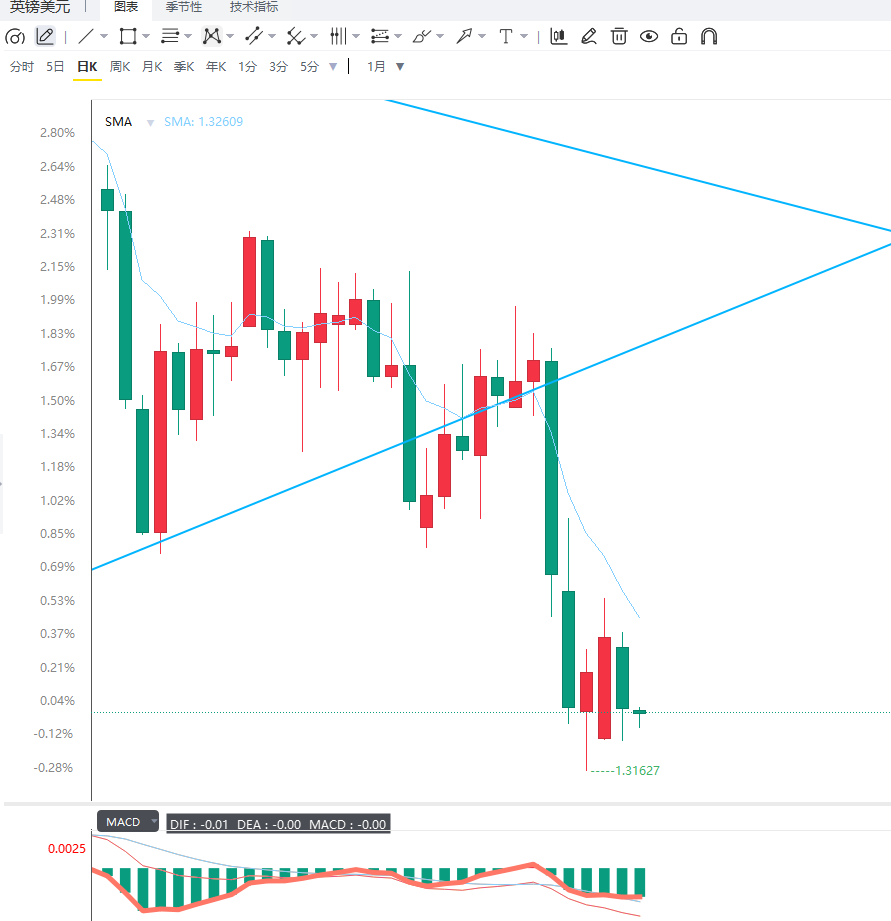
Editor's Summary : The current GBP/USD exchange rate is being influenced by both expectations of political stability in the UK and the strong performance of the US economy. Reduced political risk in the UK is providing some support for the pound, but continued positive US PMI data and market expectations that the Federal Reserve will maintain a tight policy are strengthening the dollar's advantage. Going forward, market focus will shift to US inflation data, the Fed's policy path, and the economic policy direction of the new UK government. In the short term, 1.3300 will be a crucial watershed for whether the pound can rebound further, while 1.3150 is a key support area to observe whether the market weakens again. Overall, the exchange rate is biased towards short-term consolidation, but the medium- to long-term trend still needs new fundamental catalysts.
The US dollar has recently received significant support, mainly due to the continued resilience of US economic data. The latest preliminary reading of the S&P Global Composite Purchasing Managers' Index (PMI) for June rose to 52.2 , higher than May's 51.5 and better than market expectations, indicating that overall US business activity continues to expand.
The breakdown of data shows that the US manufacturing sector remains robust. The manufacturing output index rose to 55.7 from 55.1, exceeding market expectations of 54.8, indicating that industrial production activity continues to grow rapidly. Meanwhile, the services PMI rose to 51.3 , further improving from the previous reading of 50.7 and also slightly exceeding market expectations. Following the data release, market confidence in the US economic growth outlook strengthened.
Analysts believe that the continued resilience of the US economy is reinforcing the "US economic exceptionalism" trading logic. Robust economic growth not only supports corporate profit expectations but also gives the market confidence that the Federal Reserve has greater policy flexibility in addressing inflation, thereby further consolidating the attractiveness of dollar assets.
Meanwhile, while the situation in the Middle East has eased somewhat, market concerns have not been completely eliminated. US President Trump stated that Iran has agreed to open its facilities for inspection. However, Iranian Foreign Minister Abbas Araqchi subsequently stated that substantive negotiations between the two sides on the nuclear issue have not yet formally begun, indicating that relevant differences still exist.
Furthermore, Iran's chief negotiator emphasized that the Strait of Hormuz will continue to be under strict Iranian control and will not return to its pre-conflict state. Given that the Strait of Hormuz is a vital global energy transport route, this statement implies that the energy market may still face some uncertainty. Meanwhile, the United States is pushing for a new round of negotiations between Israel and Lebanon in an effort to ease regional tensions. Overall, market risk sentiment has improved somewhat, but the geopolitical risk premium has not completely disappeared.
While the US dollar is supported by economic data, the British pound has recently benefited mainly from the stabilizing domestic political situation in the UK. After Prime Minister Keir Starmer announced his resignation, the market initially worried about a potential protracted power struggle within the ruling party. However, with Andy Burnham quickly emerging as a leading candidate to succeed him and gaining the support of several key party figures, market expectations for a smooth transition of power in the UK have clearly increased.
Investors generally believe that if the UK leadership can smoothly complete the transition and avoid prolonged political uncertainty impacting the economy and fiscal policy, the risk discount faced by pound assets is expected to gradually decrease. This is one of the key reasons why the pound has remained relatively stable recently against the backdrop of a strong dollar. However, from the core logic affecting exchange rates, the advantages of US economic growth and interest rate expectations still dominate. As the market continues to focus on US inflation trends and future monetary policy changes, the dollar may remain relatively strong in the short term, while the pound's upside potential may be somewhat limited.
From a daily chart perspective, the GBP/USD pair entered a consolidation phase after breaking below its medium-term consolidation range, and is currently fluctuating around the 1.3200 level. The overall trend remains weak, but downward momentum has slowed somewhat. If the 1.3150-1.3100 support zone can be held, a further bottom may be formed. Key resistance levels to watch are 1.3250 and 1.3300 ; a decisive break and hold above these levels could lead to a further rebound towards 1.3400.
From a 4-hour chart perspective, the exchange rate has recently formed a short-term rebound structure, with the price gradually rising above the short-term moving averages, indicating that the bearish pressure has eased somewhat. However, momentum indicators have not yet fully turned bullish, and the bulls have not yet gained a decisive advantage. The market is currently in a directional decision-making phase. If it can break through the 1.3250 resistance and generate significant upward volume, the short-term trend is expected to improve further; conversely, if it falls below the 1.3150 support again, it may retest the 1.3100 or even the 1.3000 psychological level. Overall, the GBP/USD pair is still in a corrective rebound phase, and the medium-term trend has not yet fully reversed until a key resistance level is broken.
Editor's Summary : The current GBP/USD exchange rate is being influenced by both expectations of political stability in the UK and the strong performance of the US economy. Reduced political risk in the UK is providing some support for the pound, but continued positive US PMI data and market expectations that the Federal Reserve will maintain a tight policy are strengthening the dollar's advantage. Going forward, market focus will shift to US inflation data, the Fed's policy path, and the economic policy direction of the new UK government. In the short term, 1.3300 will be a crucial watershed for whether the pound can rebound further, while 1.3150 is a key support area to observe whether the market weakens again. Overall, the exchange rate is biased towards short-term consolidation, but the medium- to long-term trend still needs new fundamental catalysts.
- Risk Warning and Disclaimer
- The market involves risk, and trading may not be suitable for all investors. This article is for reference only and does not constitute personal investment advice, nor does it take into account certain users’ specific investment objectives, financial situation, or other needs. Any investment decisions made based on this information are at your own risk.