For the first time in forty years, the United States has comprehensively eased oil sanctions, prompting Iran to seize the window of opportunity to export oil.
2026-06-24 11:25:45
The United States and Iran continue to advance negotiations on a permanent peace agreement. Although the negotiation situation remains fragile, the United States has significantly eased its oil sanctions policy against Iran, allowing Iran to resume dollar-denominated oil trade after more than 40 years. This is the most significant easing of sanctions since the 1979 Iranian Islamic Revolution and will profoundly reshape the global crude oil trade landscape and the Middle East energy market order.
On Monday (June 22), the U.S. Treasury Department issued a 60-day broad-based sanctions waiver policy, which will be valid until August 21. The policy explicitly allows Iran to conduct normal production and export of crude oil, petrochemicals, and various petroleum derivatives, and allows for trade settlement in US dollars throughout the process.
The "General X Permit" exemption, which has now been implemented, has a broad scope, allowing shipping vessels and market participants previously restricted by US sanctions to conduct relevant business normally. According to data from the US Energy Information Administration, the policy also reopens the US imports of Iranian crude oil, a process that had been largely halted since the 1990s due to decades of stringent sanctions.
This policy adjustment completely reverses the US's long-standing strategy of maximum pressure on Iran, and the energy sanctions system aimed at severely damaging the Iranian economy is being eased, which is expected to bring huge oil export revenue to Iran.
Miad Maleki, a senior fellow at the Washington-based think tank Foundation for the Defense of Democracy and a former U.S. Treasury sanctions official, said the policy could revitalize the 67 million barrels of Iranian floating crude oil stranded in the Gulf region, potentially generating $8 to $9 billion in economic benefits for Iran. Maleki stated, "The complete liberalization of crude oil production, exports, dollar settlements, petrochemical trade, and shipping guarantees completely opens up Iran's most crucial channels for fiscal revenue."
This easing of sanctions is not a temporary measure, but rather an advancement based on previous cooperation between the two countries. The US and Iran signed a memorandum of understanding last week, and the multiple rounds of negotiations that concluded in Switzerland on Monday have made positive progress towards reaching a final peace agreement.
US President Trump interpreted this easing of restrictions, stating that profits Iran earns through oil trade must be used specifically for purchasing US agricultural products and cannot be used for military construction.
As negotiations continue, Iranian crude oil exports have begun to recover. Data from maritime intelligence agency Windward shows that Iran shipped 6.79 million barrels of crude oil last week, marking a two-month high in exports.
Brett Erickson, Managing Director of Obsidian Risk Advisory, analyzed that Iranian crude oil has historically had a fixed discount compared to Brent crude oil. With increased market demand, Iranian crude oil prices are expected to reach a premium, further increasing Iran's foreign trade revenue.
This exemption policy eliminates a key pain point in Iran's previous oil trade, allowing Iran to directly transfer oil export revenue to its central bank, completely abandoning the reliance on underground financial intermediaries for settlement and significantly reducing transaction costs and trade risks. Maleki stated, "With the formal opening of the dollar clearing channel, major Asian buyers will significantly increase their purchases of Iranian crude oil."
Previously, domestic companies in this major Asian country could only complete transactions through non-transparent channels to avoid the risks of secondary sanctions from the United States. Now, both state-owned and private independent refineries in the country can access compliant banking transaction networks.
The market generally anticipates that buyers in Iran will begin a concentrated restocking cycle before the exemption policy expires in August. Currently, major Asian countries handle over 90% of Iran's crude oil exports, but JPMorgan data shows that the country's crude oil imports declined sharply from February to May this year, with a drop far exceeding that during the pandemic period in the second half of 2020.
According to Muyu Xu, a senior crude oil analyst at energy analysis firm Kepler, companies are currently working hard to complete compliance audits, and short-term procurement has not yet shown a significant recovery. Medium- and long-term procurement demand will be released steadily as pricing and supply conditions improve.
Michael Feller, chief strategist at Geostrategy Institute, said Iran will make full use of this 60-day policy window to expedite the repair of oil facilities damaged in the geopolitical conflict, while also finalizing long-term supply contracts with key purchasing countries such as major Asian powers.
This easing of sanctions will not only quickly boost Iran's domestic economy, but will also significantly enhance its influence in the Middle East geopolitical landscape.
In conclusion, this historic easing of US oil sanctions has completely broken down trade barriers that have existed for over forty years, officially bringing Iranian petrodollar trade back to the global market. In the short term, it will release a massive amount of crude oil and stimulate international trade demand; in the medium to long term, it will change the structure of energy trade in the Middle East.
During the policy window, global crude oil supply and demand, pricing systems, and cross-border settlement models will all undergo a new round of significant adjustments.
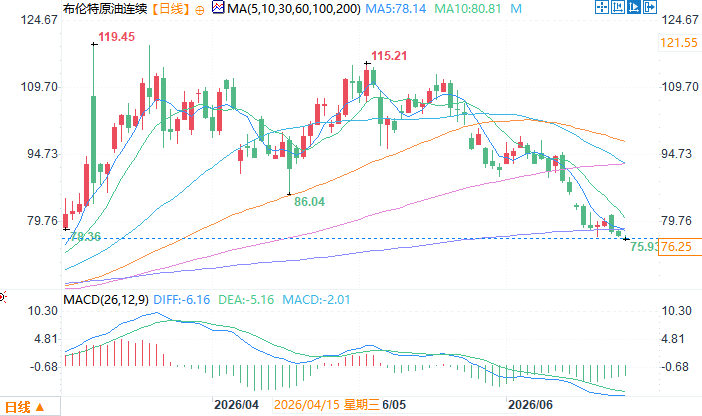
Brent crude oil daily chart source: EasyForex
At 11:25 AM Beijing time on June 24, Brent crude oil futures were trading at $76.25 per barrel.
The United States has introduced a temporary waiver policy, fully opening up trade in Iranian petrodollars.
On Monday (June 22), the U.S. Treasury Department issued a 60-day broad-based sanctions waiver policy, which will be valid until August 21. The policy explicitly allows Iran to conduct normal production and export of crude oil, petrochemicals, and various petroleum derivatives, and allows for trade settlement in US dollars throughout the process.
The "General X Permit" exemption, which has now been implemented, has a broad scope, allowing shipping vessels and market participants previously restricted by US sanctions to conduct relevant business normally. According to data from the US Energy Information Administration, the policy also reopens the US imports of Iranian crude oil, a process that had been largely halted since the 1990s due to decades of stringent sanctions.
This policy adjustment completely reverses the US's long-standing strategy of maximum pressure on Iran, and the energy sanctions system aimed at severely damaging the Iranian economy is being eased, which is expected to bring huge oil export revenue to Iran.
Miad Maleki, a senior fellow at the Washington-based think tank Foundation for the Defense of Democracy and a former U.S. Treasury sanctions official, said the policy could revitalize the 67 million barrels of Iranian floating crude oil stranded in the Gulf region, potentially generating $8 to $9 billion in economic benefits for Iran. Maleki stated, "The complete liberalization of crude oil production, exports, dollar settlements, petrochemical trade, and shipping guarantees completely opens up Iran's most crucial channels for fiscal revenue."
Policy implementation relies on progress in US-Iran negotiations, and crude oil exports have rebounded significantly.
This easing of sanctions is not a temporary measure, but rather an advancement based on previous cooperation between the two countries. The US and Iran signed a memorandum of understanding last week, and the multiple rounds of negotiations that concluded in Switzerland on Monday have made positive progress towards reaching a final peace agreement.
US President Trump interpreted this easing of restrictions, stating that profits Iran earns through oil trade must be used specifically for purchasing US agricultural products and cannot be used for military construction.
As negotiations continue, Iranian crude oil exports have begun to recover. Data from maritime intelligence agency Windward shows that Iran shipped 6.79 million barrels of crude oil last week, marking a two-month high in exports.
Brett Erickson, Managing Director of Obsidian Risk Advisory, analyzed that Iranian crude oil has historically had a fixed discount compared to Brent crude oil. With increased market demand, Iranian crude oil prices are expected to reach a premium, further increasing Iran's foreign trade revenue.
With settlement barriers completely eliminated, buyers from major Asian countries are more willing to replenish their inventories.
This exemption policy eliminates a key pain point in Iran's previous oil trade, allowing Iran to directly transfer oil export revenue to its central bank, completely abandoning the reliance on underground financial intermediaries for settlement and significantly reducing transaction costs and trade risks. Maleki stated, "With the formal opening of the dollar clearing channel, major Asian buyers will significantly increase their purchases of Iranian crude oil."
Previously, domestic companies in this major Asian country could only complete transactions through non-transparent channels to avoid the risks of secondary sanctions from the United States. Now, both state-owned and private independent refineries in the country can access compliant banking transaction networks.
The market generally anticipates that buyers in Iran will begin a concentrated restocking cycle before the exemption policy expires in August. Currently, major Asian countries handle over 90% of Iran's crude oil exports, but JPMorgan data shows that the country's crude oil imports declined sharply from February to May this year, with a drop far exceeding that during the pandemic period in the second half of 2020.
According to Muyu Xu, a senior crude oil analyst at energy analysis firm Kepler, companies are currently working hard to complete compliance audits, and short-term procurement has not yet shown a significant recovery. Medium- and long-term procurement demand will be released steadily as pricing and supply conditions improve.
Iran seizes policy window of opportunity to solidify its long-term energy trade advantages
Michael Feller, chief strategist at Geostrategy Institute, said Iran will make full use of this 60-day policy window to expedite the repair of oil facilities damaged in the geopolitical conflict, while also finalizing long-term supply contracts with key purchasing countries such as major Asian powers.
This easing of sanctions will not only quickly boost Iran's domestic economy, but will also significantly enhance its influence in the Middle East geopolitical landscape.
Summarize
In conclusion, this historic easing of US oil sanctions has completely broken down trade barriers that have existed for over forty years, officially bringing Iranian petrodollar trade back to the global market. In the short term, it will release a massive amount of crude oil and stimulate international trade demand; in the medium to long term, it will change the structure of energy trade in the Middle East.
During the policy window, global crude oil supply and demand, pricing systems, and cross-border settlement models will all undergo a new round of significant adjustments.
Brent crude oil daily chart source: EasyForex
At 11:25 AM Beijing time on June 24, Brent crude oil futures were trading at $76.25 per barrel.
- Risk Warning and Disclaimer
- The market involves risk, and trading may not be suitable for all investors. This article is for reference only and does not constitute personal investment advice, nor does it take into account certain users’ specific investment objectives, financial situation, or other needs. Any investment decisions made based on this information are at your own risk.