After the storm subsides in the Strait of Hormuz, what will be the next step for oil prices?
2026-06-24 15:20:55
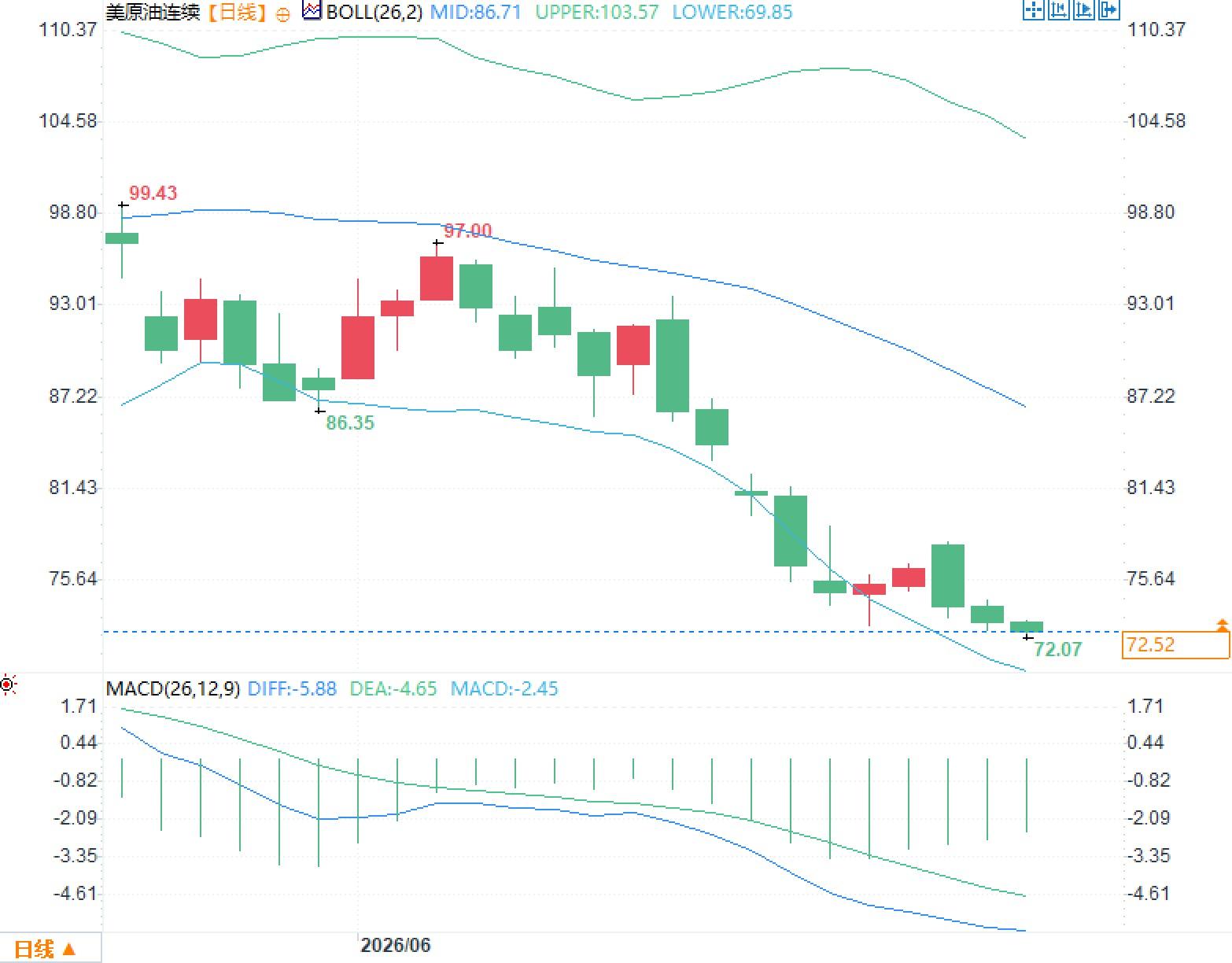
On Wednesday, June 24th, WTI crude oil entered a clear structural repricing phase, with Brent crude oil also showing a downward trend. The market experienced a decline of over 10% in the past five trading days. The core driver was not a single supply and demand change, but rather a concentrated retracement of risk premiums triggered by the rapid cooling of geopolitical risk expectations surrounding potential disturbances in the Strait of Hormuz. In a short period, the pricing logic for crude oil shifted from "extreme disruption assumptions" to "realistic liquidity and demand constraints," a change that directly reshaped the market's main trading drivers.

The most significant characteristic of this round of oil price adjustments is the rapid compression of the geopolitical risk premium. Previously, market trading logic revolved heavily around the potential disruption of energy transportation routes, with the Strait of Hormuz-related risks becoming a core pricing variable. However, as sentiment cooled, prices quickly deviated from extreme scenario assumptions and returned to a path closer to the probability of actual occurrence.
This repricing does not mean the risk has disappeared, but rather that the market has preemptively priced in the "tail risk." After the risk premium has been quickly cleared, the crude oil price structure has returned to a stage dominated by supply and demand fundamentals, reopening pricing space for subsequent fluctuations.
Structurally, the crude oil market is essentially a logistics system, not just a commodity market. Currently, price drivers are shifting from "event-driven" to "system-driven."
Despite the decline in oil prices, shipping stress indicators remain at high levels, with some monitoring systems even showing that the transportation chain is still operating under high pressure. This divergence between prices and logistics status indicates that the market is splitting into two levels: financial prices are rapidly recovering, while the physical transportation system is still digesting previous risk expectations.
During this phase, capacity allocation, route selection, insurance costs, and transportation efficiency are once again becoming important variables influencing price formation.
As geopolitical factors lose weight, demand-side variables are regaining dominance. The market is beginning to reassess the transmission path of macroeconomic data to energy consumption, paying particular attention to the link between growth and transportation demand.
For example, consumer spending indicators and economic growth data will gradually influence crude oil demand expectations through transportation, industrial activity, and energy intensity. After the risk premium shrinks, these "slow variables" have once again become the core source of price volatility.
The market structure is shifting from "pricing based on anticipated shocks" to "pricing based on data," with prices becoming less sensitive to breaking news and more dependent on the actual state of the economy.
Despite the weakening of crude oil prices, the shipping market has not cooled down accordingly. Some tanker transport indicators and capacity tightness remain at relatively high levels, reflecting that the physical logistics chain is still in a period of adjustment.
This divergence illustrates a key issue: financial markets have already priced in the receding risks, while the physical transportation system is still adjusting its routes and efficiencies. In global energy flows, the optimization of transport routes, port turnover efficiency, and fleet allocation remain under the continued influence of previous shocks.
Therefore, the divergence between oil prices and logistics indicators has become an important signal for judging the true state of the market.
In the short term, the crude oil market has entered a new phase of rebalancing. The marginal impact of geopolitical risks on prices has decreased significantly, but they have not completely disappeared from the pricing system. In contrast, the interaction between demand and logistics is becoming the dominant force.
Future price trends are more likely to be determined by three types of variables: the stability of global demand, the speed of recovery in transportation efficiency, and marginal changes in macroeconomic data. In the absence of new geopolitical shocks, the market will rely more on "real flow data" than on "event expectations."
The oil market is transitioning from a sentiment-driven phase to a structurally and systemically driven phase, a shift that often signifies a fundamental change in volatility patterns.
Question 1: Why did oil prices fall sharply even though the risks have not completely disappeared?
A: This is mainly because the market has priced in extreme risks in advance. When the sentiment eases, the premium is released in a concentrated manner, and prices return to the basic supply and demand structure, rather than simply reflecting changes in risk.
Question 2: Why are oil prices no longer rising despite continued logistical pressures?
A: The financial market has already priced in transportation risks, but the adjustment of physical logistics is lagging, which leads to a temporary divergence between prices and transportation indicators.
Question 3: What variables will be the main drivers of future oil prices?
A: The core will shift to the combined impact of three factors: demand-side economic data, the degree of recovery in transportation efficiency, and the stability of global energy flows.
I. The rapid decline of geopolitical risk premium and market repricing
The most significant characteristic of this round of oil price adjustments is the rapid compression of the geopolitical risk premium. Previously, market trading logic revolved heavily around the potential disruption of energy transportation routes, with the Strait of Hormuz-related risks becoming a core pricing variable. However, as sentiment cooled, prices quickly deviated from extreme scenario assumptions and returned to a path closer to the probability of actual occurrence.
This repricing does not mean the risk has disappeared, but rather that the market has preemptively priced in the "tail risk." After the risk premium has been quickly cleared, the crude oil price structure has returned to a stage dominated by supply and demand fundamentals, reopening pricing space for subsequent fluctuations.
II. The logistics system has once again become the core pricing mechanism in the oil market.
Structurally, the crude oil market is essentially a logistics system, not just a commodity market. Currently, price drivers are shifting from "event-driven" to "system-driven."
Despite the decline in oil prices, shipping stress indicators remain at high levels, with some monitoring systems even showing that the transportation chain is still operating under high pressure. This divergence between prices and logistics status indicates that the market is splitting into two levels: financial prices are rapidly recovering, while the physical transportation system is still digesting previous risk expectations.
During this phase, capacity allocation, route selection, insurance costs, and transportation efficiency are once again becoming important variables influencing price formation.
III. Demand expectation recovery becomes the core pricing anchor
As geopolitical factors lose weight, demand-side variables are regaining dominance. The market is beginning to reassess the transmission path of macroeconomic data to energy consumption, paying particular attention to the link between growth and transportation demand.
For example, consumer spending indicators and economic growth data will gradually influence crude oil demand expectations through transportation, industrial activity, and energy intensity. After the risk premium shrinks, these "slow variables" have once again become the core source of price volatility.
The market structure is shifting from "pricing based on anticipated shocks" to "pricing based on data," with prices becoming less sensitive to breaking news and more dependent on the actual state of the economy.
IV. Structural Differentiation Revealed by Shipping and Transportation Data
Despite the weakening of crude oil prices, the shipping market has not cooled down accordingly. Some tanker transport indicators and capacity tightness remain at relatively high levels, reflecting that the physical logistics chain is still in a period of adjustment.
This divergence illustrates a key issue: financial markets have already priced in the receding risks, while the physical transportation system is still adjusting its routes and efficiencies. In global energy flows, the optimization of transport routes, port turnover efficiency, and fleet allocation remain under the continued influence of previous shocks.
Therefore, the divergence between oil prices and logistics indicators has become an important signal for judging the true state of the market.
V. Market Outlook and Structural Evolution Direction
In the short term, the crude oil market has entered a new phase of rebalancing. The marginal impact of geopolitical risks on prices has decreased significantly, but they have not completely disappeared from the pricing system. In contrast, the interaction between demand and logistics is becoming the dominant force.
Future price trends are more likely to be determined by three types of variables: the stability of global demand, the speed of recovery in transportation efficiency, and marginal changes in macroeconomic data. In the absence of new geopolitical shocks, the market will rely more on "real flow data" than on "event expectations."
The oil market is transitioning from a sentiment-driven phase to a structurally and systemically driven phase, a shift that often signifies a fundamental change in volatility patterns.
Frequently Asked Questions
Question 1: Why did oil prices fall sharply even though the risks have not completely disappeared?
A: This is mainly because the market has priced in extreme risks in advance. When the sentiment eases, the premium is released in a concentrated manner, and prices return to the basic supply and demand structure, rather than simply reflecting changes in risk.
Question 2: Why are oil prices no longer rising despite continued logistical pressures?
A: The financial market has already priced in transportation risks, but the adjustment of physical logistics is lagging, which leads to a temporary divergence between prices and transportation indicators.
Question 3: What variables will be the main drivers of future oil prices?
A: The core will shift to the combined impact of three factors: demand-side economic data, the degree of recovery in transportation efficiency, and the stability of global energy flows.
- Risk Warning and Disclaimer
- The market involves risk, and trading may not be suitable for all investors. This article is for reference only and does not constitute personal investment advice, nor does it take into account certain users’ specific investment objectives, financial situation, or other needs. Any investment decisions made based on this information are at your own risk.