The Warsh Treaty inherently imposes a constraint on risky assets.
2026-06-25 21:59:07
In his first policy meeting after taking office, Warsh did not focus on the interest rate decision that the market was focused on. Instead, he introduced a series of disruptive institutional reforms that completely reshaped the Fed's policy operation and market communication logic.
Against the backdrop of recurring inflation, complex supply and demand structures, and the impact of AI wealth effects on macroeconomic fundamentals in the United States, the uncertainty surrounding the Federal Reserve's policies has increased significantly. Even if interest rate hikes are not implemented in the short term, market financial conditions will passively tend to tighten, and the trends of long-term and short-term interest rates in the United States and the pricing logic of major asset classes will undergo a fundamental restructuring.
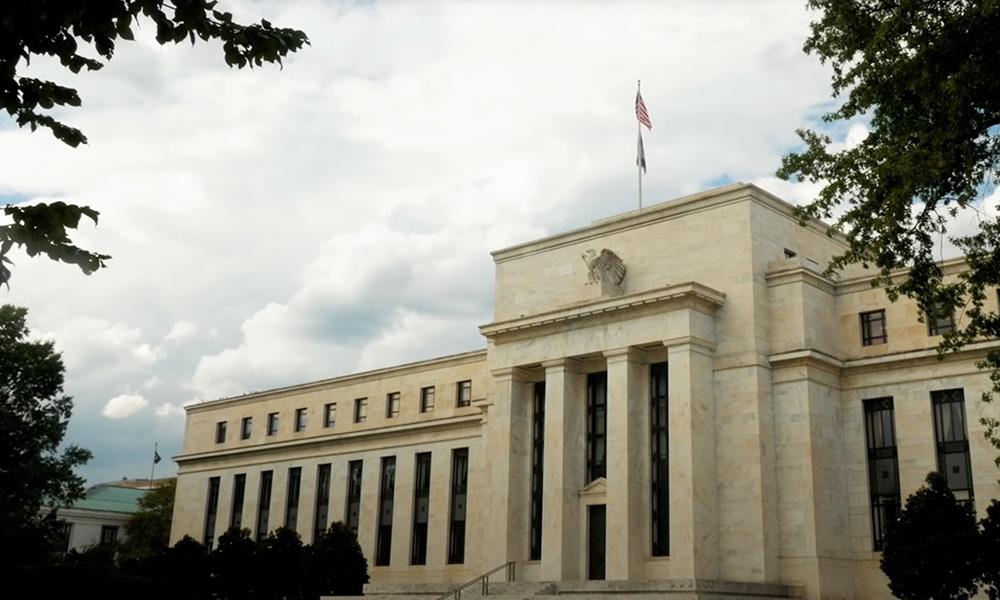
Compared to previous Federal Reserve chairmen, Warsh's governing philosophy was highly disruptive, with the core being to weaken the central bank's guidance of expectations and strengthen data-driven and policy flexibility.
The specific implementation measures are clear and resolute: the wording of the monetary policy statement has been significantly streamlined, and the lengthy trend statements of the past have been abandoned; the long-standing market reliance on forward guidance on interest rates has been completely eliminated, and the chairman will no longer issue his own dot plot forecast for the interest rate path;
At the same time, multiple special working groups were established to comprehensively review the Fed's traditional operating mechanisms, proactively break the existing internal consensus, optimize policy decisions through the competition of diverse viewpoints, and create what it calls a "positive internal discussion mechanism." This article briefly outlines the overall situation.
The underlying logic of this reform is very clear: Warsh's team hopes to end the traditional model of the Federal Reserve "anchoring market expectations in advance", abandon fixed policy path predictions, and instead rely on real-time macroeconomic data, secondary market signals and professional judgment from external think tanks to formulate policies.
Under the new framework, market expectations will be driven by real economic data, rather than policy signals released in advance by the central bank, which will completely change the past pattern of the central bank "one-way guiding the market" and make monetary policy more in line with the dynamically changing economic fundamentals.
The most direct market impact of this new policy is the lack of an anchor for interest rate expectations and the increase in market volatility.
The previously stable anchoring effect of expectations has been significantly weakened, the central level of short-term interest rate fluctuations has continued to rise, and the two-way risks of unexpected interest rate hikes and cuts have been amplified simultaneously.
More importantly, given the current uncertainty surrounding the US macroeconomic fundamentals and the persistently higher inflation rate than the policy target, the Federal Reserve's shift from weakening forward guidance to strengthening policy flexibility will directly lead to a passive tightening of financial conditions across the entire market.
Without the Federal Reserve as a stabilizing factor, the risk premiums of most major asset classes will rise systematically, with only a few specific asset classes able to avoid this adjustment pressure.
To understand the profound impact of the Warsh policy, it is necessary to trace the evolution of the Federal Reserve's monetary policy.
Following the global financial crisis of 2008-2009, the Federal Reserve introduced unconventional easing tools such as forward guidance and large-scale asset purchases, with the core objective of maintaining a loose financial environment when the benchmark interest rate hit the zero lower bound.
The accompanying Summary of Economic Forecasts (SEP) at the time, by locking in market interest rate expectations and lowering risk premiums across all asset classes, allowed the central bank to continue releasing easing dividends without needing to cut interest rates further, becoming a core pillar for stabilizing the market in the post-crisis era.
Given that policy interest rates have long since moved away from the zero lower bound, Warsh argues that the traditional forward guidance system has lost its value.
A consensus has been reached among major central banks worldwide: efficient monetary policy transmission relies on the market's ability to understand the central bank's regulatory logic, rather than the central bank locking in a fixed policy path in advance.
The core breakthrough of the Walsh policy is to completely abandon the rigid expectation management model and only clearly convey to the market the judgment of economic fundamentals, the risk distribution corresponding to inflation and employment targets, and let the market independently deduce the direction of policy adjustments under changes in fundamentals.
The direct result of this paradigm shift is a continued rise in the uncertainty premium of asset pricing across the entire market. This means that it has become more difficult for investors to guess the Federal Reserve's direction or to discern inflation and employment data, indicating higher macroeconomic uncertainty and therefore a higher risk compensation required.
When traders cannot clearly predict the medium- to long-term trend of interest rates, the pricing efficiency of risky assets is significantly weakened, and the market will spontaneously curb speculative behavior of blindly increasing leverage.
This change is not a traditional monetary tightening, and there are no rigid operations such as interest rate hikes or balance sheet reduction. However, investors' proactive pricing behavior of raising risk compensation has effectively driven a systemic tightening of financial conditions, becoming the most core implicit tightening force in the current market.
The timing of the implementation of the Walsh policy amplified the market impact of the policy change.
The current US macroeconomic market is characterized by highly intertwined supply and demand variables, with various disruptive factors difficult to separate in real time. The fluctuating inflation trend and complex causes pose the biggest challenge for the Federal Reserve's regulation.
On the one hand, negative supply shocks such as geopolitical conflicts, energy supply disruptions, global industrial chain restructuring, and trade tariff barriers continue to exist; on the other hand, the explosive growth of capital expenditure in the AI sector has generated a wealth effect that continues to support end-consumer spending, allowing market demand to remain highly resilient.
This pattern of supply and demand disturbances has completely overturned the inflation judgment framework of the Powell era.
Previously, the prevailing view of the Federal Reserve was that inflationary pressures mainly stemmed from temporary supply disruptions and were not subject to targeted monetary tightening.
However, both supply and demand factors are currently driving up inflation, and recent inflation readings have rebounded slightly again. There is a serious divergence in the Federal Reserve’s assessment of the causes of inflation, and the June summary of economic forecasts fully reflects the differences in officials’ views.
At the same time, the dynamic changes in the Middle East geopolitical situation and the crude oil market have temporarily eased the inflationary pressure on the supply side, further increasing the difficulty of judging the inflation trend.
In addition, the rapid rise of the AI industry has brought new quantitative challenges to macroeconomic analysis, becoming a hidden obstacle to the Federal Reserve's regulation.
In the long run, AI technology can improve total factor productivity, expand effective supply, and reduce unit labor costs, exhibiting significant deflationary properties.
However, in the short term, the expansion of the AI industry has driven up the prices of chips and storage hardware, and the costs are transmitted from top to bottom to consumer electronics terminals, directly increasing the pressure of inflation in the short term.
More importantly, the wealth effect generated by AI suffers from serious statistical distortion, leading to a long-term underestimation of the resilience of real demand in the United States.
In the past, the core indicator for measuring the wealth effect was the marginal propensity to consume. However, decades of wealth disparity coupled with the AI wave have led to a continuous concentration of social wealth in the top 20% of high-income families. This group itself has a low willingness to consume, and traditional statistical models can no longer adapt to the current economic structure.
At the same time, the salary structure of high-end talents in the AI industry has been completely changed. The proportion of fixed cash salary has continued to decline, while deferred unexercised equity compensation and book appreciation of equity assets have become the core sources of wealth growth. This huge amount of wealth has long been outside the scope of official statistics.
Data estimates show that in 2025 alone, the scale of deferred equity compensation paid by S&P 500 constituent stocks will reach $250 billion. Coupled with the 3-4 year vesting period and the rise in equity market, the scale of outstanding unexercised equity compensation in the market will exceed one trillion US dollars.
This concentrated equity wealth, while not quickly converted into consumption, effectively reduces the precautionary savings demand of high-income groups, perfectly explaining the abnormal pattern of undiminished consumption and persistently low household savings rate in the context of high interest rates in the United States.
This is why overall US consumption has far exceeded market expectations based on traditional wage data, continuously supporting inflation and significantly increasing the difficulty of the Federal Reserve's policy adjustments.
With the combined effects of AI wealth effect and supply shock, the equity market has become deeply embedded in the transmission chain of the Federal Reserve's inflation control.
Although the Federal Reserve does not directly anchor asset prices, the persistent wealth effect has fueled overheated demand and supported high inflation, leading to a moderate correction in equity valuations. This has become the core path for tightening financial conditions and suppressing end-consumer spending.
From a pricing perspective, the risk premium embedded in US equity assets is currently at an extremely low level compared to historical averages and current macroeconomic uncertainties.
After the implementation of the new Warsh policy, the market lost a stable expectation fulcrum for forward guidance. At the same time, investors continued to worry that the Federal Reserve would further tighten monetary policy to hedge against wealth-driven inflation, which significantly suppressed equity valuations.
At the same time, the market has begun to re-examine the profitability of the AI industry chain, questioning whether the current massive capital expenditure on computing power can match future operating income, further exacerbating pricing volatility in the equity market.
Combining Warsh's governing philosophy with the current macroeconomic landscape, the trend of US interest rates and the operating logic of the financial market have undergone a fundamental change.
In the short term, the Federal Reserve is likely to keep the benchmark interest rate unchanged and will not implement aggressive interest rate hikes or cuts. However, increased policy uncertainty will replace interest rate hikes and become the core force for tightening financial conditions.
Short-term interest rates will depart from their previous stable trend and enter a high-volatility range, with a significant increase in the risk of two-way fluctuations; long-term interest rates, on the other hand, will maintain a high-level oscillation pattern based on the resilience of fundamentals and the stickiness of inflation, with limited room for decline.
In the medium to long term, the policy paradigm shift led by Warsh will continue to unfold, the predictability of Fed policies will decline, and the market will remain in a state of "self-pricing risk" for a long time.
Against the backdrop of profound economic restructuring, unclear macroeconomic effects of AI, and ambiguous inflation logic, the central bank will no longer stabilize the market through advance guidance. Various assets will continue to absorb uncertainty premiums, and overall financial conditions are more likely to tighten than loosen.
Overall, the Federal Reserve's reforms during the Warsh era were not simply interest rate adjustments, but a systemic reshaping of the monetary policy framework.
Compared to a single decision to raise or lower interest rates, the disruptive reform of the policy guidance system will have a more profound and lasting medium- to long-term impact on US interest rate trends, financial conditions, and global asset pricing, and will also be the core theme of future market transactions.
Against the backdrop of recurring inflation, complex supply and demand structures, and the impact of AI wealth effects on macroeconomic fundamentals in the United States, the uncertainty surrounding the Federal Reserve's policies has increased significantly. Even if interest rate hikes are not implemented in the short term, market financial conditions will passively tend to tighten, and the trends of long-term and short-term interest rates in the United States and the pricing logic of major asset classes will undergo a fundamental restructuring.
Warsh's core governing philosophy: weaken the guidance of expectations and strengthen policy flexibility.
Compared to previous Federal Reserve chairmen, Warsh's governing philosophy was highly disruptive, with the core being to weaken the central bank's guidance of expectations and strengthen data-driven and policy flexibility.
The specific implementation measures are clear and resolute: the wording of the monetary policy statement has been significantly streamlined, and the lengthy trend statements of the past have been abandoned; the long-standing market reliance on forward guidance on interest rates has been completely eliminated, and the chairman will no longer issue his own dot plot forecast for the interest rate path;
At the same time, multiple special working groups were established to comprehensively review the Fed's traditional operating mechanisms, proactively break the existing internal consensus, optimize policy decisions through the competition of diverse viewpoints, and create what it calls a "positive internal discussion mechanism." This article briefly outlines the overall situation.
The underlying logic of this reform is very clear: Warsh's team hopes to end the traditional model of the Federal Reserve "anchoring market expectations in advance", abandon fixed policy path predictions, and instead rely on real-time macroeconomic data, secondary market signals and professional judgment from external think tanks to formulate policies.
Under the new framework, market expectations will be driven by real economic data, rather than policy signals released in advance by the central bank, which will completely change the past pattern of the central bank "one-way guiding the market" and make monetary policy more in line with the dynamically changing economic fundamentals.
The most direct market impact of this new policy is the lack of an anchor for interest rate expectations and the increase in market volatility.
The previously stable anchoring effect of expectations has been significantly weakened, the central level of short-term interest rate fluctuations has continued to rise, and the two-way risks of unexpected interest rate hikes and cuts have been amplified simultaneously.
More importantly, given the current uncertainty surrounding the US macroeconomic fundamentals and the persistently higher inflation rate than the policy target, the Federal Reserve's shift from weakening forward guidance to strengthening policy flexibility will directly lead to a passive tightening of financial conditions across the entire market.
Without the Federal Reserve as a stabilizing factor, the risk premiums of most major asset classes will rise systematically, with only a few specific asset classes able to avoid this adjustment pressure.
Policy Paradigm Shift: From Expectation Anchoring to Risk-Driven Pricing
To understand the profound impact of the Warsh policy, it is necessary to trace the evolution of the Federal Reserve's monetary policy.
Following the global financial crisis of 2008-2009, the Federal Reserve introduced unconventional easing tools such as forward guidance and large-scale asset purchases, with the core objective of maintaining a loose financial environment when the benchmark interest rate hit the zero lower bound.
The accompanying Summary of Economic Forecasts (SEP) at the time, by locking in market interest rate expectations and lowering risk premiums across all asset classes, allowed the central bank to continue releasing easing dividends without needing to cut interest rates further, becoming a core pillar for stabilizing the market in the post-crisis era.
Given that policy interest rates have long since moved away from the zero lower bound, Warsh argues that the traditional forward guidance system has lost its value.
A consensus has been reached among major central banks worldwide: efficient monetary policy transmission relies on the market's ability to understand the central bank's regulatory logic, rather than the central bank locking in a fixed policy path in advance.
The core breakthrough of the Walsh policy is to completely abandon the rigid expectation management model and only clearly convey to the market the judgment of economic fundamentals, the risk distribution corresponding to inflation and employment targets, and let the market independently deduce the direction of policy adjustments under changes in fundamentals.
The direct result of this paradigm shift is a continued rise in the uncertainty premium of asset pricing across the entire market. This means that it has become more difficult for investors to guess the Federal Reserve's direction or to discern inflation and employment data, indicating higher macroeconomic uncertainty and therefore a higher risk compensation required.
When traders cannot clearly predict the medium- to long-term trend of interest rates, the pricing efficiency of risky assets is significantly weakened, and the market will spontaneously curb speculative behavior of blindly increasing leverage.
This change is not a traditional monetary tightening, and there are no rigid operations such as interest rate hikes or balance sheet reduction. However, investors' proactive pricing behavior of raising risk compensation has effectively driven a systemic tightening of financial conditions, becoming the most core implicit tightening force in the current market.
The Federal Reserve's current core macroeconomic dilemma: an unclear logic of inflation and a complex interplay of multiple variables.
The timing of the implementation of the Walsh policy amplified the market impact of the policy change.
The current US macroeconomic market is characterized by highly intertwined supply and demand variables, with various disruptive factors difficult to separate in real time. The fluctuating inflation trend and complex causes pose the biggest challenge for the Federal Reserve's regulation.
On the one hand, negative supply shocks such as geopolitical conflicts, energy supply disruptions, global industrial chain restructuring, and trade tariff barriers continue to exist; on the other hand, the explosive growth of capital expenditure in the AI sector has generated a wealth effect that continues to support end-consumer spending, allowing market demand to remain highly resilient.
This pattern of supply and demand disturbances has completely overturned the inflation judgment framework of the Powell era.
Previously, the prevailing view of the Federal Reserve was that inflationary pressures mainly stemmed from temporary supply disruptions and were not subject to targeted monetary tightening.
However, both supply and demand factors are currently driving up inflation, and recent inflation readings have rebounded slightly again. There is a serious divergence in the Federal Reserve’s assessment of the causes of inflation, and the June summary of economic forecasts fully reflects the differences in officials’ views.
At the same time, the dynamic changes in the Middle East geopolitical situation and the crude oil market have temporarily eased the inflationary pressure on the supply side, further increasing the difficulty of judging the inflation trend.
In addition, the rapid rise of the AI industry has brought new quantitative challenges to macroeconomic analysis, becoming a hidden obstacle to the Federal Reserve's regulation.
In the long run, AI technology can improve total factor productivity, expand effective supply, and reduce unit labor costs, exhibiting significant deflationary properties.
However, in the short term, the expansion of the AI industry has driven up the prices of chips and storage hardware, and the costs are transmitted from top to bottom to consumer electronics terminals, directly increasing the pressure of inflation in the short term.
More importantly, the wealth effect generated by AI suffers from serious statistical distortion, leading to a long-term underestimation of the resilience of real demand in the United States.
In the past, the core indicator for measuring the wealth effect was the marginal propensity to consume. However, decades of wealth disparity coupled with the AI wave have led to a continuous concentration of social wealth in the top 20% of high-income families. This group itself has a low willingness to consume, and traditional statistical models can no longer adapt to the current economic structure.
At the same time, the salary structure of high-end talents in the AI industry has been completely changed. The proportion of fixed cash salary has continued to decline, while deferred unexercised equity compensation and book appreciation of equity assets have become the core sources of wealth growth. This huge amount of wealth has long been outside the scope of official statistics.
Data supports the claim that trillions of dollars in unexercised equity wealth underpins US consumption.
Data estimates show that in 2025 alone, the scale of deferred equity compensation paid by S&P 500 constituent stocks will reach $250 billion. Coupled with the 3-4 year vesting period and the rise in equity market, the scale of outstanding unexercised equity compensation in the market will exceed one trillion US dollars.
This concentrated equity wealth, while not quickly converted into consumption, effectively reduces the precautionary savings demand of high-income groups, perfectly explaining the abnormal pattern of undiminished consumption and persistently low household savings rate in the context of high interest rates in the United States.
This is why overall US consumption has far exceeded market expectations based on traditional wage data, continuously supporting inflation and significantly increasing the difficulty of the Federal Reserve's policy adjustments.
Inflation and Equity Market Linkage: A New Policy Transmission Mechanism Takes Shape
With the combined effects of AI wealth effect and supply shock, the equity market has become deeply embedded in the transmission chain of the Federal Reserve's inflation control.
Although the Federal Reserve does not directly anchor asset prices, the persistent wealth effect has fueled overheated demand and supported high inflation, leading to a moderate correction in equity valuations. This has become the core path for tightening financial conditions and suppressing end-consumer spending.
From a pricing perspective, the risk premium embedded in US equity assets is currently at an extremely low level compared to historical averages and current macroeconomic uncertainties.
After the implementation of the new Warsh policy, the market lost a stable expectation fulcrum for forward guidance. At the same time, investors continued to worry that the Federal Reserve would further tighten monetary policy to hedge against wealth-driven inflation, which significantly suppressed equity valuations.
At the same time, the market has begun to re-examine the profitability of the AI industry chain, questioning whether the current massive capital expenditure on computing power can match future operating income, further exacerbating pricing volatility in the equity market.
US Interest Rate Trends and Market Outlook
Combining Warsh's governing philosophy with the current macroeconomic landscape, the trend of US interest rates and the operating logic of the financial market have undergone a fundamental change.
In the short term, the Federal Reserve is likely to keep the benchmark interest rate unchanged and will not implement aggressive interest rate hikes or cuts. However, increased policy uncertainty will replace interest rate hikes and become the core force for tightening financial conditions.
Short-term interest rates will depart from their previous stable trend and enter a high-volatility range, with a significant increase in the risk of two-way fluctuations; long-term interest rates, on the other hand, will maintain a high-level oscillation pattern based on the resilience of fundamentals and the stickiness of inflation, with limited room for decline.
In the medium to long term, the policy paradigm shift led by Warsh will continue to unfold, the predictability of Fed policies will decline, and the market will remain in a state of "self-pricing risk" for a long time.
Against the backdrop of profound economic restructuring, unclear macroeconomic effects of AI, and ambiguous inflation logic, the central bank will no longer stabilize the market through advance guidance. Various assets will continue to absorb uncertainty premiums, and overall financial conditions are more likely to tighten than loosen.
Overall, the Federal Reserve's reforms during the Warsh era were not simply interest rate adjustments, but a systemic reshaping of the monetary policy framework.
Compared to a single decision to raise or lower interest rates, the disruptive reform of the policy guidance system will have a more profound and lasting medium- to long-term impact on US interest rate trends, financial conditions, and global asset pricing, and will also be the core theme of future market transactions.
- Risk Warning and Disclaimer
- The market involves risk, and trading may not be suitable for all investors. This article is for reference only and does not constitute personal investment advice, nor does it take into account certain users’ specific investment objectives, financial situation, or other needs. Any investment decisions made based on this information are at your own risk.