Expectations of a Fed rate hike are reshaping the market, and gold prices are holding above $4,000.
2026-06-25 22:05:00
Gold prices edged higher in early U.S. trading on Thursday (June 25), while spot silver also rose. This followed four consecutive days of declines in gold and silver prices, prompting bargain hunting. Meanwhile, the U.S. dollar index remained near a one-year high, and the 10-year U.S. Treasury yield hovered around 4.4%. At the time of writing, spot gold was quoted at approximately $4,002.25 per ounce, up 0.08% on the day; spot silver was quoted at approximately $56.996 per ounce, down 0.71% on the day.

The latest US inflation data failed to alleviate the downward pressure on precious metals from the Federal Reserve's policies. The Personal Consumption Expenditures (PCE) price index rose 0.4% month-over-month and 4.1% year-over-year in May; the year-over-year figure was in line with market expectations, while the month-over-month increase was slightly lower than the market forecast of 0.5%. Following the data release, US stock futures rallied across the board, with Nasdaq 100 futures surging 2.3%, S&P 500 futures rising 0.8%, and Dow Jones futures climbing 0.2%, as the market breathed a sigh of relief that inflation had not exceeded expectations.
Current market pricing logic remains centered on the policy shift signals released by the Federal Reserve's June 17th policy meeting. The Federal Open Market Committee (FOMC) unanimously voted to maintain the benchmark interest rate range at 3.50%-3.75%; however, the updated dot plot completely reversed market expectations of a 2026 rate cut, instead suggesting at least one rate hike this year. Nine Fed officials project at least one rate hike in 2026. This shift in expectations has increased expectations of rising real interest rates, putting pressure on gold and silver; the oil market, meanwhile, has gradually shed the premium brought about by geopolitical conflicts.
The impact of the Strait of Hormuz situation on the market has cooled, with market focus shifting from the crisis of the waterway blockade to a test of normalized shipping operations. In the past 24 hours, the number of oil tankers passing through the strait has doubled, reaching the highest level since the end of February. Ships have also resumed normal navigation using satellite signals, and Brent crude oil prices have fallen to $73.55 per barrel, essentially returning to pre-conflict levels. Safe-haven buying of oil has subsided, and concerns about energy inflation have eased, leading to a rebound in risk assets. It should be noted that the US-Iran ceasefire and the unstable foundation of shipping recovery, along with persistent geopolitical risks, mean that gold has only shed its panic premium and has not completely broken free from the pricing logic of geopolitical safe-haven assets.
Global Commodity and Currency Market Updates: West Texas Intermediate (WTI) crude oil prices in New York fell, trading near the $70.30 mark; Brent crude oil was at $73.55. The US dollar index strengthened slightly, approaching 101.51; the benchmark 10-year US Treasury yield remained around 4.37%.
Spot Gold Technical Analysis
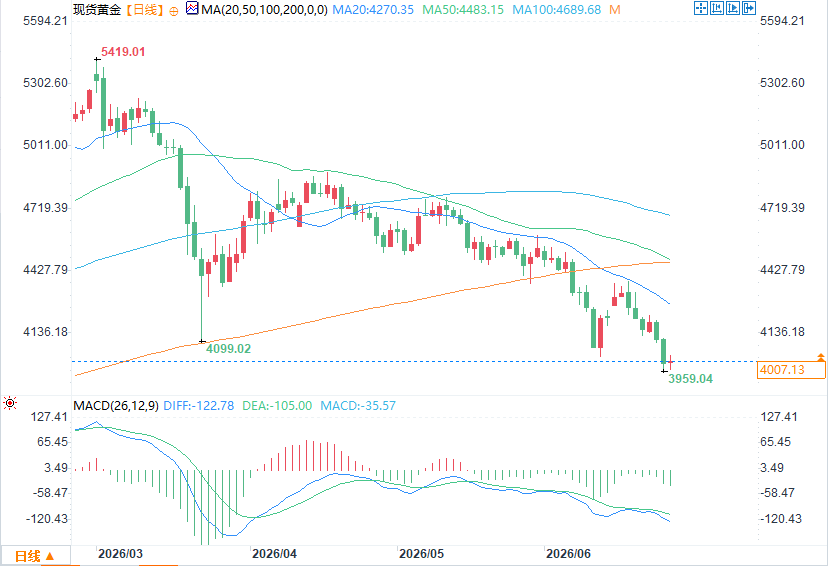
The primary short-term goal for bulls is to push gold prices above the $4,023-$4,090 resistance zone; if this zone is broken, the next targets are $4,357 and $4,597.
The short-term primary target for bears is to push gold prices below the $3,900 support level; once this level is breached, further downside potential will open up, with key support levels at $3,830 and $3,800.
The first short-term resistance level is $4,023, and the second resistance level is $4,090; the first short-term support level is $3,900, and the second support level is $3,830.
Technical Analysis of Spot Silver
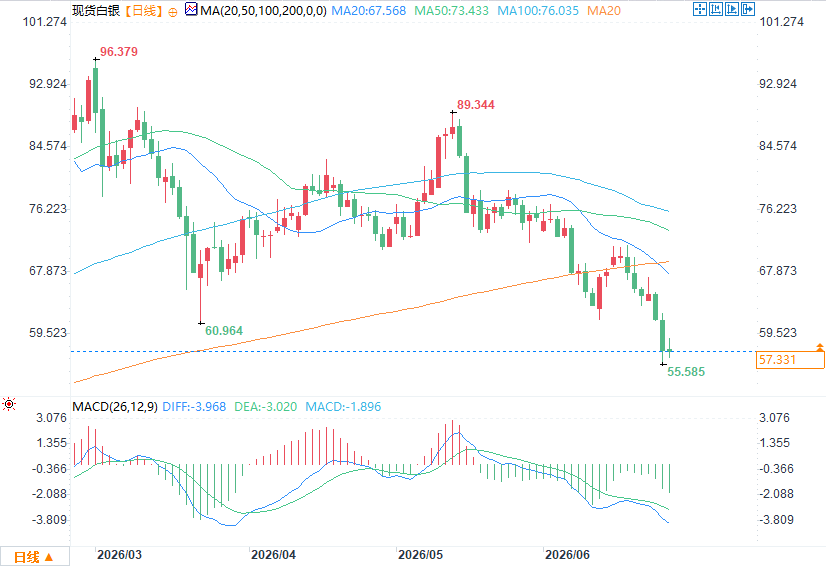
The primary short-term goal for bulls is to push silver prices above the $59.62–$62 resistance zone; a break above this level would target $71.49 and $72.
The primary short-term target for short sellers is to push silver prices below the $57.20 support level; if this level is breached, further downside targets are $53.40 and $51.26.
The first short-term resistance level is $59.62, and the second resistance level is $62; the first short-term support level is $57.20, and the second support level is $53.40.
The latest US inflation data failed to alleviate the downward pressure on precious metals from the Federal Reserve's policies. The Personal Consumption Expenditures (PCE) price index rose 0.4% month-over-month and 4.1% year-over-year in May; the year-over-year figure was in line with market expectations, while the month-over-month increase was slightly lower than the market forecast of 0.5%. Following the data release, US stock futures rallied across the board, with Nasdaq 100 futures surging 2.3%, S&P 500 futures rising 0.8%, and Dow Jones futures climbing 0.2%, as the market breathed a sigh of relief that inflation had not exceeded expectations.
Current market pricing logic remains centered on the policy shift signals released by the Federal Reserve's June 17th policy meeting. The Federal Open Market Committee (FOMC) unanimously voted to maintain the benchmark interest rate range at 3.50%-3.75%; however, the updated dot plot completely reversed market expectations of a 2026 rate cut, instead suggesting at least one rate hike this year. Nine Fed officials project at least one rate hike in 2026. This shift in expectations has increased expectations of rising real interest rates, putting pressure on gold and silver; the oil market, meanwhile, has gradually shed the premium brought about by geopolitical conflicts.
The impact of the Strait of Hormuz situation on the market has cooled, with market focus shifting from the crisis of the waterway blockade to a test of normalized shipping operations. In the past 24 hours, the number of oil tankers passing through the strait has doubled, reaching the highest level since the end of February. Ships have also resumed normal navigation using satellite signals, and Brent crude oil prices have fallen to $73.55 per barrel, essentially returning to pre-conflict levels. Safe-haven buying of oil has subsided, and concerns about energy inflation have eased, leading to a rebound in risk assets. It should be noted that the US-Iran ceasefire and the unstable foundation of shipping recovery, along with persistent geopolitical risks, mean that gold has only shed its panic premium and has not completely broken free from the pricing logic of geopolitical safe-haven assets.
Global Commodity and Currency Market Updates: West Texas Intermediate (WTI) crude oil prices in New York fell, trading near the $70.30 mark; Brent crude oil was at $73.55. The US dollar index strengthened slightly, approaching 101.51; the benchmark 10-year US Treasury yield remained around 4.37%.
Spot Gold Technical Analysis
The primary short-term goal for bulls is to push gold prices above the $4,023-$4,090 resistance zone; if this zone is broken, the next targets are $4,357 and $4,597.
The short-term primary target for bears is to push gold prices below the $3,900 support level; once this level is breached, further downside potential will open up, with key support levels at $3,830 and $3,800.
The first short-term resistance level is $4,023, and the second resistance level is $4,090; the first short-term support level is $3,900, and the second support level is $3,830.
Technical Analysis of Spot Silver
The primary short-term goal for bulls is to push silver prices above the $59.62–$62 resistance zone; a break above this level would target $71.49 and $72.
The primary short-term target for short sellers is to push silver prices below the $57.20 support level; if this level is breached, further downside targets are $53.40 and $51.26.
The first short-term resistance level is $59.62, and the second resistance level is $62; the first short-term support level is $57.20, and the second support level is $53.40.
- Risk Warning and Disclaimer
- The market involves risk, and trading may not be suitable for all investors. This article is for reference only and does not constitute personal investment advice, nor does it take into account certain users’ specific investment objectives, financial situation, or other needs. Any investment decisions made based on this information are at your own risk.