History has once again sided with the dollar.
2026-06-26 18:03:35
Over the past 111 trading days (statistics ending June 23), the US dollar index has risen by more than 5%. This trend is extremely rare, occurring only 20 times since 1970. Historically, the US dollar has strengthened further each time this pattern appears.

One month after the signal appeared, the US dollar index rose by an average of 0.98%; six months by an average of 3.26%; and twelve months by an average of 4.03%. Of the 17 fully recorded market cycles, the US dollar index remained in an upward trend one year later in 12 of them.
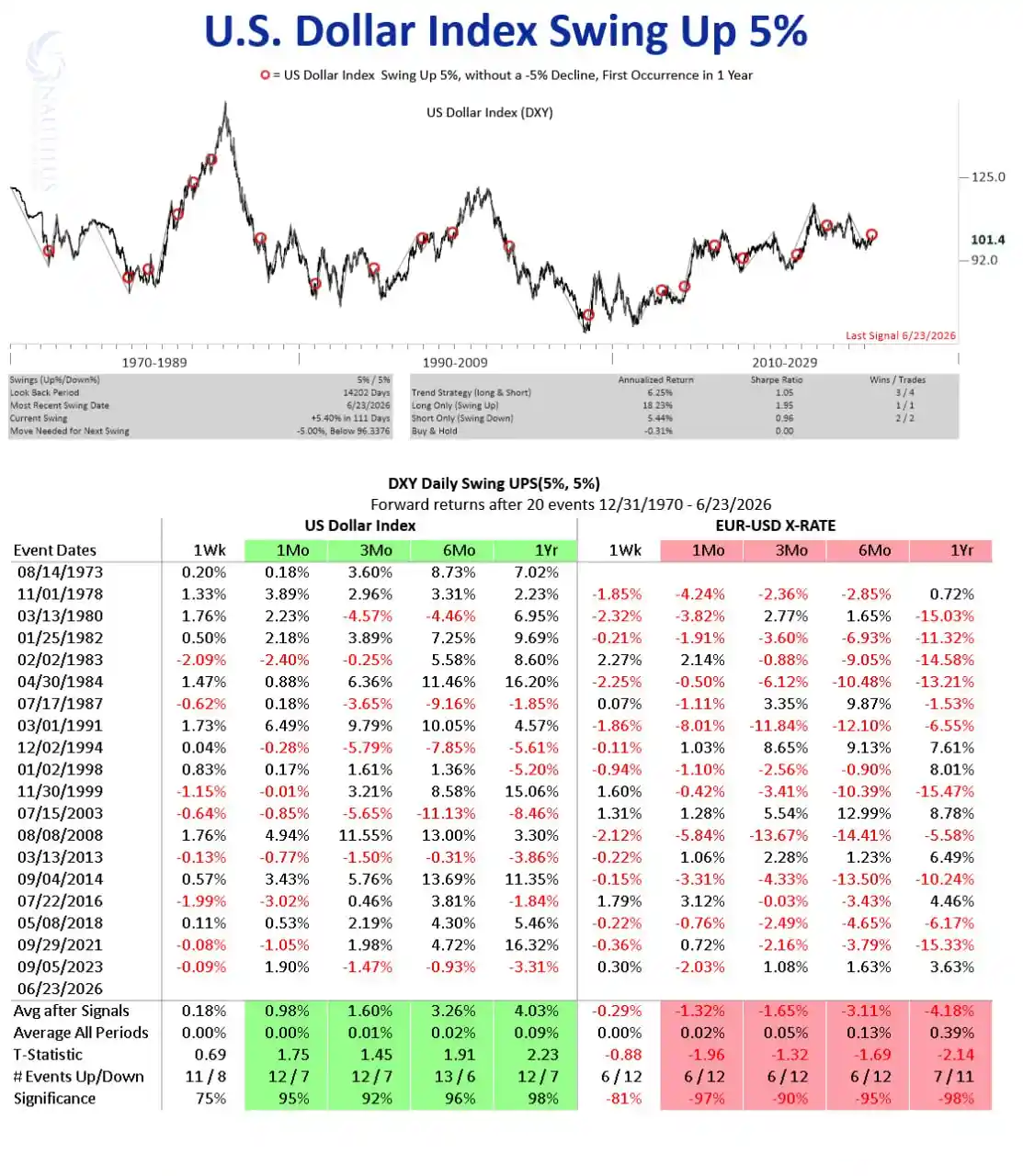
The euro has historically moved in the opposite direction to the dollar. When the same signal is triggered, the euro has fallen by an average of 1.32% against the dollar in one month, 3.11% in six months, and 4.18% over a year.
Of course, history cannot guarantee that market trends will perfectly replicate the past. However, such statistically consistent market patterns are by no means accidental. A sustained strengthening of the US dollar typically reflects a fundamental shift in global investor expectations, rather than a fleeting moment of short-term speculative sentiment. The core driver of this market rally remains the Federal Reserve. The Fed's stance is very clear: curbing inflation is the top priority, even if it slows economic growth. A stronger dollar will suppress almost all asset classes: pushing up global financing costs, weakening the attractiveness of non-interest-bearing assets like gold, increasing debt repayment pressure on emerging market countries, and dragging down commodity prices.
The current transmission logic is becoming increasingly clear: the market is gradually digesting the expectation of "high interest rates being maintained for a long time", and precious metals, the euro, and other commodities are all falling.
Technical Analysis
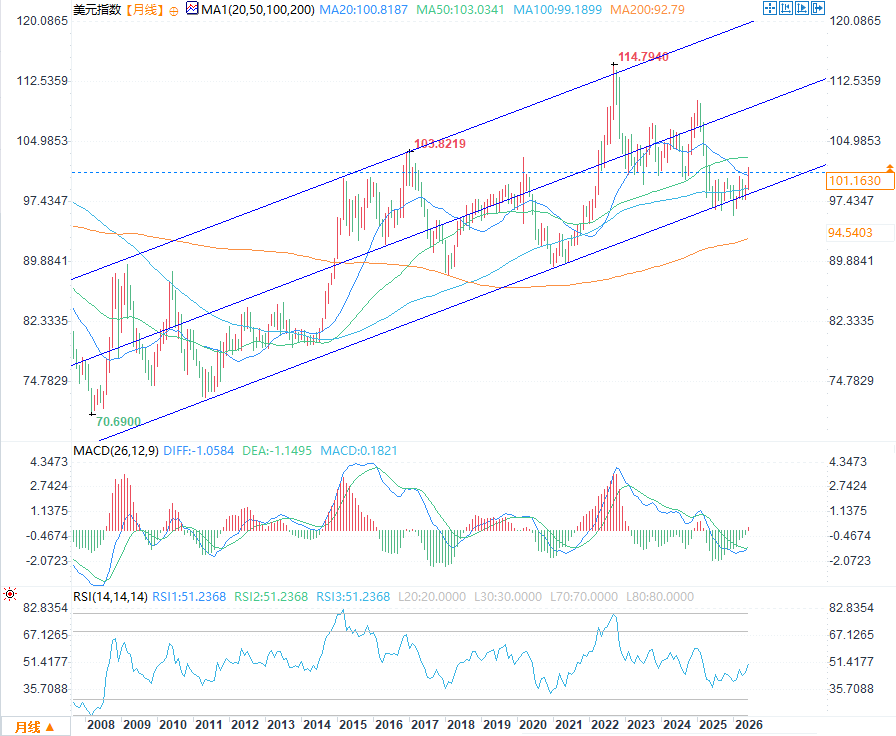
(US Dollar Index Daily Chart Source: FX678)
The US dollar index remains within the long-term upward channel that began in 2008. The current price has stabilized above short-term moving averages, and the MACD monthly chart shows a golden cross, indicating short-term rebound momentum. In the medium term, it faces resistance from the confluence of the 50-day moving average and the previous high of 103.82. Currently, it is in a high-level consolidation phase following the surge in 2022, making a one-sided sharp rise unlikely. Holding above 100.82 would allow the rebound to continue, while a break below 96.59 would test the long-term bullish trend. The area above 103 represents a strong resistance zone.
in conclusion
Investors should not only focus on the dollar's inherent strength but also delve into the core drivers behind its appreciation. As long as inflation remains sticky, US Treasury yields remain high, and the Federal Reserve maintains a hawkish stance, historical data will continue to favor the dollar. Referring to past interest rate hike cycles, the duration of this dollar appreciation trend may far exceed most market participants' current expectations.
One month after the signal appeared, the US dollar index rose by an average of 0.98%; six months by an average of 3.26%; and twelve months by an average of 4.03%. Of the 17 fully recorded market cycles, the US dollar index remained in an upward trend one year later in 12 of them.
The euro has historically moved in the opposite direction to the dollar. When the same signal is triggered, the euro has fallen by an average of 1.32% against the dollar in one month, 3.11% in six months, and 4.18% over a year.
Of course, history cannot guarantee that market trends will perfectly replicate the past. However, such statistically consistent market patterns are by no means accidental. A sustained strengthening of the US dollar typically reflects a fundamental shift in global investor expectations, rather than a fleeting moment of short-term speculative sentiment. The core driver of this market rally remains the Federal Reserve. The Fed's stance is very clear: curbing inflation is the top priority, even if it slows economic growth. A stronger dollar will suppress almost all asset classes: pushing up global financing costs, weakening the attractiveness of non-interest-bearing assets like gold, increasing debt repayment pressure on emerging market countries, and dragging down commodity prices.
The current transmission logic is becoming increasingly clear: the market is gradually digesting the expectation of "high interest rates being maintained for a long time", and precious metals, the euro, and other commodities are all falling.
Technical Analysis
(US Dollar Index Daily Chart Source: FX678)
The US dollar index remains within the long-term upward channel that began in 2008. The current price has stabilized above short-term moving averages, and the MACD monthly chart shows a golden cross, indicating short-term rebound momentum. In the medium term, it faces resistance from the confluence of the 50-day moving average and the previous high of 103.82. Currently, it is in a high-level consolidation phase following the surge in 2022, making a one-sided sharp rise unlikely. Holding above 100.82 would allow the rebound to continue, while a break below 96.59 would test the long-term bullish trend. The area above 103 represents a strong resistance zone.
in conclusion
Investors should not only focus on the dollar's inherent strength but also delve into the core drivers behind its appreciation. As long as inflation remains sticky, US Treasury yields remain high, and the Federal Reserve maintains a hawkish stance, historical data will continue to favor the dollar. Referring to past interest rate hike cycles, the duration of this dollar appreciation trend may far exceed most market participants' current expectations.
- Risk Warning and Disclaimer
- The market involves risk, and trading may not be suitable for all investors. This article is for reference only and does not constitute personal investment advice, nor does it take into account certain users’ specific investment objectives, financial situation, or other needs. Any investment decisions made based on this information are at your own risk.