Two rounds of price clashes in 11 days: Overly optimistic outlook for oil prices warrants caution.
2026-06-29 20:46:29
On Monday (June 29), WTI oil prices remained volatile during the Asian and European sessions, briefly rising by 1% before quickly falling back.
The geopolitical conflict between the US and Iran escalated suddenly on Sunday, disrupting the stable operation of the crude oil market. International crude oil benchmark Brent crude futures rose in tandem, with an increase of around 1.5%.
White House Press Secretary Levitt stated that technical negotiations will be held concurrently with high-level talks, and that President Trump hopes the peace process will proceed smoothly. President Trump also reserves the right to use military force if necessary.
The core cause of this round of oil price fluctuations is the recent and repeated military standoff between the US and Iran.
The escalating conflict between the two sides had previously severely hampered the process of negotiations to stabilize the situation in the Middle East and directly disrupted the global oil shipping and supply system.
With both sides reaching a temporary ceasefire agreement, the Strait of Hormuz, a core global energy strategic passage, has resumed freedom of navigation, allowing commercial ships to pass normally, providing key fundamental support for the rebound in oil prices.
According to US officials, the US and Iran have not only temporarily suspended all military operations, but will also conduct ongoing technical consultations on the details of the memorandum of understanding to further consolidate the ceasefire results.
Prior to this ceasefire agreement, the Middle East geopolitical situation had undergone a period of intense turmoil.
Last Saturday, a commercial oil tanker was attacked with munitions in the Strait of Hormuz. Following the incident, the U.S. military quickly launched a precise strike against multiple Iranian military targets.
The impact of the conflict continues to expand, with Kuwait and Bahrain, neighboring Iran, also detecting incoming missile and drone targets at night, leading to a sharp deterioration in the regional security situation.
The escalating conflict has prompted a strong statement from the United States. On Sunday, President Trump publicly warned Iran that if the situation continues to spiral out of control, the United States will take decisive military action to end the current conflict.
The U.S. Central Command disclosed details of the military operation, which was a retaliatory strike against the attack on the Panamanian oil tanker "Kikumaru". The tanker was carrying more than 2 million barrels of crude oil through the Strait of Hormuz when it was attacked by an Iranian drone. U.S. warplanes carried out precision strikes on a total of 10 Iranian military targets in and around the strait, including key military facilities such as missiles, drone storage facilities, and coastal radar sites.
Despite repeated geopolitical conflicts disrupting the market, the current crude oil market is showing a clear optimistic sentiment, and even an overly relaxed trading mentality, a phenomenon that has drawn warnings from professional institutions.
In a new research report released on Monday, ING analysts Warren Paterson and Eva Mante pointed out that market participants generally underestimated the potential risks to Middle Eastern crude oil supplies and were overly optimistic about the speed of recovery in Persian Gulf crude oil supplies.
The current market trading logic is overly focused on the expectation of improved global supply and demand brought about by the recovery of crude oil circulation, deliberately downplaying the uncertainty risks of geopolitical conflicts.
According to institutions, this one-sided optimism poses significant risks. If the recovery of crude oil supply falls short of expectations, or if the conflict between the US and Iran escalates again, crude oil prices will face substantial upward potential.
The current oil price rebound began on Monday morning, but the overall pace of the rebound was relatively slow. This was mainly because the market had already priced in the expectation of a ceasefire, which weakened the positive impact of geopolitical conflicts in the short term.
In fact, the market currently lacks sufficient risk awareness, with most investors ignoring the real impact of the disruption to shipping in the Strait of Hormuz and the tight supply of global crude oil inventories, which have fallen to multi-decade lows.
In summary, the excessive optimism in the crude oil market in the past has overdrawn the market's momentum and ignored the recurring and complex geopolitical situation in the Middle East. The two clashes between the US and Iran in 11 days suggest that the US-Iran situation may be subject to recurring fluctuations.
The recent rebound in oil prices also signifies that the market is gradually returning to rationality, facing core fundamental factors such as geopolitical risks and low global inventory levels. The true supply and demand dynamics and risk pricing in the crude oil market are gradually being restored.
From a technical perspective, the rate of decline in WTI oil prices has begun to slow. Currently, oil prices are consolidating around the 70 level, which is the 0.236 Fibonacci retracement of this round of gains. A break below this level should have triggered a large number of stop-loss orders, but this has not occurred. This means that short-term speculative positions are not crowded, and funds are not in the market. Therefore, simple positive news later on may lead to a rapid replenishment of funds that were withdrawn earlier.
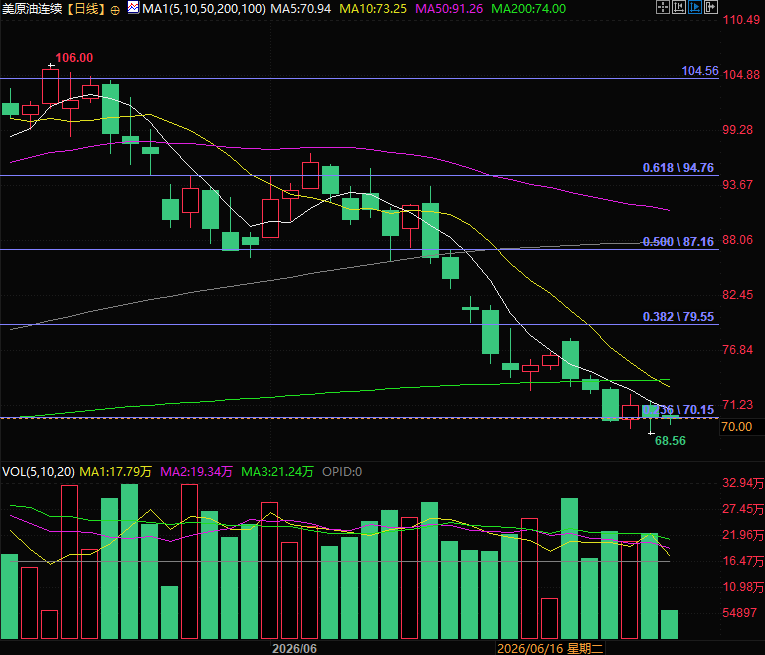
(WTI crude oil futures daily chart, source: EasyForex)
At 20:40 Beijing time, WTI crude oil futures were trading at $70.12 per barrel.
The geopolitical conflict between the US and Iran escalated suddenly on Sunday, disrupting the stable operation of the crude oil market. International crude oil benchmark Brent crude futures rose in tandem, with an increase of around 1.5%.
White House Press Secretary Levitt stated that technical negotiations will be held concurrently with high-level talks, and that President Trump hopes the peace process will proceed smoothly. President Trump also reserves the right to use military force if necessary.
Ceasefire eases geopolitical pressures and restores key shipping lanes to normal operation
The core cause of this round of oil price fluctuations is the recent and repeated military standoff between the US and Iran.
The escalating conflict between the two sides had previously severely hampered the process of negotiations to stabilize the situation in the Middle East and directly disrupted the global oil shipping and supply system.
With both sides reaching a temporary ceasefire agreement, the Strait of Hormuz, a core global energy strategic passage, has resumed freedom of navigation, allowing commercial ships to pass normally, providing key fundamental support for the rebound in oil prices.
According to US officials, the US and Iran have not only temporarily suspended all military operations, but will also conduct ongoing technical consultations on the details of the memorandum of understanding to further consolidate the ceasefire results.
A comprehensive recap of the conflict: Multiple attacks triggered severe turmoil in the Middle East.
Prior to this ceasefire agreement, the Middle East geopolitical situation had undergone a period of intense turmoil.
Last Saturday, a commercial oil tanker was attacked with munitions in the Strait of Hormuz. Following the incident, the U.S. military quickly launched a precise strike against multiple Iranian military targets.
The impact of the conflict continues to expand, with Kuwait and Bahrain, neighboring Iran, also detecting incoming missile and drone targets at night, leading to a sharp deterioration in the regional security situation.
The escalating conflict has prompted a strong statement from the United States. On Sunday, President Trump publicly warned Iran that if the situation continues to spiral out of control, the United States will take decisive military action to end the current conflict.
The U.S. Central Command disclosed details of the military operation, which was a retaliatory strike against the attack on the Panamanian oil tanker "Kikumaru". The tanker was carrying more than 2 million barrels of crude oil through the Strait of Hormuz when it was attacked by an Iranian drone. U.S. warplanes carried out precision strikes on a total of 10 Iranian military targets in and around the strait, including key military facilities such as missiles, drone storage facilities, and coastal radar sites.
Institutions warn: Market overly optimistic, ignoring potential supply risks.
Despite repeated geopolitical conflicts disrupting the market, the current crude oil market is showing a clear optimistic sentiment, and even an overly relaxed trading mentality, a phenomenon that has drawn warnings from professional institutions.
In a new research report released on Monday, ING analysts Warren Paterson and Eva Mante pointed out that market participants generally underestimated the potential risks to Middle Eastern crude oil supplies and were overly optimistic about the speed of recovery in Persian Gulf crude oil supplies.
The current market trading logic is overly focused on the expectation of improved global supply and demand brought about by the recovery of crude oil circulation, deliberately downplaying the uncertainty risks of geopolitical conflicts.
According to institutions, this one-sided optimism poses significant risks. If the recovery of crude oil supply falls short of expectations, or if the conflict between the US and Iran escalates again, crude oil prices will face substantial upward potential.
The current oil price rebound began on Monday morning, but the overall pace of the rebound was relatively slow. This was mainly because the market had already priced in the expectation of a ceasefire, which weakened the positive impact of geopolitical conflicts in the short term.
In fact, the market currently lacks sufficient risk awareness, with most investors ignoring the real impact of the disruption to shipping in the Strait of Hormuz and the tight supply of global crude oil inventories, which have fallen to multi-decade lows.
Summary and Technical Analysis:
In summary, the excessive optimism in the crude oil market in the past has overdrawn the market's momentum and ignored the recurring and complex geopolitical situation in the Middle East. The two clashes between the US and Iran in 11 days suggest that the US-Iran situation may be subject to recurring fluctuations.
The recent rebound in oil prices also signifies that the market is gradually returning to rationality, facing core fundamental factors such as geopolitical risks and low global inventory levels. The true supply and demand dynamics and risk pricing in the crude oil market are gradually being restored.
From a technical perspective, the rate of decline in WTI oil prices has begun to slow. Currently, oil prices are consolidating around the 70 level, which is the 0.236 Fibonacci retracement of this round of gains. A break below this level should have triggered a large number of stop-loss orders, but this has not occurred. This means that short-term speculative positions are not crowded, and funds are not in the market. Therefore, simple positive news later on may lead to a rapid replenishment of funds that were withdrawn earlier.
(WTI crude oil futures daily chart, source: EasyForex)
At 20:40 Beijing time, WTI crude oil futures were trading at $70.12 per barrel.
- Risk Warning and Disclaimer
- The market involves risk, and trading may not be suitable for all investors. This article is for reference only and does not constitute personal investment advice, nor does it take into account certain users’ specific investment objectives, financial situation, or other needs. Any investment decisions made based on this information are at your own risk.