The PCE statistical methodology is undergoing a major adjustment, potentially revising the May inflation reading down by 0.2 percentage points, which could influence the Federal Reserve's assessment.
2026-06-30 10:30:02
On Tuesday (June 30) in early Asian trading, the US dollar index fluctuated upwards and is currently trading around 101.25.
However, investors' attention has shifted in part to potential changes in the U.S. inflation statistics system.
The U.S. Bureau of Economic Analysis announced that it will adjust the statistical methods for some inflation indicators later this year, affecting pricing calculations in areas such as portfolio management, legal services, and computer software.
Economists expect this adjustment to lead to a downward revision of the year-on-year increase in the core PCE price index in May from the previously announced 3.4% to 3.2%-3.3%.
Since the PCE is a key reference indicator for the Federal Reserve to achieve its 2% inflation target, this change in statistical methodology may have a subtle but important impact on the market's judgment of inflation trends and policy paths.
The U.S. Bureau of Economic Analysis announced that it will adjust the statistical methodology for the PCE price index, affecting pricing calculations in three major areas: portfolio management, legal services, and computer software and accessories.
These adjustments will be included in the revised GDP data released on September 30 and will be retrospective to 2021. As the PCE price index is a core component of the monthly personal income and spending report and a key reference indicator for the Federal Reserve in assessing its 2% inflation target, this change in statistical methodology has attracted significant market attention.
Economists expect the adjusted year-on-year growth rate of core PCE in May to be revised down by 0.1 to 0.2 percentage points, which may further reinforce the narrative of continued decline in inflation.
Goldman Sachs and JPMorgan Chase respectively predict that the year-on-year growth rate of core PCE in May will be revised down from 3.4% to 3.2% or 3.3%. Although the adjustment appears to be relatively mild, during this critical window of the Fed's policy shift, this change may be significantly amplified and interpreted by the market, thereby rapidly reshaping investors' expectations for the interest rate path and triggering volatility in bond yields and a revaluation of stock market valuations.
JPMorgan economists further analyzed that the weight of related items in the PCE index is much higher than that of the CPI, reaching more than 30 times, and the two are not entirely consistent in terms of the definition and coverage of specific pricing items. This means that the impact of statistical method optimization on PCE readings may be more profound than initially estimated, not only reinforcing the overall narrative of a continued decline in inflation, but also potentially providing the Federal Reserve with more room for maneuver in subsequent monetary policy decisions.
This adjustment comes at a time when the US economy is facing the dual challenges of slowing growth and inflationary pressures. The revised core PCE data is expected to alleviate market concerns about persistent high inflation, push down long-term Treasury yields, and provide support for the stock market, especially for technology and growth sectors.
However, analysts also cautioned that while retrospective adjustments do not change the economic fundamentals, they may exacerbate disagreements over data interpretation in the short term. Investors are advised to closely monitor subsequent statements from Federal Reserve officials to grasp the pace of policy.
Although the 0.1-0.2 percentage point reduction may seem limited, the Federal Reserve is currently in a critical window of opportunity for monetary policy shifts, and any changes in inflation data could be amplified and interpreted by the market.
If the core PCE is revised downward, it will strengthen the narrative of "continued decline in inflation" and provide more evidence for the Federal Reserve to pause interest rate hikes or even shift to easing.
If the core PCE remains unchanged or is revised upward, it may reinforce the judgment that "inflation remains sticky" and postpone the timing of the policy shift.
Furthermore, this adjustment is retrospective to 2021, meaning that historical inflation data from the past few years may also be subject to revision, which will affect economists' inflation forecasting models and the Federal Reserve's assessment of long-term price trends.
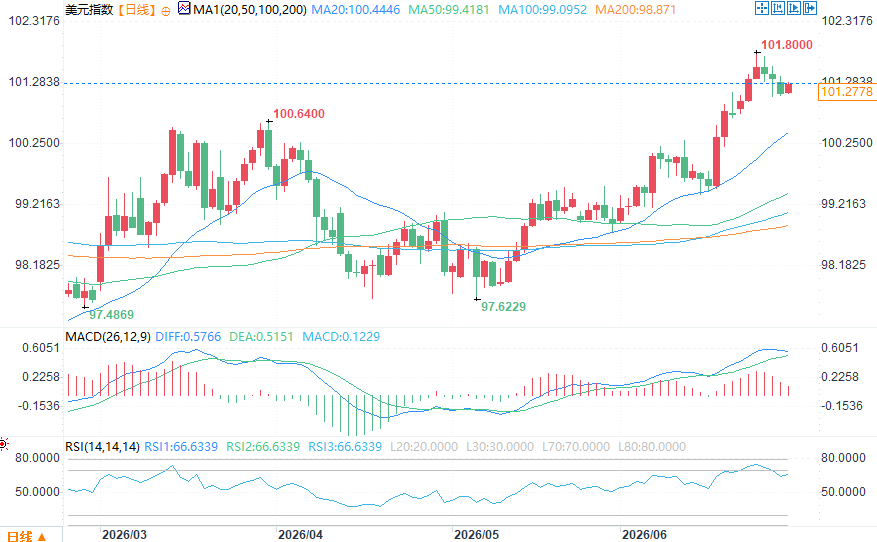
(US Dollar Index Daily Chart, Source: FX678)
At 10:29 AM Beijing time on June 30, the US dollar index was at 101.27.
However, investors' attention has shifted in part to potential changes in the U.S. inflation statistics system.
The U.S. Bureau of Economic Analysis announced that it will adjust the statistical methods for some inflation indicators later this year, affecting pricing calculations in areas such as portfolio management, legal services, and computer software.
Economists expect this adjustment to lead to a downward revision of the year-on-year increase in the core PCE price index in May from the previously announced 3.4% to 3.2%-3.3%.
Since the PCE is a key reference indicator for the Federal Reserve to achieve its 2% inflation target, this change in statistical methodology may have a subtle but important impact on the market's judgment of inflation trends and policy paths.
Statistical adjustments: involving three major areas, retrospectively dating back to 2021.
The U.S. Bureau of Economic Analysis announced that it will adjust the statistical methodology for the PCE price index, affecting pricing calculations in three major areas: portfolio management, legal services, and computer software and accessories.
These adjustments will be included in the revised GDP data released on September 30 and will be retrospective to 2021. As the PCE price index is a core component of the monthly personal income and spending report and a key reference indicator for the Federal Reserve in assessing its 2% inflation target, this change in statistical methodology has attracted significant market attention.
Economists expect the adjusted year-on-year growth rate of core PCE in May to be revised down by 0.1 to 0.2 percentage points, which may further reinforce the narrative of continued decline in inflation.
Market impact: Core PCE may be revised downwards by 0.1-0.2 percentage points.
Goldman Sachs and JPMorgan Chase respectively predict that the year-on-year growth rate of core PCE in May will be revised down from 3.4% to 3.2% or 3.3%. Although the adjustment appears to be relatively mild, during this critical window of the Fed's policy shift, this change may be significantly amplified and interpreted by the market, thereby rapidly reshaping investors' expectations for the interest rate path and triggering volatility in bond yields and a revaluation of stock market valuations.
JPMorgan economists further analyzed that the weight of related items in the PCE index is much higher than that of the CPI, reaching more than 30 times, and the two are not entirely consistent in terms of the definition and coverage of specific pricing items. This means that the impact of statistical method optimization on PCE readings may be more profound than initially estimated, not only reinforcing the overall narrative of a continued decline in inflation, but also potentially providing the Federal Reserve with more room for maneuver in subsequent monetary policy decisions.
This adjustment comes at a time when the US economy is facing the dual challenges of slowing growth and inflationary pressures. The revised core PCE data is expected to alleviate market concerns about persistent high inflation, push down long-term Treasury yields, and provide support for the stock market, especially for technology and growth sectors.
However, analysts also cautioned that while retrospective adjustments do not change the economic fundamentals, they may exacerbate disagreements over data interpretation in the short term. Investors are advised to closely monitor subsequent statements from Federal Reserve officials to grasp the pace of policy.
Policy Implications: Cooling Inflation Readings May Affect the Federal Reserve's Judgment
Although the 0.1-0.2 percentage point reduction may seem limited, the Federal Reserve is currently in a critical window of opportunity for monetary policy shifts, and any changes in inflation data could be amplified and interpreted by the market.
If the core PCE is revised downward, it will strengthen the narrative of "continued decline in inflation" and provide more evidence for the Federal Reserve to pause interest rate hikes or even shift to easing.
If the core PCE remains unchanged or is revised upward, it may reinforce the judgment that "inflation remains sticky" and postpone the timing of the policy shift.
Furthermore, this adjustment is retrospective to 2021, meaning that historical inflation data from the past few years may also be subject to revision, which will affect economists' inflation forecasting models and the Federal Reserve's assessment of long-term price trends.
(US Dollar Index Daily Chart, Source: FX678)
At 10:29 AM Beijing time on June 30, the US dollar index was at 101.27.
- Risk Warning and Disclaimer
- The market involves risk, and trading may not be suitable for all investors. This article is for reference only and does not constitute personal investment advice, nor does it take into account certain users’ specific investment objectives, financial situation, or other needs. Any investment decisions made based on this information are at your own risk.