













The market is focused on Hormuz, but has overlooked the fact that a Ukrainian oil refinery is burning.
2026-07-03 09:11:52
Brent crude oil futures traded in a narrow range in early Asian trading on Friday (July 3), currently hovering around $71.50 per barrel.
For crude oil futures, the market's current focus remains on the expectation of a loose supply and demand fundamental—the resumption of navigation through the Hormuz and increased OPEC+ production have led institutions to exclude geopolitical premiums from pricing. However, an underestimated variable is emerging: Ukraine's continued attacks on Russian domestic refining facilities are quietly eroding global refined oil supply.
Russia launched a massive airstrike on Kyiv, the capital of Ukraine, early Thursday morning (July 2), firing 74 missiles and 496 drones, killing at least 27 people, injuring 91, and damaging about 130 buildings.
This is one of the deadliest attacks Kyiv has suffered since the fifth year of the Russia-Ukraine conflict. The mayor of Kyiv declared Friday a day of mourning for the entire city.
Explosions were heard repeatedly throughout the night in downtown Kyiv and other areas, prompting thousands of residents to rush to subway stations and bomb shelters for refuge. Thick smoke blanketed the city. Rescue workers worked through the night to clear rubble and search for those trapped, and the death toll is likely to continue to rise.
Ukrainian Air Force spokesman Yuri Ikhnat said the number of ballistic missiles in the attack was unusually high, and Ukraine's low interception rate for such missiles was mainly due to a severe shortage of air defense equipment such as Patriot missiles in recent months.
The attack caused varying degrees of damage to residential areas in Kyiv, affecting approximately 3 million people. Nine-story residential buildings were partially destroyed, and numerous homes caught fire. Advanced laboratories and offices at the National Institute of Biochemistry of Ukraine were burned down, prompting biologist Yuri Danilovich to describe it as "a disaster for Ukrainian medical and biological sciences."
The Ukrainian Red Cross humanitarian warehouse in Kyiv was also destroyed, resulting in the loss of 320,000 pieces of relief supplies and severely impacting the national emergency response.
EU Ambassador to Ukraine, Katarina Masenova, said that diplomatic residences were attacked, and although no one was injured, property was destroyed in the fire, adding that Russia "pouring hellfire into Kyiv."
Zelenskyy cut short his visit to Ireland and returned to Kyiv, where he inspected the severely damaged residential buildings. In a video address, he said, "More homes and lives could have been saved today if our partners had delivered on their promises in time. Our only request is that the agreements already reached be honored."
Zelenskyy emphasized that air defense will be a key topic at next week's NATO summit in Turkey, and called on Europe to accelerate the development of its own air defense capabilities to counter various threats, including ballistic missiles.
The Russian Ministry of Defense stated that the operation, which used long-range, high-precision weapons to strike military facilities, energy facilities, and airports in Kyiv and other areas, was retaliation for Ukrainian drone attacks on Russian territory.
The Kremlin stated that the military has informed President Putin that Moscow will continue to increase pressure to achieve its war objectives.
Ukraine claims it attacked an oil refinery in Russia's Nizhny Novgorod region at night, resulting in one death.
EU High Representative for Foreign Affairs and Security Policy Kaya Karas said she would propose new sanctions against more entities supporting the Russian military-industrial complex. She emphasized that only continued military support to Ukraine and increased pressure on Moscow can deter such attacks.
UN Secretary-General António Guterres condemned the attack on a residential area. NATO members Poland and Finland have taken precautionary measures, briefly scrambling fighter jets or establishing restricted airspace.
As of now, more than 600 rescue workers are still conducting search and rescue operations at multiple locations throughout the city.
Analysts point out that this round of attacks highlights the gaps in Ukraine's air defense system and also reflects the escalating conflict.
This large-scale airstrike highlights the protracted and destructive nature of the Russia-Ukraine conflict, with the shortage of air defense systems directly amplifying the risks to civilians and infrastructure. The repeated targeting of energy facilities exacerbates tensions in the global energy supply chain, and expectations of escalating sanctions may further drive up the prices of related commodities. The future outcomes of the NATO summit and the implementation of aid will have a crucial impact on the course of the conflict and the stability of international markets.
Q1: How large was the Russian airstrike on Kyiv?
A: The Russian military launched 74 missiles and 496 drones, a large-scale combined attack rarely seen in recent times. The large number of ballistic missiles increased the difficulty of interception, and the Ukrainian air defense system was limited in effectiveness due to a shortage of Patriot missiles, ultimately resulting in 27 deaths, 91 injuries, and widespread building damage.
Q2: Why has the shortage of air defense systems become a core issue?
A: Ukraine has faced delays in Western aid in recent months, and its existing stockpiles are insufficient to cope with high-intensity saturation attacks. Zelensky directly accused allies of failing to deliver on their promises in a timely manner, resulting in more civilian casualties. This also reflects the lagging development of European air defense capabilities, becoming a focal point of discussion ahead of the NATO summit.
Q3: What direct impact will the attack have on Ukraine's economy and people's livelihoods?
A: In addition to casualties, the National Institute of Biochemistry and Red Cross warehouses suffered severe damage, impacting scientific research and humanitarian aid. The widespread destruction of residential areas exacerbated hardship for the people, and reconstruction costs will further deplete Ukraine's financial resources.
Q4: What is the logic behind Russia's actions?
A: Russia claims it was retaliation for Ukraine's attacks on its domestic oil refineries and other energy facilities. This creates a cycle of mutual attacks on energy facilities, with Russia hoping to pressure Ukraine into making concessions, while Ukraine attempts to weaken Russia's military industry and fuel supply.
Q5: What measures might the international community take next?
A: The EU plans to expand sanctions against Russia, focusing on the military supply chain; the NATO summit may discuss strengthening air defense assistance. The UN has condemned the move, but its actual effectiveness depends on the implementation of aid and diplomatic efforts. Overall, the escalation of the conflict will continue to increase the risk of volatility in global energy prices.
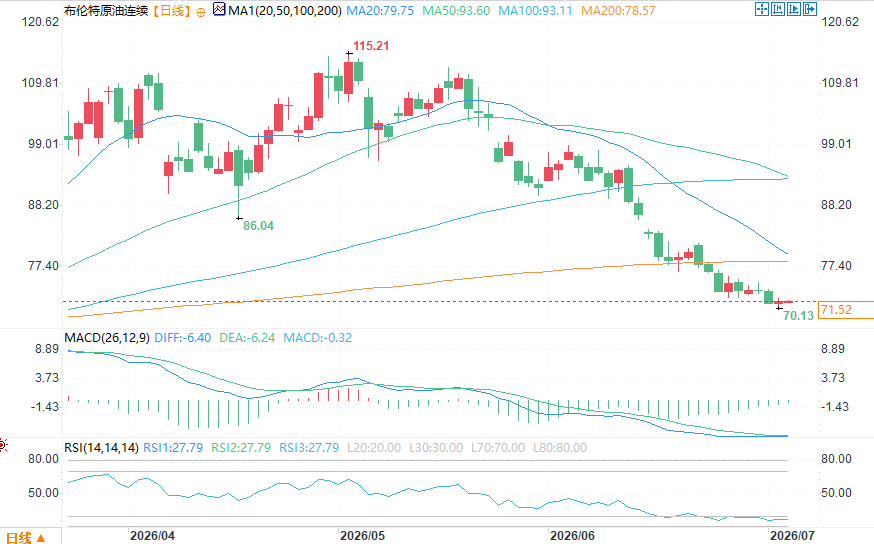
(Brent crude oil futures daily chart, source: FX678)
At 09:09 Beijing time on July 3, Brent crude oil futures were trading at $71.60 per barrel.
For crude oil futures, the market's current focus remains on the expectation of a loose supply and demand fundamental—the resumption of navigation through the Hormuz and increased OPEC+ production have led institutions to exclude geopolitical premiums from pricing. However, an underestimated variable is emerging: Ukraine's continued attacks on Russian domestic refining facilities are quietly eroding global refined oil supply.
Russia launched a massive airstrike on Kyiv, the capital of Ukraine, early Thursday morning (July 2), firing 74 missiles and 496 drones, killing at least 27 people, injuring 91, and damaging about 130 buildings.
This is one of the deadliest attacks Kyiv has suffered since the fifth year of the Russia-Ukraine conflict. The mayor of Kyiv declared Friday a day of mourning for the entire city.
Explosions were heard repeatedly throughout the night in downtown Kyiv and other areas, prompting thousands of residents to rush to subway stations and bomb shelters for refuge. Thick smoke blanketed the city. Rescue workers worked through the night to clear rubble and search for those trapped, and the death toll is likely to continue to rise.
Ukrainian Air Force spokesman Yuri Ikhnat said the number of ballistic missiles in the attack was unusually high, and Ukraine's low interception rate for such missiles was mainly due to a severe shortage of air defense equipment such as Patriot missiles in recent months.
Extensive damage affected multiple important facilities.
The attack caused varying degrees of damage to residential areas in Kyiv, affecting approximately 3 million people. Nine-story residential buildings were partially destroyed, and numerous homes caught fire. Advanced laboratories and offices at the National Institute of Biochemistry of Ukraine were burned down, prompting biologist Yuri Danilovich to describe it as "a disaster for Ukrainian medical and biological sciences."
The Ukrainian Red Cross humanitarian warehouse in Kyiv was also destroyed, resulting in the loss of 320,000 pieces of relief supplies and severely impacting the national emergency response.
EU Ambassador to Ukraine, Katarina Masenova, said that diplomatic residences were attacked, and although no one was injured, property was destroyed in the fire, adding that Russia "pouring hellfire into Kyiv."
Zelenskyy urgently returned home to criticize allies for failing to provide air defense systems in a timely manner.
Zelenskyy cut short his visit to Ireland and returned to Kyiv, where he inspected the severely damaged residential buildings. In a video address, he said, "More homes and lives could have been saved today if our partners had delivered on their promises in time. Our only request is that the agreements already reached be honored."
Zelenskyy emphasized that air defense will be a key topic at next week's NATO summit in Turkey, and called on Europe to accelerate the development of its own air defense capabilities to counter various threats, including ballistic missiles.
Russia claims this is a retaliatory action and will continue to exert pressure.
The Russian Ministry of Defense stated that the operation, which used long-range, high-precision weapons to strike military facilities, energy facilities, and airports in Kyiv and other areas, was retaliation for Ukrainian drone attacks on Russian territory.
The Kremlin stated that the military has informed President Putin that Moscow will continue to increase pressure to achieve its war objectives.
Ukraine claims it attacked an oil refinery in Russia's Nizhny Novgorod region at night, resulting in one death.
International reaction is strong, and the EU plans to impose additional sanctions.
EU High Representative for Foreign Affairs and Security Policy Kaya Karas said she would propose new sanctions against more entities supporting the Russian military-industrial complex. She emphasized that only continued military support to Ukraine and increased pressure on Moscow can deter such attacks.
UN Secretary-General António Guterres condemned the attack on a residential area. NATO members Poland and Finland have taken precautionary measures, briefly scrambling fighter jets or establishing restricted airspace.
As of now, more than 600 rescue workers are still conducting search and rescue operations at multiple locations throughout the city.
Analysts point out that this round of attacks highlights the gaps in Ukraine's air defense system and also reflects the escalating conflict.
Editor's Summary
This large-scale airstrike highlights the protracted and destructive nature of the Russia-Ukraine conflict, with the shortage of air defense systems directly amplifying the risks to civilians and infrastructure. The repeated targeting of energy facilities exacerbates tensions in the global energy supply chain, and expectations of escalating sanctions may further drive up the prices of related commodities. The future outcomes of the NATO summit and the implementation of aid will have a crucial impact on the course of the conflict and the stability of international markets.
Frequently Asked Questions
Q1: How large was the Russian airstrike on Kyiv?
A: The Russian military launched 74 missiles and 496 drones, a large-scale combined attack rarely seen in recent times. The large number of ballistic missiles increased the difficulty of interception, and the Ukrainian air defense system was limited in effectiveness due to a shortage of Patriot missiles, ultimately resulting in 27 deaths, 91 injuries, and widespread building damage.
Q2: Why has the shortage of air defense systems become a core issue?
A: Ukraine has faced delays in Western aid in recent months, and its existing stockpiles are insufficient to cope with high-intensity saturation attacks. Zelensky directly accused allies of failing to deliver on their promises in a timely manner, resulting in more civilian casualties. This also reflects the lagging development of European air defense capabilities, becoming a focal point of discussion ahead of the NATO summit.
Q3: What direct impact will the attack have on Ukraine's economy and people's livelihoods?
A: In addition to casualties, the National Institute of Biochemistry and Red Cross warehouses suffered severe damage, impacting scientific research and humanitarian aid. The widespread destruction of residential areas exacerbated hardship for the people, and reconstruction costs will further deplete Ukraine's financial resources.
Q4: What is the logic behind Russia's actions?
A: Russia claims it was retaliation for Ukraine's attacks on its domestic oil refineries and other energy facilities. This creates a cycle of mutual attacks on energy facilities, with Russia hoping to pressure Ukraine into making concessions, while Ukraine attempts to weaken Russia's military industry and fuel supply.
Q5: What measures might the international community take next?
A: The EU plans to expand sanctions against Russia, focusing on the military supply chain; the NATO summit may discuss strengthening air defense assistance. The UN has condemned the move, but its actual effectiveness depends on the implementation of aid and diplomatic efforts. Overall, the escalation of the conflict will continue to increase the risk of volatility in global energy prices.
(Brent crude oil futures daily chart, source: FX678)
At 09:09 Beijing time on July 3, Brent crude oil futures were trading at $71.60 per barrel.
- Risk Warning and Disclaimer
- The market involves risk, and trading may not be suitable for all investors. This article is for reference only and does not constitute personal investment advice, nor does it take into account certain users’ specific investment objectives, financial situation, or other needs. Any investment decisions made based on this information are at your own risk.

