Dual research confirms that the long-term logic of global central banks' gold purchases remains unchanged, and the foundation for a long-term bull market in gold is solid.
2026-07-03 10:15:21
Gold prices have recently fallen sharply from their highs at the beginning of the year, leading many investors to worry whether the multi-year bull market for gold is coming to an end. The market is focusing too much on short-term variables such as the Federal Reserve's interest rates and the dollar's trend, while ignoring the core force that determines the long-term trend of gold prices: the continuous strategic gold purchases by central banks around the world.
Two authoritative central bank surveys simultaneously confirm that the structural trend of increasing global gold reserves remains unchanged. Coupled with bullish forecasts from investment banks, the long-term upward logic for gold has not been shaken, and the short-term pullback is merely a temporary pause in the market.
The recent gold price adjustment has been significant, leading to widespread pessimism in the market and many questioning whether the long-term upward trend in gold prices has run out of momentum.
Currently, market participants generally focus on the Federal Reserve's monetary policy, US Treasury yields, and fluctuations in the US dollar index to judge the short-term rise and fall of gold prices, but ignore the long-term demand that can stabilize and support gold prices.
After conducting multi-dimensional data analysis, various leading financial institutions have reached a consensus that the underlying strategy of global foreign exchange reserve management institutions in allocating gold has not changed. This is also the core characteristic that distinguishes gold from previous market cycles.
This week, the Official Monetary and Financial Institutions Forum released its annual central bank reserve survey. The surveyed reserve managers generally maintained an optimistic outlook on gold, with several institutions predicting that gold prices will fluctuate between $5,000 and $6,000 per ounce over the next year. The report also pointed out that central banks' motivation for allocating gold is not merely to profit from short-term price increases. In a context of increasingly divergent geopolitical landscapes, gold offers asset diversification, high liquidity, and hedging against geopolitical risks, making it an irreplaceable core asset in foreign exchange reserves.
Just two weeks prior to the release of this survey, the World Gold Council also released its annual questionnaire on central bank gold reserves, and the two surveys yielded highly consistent conclusions. 45% of the surveyed central banks plan to increase their gold holdings in the next twelve months, a record high, and nearly 90% of institutions predict that global official gold reserves will continue to expand. This clearly demonstrates that increasing gold holdings has become a unified long-term strategy for central banks in many countries around the world.
Despite a sharp pullback in gold prices, industry experts generally believe that the current bull market is far from over.
In its latest market report, Goldman Sachs stated that demand for gold from sovereign wealth funds will continue to be a core support for gold prices, maintaining a bullish view on gold and predicting that gold prices could approach $4,900 per ounce next year.
Central bank gold purchases are fundamentally different from ETF funds and short-term speculative trading. Central banks do not buy low and sell high based on short-term market fluctuations; their purchases stem from deep strategic considerations such as long-term reserve planning, reducing reliance on dollar assets, and holding politically neutral assets. With the growth rate of new global gold mine supply remaining moderate, as long as central banks maintain their historically high levels of gold purchases, they can continue to provide stable purchasing power for the gold market.
Interest rates, inflation, and exchange rates will continue to cause short-term fluctuations in gold prices; these factors will only affect the short-term trend.
The current gold market is exhibiting a completely new operating logic unseen for decades. Central banks have become the core buyers, with institutional investors positioning themselves over a ten-year timeframe, while non-speculative funds focus solely on short-term quarterly price movements. This long-term strategic buying can continuously hedge against various short-term negative factors and is the strongest support for the sustained long-term bull market in gold.
In summary, the current decline in gold prices is merely a short-term technical adjustment, and short-term factors such as the Federal Reserve's interest rate and the US dollar can only influence short-term fluctuations.
The demand for diversified reserve portfolios among global central banks has been a long-term issue. Two authoritative surveys and a research report from a leading investment bank both confirm that the official gold purchasing trend remains unchanged. Long-term strategic buying has built a solid bottom, and the long-term bull market for gold, which has lasted for many years, has not ended.
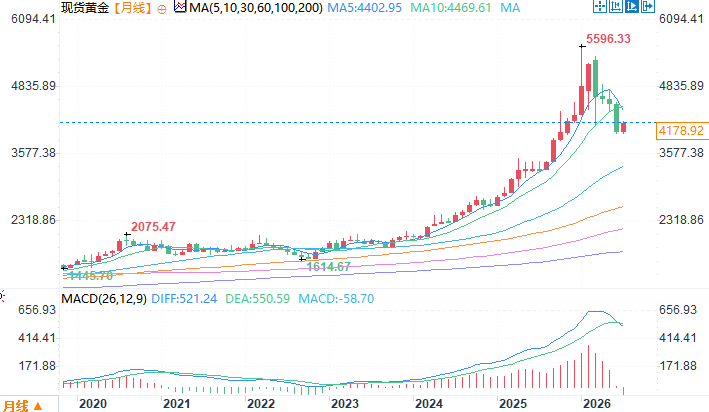
Spot gold monthly chart source: EasyForex
At 10:14 AM Beijing time on July 3, spot gold was trading at $4179.42 per ounce.
Two authoritative central bank surveys simultaneously confirm that the structural trend of increasing global gold reserves remains unchanged. Coupled with bullish forecasts from investment banks, the long-term upward logic for gold has not been shaken, and the short-term pullback is merely a temporary pause in the market.
Short-term pullbacks have triggered market divergence, with investors overly focused on short-term macroeconomic variables.
The recent gold price adjustment has been significant, leading to widespread pessimism in the market and many questioning whether the long-term upward trend in gold prices has run out of momentum.
Currently, market participants generally focus on the Federal Reserve's monetary policy, US Treasury yields, and fluctuations in the US dollar index to judge the short-term rise and fall of gold prices, but ignore the long-term demand that can stabilize and support gold prices.
After conducting multi-dimensional data analysis, various leading financial institutions have reached a consensus that the underlying strategy of global foreign exchange reserve management institutions in allocating gold has not changed. This is also the core characteristic that distinguishes gold from previous market cycles.
Two authoritative surveys corroborate the continued gold-buying spree by the central bank, highlighting its diversified investment value.
This week, the Official Monetary and Financial Institutions Forum released its annual central bank reserve survey. The surveyed reserve managers generally maintained an optimistic outlook on gold, with several institutions predicting that gold prices will fluctuate between $5,000 and $6,000 per ounce over the next year. The report also pointed out that central banks' motivation for allocating gold is not merely to profit from short-term price increases. In a context of increasingly divergent geopolitical landscapes, gold offers asset diversification, high liquidity, and hedging against geopolitical risks, making it an irreplaceable core asset in foreign exchange reserves.
Just two weeks prior to the release of this survey, the World Gold Council also released its annual questionnaire on central bank gold reserves, and the two surveys yielded highly consistent conclusions. 45% of the surveyed central banks plan to increase their gold holdings in the next twelve months, a record high, and nearly 90% of institutions predict that global official gold reserves will continue to expand. This clearly demonstrates that increasing gold holdings has become a unified long-term strategy for central banks in many countries around the world.
Investment banks are firmly bullish on gold, and the logic behind central bank gold purchases is completely separate from that of ordinary speculative funds.
Despite a sharp pullback in gold prices, industry experts generally believe that the current bull market is far from over.
In its latest market report, Goldman Sachs stated that demand for gold from sovereign wealth funds will continue to be a core support for gold prices, maintaining a bullish view on gold and predicting that gold prices could approach $4,900 per ounce next year.
Central bank gold purchases are fundamentally different from ETF funds and short-term speculative trading. Central banks do not buy low and sell high based on short-term market fluctuations; their purchases stem from deep strategic considerations such as long-term reserve planning, reducing reliance on dollar assets, and holding politically neutral assets. With the growth rate of new global gold mine supply remaining moderate, as long as central banks maintain their historically high levels of gold purchases, they can continue to provide stable purchasing power for the gold market.
A new cyclical logic has taken shape, and long-term capital supports the continuation of the gold bull market.
Interest rates, inflation, and exchange rates will continue to cause short-term fluctuations in gold prices; these factors will only affect the short-term trend.
The current gold market is exhibiting a completely new operating logic unseen for decades. Central banks have become the core buyers, with institutional investors positioning themselves over a ten-year timeframe, while non-speculative funds focus solely on short-term quarterly price movements. This long-term strategic buying can continuously hedge against various short-term negative factors and is the strongest support for the sustained long-term bull market in gold.
Summarize
In summary, the current decline in gold prices is merely a short-term technical adjustment, and short-term factors such as the Federal Reserve's interest rate and the US dollar can only influence short-term fluctuations.
The demand for diversified reserve portfolios among global central banks has been a long-term issue. Two authoritative surveys and a research report from a leading investment bank both confirm that the official gold purchasing trend remains unchanged. Long-term strategic buying has built a solid bottom, and the long-term bull market for gold, which has lasted for many years, has not ended.
Spot gold monthly chart source: EasyForex
At 10:14 AM Beijing time on July 3, spot gold was trading at $4179.42 per ounce.
- Risk Warning and Disclaimer
- The market involves risk, and trading may not be suitable for all investors. This article is for reference only and does not constitute personal investment advice, nor does it take into account certain users’ specific investment objectives, financial situation, or other needs. Any investment decisions made based on this information are at your own risk.