With the Fed's rate hike expectations plummeting and the UK's fiscal discipline commitments, how far can the pound go?
2026-07-03 14:33:08
On Friday (July 3) during Asian trading hours, the pound continued its upward trend against the dollar, currently trading around 1.3370. This follows six consecutive days of gains.
The much weaker-than-expected US non-farm payroll data for June significantly dampened market expectations for a near-term interest rate hike by the Federal Reserve, putting downward pressure on the dollar and providing support for the pound.
At the same time, changes in the British political situation and the direction of its fiscal policy have also become the focus of market attention.
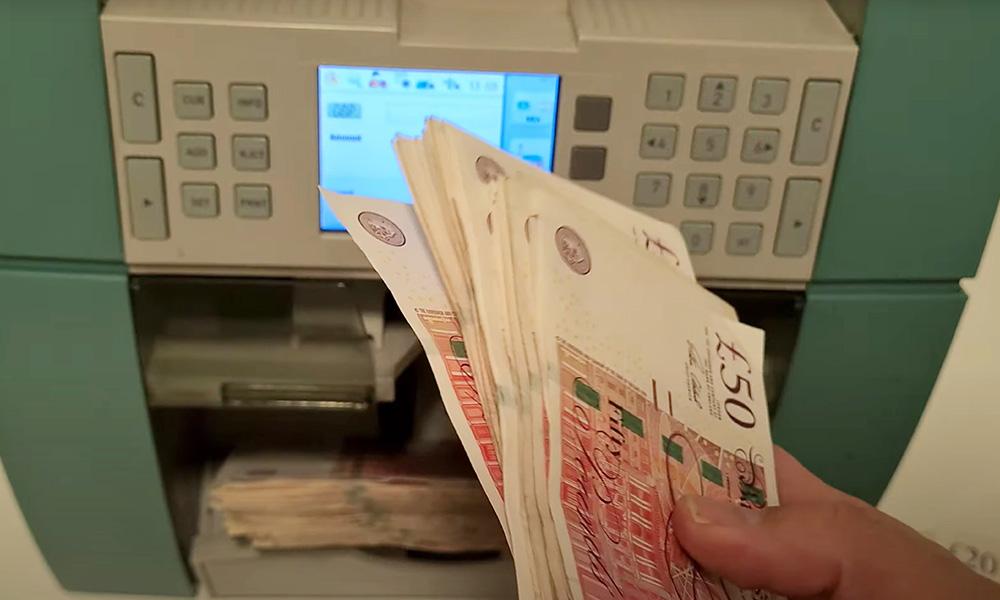
The pound continued to rise against the dollar, mainly driven by a weak US non-farm payroll report – only 57,000 jobs were added in June, far below the expected 110,000, and the previous figure was also revised down significantly.
Signs of a cooling U.S. labor market have prompted financial markets to significantly reduce their bets on a near-term interest rate hike by the Federal Reserve.
According to the CME FedWatch tool, market expectations for a Fed rate hike before September have fallen from 66% before the data release to about 52%. This shift has put pressure on the dollar and provided tailwind support for the pound against the dollar.
The market is also closely watching the latest developments in British politics.
Political uncertainty has increased since Keir Starmer stepped down last week.
Natixis analysts noted that Andy Burnham's commitment to fiscal discipline provided short-term support for the pound, but the market will be closely watching whether future budgets will loosen fiscal rules to support higher public spending. Any sign of a loosening fiscal stance could potentially put pressure on the pound.
On July 2, Citigroup's foreign exchange team predicted that the pound/dollar exchange rate would target 1.33 in the third quarter and could rise to 1.37 in the fourth quarter.
The agency believes that better-than-expected UK economic data, coupled with hawkish signals from the Bank of England, provided support for the pound. However, uncertainty surrounding the Federal Reserve's policy shift and the strength of the US dollar remain the main risks.
Citigroup points out that adjustments to UK fiscal policy and fluctuations in energy prices will affect the performance of the pound.
UBS FX strategists predicted on July 1 that the pound would fluctuate widely against the dollar between 1.30 and 1.40, with a neutral year-end target of 1.34.
The agency noted that the Bank of England's interest rate hike cycle is nearing its end, but inflationary pressures are slowing the policy normalization process compared to market expectations. Strong US economic growth and the safe-haven appeal of the dollar will continue to test the pound.
UBS emphasizes that the UK's export-oriented economy will benefit from a recovery in global demand, but increased volatility is due to domestic political uncertainty.
Despite the recent rebound in the pound, it still faces significant technical resistance. The current exchange rate remains below the key 200-day moving average of 1.3397, indicating a cautious medium-term outlook.
On the upside, the first resistance is near the 200-day moving average. If this level is broken, it is expected to test higher resistance areas.
On the downside, the initial support level is at the psychological level of 1.3300. If this level is breached, it could trigger a deeper pullback.
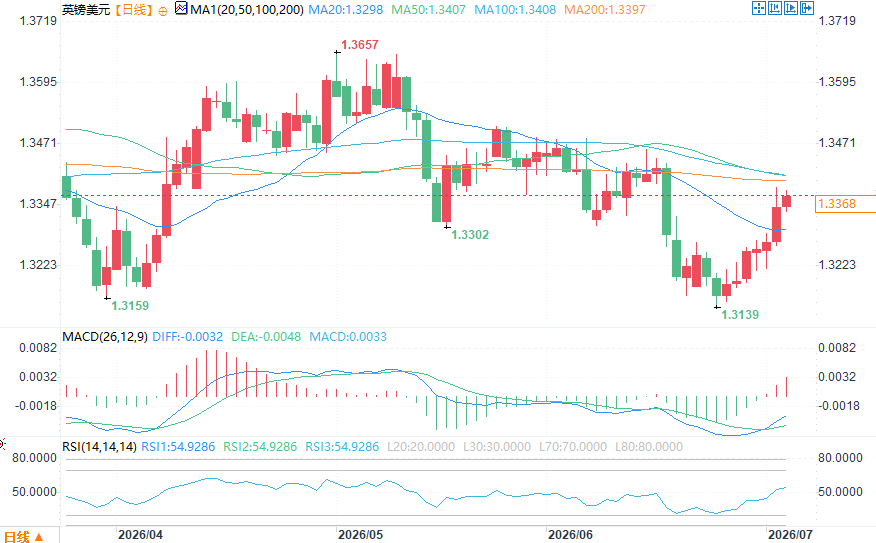
(GBP/USD daily chart, source: FX678)
At 14:32 Beijing time on July 3, the British pound was trading at 1.3368/69 against the US dollar.
The much weaker-than-expected US non-farm payroll data for June significantly dampened market expectations for a near-term interest rate hike by the Federal Reserve, putting downward pressure on the dollar and providing support for the pound.
At the same time, changes in the British political situation and the direction of its fiscal policy have also become the focus of market attention.
A weaker dollar gave the pound upward momentum.
The pound continued to rise against the dollar, mainly driven by a weak US non-farm payroll report – only 57,000 jobs were added in June, far below the expected 110,000, and the previous figure was also revised down significantly.
Signs of a cooling U.S. labor market have prompted financial markets to significantly reduce their bets on a near-term interest rate hike by the Federal Reserve.
According to the CME FedWatch tool, market expectations for a Fed rate hike before September have fallen from 66% before the data release to about 52%. This shift has put pressure on the dollar and provided tailwind support for the pound against the dollar.
British Politics: Fiscal Discipline Pledge Provides Short-Term Support
The market is also closely watching the latest developments in British politics.
Political uncertainty has increased since Keir Starmer stepped down last week.
Natixis analysts noted that Andy Burnham's commitment to fiscal discipline provided short-term support for the pound, but the market will be closely watching whether future budgets will loosen fiscal rules to support higher public spending. Any sign of a loosening fiscal stance could potentially put pressure on the pound.
Institutional Views
On July 2, Citigroup's foreign exchange team predicted that the pound/dollar exchange rate would target 1.33 in the third quarter and could rise to 1.37 in the fourth quarter.
The agency believes that better-than-expected UK economic data, coupled with hawkish signals from the Bank of England, provided support for the pound. However, uncertainty surrounding the Federal Reserve's policy shift and the strength of the US dollar remain the main risks.
Citigroup points out that adjustments to UK fiscal policy and fluctuations in energy prices will affect the performance of the pound.
UBS FX strategists predicted on July 1 that the pound would fluctuate widely against the dollar between 1.30 and 1.40, with a neutral year-end target of 1.34.
The agency noted that the Bank of England's interest rate hike cycle is nearing its end, but inflationary pressures are slowing the policy normalization process compared to market expectations. Strong US economic growth and the safe-haven appeal of the dollar will continue to test the pound.
UBS emphasizes that the UK's export-oriented economy will benefit from a recovery in global demand, but increased volatility is due to domestic political uncertainty.
Technical Analysis: The 200-day moving average forms a key resistance level.
Despite the recent rebound in the pound, it still faces significant technical resistance. The current exchange rate remains below the key 200-day moving average of 1.3397, indicating a cautious medium-term outlook.
On the upside, the first resistance is near the 200-day moving average. If this level is broken, it is expected to test higher resistance areas.
On the downside, the initial support level is at the psychological level of 1.3300. If this level is breached, it could trigger a deeper pullback.
(GBP/USD daily chart, source: FX678)
At 14:32 Beijing time on July 3, the British pound was trading at 1.3368/69 against the US dollar.
- Risk Warning and Disclaimer
- The market involves risk, and trading may not be suitable for all investors. This article is for reference only and does not constitute personal investment advice, nor does it take into account certain users’ specific investment objectives, financial situation, or other needs. Any investment decisions made based on this information are at your own risk.