Weaker-than-expected US jobs data weighed on the dollar, while GBP/USD continued its rebound.
2026-07-03 14:49:39
GBP/USD rose modestly during the Asian trading session, trading around 1.3370 , continuing the recovery trend following the previous day's decline in the US dollar. The current short-term movement is mainly driven by the weakening US dollar, but structural constraints in the pound's fundamentals limit the overall upside potential.
In the US, the latest non-farm payroll data showed that only about 57,000 jobs were added in June, significantly lower than the market expectation of 110,000, indicating a clear cooling in the US labor market. Meanwhile, the unemployment rate fell slightly to 4.2% , a slight improvement from the previous value of 4.3%, but this did not change the overall assessment of a slowdown in employment momentum. Following the data release, market expectations for further interest rate hikes by the Federal Reserve in the near future cooled significantly, with interest rate futures showing that the probability of a rate hike in September has fallen to about 52% , putting downward pressure on the US dollar.
Amid a weakening US dollar, GBP/USD found short-term support and rebounded slightly. However, overall upward momentum remains weak, as the pound also faces policy and fiscal uncertainty. The UK political situation remains in a period of adjustment following the departure of former Prime Minister Starmer, with the market continuing to focus on the new government's fiscal policy stance, particularly the possibility of a rebalancing between public spending expansion and fiscal discipline. Any marginal easing of fiscal rules could exert medium-term pressure on the pound.
Regarding monetary policy, the Bank of England is expected to maintain a wait-and-see stance in the near term, with the market generally believing that interest rates will remain unchanged at this month's policy meeting. However, interest rate futures pricing indicates a roughly 90% probability of further rate hikes this year. This combination of "short-term wait-and-see attitude + medium-term tightening expectations" leaves the pound lacking a clear unilateral trend driver.
Meanwhile, the US market was closed for the Independence Day holiday, and the decrease in short-term liquidity amplified the volatility of the exchange rate, causing GBP/USD to exhibit more technical fluctuations than trend-based movements.
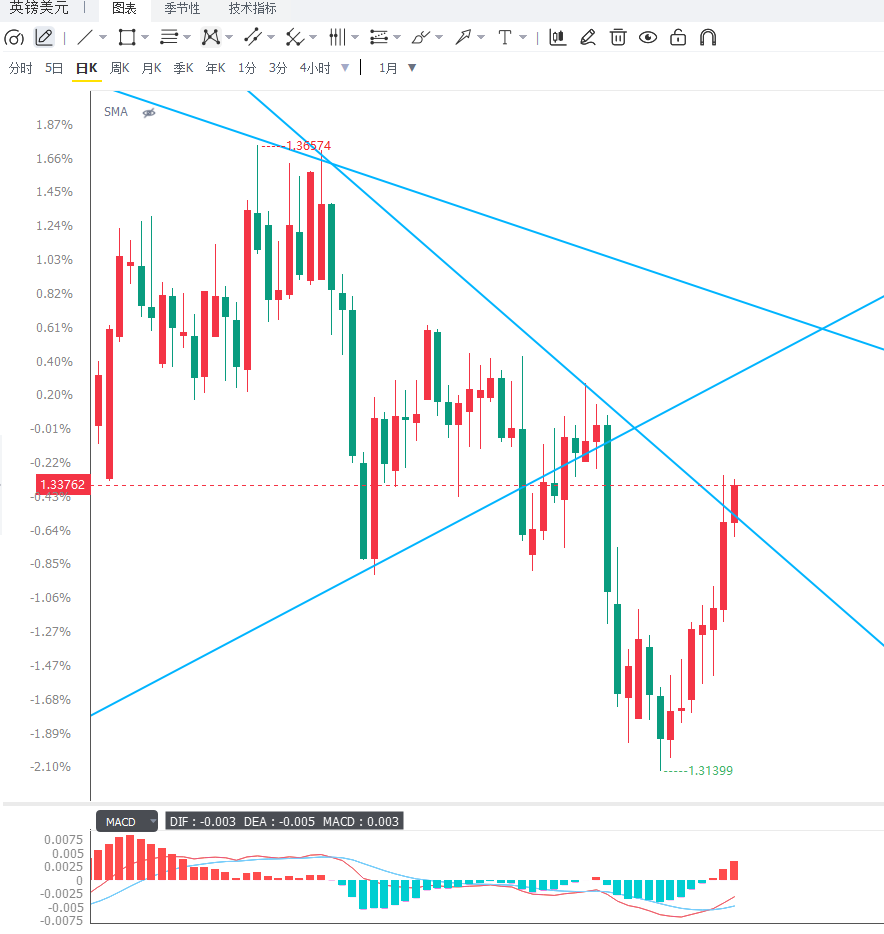
From a technical perspective, the daily chart shows that GBP/USD has entered a consolidation phase after its previous surge. The overall trend remains slightly bullish with some volatility, but upward momentum is weakening. The key resistance level to watch is the 1.3420-1.3450 area, which is a previous area of dense trading and a short-term moving average resistance zone. A break above this level could open up space towards 1.3520. On the downside, the key support level is around 1.3270 , which is a short-term trendline support and a previous pullback low. A break below this level could lead to a decline to the 1.3200 area.
From the 4-hour chart, the exchange rate has formed a short-term consolidation range above 1.3300, with the MACD histogram showing a gentle convergence, indicating a near balance between bullish and bearish forces. If it fails to break through 1.3380 effectively in the short term, it may continue to consolidate within the 1.3270-1.3380 range; if the US dollar continues to weaken, there is still a chance to test 1.3450. Overall, the short-term trend is biased towards consolidation, lacking a clear directional breakout.
Editor's Summary:
The recent slight rebound in GBP/USD was primarily driven by significantly weaker US employment data, with a weakening dollar being the core short-term driver. However, the pound itself is constrained by uncertainties surrounding UK fiscal policy and politics, limiting its upside potential. Currently, the exchange rate is exhibiting a range-bound structure, lacking momentum for a trend breakout in the short term. Future price movements will depend on the rebalancing of expectations regarding Federal Reserve policy and the path of UK fiscal policy. Given the coexistence of a weak dollar and uncertainty surrounding the pound, GBP/USD is likely to maintain its range-bound trading pattern.
In the US, the latest non-farm payroll data showed that only about 57,000 jobs were added in June, significantly lower than the market expectation of 110,000, indicating a clear cooling in the US labor market. Meanwhile, the unemployment rate fell slightly to 4.2% , a slight improvement from the previous value of 4.3%, but this did not change the overall assessment of a slowdown in employment momentum. Following the data release, market expectations for further interest rate hikes by the Federal Reserve in the near future cooled significantly, with interest rate futures showing that the probability of a rate hike in September has fallen to about 52% , putting downward pressure on the US dollar.
Amid a weakening US dollar, GBP/USD found short-term support and rebounded slightly. However, overall upward momentum remains weak, as the pound also faces policy and fiscal uncertainty. The UK political situation remains in a period of adjustment following the departure of former Prime Minister Starmer, with the market continuing to focus on the new government's fiscal policy stance, particularly the possibility of a rebalancing between public spending expansion and fiscal discipline. Any marginal easing of fiscal rules could exert medium-term pressure on the pound.
Regarding monetary policy, the Bank of England is expected to maintain a wait-and-see stance in the near term, with the market generally believing that interest rates will remain unchanged at this month's policy meeting. However, interest rate futures pricing indicates a roughly 90% probability of further rate hikes this year. This combination of "short-term wait-and-see attitude + medium-term tightening expectations" leaves the pound lacking a clear unilateral trend driver.
Meanwhile, the US market was closed for the Independence Day holiday, and the decrease in short-term liquidity amplified the volatility of the exchange rate, causing GBP/USD to exhibit more technical fluctuations than trend-based movements.
From a technical perspective, the daily chart shows that GBP/USD has entered a consolidation phase after its previous surge. The overall trend remains slightly bullish with some volatility, but upward momentum is weakening. The key resistance level to watch is the 1.3420-1.3450 area, which is a previous area of dense trading and a short-term moving average resistance zone. A break above this level could open up space towards 1.3520. On the downside, the key support level is around 1.3270 , which is a short-term trendline support and a previous pullback low. A break below this level could lead to a decline to the 1.3200 area.
From the 4-hour chart, the exchange rate has formed a short-term consolidation range above 1.3300, with the MACD histogram showing a gentle convergence, indicating a near balance between bullish and bearish forces. If it fails to break through 1.3380 effectively in the short term, it may continue to consolidate within the 1.3270-1.3380 range; if the US dollar continues to weaken, there is still a chance to test 1.3450. Overall, the short-term trend is biased towards consolidation, lacking a clear directional breakout.
Editor's Summary:
The recent slight rebound in GBP/USD was primarily driven by significantly weaker US employment data, with a weakening dollar being the core short-term driver. However, the pound itself is constrained by uncertainties surrounding UK fiscal policy and politics, limiting its upside potential. Currently, the exchange rate is exhibiting a range-bound structure, lacking momentum for a trend breakout in the short term. Future price movements will depend on the rebalancing of expectations regarding Federal Reserve policy and the path of UK fiscal policy. Given the coexistence of a weak dollar and uncertainty surrounding the pound, GBP/USD is likely to maintain its range-bound trading pattern.
- Risk Warning and Disclaimer
- The market involves risk, and trading may not be suitable for all investors. This article is for reference only and does not constitute personal investment advice, nor does it take into account certain users’ specific investment objectives, financial situation, or other needs. Any investment decisions made based on this information are at your own risk.