Employment, inflation, and the legal system are intertwined, putting the Federal Reserve under pressure.
2026-07-03 21:57:07
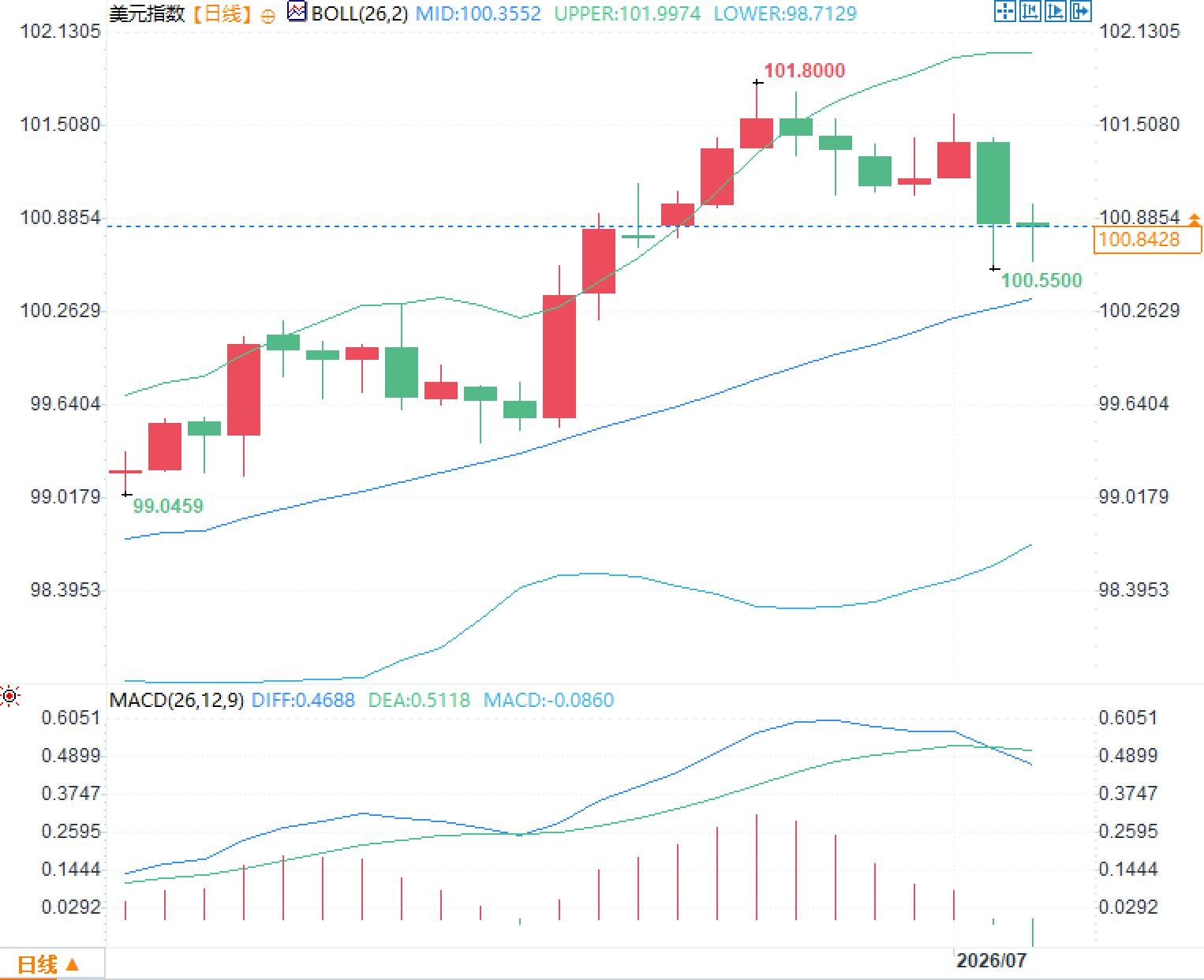
On Friday, July 3rd, the market repriced around two main themes: first, the US Supreme Court's ruling on Federal Reserve Governor Cook's future; and second, the significantly weaker-than-expected US June jobs data. June's non-farm payrolls increased by only 57,000, and the unemployment rate fell to 4.2%, but the large-scale labor exodus reduced market bets on a July rate hike to below 20%, with the current federal funds target range at 3.50% to 3.75%. The US dollar index fell back to 100.80, while gold rose to around $4170.
On the surface, the market's initial reaction to the Supreme Court's 5-4 rejection of Trump's attempt to immediately remove Cook from office was relatively restrained, as the ruling did not immediately change the Federal Reserve's voting structure or directly alter the path of the July interest rate decision. Cook subsequently stated that the ruling upheld the Fed's responsibility to serve the public free from political interference. Trump, however, indicated he would continue to take action and emphasized that he would complete the necessary procedures.

This is precisely the core of the problem. What the market really needs to assess is not whether Cook will remain in office temporarily, but how much of a gray area the Supreme Court has left behind. The ruling acknowledges that the president cannot arbitrarily dismiss a Federal Reserve governor, but it still does not clearly define the boundaries of "justifiable reasons," nor does it raise procedural requirements to the level of a judicial trial. This means that independence has not been forged back into steel, but rather temporarily returned to its original position.
In the past, traders focused on the US dollar primarily on interest rate differentials, inflation, employment, and risk appetite. However, the Cook case has brought another variable to the forefront: the stability of policy institutions. The Federal Reserve's independence is the implicit foundation of the long-term yield curve, inflation expectations, and the dollar's credibility. Once the market believes that monetary policy may be swayed by short-term political cycles, higher risk compensation may be demanded for long-term interest rates.
In the short term, cooling employment has lowered expectations for interest rate hikes, causing the dollar index to fall. The 2-year yield, more sensitive to policy expectations, has already retreated from its highs. However, in the medium term, if institutional uncertainty increases, the yield curve may not follow the traditional path of "weakening employment equals lower interest rates." The front end may follow the cooling of interest rate hike expectations, while the long end may remain resilient due to inflation credibility and fiscal risk compensation, which could exacerbate the instability of the yield curve shape.
June's employment data was weaker than expected, but this does not automatically translate into a signal of easing. This is because inflationary pressures have not subsided accordingly. In May, the personal consumption expenditure price index rose to 4.1% year-on-year, and the core index rose to 3.4% year-on-year, still significantly higher than the policy target.
This puts the Federal Reserve in a more complex judgment range: overemphasizing the cooling employment situation could weaken inflationary constraints; continuing to emphasize inflation could amplify growth pressures when the labor market weakens at the margin. The Cook case adds another layer of institutional variables to this macroeconomic dilemma. At the trading level, the market is not only judging whether there will be a rate hike in July or September, but also whether the Federal Reserve can still treat every policy decision as a technical one.
The limited market reaction following the ruling does not mean the risks have been fully absorbed. There are three reasons for this. First, Cook remains in office, and the voting structure has not changed immediately. Second, regional Fed presidents have already been re-confirmed, making it difficult to quickly form a unilateral policy majority. Third, the June employment data outweighed the legal risks and became the dominant variable in the current market trend.
However, the calm is not meaningless; it simply indicates that the market has temporarily categorized the event as a "slow variable." Slow variables don't impact the market daily, but they do alter valuation frameworks. If subsequent litigation continues or new appointment controversies arise, the valuations of the dollar, gold, long-term interest rates, and financial stocks may all re-absorb the institutional risk premium.
On the surface, the market's initial reaction to the Supreme Court's 5-4 rejection of Trump's attempt to immediately remove Cook from office was relatively restrained, as the ruling did not immediately change the Federal Reserve's voting structure or directly alter the path of the July interest rate decision. Cook subsequently stated that the ruling upheld the Fed's responsibility to serve the public free from political interference. Trump, however, indicated he would continue to take action and emphasized that he would complete the necessary procedures.
This is precisely the core of the problem. What the market really needs to assess is not whether Cook will remain in office temporarily, but how much of a gray area the Supreme Court has left behind. The ruling acknowledges that the president cannot arbitrarily dismiss a Federal Reserve governor, but it still does not clearly define the boundaries of "justifiable reasons," nor does it raise procedural requirements to the level of a judicial trial. This means that independence has not been forged back into steel, but rather temporarily returned to its original position.
In the past, traders focused on the US dollar primarily on interest rate differentials, inflation, employment, and risk appetite. However, the Cook case has brought another variable to the forefront: the stability of policy institutions. The Federal Reserve's independence is the implicit foundation of the long-term yield curve, inflation expectations, and the dollar's credibility. Once the market believes that monetary policy may be swayed by short-term political cycles, higher risk compensation may be demanded for long-term interest rates.
In the short term, cooling employment has lowered expectations for interest rate hikes, causing the dollar index to fall. The 2-year yield, more sensitive to policy expectations, has already retreated from its highs. However, in the medium term, if institutional uncertainty increases, the yield curve may not follow the traditional path of "weakening employment equals lower interest rates." The front end may follow the cooling of interest rate hike expectations, while the long end may remain resilient due to inflation credibility and fiscal risk compensation, which could exacerbate the instability of the yield curve shape.
June's employment data was weaker than expected, but this does not automatically translate into a signal of easing. This is because inflationary pressures have not subsided accordingly. In May, the personal consumption expenditure price index rose to 4.1% year-on-year, and the core index rose to 3.4% year-on-year, still significantly higher than the policy target.
This puts the Federal Reserve in a more complex judgment range: overemphasizing the cooling employment situation could weaken inflationary constraints; continuing to emphasize inflation could amplify growth pressures when the labor market weakens at the margin. The Cook case adds another layer of institutional variables to this macroeconomic dilemma. At the trading level, the market is not only judging whether there will be a rate hike in July or September, but also whether the Federal Reserve can still treat every policy decision as a technical one.
The limited market reaction following the ruling does not mean the risks have been fully absorbed. There are three reasons for this. First, Cook remains in office, and the voting structure has not changed immediately. Second, regional Fed presidents have already been re-confirmed, making it difficult to quickly form a unilateral policy majority. Third, the June employment data outweighed the legal risks and became the dominant variable in the current market trend.
However, the calm is not meaningless; it simply indicates that the market has temporarily categorized the event as a "slow variable." Slow variables don't impact the market daily, but they do alter valuation frameworks. If subsequent litigation continues or new appointment controversies arise, the valuations of the dollar, gold, long-term interest rates, and financial stocks may all re-absorb the institutional risk premium.
- Risk Warning and Disclaimer
- The market involves risk, and trading may not be suitable for all investors. This article is for reference only and does not constitute personal investment advice, nor does it take into account certain users’ specific investment objectives, financial situation, or other needs. Any investment decisions made based on this information are at your own risk.