Crude oil trading alert: US crude oil has rebounded after a sharp drop, but this does not change the downward trend; be wary of another pullback.
2026-07-08 09:25:02
International crude oil markets continued their rebound on Wednesday, with WTI crude oil prices rising further after a nearly 5% surge in the previous trading day, briefly hovering around $72.20 per barrel during Asian trading hours. The main driver of the price increase was renewed supply risks in the Middle East, prompting the market to reassess the potential impact on the global crude oil supply chain.

Recent US military actions and the revocation of key waivers allowing some Iranian oil exports have reignited market concerns about potential further restrictions on Iranian crude oil supplies. Meanwhile, recent actions by Iranian forces targeting regional commercial vessels, including incidents involving Qatari LNG carriers and Saudi oil tankers, have once again brought the security of shipping in the Strait of Hormuz into focus.
The Strait of Hormuz is a vital global energy transport route, with approximately one-fifth of the world's seaborne crude oil supply passing through the region . If shipping companies reduce their operations through this waterway due to security risks, it could lead to short-term supply shortages and drive up risk premiums in the crude oil market rapidly. Therefore, investors are reassessing previous market assessments of ample supply.
Previously, the crude oil market generally expected increased supply pressure in the future, mainly due to OPEC+ gradually raising its production targets and major Middle Eastern oil-producing countries planning to expand exports. The market was initially concerned that oversupply might limit the upside potential of oil prices, but recent changes in geopolitical risks have shifted this logic, leading to a renewed inflow of funds into safe-haven assets in the energy market.
Market reaction indicates that the rise in oil prices reflects not only supply-side concerns but also changes in investor risk appetite. The rapid rebound in crude oil prices shows that the market remains highly sensitive to sudden supply disruptions. However, analysts believe that the current rise is driven more by short-term risk premiums than by a trend driven by a significant improvement in global oil demand.
On the demand side, investors remain focused on the global economic growth outlook and changes in monetary policies of major economies. A slowdown in global economic growth and a decline in industrial activity could limit the growth rate of crude oil consumption. Meanwhile, the US dollar's performance remains a significant factor influencing oil prices; a stronger dollar typically increases the cost of purchasing dollar-denominated goods, thus putting downward pressure on oil prices.
Regarding inventory data, the market remains focused on crude oil inventory changes reported by the U.S. Energy Information Administration (EIA) and the American Petroleum Institute (API). A continued decline in inventories could further reinforce expectations of tight supply and provide additional support for oil prices; however, a resurgence in inventories could weaken the current upward momentum.
Currently, the market's core focus is on three aspects: first, whether the situation in the Middle East will further impact crude oil transportation; second, whether Iranian crude oil exports will be subject to continued restrictions; and third, whether the OPEC+ production increase plan will alleviate supply pressure. In the short term, any news regarding supply disruptions could continue to drive oil price volatility.
From a daily chart perspective, the recent rally in US crude oil is a technical rebound after a significant oversold condition. Prices found buying support after a rapid decline, but a clear trend reversal signal has not yet formed. Looking at the overall structure, oil prices are still trading within the previous consolidation range, with the short-term rebound primarily recovering from previous losses. Current market momentum has improved somewhat, with the MACD showing signs of convergence at low levels, but the moving average system remains weak, indicating that bullish forces are recovering, but a trend reversal still requires further confirmation. The key resistance level to watch is around $75; a decisive break and hold above this level could open up further upside potential. On the downside, support is around $68; a breach of this area could lead to a retest of previous lows.
From a 4-hour chart perspective, WTI crude oil shows a clear short-term rebound trend, with prices gradually approaching short-term resistance after a continuous rise. The moving average structure indicates that bulls hold a certain advantage in the short term, but profit-taking pressure exists after the rapid rise. If oil prices can break through the resistance near $75, they may continue to move higher in the short term; if the rebound is blocked, a technical pullback may occur to retest the support level near $70. Currently, the RSI indicator is in an upward phase, indicating improved market buying sentiment, but it has not yet entered a clearly strong zone. Therefore, the validity of the breakout still needs to be monitored in the short term.
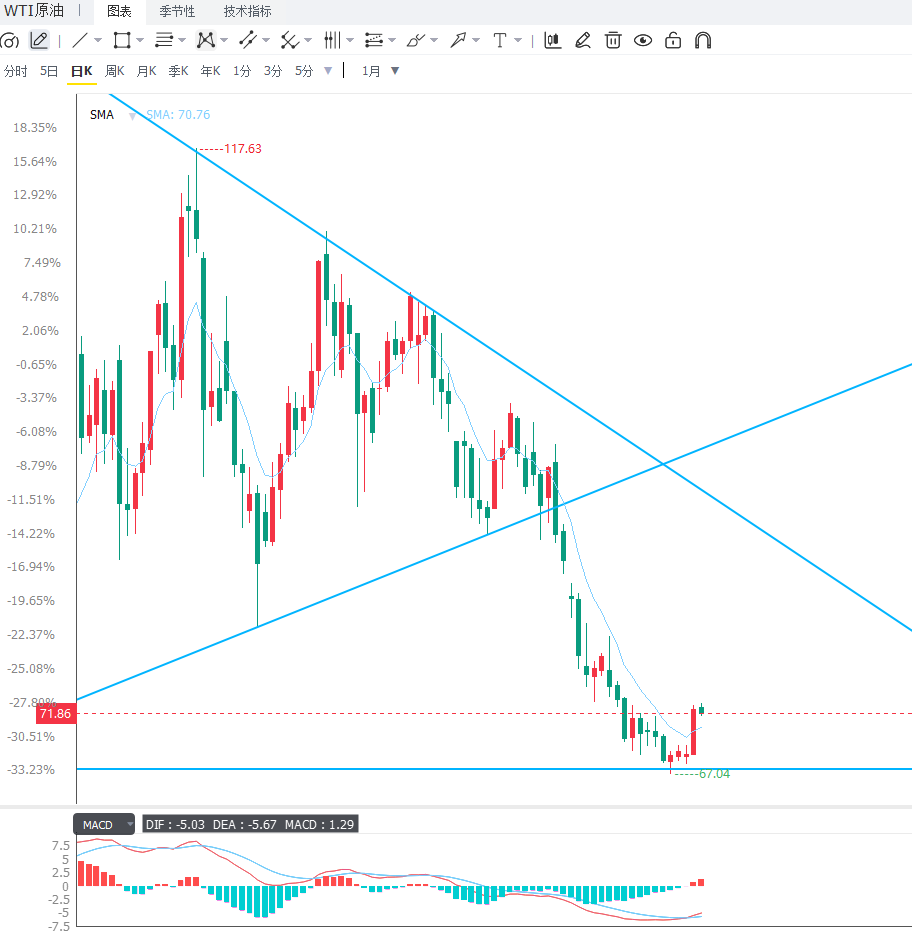
Editor's Summary : The current rise in WTI crude oil prices is primarily driven by renewed supply risks, with the market shifting its focus from previous supply easing to a reassessment of geopolitical risk premiums. In the short term, unforeseen events may continue to support oil prices at high levels, but sustained price increases remain challenging due to OPEC+ production increases and lingering uncertainties in global demand growth. The future of the crude oil market will depend on whether supply risks escalate further. If transportation disruptions and export restrictions persist, oil prices may gain further upward momentum; however, if the situation eases and the market returns to supply fundamentals, the price rebound may face pressure. Investors need to pay attention to the key resistance level of $75 and the effectiveness of the support level of $68 to determine the market direction in the next phase.
Recent US military actions and the revocation of key waivers allowing some Iranian oil exports have reignited market concerns about potential further restrictions on Iranian crude oil supplies. Meanwhile, recent actions by Iranian forces targeting regional commercial vessels, including incidents involving Qatari LNG carriers and Saudi oil tankers, have once again brought the security of shipping in the Strait of Hormuz into focus.
The Strait of Hormuz is a vital global energy transport route, with approximately one-fifth of the world's seaborne crude oil supply passing through the region . If shipping companies reduce their operations through this waterway due to security risks, it could lead to short-term supply shortages and drive up risk premiums in the crude oil market rapidly. Therefore, investors are reassessing previous market assessments of ample supply.
Previously, the crude oil market generally expected increased supply pressure in the future, mainly due to OPEC+ gradually raising its production targets and major Middle Eastern oil-producing countries planning to expand exports. The market was initially concerned that oversupply might limit the upside potential of oil prices, but recent changes in geopolitical risks have shifted this logic, leading to a renewed inflow of funds into safe-haven assets in the energy market.
Market reaction indicates that the rise in oil prices reflects not only supply-side concerns but also changes in investor risk appetite. The rapid rebound in crude oil prices shows that the market remains highly sensitive to sudden supply disruptions. However, analysts believe that the current rise is driven more by short-term risk premiums than by a trend driven by a significant improvement in global oil demand.
On the demand side, investors remain focused on the global economic growth outlook and changes in monetary policies of major economies. A slowdown in global economic growth and a decline in industrial activity could limit the growth rate of crude oil consumption. Meanwhile, the US dollar's performance remains a significant factor influencing oil prices; a stronger dollar typically increases the cost of purchasing dollar-denominated goods, thus putting downward pressure on oil prices.
Regarding inventory data, the market remains focused on crude oil inventory changes reported by the U.S. Energy Information Administration (EIA) and the American Petroleum Institute (API). A continued decline in inventories could further reinforce expectations of tight supply and provide additional support for oil prices; however, a resurgence in inventories could weaken the current upward momentum.
Currently, the market's core focus is on three aspects: first, whether the situation in the Middle East will further impact crude oil transportation; second, whether Iranian crude oil exports will be subject to continued restrictions; and third, whether the OPEC+ production increase plan will alleviate supply pressure. In the short term, any news regarding supply disruptions could continue to drive oil price volatility.
From a daily chart perspective, the recent rally in US crude oil is a technical rebound after a significant oversold condition. Prices found buying support after a rapid decline, but a clear trend reversal signal has not yet formed. Looking at the overall structure, oil prices are still trading within the previous consolidation range, with the short-term rebound primarily recovering from previous losses. Current market momentum has improved somewhat, with the MACD showing signs of convergence at low levels, but the moving average system remains weak, indicating that bullish forces are recovering, but a trend reversal still requires further confirmation. The key resistance level to watch is around $75; a decisive break and hold above this level could open up further upside potential. On the downside, support is around $68; a breach of this area could lead to a retest of previous lows.
From a 4-hour chart perspective, WTI crude oil shows a clear short-term rebound trend, with prices gradually approaching short-term resistance after a continuous rise. The moving average structure indicates that bulls hold a certain advantage in the short term, but profit-taking pressure exists after the rapid rise. If oil prices can break through the resistance near $75, they may continue to move higher in the short term; if the rebound is blocked, a technical pullback may occur to retest the support level near $70. Currently, the RSI indicator is in an upward phase, indicating improved market buying sentiment, but it has not yet entered a clearly strong zone. Therefore, the validity of the breakout still needs to be monitored in the short term.
Editor's Summary : The current rise in WTI crude oil prices is primarily driven by renewed supply risks, with the market shifting its focus from previous supply easing to a reassessment of geopolitical risk premiums. In the short term, unforeseen events may continue to support oil prices at high levels, but sustained price increases remain challenging due to OPEC+ production increases and lingering uncertainties in global demand growth. The future of the crude oil market will depend on whether supply risks escalate further. If transportation disruptions and export restrictions persist, oil prices may gain further upward momentum; however, if the situation eases and the market returns to supply fundamentals, the price rebound may face pressure. Investors need to pay attention to the key resistance level of $75 and the effectiveness of the support level of $68 to determine the market direction in the next phase.
- Risk Warning and Disclaimer
- The market involves risk, and trading may not be suitable for all investors. This article is for reference only and does not constitute personal investment advice, nor does it take into account certain users’ specific investment objectives, financial situation, or other needs. Any investment decisions made based on this information are at your own risk.