Institutions: Gold and silver have hit their lows for the year; a long-term bull market is expected to resume in the second half of the year.
2026-07-08 11:37:16
Oil prices surged after the outbreak of the US-Iran conflict, pushing up inflation and expectations of a Federal Reserve interest rate hike, putting pressure on the precious metals market for four consecutive months.
Craig Hemke, an analyst at Sprott Asset Management, proposes a core judgment: the price lows reached by gold and silver at the end of June represent the bottom for the entire year of 2026. With easing geopolitical conflicts and falling oil prices, inflationary pressures will rapidly cool. The market's extremely hawkish policy expectations have peaked, and the Federal Reserve's monetary policy will return to a rate-cutting cycle. Gold and silver will once again benefit from the long-term upward fundamentals. Meanwhile, technical recovery will take time, and a V-shaped reversal is unlikely in the short term. Range-bound trading to digest bearish signals will be the main theme of the market, with the 20-day moving average serving as a key indicator to confirm a valid bottom.
At the beginning of 2026, the overall market environment was relatively loose, and inflation continued to decline from its 2022 peak. The market generally predicted that the Federal Reserve would start cutting interest rates in the middle of the year, with a maximum of two rate cuts throughout the year.
Henk stated that the outbreak of the US-Iran conflict at the end of February completely changed the original macroeconomic path, with crude oil prices soaring to around $119. The rise in energy costs directly pushed up inflation expectations, and the market began to frantically bet on the Federal Reserve to continue raising interest rates. Gold and silver subsequently began a four-month downward adjustment.
With the large-scale standoff between the two sides largely subsiding in June, crude oil prices have fallen back to pre-conflict levels, and the core variable driving short-term inflation has disappeared. In the PCE price index, which the Federal Reserve closely monitors, the energy component surged by 21% from March to May. Following the decline in oil prices, inflation data is likely to continue to fall in the second half of the year, further easing market fears of interest rate hikes.
Henk's analysis suggests that following the June policy meeting, the market has reached the "peak of extremely hawkish expectations," and previous market predictions of multiple rate hikes have become significantly detached from fundamentals. This year, there is only a slim possibility of a single, symbolic rate hike, and the fundamental conditions for multiple consecutive rate hikes are not present.
As inflation risks gradually subside, the Federal Reserve's policy focus will return to the approach taken by new Chairman Kevin Warsh, relying on interest rate cuts to lower overall social interest costs and reshape a negative real interest rate environment. This low-interest-rate environment is the core driver supporting the long-term bull market in precious metals. Based on this macroeconomic projection, the lows reached by gold and silver at the end of June are highly likely to have locked in the bottom for prices throughout the year.
Henk cautions investors that gold and silver are unlikely to experience a rapid, steep V-shaped rebound. The recent sharp decline has severely damaged technical patterns, with current prices trading below all key moving averages, maintaining an overall bearish technical structure. The market is more likely to remain range-bound in the short term, relying on prolonged consolidation to correct oversold indicators and reverse market pessimism.
Investors should pay close attention to the 20-day moving average, a key short-term trend indicator. Once gold and silver prices stabilize above this moving average, it will further confirm that the bottom for the year has been established, and the window for long-term investment will officially open.
Considering multiple dimensions including geopolitics, energy, inflation, and monetary policy, the short-term inflationary disturbances caused by the US-Iran conflict have subsided, crude oil prices have returned to a stable range, and the US CPI and PCE inflation readings in the second half of the year are likely to be lower than market expectations, marking the complete end of the extremely hawkish interest rate hike trend.
Although gold and silver technical recovery still requires some consolidation and bottoming out, the low point for the year has been identified. The logic of currency, safe-haven assets, and asset diversification that previously drove the long bull market in precious metals from 2024 to 2025 will once again dominate the market. The gold and silver market is expected to gradually recover and rise in the second half of the year.
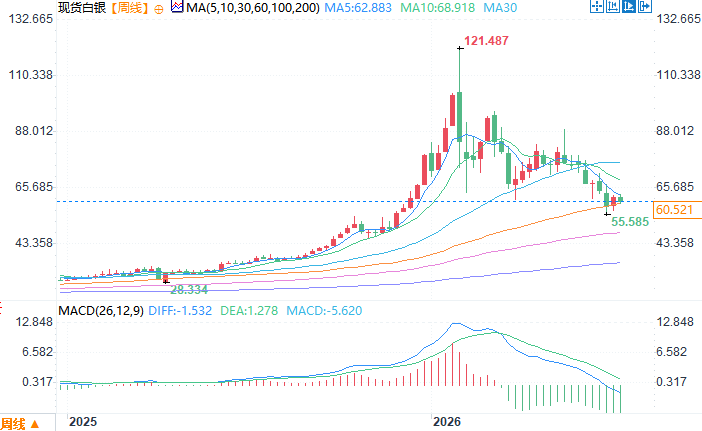
Spot silver weekly chart source: EasyForex
At 11:36 AM Beijing time on July 8, spot silver was trading at $60.59 per ounce.
Craig Hemke, an analyst at Sprott Asset Management, proposes a core judgment: the price lows reached by gold and silver at the end of June represent the bottom for the entire year of 2026. With easing geopolitical conflicts and falling oil prices, inflationary pressures will rapidly cool. The market's extremely hawkish policy expectations have peaked, and the Federal Reserve's monetary policy will return to a rate-cutting cycle. Gold and silver will once again benefit from the long-term upward fundamentals. Meanwhile, technical recovery will take time, and a V-shaped reversal is unlikely in the short term. Range-bound trading to digest bearish signals will be the main theme of the market, with the 20-day moving average serving as a key indicator to confirm a valid bottom.
Geopolitical conflicts reversed expectations of interest rate cuts, and precious metals entered a period of sustained correction.
At the beginning of 2026, the overall market environment was relatively loose, and inflation continued to decline from its 2022 peak. The market generally predicted that the Federal Reserve would start cutting interest rates in the middle of the year, with a maximum of two rate cuts throughout the year.
Henk stated that the outbreak of the US-Iran conflict at the end of February completely changed the original macroeconomic path, with crude oil prices soaring to around $119. The rise in energy costs directly pushed up inflation expectations, and the market began to frantically bet on the Federal Reserve to continue raising interest rates. Gold and silver subsequently began a four-month downward adjustment.
With the large-scale standoff between the two sides largely subsiding in June, crude oil prices have fallen back to pre-conflict levels, and the core variable driving short-term inflation has disappeared. In the PCE price index, which the Federal Reserve closely monitors, the energy component surged by 21% from March to May. Following the decline in oil prices, inflation data is likely to continue to fall in the second half of the year, further easing market fears of interest rate hikes.
hawkish expectations for policy have peaked, and rate cuts by the Federal Reserve remain the main theme this year.
Henk's analysis suggests that following the June policy meeting, the market has reached the "peak of extremely hawkish expectations," and previous market predictions of multiple rate hikes have become significantly detached from fundamentals. This year, there is only a slim possibility of a single, symbolic rate hike, and the fundamental conditions for multiple consecutive rate hikes are not present.
As inflation risks gradually subside, the Federal Reserve's policy focus will return to the approach taken by new Chairman Kevin Warsh, relying on interest rate cuts to lower overall social interest costs and reshape a negative real interest rate environment. This low-interest-rate environment is the core driver supporting the long-term bull market in precious metals. Based on this macroeconomic projection, the lows reached by gold and silver at the end of June are highly likely to have locked in the bottom for prices throughout the year.
The technical chart shows significant damage, and the short-term trend is mainly one of consolidation and bottoming out.
Henk cautions investors that gold and silver are unlikely to experience a rapid, steep V-shaped rebound. The recent sharp decline has severely damaged technical patterns, with current prices trading below all key moving averages, maintaining an overall bearish technical structure. The market is more likely to remain range-bound in the short term, relying on prolonged consolidation to correct oversold indicators and reverse market pessimism.
Investors should pay close attention to the 20-day moving average, a key short-term trend indicator. Once gold and silver prices stabilize above this moving average, it will further confirm that the bottom for the year has been established, and the window for long-term investment will officially open.
Summarize
Considering multiple dimensions including geopolitics, energy, inflation, and monetary policy, the short-term inflationary disturbances caused by the US-Iran conflict have subsided, crude oil prices have returned to a stable range, and the US CPI and PCE inflation readings in the second half of the year are likely to be lower than market expectations, marking the complete end of the extremely hawkish interest rate hike trend.
Although gold and silver technical recovery still requires some consolidation and bottoming out, the low point for the year has been identified. The logic of currency, safe-haven assets, and asset diversification that previously drove the long bull market in precious metals from 2024 to 2025 will once again dominate the market. The gold and silver market is expected to gradually recover and rise in the second half of the year.
Spot silver weekly chart source: EasyForex
At 11:36 AM Beijing time on July 8, spot silver was trading at $60.59 per ounce.
- Risk Warning and Disclaimer
- The market involves risk, and trading may not be suitable for all investors. This article is for reference only and does not constitute personal investment advice, nor does it take into account certain users’ specific investment objectives, financial situation, or other needs. Any investment decisions made based on this information are at your own risk.