The pound's rebound against the dollar has met resistance; be wary of another pullback.
2026-07-08 14:00:32
The pound weakened against the dollar in Asian trading on Wednesday, trading around 1.3355. The dollar found support amid deteriorating global risk sentiment, while the pound was pressured by short-term safe-haven flows.
The main factor driving the dollar's strength is escalating geopolitical risks. Recent US military action against Iran, along with the revocation of permits for some Iranian oil exports, and the attack on commercial vessels near the Strait of Hormuz, have fueled market concerns that regional tensions could impact energy supply stability, driving funds towards safe-haven assets such as the dollar.
Rising geopolitical risks have also reignited market concerns about the global inflation outlook. Disruptions to energy transport could push up crude oil prices and increase market anxieties about recurring inflation. Recent increases in global bond yields have prompted investors to reassess the impact of energy price fluctuations on future monetary policy. Westpac analysts stated that shipping safety issues in the Strait of Hormuz have challenged previously easing market sentiment, with investors once again focusing on the stability of peace arrangements and potential inflationary pressures from energy price changes.
Regarding the US dollar, although it was driven by safe-haven demand in the short term, its upside potential remains limited by adjustments in US interest rate expectations. Previously released US non-farm payroll data showed weaker-than-expected job growth, reducing market bets on further tightening by the Federal Reserve. Investors are currently awaiting the minutes of the Fed's June meeting for further signals on the future path of interest rates.
If the minutes of the meeting show that Federal Reserve officials are more concerned about the slowing labor market than inflationary pressures, the dollar may face downward pressure, providing an opportunity for the pound to rebound against the dollar. However, if risk sentiment continues to deteriorate, safe-haven demand for the dollar may continue to suppress the pound's performance. In the UK, the market is focused on changes in the domestic political environment. The process of replacing the UK's new prime minister will officially begin on July 9th, with the market widely expecting Andy Burnham to be the next prime minister, and the transfer of power expected to be completed in late July.
Recent market concerns about political uncertainty in the UK have eased, with investors reducing the political risk premium previously priced into sterling assets. If the UK political situation remains stable, the pound may receive some support. However, the UK economic growth outlook, inflation trends, and the Bank of England's policy path remain important factors influencing the pound's medium-term performance.
Currently, the British pound is facing a complex interplay of factors against the US dollar. On one hand, safe-haven buying of the dollar is limiting the pound's rise; on the other hand, easing political risks in the UK and cooling expectations regarding dollar policy are providing potential support for the pound. The market will subsequently focus on the Federal Reserve meeting minutes, the UK political process, and changes in global risk sentiment.
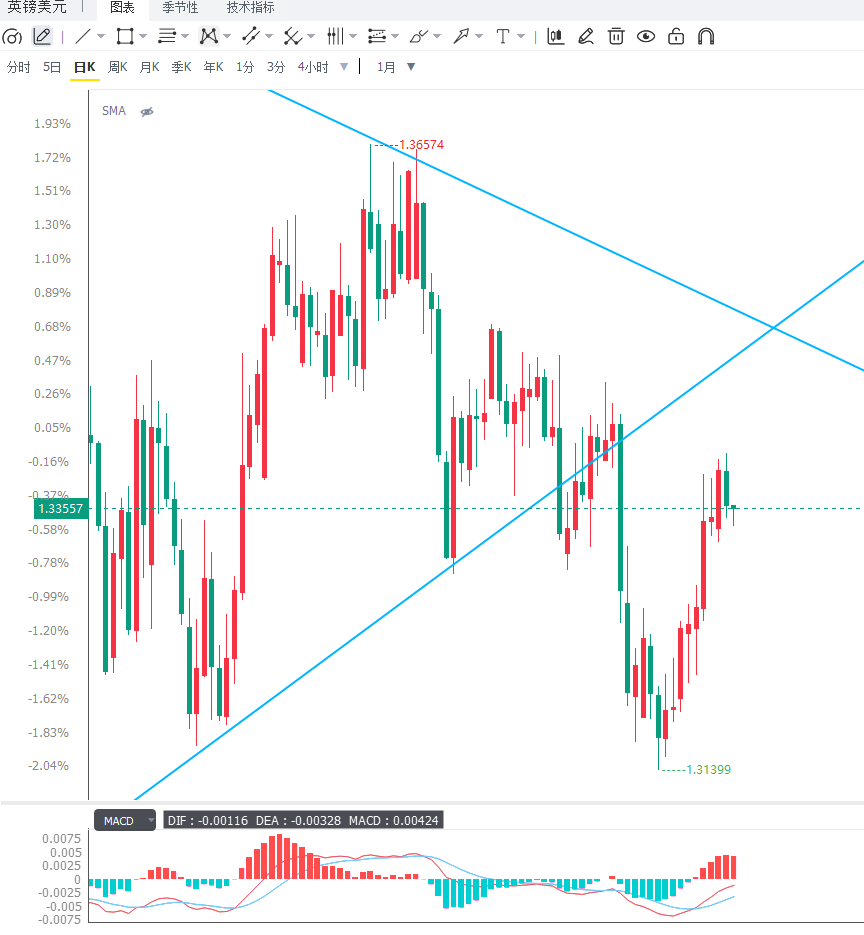
From a daily chart perspective, the GBP/USD pair has recently maintained a high-level consolidation pattern, with the price retreating after encountering resistance near 1.3400. Currently, it is under short-term pressure from a rebounding US dollar. The overall trend remains a slightly bullish consolidation, but the upward momentum has weakened. The MACD indicator shows that bullish momentum is gradually contracting, and the market has entered a consolidation phase. Key resistance levels to watch are the 1.3400-1.3450 area; a break above this area could lead to a further test of the 1.3500 area. Support is seen at the 1.3300 area; a break below this level could lead to a pullback to around 1.3250. The current exchange rate needs to confirm the validity of key support levels to determine its future direction.
From a 4-hour chart perspective, the GBP/USD pair is showing a slightly weaker trend in the short term. After breaking below some short-term moving averages, bearish pressure has increased. The RSI indicator has retreated from its highs, indicating a cooling of short-term buying interest, but it has not yet entered clearly oversold territory. If the exchange rate can regain a foothold above 1.3380, there is still a chance for a short-term rebound; however, if it continues to be pressured and breaks below the 1.3300 support level, it may further adjust towards the 1.3250 area. Short-term movements still depend on changes in the safe-haven demand for the US dollar and policy signals from the Federal Reserve.
Editor's Summary : The British pound is currently influenced by both a rising safe-haven dollar and easing political risks in the UK, resulting in a short-term oscillating trend against the US dollar. Elevated geopolitical risks are pushing the dollar stronger, putting pressure on the pound. However, the improved political environment in the UK and lower risk premiums in the market are providing some support for the pound. Going forward, market focus will be on Federal Reserve policy signals, developments in global risk events, and the policy direction of the new UK government. If demand for the dollar as a safe haven continues to strengthen, the pound/dollar pair may further test lower support levels; if risk sentiment improves and the Federal Reserve releases dovish signals, the pound may regain upward momentum. The key resistance level to watch is 1.3400, and the support level is 1.3300.
The main factor driving the dollar's strength is escalating geopolitical risks. Recent US military action against Iran, along with the revocation of permits for some Iranian oil exports, and the attack on commercial vessels near the Strait of Hormuz, have fueled market concerns that regional tensions could impact energy supply stability, driving funds towards safe-haven assets such as the dollar.
Rising geopolitical risks have also reignited market concerns about the global inflation outlook. Disruptions to energy transport could push up crude oil prices and increase market anxieties about recurring inflation. Recent increases in global bond yields have prompted investors to reassess the impact of energy price fluctuations on future monetary policy. Westpac analysts stated that shipping safety issues in the Strait of Hormuz have challenged previously easing market sentiment, with investors once again focusing on the stability of peace arrangements and potential inflationary pressures from energy price changes.
Regarding the US dollar, although it was driven by safe-haven demand in the short term, its upside potential remains limited by adjustments in US interest rate expectations. Previously released US non-farm payroll data showed weaker-than-expected job growth, reducing market bets on further tightening by the Federal Reserve. Investors are currently awaiting the minutes of the Fed's June meeting for further signals on the future path of interest rates.
If the minutes of the meeting show that Federal Reserve officials are more concerned about the slowing labor market than inflationary pressures, the dollar may face downward pressure, providing an opportunity for the pound to rebound against the dollar. However, if risk sentiment continues to deteriorate, safe-haven demand for the dollar may continue to suppress the pound's performance. In the UK, the market is focused on changes in the domestic political environment. The process of replacing the UK's new prime minister will officially begin on July 9th, with the market widely expecting Andy Burnham to be the next prime minister, and the transfer of power expected to be completed in late July.
Recent market concerns about political uncertainty in the UK have eased, with investors reducing the political risk premium previously priced into sterling assets. If the UK political situation remains stable, the pound may receive some support. However, the UK economic growth outlook, inflation trends, and the Bank of England's policy path remain important factors influencing the pound's medium-term performance.
Currently, the British pound is facing a complex interplay of factors against the US dollar. On one hand, safe-haven buying of the dollar is limiting the pound's rise; on the other hand, easing political risks in the UK and cooling expectations regarding dollar policy are providing potential support for the pound. The market will subsequently focus on the Federal Reserve meeting minutes, the UK political process, and changes in global risk sentiment.
From a daily chart perspective, the GBP/USD pair has recently maintained a high-level consolidation pattern, with the price retreating after encountering resistance near 1.3400. Currently, it is under short-term pressure from a rebounding US dollar. The overall trend remains a slightly bullish consolidation, but the upward momentum has weakened. The MACD indicator shows that bullish momentum is gradually contracting, and the market has entered a consolidation phase. Key resistance levels to watch are the 1.3400-1.3450 area; a break above this area could lead to a further test of the 1.3500 area. Support is seen at the 1.3300 area; a break below this level could lead to a pullback to around 1.3250. The current exchange rate needs to confirm the validity of key support levels to determine its future direction.
From a 4-hour chart perspective, the GBP/USD pair is showing a slightly weaker trend in the short term. After breaking below some short-term moving averages, bearish pressure has increased. The RSI indicator has retreated from its highs, indicating a cooling of short-term buying interest, but it has not yet entered clearly oversold territory. If the exchange rate can regain a foothold above 1.3380, there is still a chance for a short-term rebound; however, if it continues to be pressured and breaks below the 1.3300 support level, it may further adjust towards the 1.3250 area. Short-term movements still depend on changes in the safe-haven demand for the US dollar and policy signals from the Federal Reserve.
Editor's Summary : The British pound is currently influenced by both a rising safe-haven dollar and easing political risks in the UK, resulting in a short-term oscillating trend against the US dollar. Elevated geopolitical risks are pushing the dollar stronger, putting pressure on the pound. However, the improved political environment in the UK and lower risk premiums in the market are providing some support for the pound. Going forward, market focus will be on Federal Reserve policy signals, developments in global risk events, and the policy direction of the new UK government. If demand for the dollar as a safe haven continues to strengthen, the pound/dollar pair may further test lower support levels; if risk sentiment improves and the Federal Reserve releases dovish signals, the pound may regain upward momentum. The key resistance level to watch is 1.3400, and the support level is 1.3300.
- Risk Warning and Disclaimer
- The market involves risk, and trading may not be suitable for all investors. This article is for reference only and does not constitute personal investment advice, nor does it take into account certain users’ specific investment objectives, financial situation, or other needs. Any investment decisions made based on this information are at your own risk.