From Engine of Europe to Stagnation: Policy Mistakes and Multiple Crises Lead Germany to a Lost Decade
2026-07-08 15:25:25
As a core European economy, Germany has been mired in economic difficulties for years. Since its economic growth rate was revised downward multiple times in 2018, the once-shining benchmark for growth in the Eurozone has completely lost its luster, and the overall economy has fallen into a state of stagnation. Even though the German DAX stock index continues to hit new highs, showing a trend that diverges from the real economy, the business community and mainstream financial institutions generally warn that Germany is facing the risk of a "lost decade."
The Merz government introduced a series of economic stimulus measures, including tax cuts, employment reforms, and streamlining government operations, in an attempt to reverse the stagnation. However, the policy力度 (intensity/strength) was significantly reduced, and the implementation effect was limited. Coupled with multiple negative factors such as mistimed fiscal borrowing, flawed energy strategy decisions, continued decline in manufacturing, and a cooling of the defense industry, the structural problems of the German economy continued to become apparent, and the long-term recovery prospects remained bleak.
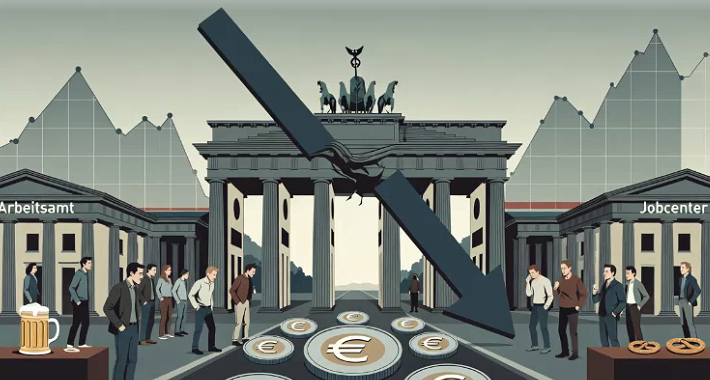
Since the impact of the COVID-19 pandemic in early 2020, the German economy has been essentially stagnant, with GDP, after adjusting for inflation, remaining at the 2019 level for an extended period, forming a rare pattern of prolonged economic stagnation.
Faced with a persistently sluggish economy and public discontent, Merz's coalition government launched a comprehensive reform plan, encompassing measures such as tax cuts for the middle class, optimization of the labor market system, regulation of sick leave, and streamlining of administrative procedures, aiming to revitalize the economy. However, this stimulus package suffers from significant deflation; the finalized €10 billion tax cut represents only 0.21% of Germany's GDP in 2025, less than half of the €27 billion previously agreed upon by political parties, severely weakening the policy's support.
Germany's current economic predicament shares many similarities with Japan's "lost decade," with the core issues being weak policy stimulus and an inability to eradicate structural problems.
It is worth noting that the German capital market is exhibiting independent performance, severely decoupled from the real economy. Recently, the index has continued to rise, breaking through previous highs one after another, which stands in stark contrast to the sluggish trend of the real economy.
To expand its defense capabilities and address its military shortcomings, Germany broke with decades of fiscal austerity policies and significantly increased its debt.
According to related plans, Germany's total new borrowing will exceed €800 billion by 2030, with new debt issuance exceeding €200 billion in 2026, a 12.5% increase from the current year. The cumulative debt from 2027 to 2030 is projected to reach approximately €838 billion. The new debt will primarily be used for defense spending, with the defense budget projected to reach €109 billion in 2026 and rise to €183.6 billion in 2030. Additionally, €11.6 billion in military aid will be provided to Ukraine next year.
This massive borrowing spree suffers from a serious timing mismatch. During the Eurozone crisis and the European Central Bank's negative interest rates and quantitative easing cycle, Germany's financing costs were extremely low, with the yield on 10-year government bonds once approaching negative territory. At that time, Germany adhered to a debt brake policy and deliberately restrained borrowing. Currently, however, with the yield on 10-year government bonds nearing 3% and financing costs high, Germany is issuing bonds against the trend, leading to a continuous increase in debt repayment pressure. Official estimates show that Germany's annual debt interest payments will nearly double from €42 billion next year to €81 billion in 2030, further exacerbating its fiscal burden.
Large-scale military spending should have boosted the domestic military industry, but the industry's actual development has fallen short of expectations.
The long-awaited IPO of KNDS, the Franco-German tank manufacturer, was forced to be postponed due to a lack of investor confidence. Meanwhile, the German government abruptly halted the multi-billion euro F126 military project, directly causing Rheinmetall's share price to plummet by approximately 20%. Rheinmetall CEO Armin Papperger stated that the termination of the F126 project had a significant impact on the company, and was completely unexpected, representing a sudden setback for the industry.
A series of missteps in energy policy is one of the core reasons for Germany's economic predicament.
Germany has invested approximately €700 billion in its energy transition, blindly replacing traditional, reliable electricity with less stable renewable energy sources. Coupled with the outbreak of the Russia-Ukraine conflict, Germany hastily shut down its last three nuclear power plants, completely disrupting the domestic energy supply and demand balance and creating the dual problems of persistently high electricity prices and insufficient power supply stability.
With the rapid development of artificial intelligence and data center industries, global electricity demand continues to rise, further amplifying Germany's energy shortage. High electricity prices and an unstable power supply system are significantly weakening the competitiveness of local companies, leading many to shelve their domestic investment plans, diversify risks through acquisitions of American companies, and even plan to relocate their headquarters overseas, further intensifying the trend of industrial outflow.
Manufacturing, a traditional core strength of Germany, has been in continuous decline in recent years.
Data from the German Federal Bank shows that domestic industrial output peaked at the end of 2017 and is currently down 9% from a decade ago. Calendar-adjusted industrial output in May 2026 is projected to be flat compared to the same period in 2025, indicating a complete exhaustion of growth momentum. Although the data shows a slight month-on-month improvement, this is mainly due to a short-term production boost from geopolitical conflicts in the Middle East. As energy costs decline, production growth is highly likely to fall again.
At the same time, the global manufacturing competition landscape is being reshaped, with major Asian manufacturing countries continuing to boost exports, further squeezing the market space for German domestic manufacturing. The downward pressure on the industry continues to increase, and the overall economy has shown typical characteristics of economic recession.
As a core pillar of the Eurozone, Germany's prolonged economic stagnation will continue to suppress the overall trend of the euro.
Germany's weak economy, shrinking manufacturing sector, and structural recession have directly lowered overall growth expectations for the Eurozone, weakening the euro's fundamental support. At the same time, Germany's economic downturn will force the European Central Bank to maintain a relatively loose monetary policy, delaying the pace of interest rate hikes or even continuing its easing stance, widening the interest rate differential between the US and Europe, and putting continued pressure on the euro exchange rate.
Furthermore, Germany's fiscal expansion and rising debt pressure will exacerbate market concerns about the stability of the Eurozone economy, weaken the euro's safe-haven appeal and asset attractiveness, and cause the euro to maintain a weak and volatile pattern in the long term, making it difficult to start a strong rebound.
In summary, Germany's economic stagnation is not a short-term fluctuation, but a structural crisis resulting from a combination of policy missteps, fiscal failures, energy shortages, and industrial decline. Insufficient stimulus from new policies and mistimed borrowing have driven up debt servicing costs; strategic energy errors have created long-term industrial disadvantages; and the continued contraction of manufacturing and the outflow of businesses have exacerbated economic hollowing out. These multiple problems are intertwined. Even with strong stock market performance and continued expansion of military spending, the deep-seated difficulties in the real economy cannot be masked. Without fundamental reforms, Germany is highly likely to fall into a prolonged period of stagnation, a "lost decade."
The Merz government introduced a series of economic stimulus measures, including tax cuts, employment reforms, and streamlining government operations, in an attempt to reverse the stagnation. However, the policy力度 (intensity/strength) was significantly reduced, and the implementation effect was limited. Coupled with multiple negative factors such as mistimed fiscal borrowing, flawed energy strategy decisions, continued decline in manufacturing, and a cooling of the defense industry, the structural problems of the German economy continued to become apparent, and the long-term recovery prospects remained bleak.
The economy has been stagnant for a long time, and the new policies are not strong enough to break the deadlock.
Since the impact of the COVID-19 pandemic in early 2020, the German economy has been essentially stagnant, with GDP, after adjusting for inflation, remaining at the 2019 level for an extended period, forming a rare pattern of prolonged economic stagnation.
Faced with a persistently sluggish economy and public discontent, Merz's coalition government launched a comprehensive reform plan, encompassing measures such as tax cuts for the middle class, optimization of the labor market system, regulation of sick leave, and streamlining of administrative procedures, aiming to revitalize the economy. However, this stimulus package suffers from significant deflation; the finalized €10 billion tax cut represents only 0.21% of Germany's GDP in 2025, less than half of the €27 billion previously agreed upon by political parties, severely weakening the policy's support.
Germany's current economic predicament shares many similarities with Japan's "lost decade," with the core issues being weak policy stimulus and an inability to eradicate structural problems.
It is worth noting that the German capital market is exhibiting independent performance, severely decoupled from the real economy. Recently, the index has continued to rise, breaking through previous highs one after another, which stands in stark contrast to the sluggish trend of the real economy.
Seriously flawed fiscal decisions have led to a continuous surge in debt repayment pressure.
To expand its defense capabilities and address its military shortcomings, Germany broke with decades of fiscal austerity policies and significantly increased its debt.
According to related plans, Germany's total new borrowing will exceed €800 billion by 2030, with new debt issuance exceeding €200 billion in 2026, a 12.5% increase from the current year. The cumulative debt from 2027 to 2030 is projected to reach approximately €838 billion. The new debt will primarily be used for defense spending, with the defense budget projected to reach €109 billion in 2026 and rise to €183.6 billion in 2030. Additionally, €11.6 billion in military aid will be provided to Ukraine next year.
This massive borrowing spree suffers from a serious timing mismatch. During the Eurozone crisis and the European Central Bank's negative interest rates and quantitative easing cycle, Germany's financing costs were extremely low, with the yield on 10-year government bonds once approaching negative territory. At that time, Germany adhered to a debt brake policy and deliberately restrained borrowing. Currently, however, with the yield on 10-year government bonds nearing 3% and financing costs high, Germany is issuing bonds against the trend, leading to a continuous increase in debt repayment pressure. Official estimates show that Germany's annual debt interest payments will nearly double from €42 billion next year to €81 billion in 2030, further exacerbating its fiscal burden.
The defense industry unexpectedly cooled down, hindering arms expansion plans.
Large-scale military spending should have boosted the domestic military industry, but the industry's actual development has fallen short of expectations.
The long-awaited IPO of KNDS, the Franco-German tank manufacturer, was forced to be postponed due to a lack of investor confidence. Meanwhile, the German government abruptly halted the multi-billion euro F126 military project, directly causing Rheinmetall's share price to plummet by approximately 20%. Rheinmetall CEO Armin Papperger stated that the termination of the F126 project had a significant impact on the company, and was completely unexpected, representing a sudden setback for the industry.
Strategic energy policy errors have solidified long-term economic risks.
A series of missteps in energy policy is one of the core reasons for Germany's economic predicament.
Germany has invested approximately €700 billion in its energy transition, blindly replacing traditional, reliable electricity with less stable renewable energy sources. Coupled with the outbreak of the Russia-Ukraine conflict, Germany hastily shut down its last three nuclear power plants, completely disrupting the domestic energy supply and demand balance and creating the dual problems of persistently high electricity prices and insufficient power supply stability.
With the rapid development of artificial intelligence and data center industries, global electricity demand continues to rise, further amplifying Germany's energy shortage. High electricity prices and an unstable power supply system are significantly weakening the competitiveness of local companies, leading many to shelve their domestic investment plans, diversify risks through acquisitions of American companies, and even plan to relocate their headquarters overseas, further intensifying the trend of industrial outflow.
The manufacturing sector continues to decline, and competitive pressures in the industry are intensifying.
Manufacturing, a traditional core strength of Germany, has been in continuous decline in recent years.
Data from the German Federal Bank shows that domestic industrial output peaked at the end of 2017 and is currently down 9% from a decade ago. Calendar-adjusted industrial output in May 2026 is projected to be flat compared to the same period in 2025, indicating a complete exhaustion of growth momentum. Although the data shows a slight month-on-month improvement, this is mainly due to a short-term production boost from geopolitical conflicts in the Middle East. As energy costs decline, production growth is highly likely to fall again.
At the same time, the global manufacturing competition landscape is being reshaped, with major Asian manufacturing countries continuing to boost exports, further squeezing the market space for German domestic manufacturing. The downward pressure on the industry continues to increase, and the overall economy has shown typical characteristics of economic recession.
The impact of Germany's economic situation on the euro's exchange rate
As a core pillar of the Eurozone, Germany's prolonged economic stagnation will continue to suppress the overall trend of the euro.
Germany's weak economy, shrinking manufacturing sector, and structural recession have directly lowered overall growth expectations for the Eurozone, weakening the euro's fundamental support. At the same time, Germany's economic downturn will force the European Central Bank to maintain a relatively loose monetary policy, delaying the pace of interest rate hikes or even continuing its easing stance, widening the interest rate differential between the US and Europe, and putting continued pressure on the euro exchange rate.
Furthermore, Germany's fiscal expansion and rising debt pressure will exacerbate market concerns about the stability of the Eurozone economy, weaken the euro's safe-haven appeal and asset attractiveness, and cause the euro to maintain a weak and volatile pattern in the long term, making it difficult to start a strong rebound.
Summarize
In summary, Germany's economic stagnation is not a short-term fluctuation, but a structural crisis resulting from a combination of policy missteps, fiscal failures, energy shortages, and industrial decline. Insufficient stimulus from new policies and mistimed borrowing have driven up debt servicing costs; strategic energy errors have created long-term industrial disadvantages; and the continued contraction of manufacturing and the outflow of businesses have exacerbated economic hollowing out. These multiple problems are intertwined. Even with strong stock market performance and continued expansion of military spending, the deep-seated difficulties in the real economy cannot be masked. Without fundamental reforms, Germany is highly likely to fall into a prolonged period of stagnation, a "lost decade."
- Risk Warning and Disclaimer
- The market involves risk, and trading may not be suitable for all investors. This article is for reference only and does not constitute personal investment advice, nor does it take into account certain users’ specific investment objectives, financial situation, or other needs. Any investment decisions made based on this information are at your own risk.