













Institutions: Gold's worst quarter in twelve years ends, second half recovery expected, full-year gains anticipated.
2026-07-09 11:25:06
Invesco's latest quarterly gold outlook report indicates that gold experienced its worst quarterly performance in twelve years in the second quarter of 2026. Soaring energy prices fueled inflation expectations, market expectations for interest rate hikes intensified, and a stronger dollar coupled with a fading geopolitical safe-haven premium led to a deep correction in gold prices. However, the report also clarifies that this adjustment is a healthy correction after a long period of gains. With structural support from continued large-scale gold purchases by global central banks, the gold market is expected to stabilize and recover in the second half of the year, maintaining the overall upward trend for the year, and the medium- to long-term investment logic remains solid.
Sam Whitehead, Head of Alternative Assets and ESG ETF Product Strategy at Invesco, Benjamin Jones, Global Head of Research, and David Scales, Senior Investment Editor for ETFs, jointly analyzed that gold prices fell by 14.1% in the second quarter, completely erasing all gains from the first quarter and falling sharply from the record intraday high reached at the end of January this year.
The decline was mainly concentrated in May and June. On June 24, gold prices fell below the key psychological level of $4,000 per ounce for the first time since November 2025. The price fluctuated around this level at the end of the quarter and finally closed at $4,008 per ounce.
This quarterly decline marks the worst performance since the second quarter of 2013, when gold prices plummeted by 22.7%. Analysts say that a deep correction after a long period of significant asset price increases is a normal market phenomenon. This round of adjustment has effectively released the risks of previous overvaluation, and gold's cumulative increase over the past twelve months has still reached 21.3%, indicating that the long-term upward trend has not been reversed.
Gold prices faced downward pressure in the second quarter due to a confluence of negative macroeconomic factors. The US-Iran conflict pushed up energy prices, and market concerns about persistent inflation led to expectations that the Federal Reserve would maintain high interest rates for an extended period, significantly increasing the opportunity cost of holding non-interest-bearing gold. Simultaneously, the temporary strengthening of the US dollar increased the cost of gold for non-US investors, weakening overseas demand. Furthermore, optimistic market expectations of a breakthrough in US-Iran negotiations gradually absorbed the geopolitical safe-haven premium for gold, further dragging down prices.
U.S. inflation data rose again in May, with the personal consumption expenditures (PCE) price index climbing to 4.1% and the core PCE price index reaching 3.4%, both hitting record highs in recent years, confirming the risk of sticky inflation. The Federal Open Market Committee (FOMC), led by newly appointed Federal Reserve Chairman Kevin Warsh, clearly signaled a hawkish stance, stating its commitment to stabilizing prices in response to five consecutive years of inflation exceeding targets, leading to a rapid increase in expectations for interest rate hikes. Market pricing reversed dramatically, shifting from widespread expectations of rate cuts at the beginning of the year to a high probability of rate hikes by the end of the year, significantly suppressing gold prices.
Analysts warn that the downside risks for gold in the short term have not been fully eliminated, and the next few months will be a critical window for market direction.
The market will focus on two key variables going forward: first, whether inflation can continue to cool down as oil prices fall and break free from its high-level stagnation; and second, whether the US dollar will continue its strong upward trend. The combination of high inflation and a strong dollar remains the main short-term negative factor suppressing gold prices, and the risk of market volatility persists.
Despite a mix of short-term negative factors, Invesco remains optimistic about gold's performance in the second half of 2026, with the core support coming from the continued gold purchases by global central banks.
Data from the World Gold Council shows that a record 45% of surveyed central banks plan to increase their gold reserves in the coming year, and 89% of institutions predict that the total amount of global central bank gold reserves will continue to grow. In recent years, most central banks have been continuously increasing their gold holdings to hedge against geopolitical risks, resist inflation fluctuations, optimize their foreign exchange reserve structure, and because central bank gold purchases are price-insensitive, they can support gold prices in the long term.
Compared to the stable allocation needs of central banks, market investment demand relies more on price trends. Retail investors' physical gold purchases and institutional fund rebalancing behaviors fluctuate with market conditions. Analysts emphasize that gold's allocation value has multiple attributes. With its unique advantages of low correlation, no credit risk, and value preservation and volatility resistance, it remains an indispensable hedging tool in global asset portfolios.
Overall, the sharp correction in gold prices in the second quarter was a result of the concentrated release of negative macroeconomic factors and represents a healthy technical correction that did not undermine the long-term upward trend. In the short term, the market still needs to digest the pressure from interest rate hikes and a strong dollar, but the structural benefits of continued gold purchases by global central banks provide a solid foundation.
As inflation and monetary policy expectations gradually become clearer, gold is expected to end its weak and volatile trend and gradually recover and rise in the second half of the year, achieving an overall upward trend for the whole year.
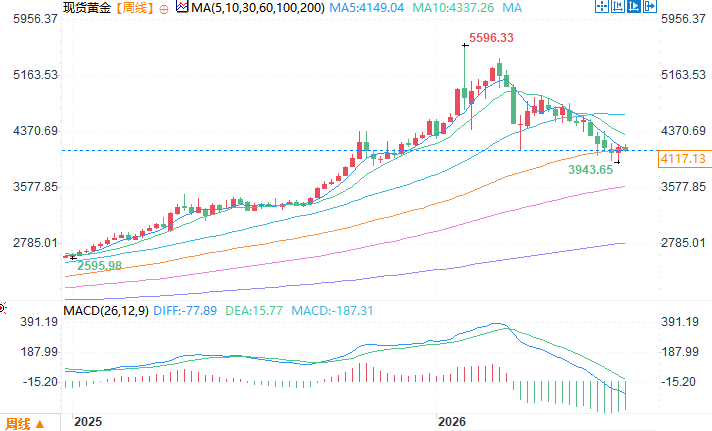
Spot gold weekly chart source: EasyForex
At 11:24 AM Beijing time on July 9, spot gold was trading at $4058.88 per ounce.
Gold prices experienced a sharp correction in the second quarter, marking their worst performance in twelve years.
Sam Whitehead, Head of Alternative Assets and ESG ETF Product Strategy at Invesco, Benjamin Jones, Global Head of Research, and David Scales, Senior Investment Editor for ETFs, jointly analyzed that gold prices fell by 14.1% in the second quarter, completely erasing all gains from the first quarter and falling sharply from the record intraday high reached at the end of January this year.
The decline was mainly concentrated in May and June. On June 24, gold prices fell below the key psychological level of $4,000 per ounce for the first time since November 2025. The price fluctuated around this level at the end of the quarter and finally closed at $4,008 per ounce.
This quarterly decline marks the worst performance since the second quarter of 2013, when gold prices plummeted by 22.7%. Analysts say that a deep correction after a long period of significant asset price increases is a normal market phenomenon. This round of adjustment has effectively released the risks of previous overvaluation, and gold's cumulative increase over the past twelve months has still reached 21.3%, indicating that the long-term upward trend has not been reversed.
Multiple negative factors combined to suppress gold prices in the second quarter.
Gold prices faced downward pressure in the second quarter due to a confluence of negative macroeconomic factors. The US-Iran conflict pushed up energy prices, and market concerns about persistent inflation led to expectations that the Federal Reserve would maintain high interest rates for an extended period, significantly increasing the opportunity cost of holding non-interest-bearing gold. Simultaneously, the temporary strengthening of the US dollar increased the cost of gold for non-US investors, weakening overseas demand. Furthermore, optimistic market expectations of a breakthrough in US-Iran negotiations gradually absorbed the geopolitical safe-haven premium for gold, further dragging down prices.
U.S. inflation data rose again in May, with the personal consumption expenditures (PCE) price index climbing to 4.1% and the core PCE price index reaching 3.4%, both hitting record highs in recent years, confirming the risk of sticky inflation. The Federal Open Market Committee (FOMC), led by newly appointed Federal Reserve Chairman Kevin Warsh, clearly signaled a hawkish stance, stating its commitment to stabilizing prices in response to five consecutive years of inflation exceeding targets, leading to a rapid increase in expectations for interest rate hikes. Market pricing reversed dramatically, shifting from widespread expectations of rate cuts at the beginning of the year to a high probability of rate hikes by the end of the year, significantly suppressing gold prices.
Short-term risks remain, but the key to future market dynamics is clear.
Analysts warn that the downside risks for gold in the short term have not been fully eliminated, and the next few months will be a critical window for market direction.
The market will focus on two key variables going forward: first, whether inflation can continue to cool down as oil prices fall and break free from its high-level stagnation; and second, whether the US dollar will continue its strong upward trend. The combination of high inflation and a strong dollar remains the main short-term negative factor suppressing gold prices, and the risk of market volatility persists.
With solid structural support, the market outlook for the second half of the year is promising.
Despite a mix of short-term negative factors, Invesco remains optimistic about gold's performance in the second half of 2026, with the core support coming from the continued gold purchases by global central banks.
Data from the World Gold Council shows that a record 45% of surveyed central banks plan to increase their gold reserves in the coming year, and 89% of institutions predict that the total amount of global central bank gold reserves will continue to grow. In recent years, most central banks have been continuously increasing their gold holdings to hedge against geopolitical risks, resist inflation fluctuations, optimize their foreign exchange reserve structure, and because central bank gold purchases are price-insensitive, they can support gold prices in the long term.
Compared to the stable allocation needs of central banks, market investment demand relies more on price trends. Retail investors' physical gold purchases and institutional fund rebalancing behaviors fluctuate with market conditions. Analysts emphasize that gold's allocation value has multiple attributes. With its unique advantages of low correlation, no credit risk, and value preservation and volatility resistance, it remains an indispensable hedging tool in global asset portfolios.
Summarize
Overall, the sharp correction in gold prices in the second quarter was a result of the concentrated release of negative macroeconomic factors and represents a healthy technical correction that did not undermine the long-term upward trend. In the short term, the market still needs to digest the pressure from interest rate hikes and a strong dollar, but the structural benefits of continued gold purchases by global central banks provide a solid foundation.
As inflation and monetary policy expectations gradually become clearer, gold is expected to end its weak and volatile trend and gradually recover and rise in the second half of the year, achieving an overall upward trend for the whole year.
Spot gold weekly chart source: EasyForex
At 11:24 AM Beijing time on July 9, spot gold was trading at $4058.88 per ounce.
- Risk Warning and Disclaimer
- The market involves risk, and trading may not be suitable for all investors. This article is for reference only and does not constitute personal investment advice, nor does it take into account certain users’ specific investment objectives, financial situation, or other needs. Any investment decisions made based on this information are at your own risk.

