July 10th Financial Breakfast: Safe-haven demand helped gold prices rise slightly, while mediation by multiple countries eased tensions between the US and Iran; oil prices fell by nearly 4%.
2026-07-10 07:35:06
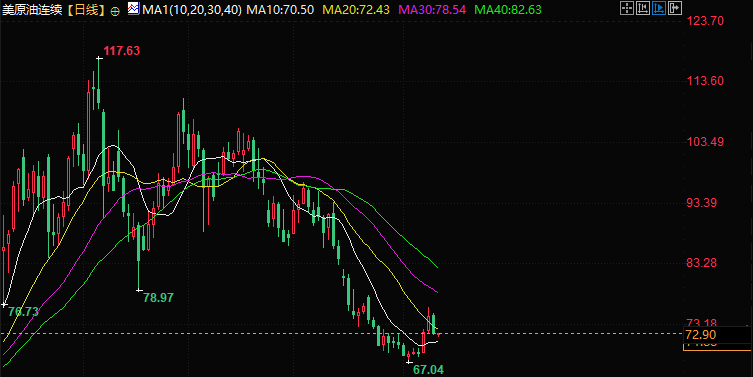
On Friday (July 10, Beijing time) in early Asian trading, spot gold was trading around $4,122 per ounce. Gold prices rose on Thursday, with geopolitical risks providing safe-haven support. However, the core driver for gold in the short term remains the Federal Reserve's policy. Oil prices fell more than 4% on Thursday, with US crude oil currently trading around $71.87 per barrel, as mediation by multiple countries helped de-escalate tensions between the US and Iran, potentially leading to a new round of nuclear negotiations, although the prospects for these negotiations remain uncertain.

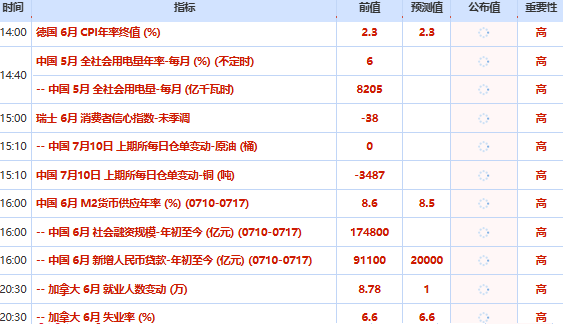
U.S. stocks performed strongly on Thursday, with the Nasdaq Composite Index closing up 1.30% at 26,206.89 points, mainly driven by a surge in chip stocks such as Micron. The Philadelphia Semiconductor Index jumped 3.06%. The S&P 500 Index closed up 0.81% at 7,543.66 points, and the Dow Jones Industrial Average rose 0.27% to close at 52,487.41 points. Although the market remained concerned that escalating conflicts in the Middle East (Iran's retaliation against U.S. military targets in Kuwait, Qatar, and Bahrain) could push up inflation, enthusiasm for AI-related technology stocks outweighed these concerns.
Micron jumped 4.5% after announcing plans to invest over $250 billion in the U.S. by 2035 to meet AI memory demand; Applied Materials rose 3.2%, SanDisk surged 7.6%, and Meta also gained on plans to mass-produce AI chips. On the economic front, a decline in initial jobless claims last week indicated a stable labor market, while the S&P 500 has risen approximately 10% so far in 2026, less than 1% below its all-time closing high in June. In the upcoming earnings season, analysts expect corporate earnings to grow by 24% year-over-year, with technology stocks contributing the most, and the S&P 500's forward price-to-earnings ratio has fallen from 21 a month ago to around 20.
Regarding the Federal Reserve, the minutes of its June meeting showed that some policymakers supported raising interest rates, but ultimately kept rates unchanged. The market currently expects a possible 25 basis point rate hike by December. Among individual stocks, PepsiCo's stock price fell 3.3% despite better-than-expected second-quarter revenue, while Costco plunged 4.2% to a six-month low due to slower same-store sales growth in June.
Gold prices rose more than 1% on Thursday, with spot gold closing at $4,123.50 per ounce, mainly due to bargain hunting after prices fell to a one-week low the previous day. Investors were also closely watching developments in the Middle East – following US strikes on Iran's southern coast and eastern provinces, Iranian armed forces launched attacks on US military infrastructure in neighboring Gulf states, putting pressure on the three-week ceasefire agreement. Geopolitical risks provided safe-haven support for gold.
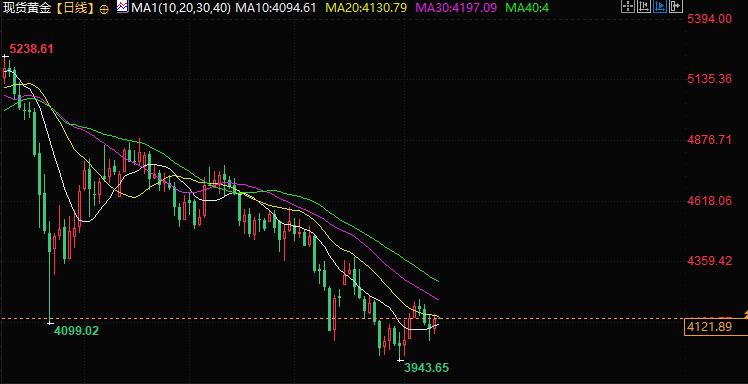
However, StoneX analysts point out that the core driver for gold in the short term remains the Federal Reserve's policy. A dovish turn by the Fed would be beneficial for gold and silver, while hints of further rate hikes would put pressure on both. Market opinions on the interest rate outlook are divided. The CME FedWatch tool shows that traders currently expect a 62% probability of a rate hike in September. Next week's inflation data and Fed Chairman Warsh's testimony before Congress will be the focus of the market.
HSBC has lowered its average gold price forecasts for this year and next, from $4,864 and $5,000 to $4,560 and $4,925 respectively.
Other precious metals also strengthened, with spot silver rising 2.9% to $59.94 per ounce, platinum rising 2.3% to $1615.25, and palladium rising 3.3% to close at $1253.25.
Oil prices fell nearly 4% on Thursday, with Brent crude down 4.09% to settle at $76.03 a barrel and WTI crude down 3.95% to settle at $71.81 a barrel. Although both closed at their highest levels since mid-to-late June on Wednesday, the decline was mainly due to investor concerns that rising inflation and other economic issues could drag down global oil demand, outweighing persistent supply risks.
Geopolitically, Iranian armed forces launched attacks on U.S. military infrastructure in the Gulf states on Thursday in response to U.S. strikes on its southern coast and eastern provinces, putting pressure on the three-week ceasefire agreement and delaying the full reopening of the Strait of Hormuz. Goldman Sachs analysts estimate that Persian Gulf oil flows initially recovered to over 80% of pre-war levels after the reopening, but have fallen back to just over 70% of normal levels following recent tanker attacks. However, Macquarie Group's global energy strategist believes that renewed tensions between the U.S. and Iran may be relatively short-lived, as both countries are constrained by real economic and political factors.
Economic concerns mainly stemmed from the minutes of the Federal Reserve's June meeting, which showed policymakers were increasingly worried about inflation, while the decline in initial jobless claims last week confirmed the labor market's "slow hiring, slow laying off" situation.
In addition, there are new variables on the supply side: Ukrainian drones attacked more than a dozen Russian oil tankers in the Sea of Azov at night, after Russia announced a ban on diesel exports, which had already raised concerns about market supply and pushed U.S. diesel futures to their biggest one-day gain in four years on Wednesday; however, New York Fed President Williams said that despite the renewed fighting in the Middle East, he does not expect energy prices to continue to rise for the rest of the year, and declined to disclose the interest rate decision at this month's policy meeting.
The dollar fell for a second straight session on Thursday, with the dollar index dropping 0.14% to 100.92, as markets weighed geopolitical risks against the prospect of a Federal Reserve interest rate hike amid renewed attacks between the US and Iran that put pressure on the Middle East ceasefire agreement.
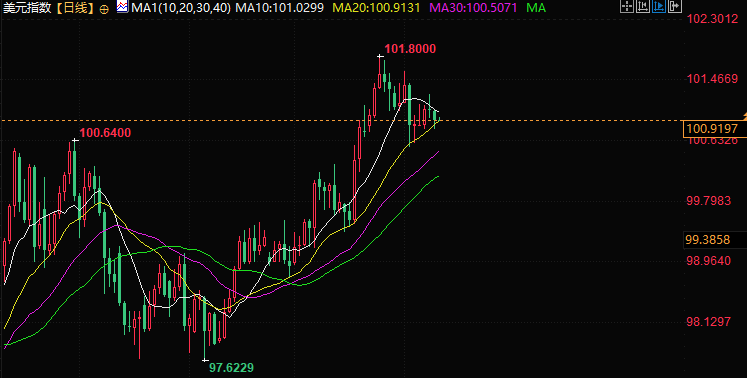
Despite retaliatory strikes by Iranian armed forces against U.S. military facilities in the Gulf states, oil prices retreated from intraday highs as concerns about rising inflation dragging down global economic growth outweighed worries about supply shortages. Analysts pointed out that the U.S. has been relatively less affected by energy supply shocks, which may force other central banks to raise interest rates faster than the Federal Reserve expected by the market.
The minutes of the Federal Reserve's June meeting revealed increased concerns among policymakers about high inflation, with some participants believing there was reason to raise interest rates immediately. However, New York Fed President Williams predicted that energy prices would not continue to rise for the remainder of the year. The CME Group's FedWatch tool showed that the market's probability of a rate hike of at least 25 basis points at the July meeting fell from 31% to 26.2%, and the probability of a September rate hike fell from 66.6% to 61.7%, but remained higher than the 54.1% a week earlier. On the economic data front, initial jobless claims in the U.S. fell by 2,000 to 215,000 last week, lower than expected, indicating a robust labor market.
The euro rose 0.19% to $1.1436, while the pound gained 0.23% to $1.3415, hitting a three-week high, as European Central Bank meeting minutes showed that policymakers received forecasts indicating that inflation would remain above target next year.
The dollar fell 0.14% against the yen to 162.34 as the Bank of Japan said the war in Iran could prompt more companies to raise prices later this year, exacerbating inflationary pressures and strengthening the case for further interest rate hikes. Meanwhile, the Japanese government plans to explicitly mention the central bank's independence in its economic blueprint to address market concerns about political interference in monetary policy.
Multiple countries have mediated to de-escalate tensions between the US and Iran, potentially leading to a new round of nuclear negotiations.
According to two mediators and a U.S. official, Qatar, Pakistan, and other regional mediators are actively working to ease tensions between the U.S. and Iran, creating space for the resumption of nuclear negotiations. Officials from Qatar, Pakistan, Turkey, Egypt, and Saudi Arabia held multiple calls with both sides on Wednesday, attempting to stabilize the situation amid escalating military conflict. A regional source involved in the mediation stated that the current focus is on de-escalating the situation before finalizing the timing of the next round of technical negotiations between the two sides. This indicates that the mediators are trying to pull the U.S. and Iran back from their current tit-for-tat stance to a diplomatic approach. A U.S. official told the media that the Trump administration remains "committed to finding a solution," and technical-level consultations are still underway. However, due to persistent differences between the two sides on core issues such as the nuclear issue, sanctions relief, and control of the Strait of Hormuz, and Trump's public statement that the U.S.-Iran ceasefire agreement is "over," the future of the negotiations remains uncertain.
The probability of a Federal Reserve rate hike in July is 25.1%, and the probability of a rate hike this year is 83.9%.
According to CME's "FedWatch": The probability of the Federal Reserve keeping interest rates unchanged in July is 74.9%, and the probability of a cumulative 25 basis point rate hike is 25.1%. The probability of the Fed keeping interest rates unchanged by September is 35.7%, the probability of a cumulative 25 basis point rate hike is 51.1%, and the probability of a cumulative 50 basis point rate hike is 13.1%. The probability of the Fed keeping interest rates unchanged by December is 16.1%, the probability of a cumulative 25 basis point rate hike is 39.8%, and the probability of at least a 50 basis point rate hike is 44.1%.
Trump's resumption of military strikes against Iran raises concerns within the Republican Party about its potential impact on the midterm elections.
US President Trump recently announced that the temporary ceasefire agreement reached between the US and Iran had "ended" due to Iran's continued attacks on ships passing through the Strait of Hormuz. Subsequently, the US military launched a large-scale strike against at least 170 military targets in Iran within 48 hours; Iran retaliated by targeting US military bases in the Middle East. This sudden escalation has plunged Washington into another protracted and unpopular war. With only months until the November midterm elections, this escalation has put Republican members of Congress in a dilemma: support the president's policies or worry that the conflict could jeopardize their election prospects. Some Republicans have openly expressed their dissatisfaction, with one House Republican stating, "He's pushing us toward political destruction." They fear that Trump is more focused on the standoff with Iran than on the party's political situation and the vital interests of voters. Economic concerns are at the heart of the Republican Party's anxieties. The previous ceasefire agreement had initially led to a decline in oil prices, but the resumption of military operations has pushed Brent crude prices back close to $80 per barrel. Republican strategists point out that the current surge in oil prices coincides with the peak summer travel season, and with consumers highly sensitive to the cost of living, this will directly weaken the Republican Party's advantage on economic issues in the election. The chairman of the Republican Mainstream Street Partnership also warned that a resurgence in gasoline and food prices would pose a serious problem for the election. Meanwhile, the high cost of war has also drawn congressional attention. The Pentagon has requested an additional $67 billion in funding to cover the expenses of military operations against Iran. Both parties in Congress are demanding a more detailed plan for the use of funds. Despite multiple pressures, the White House has defended the president's actions, stating that Trump is fulfilling his commitment to preventing Iran from acquiring nuclear weapons.
Israel informed the US that Iran was plotting a new assassination attempt against Trump.
Sources familiar with the matter revealed that Israel has provided the United States with updated intelligence indicating that Iran is planning a new assassination attempt against President Trump, signifying a further escalation of the confrontation between the two countries. During Trump's first term, the U.S. assassinated Qassem Soleimani, a senior commander of Iran's Islamic Revolutionary Guard Corps, and Iran has publicly vowed retaliation against Trump for years. The Israeli Embassy in Washington declined to comment; the Iranian Mission to the United Nations has not yet responded to requests for comment. The White House referred the media to the president's remarks made on Wednesday. (Xinhua)
Russian Foreign Minister: Russia no longer believes the West is willing to negotiate.
According to Sputnik News Agency, Russian Foreign Minister Sergey Lavrov stated at a press conference that Russia no longer believes the West is willing to negotiate on the Ukraine issue. Lavrov said, "We no longer believe the West is willing to resolve the issue through negotiations. Our previous goodwill and hope have been completely exhausted." Lavrov added, "We have outlined our assessment of the current situation in Ukraine, including the actions of the West. While pretending to be prepared for negotiations, as the European side has already announced, the West has turned around and publicly issued an ultimatum to Russia."
Burnham has secured the leadership of the Labour Party with the support of a majority of its MPs.
On July 9th, local time, the first day of the UK Labour Party leadership election, Andy Burnham secured 322 nominations out of 403 Labour MPs, essentially securing the leadership and becoming the Prime Minister of the United Kingdom. According to Labour Party leadership election rules, a candidate needs at least 81 nominations from Labour MPs to advance to the next stage of the election. Currently, no other Labour MPs have received nominations besides Burnham. Burnham is now just one step away from securing the leadership. He has already received 322 nominations; he only needs one more MP's nomination to ensure that other potential competitors do not receive the required 81 nominations, making Burnham the sole candidate. Despite his overwhelming support, according to election procedures, Burnham will still need to complete the relevant procedures on July 17th before being officially declared the Labour Party leader. He will then be appointed Prime Minister by the King. (CCTV News)
Traffic in the Strait of Hormuz has plummeted and almost come to a standstill.
A report released on September 9 by Wenward Maritime Analysis, a UK-based company, stated that traffic in the Strait of Hormuz has plummeted due to the ongoing conflict between the US and Iran, with merchant shipping leaving the Persian Gulf essentially brought to a standstill. The report noted significant fluctuations in traffic volume in the Strait of Hormuz recently. On September 7, 51 passages were recorded, with a surge of 35 ships leaving the Persian Gulf. On September 8, 35 passages were recorded, with only two of the 18 ships leaving via the southern channel, indicating that shipping operators avoided the channel closer to Oman after the previous night's attacks. From the night of September 8 to the early morning of September 9, only 5 passages were recorded, with only one ship leaving the Persian Gulf. The report pointed out that the southern channel of the Strait of Hormuz has been essentially abandoned, and merchant shipping has been effectively closed for the first time since its partial resumption in mid-June. The risk level in the Strait of Hormuz and surrounding waters is currently classified as "critical." The combined effects of the ongoing conflict between the US and Iran, the breakdown of the ceasefire, the reinstatement of sanctions, and the uncertainty surrounding the security situation in the waterway have further escalated the risks in the region. The U.S. Central Command announced on social media on August 8th (Eastern Time) that the U.S. military had launched further strikes against Iran that day. This marks the second consecutive day of U.S. military strikes against Iran in response to recent attacks on merchant ships in the Strait of Hormuz. In response, the Iranian military launched strikes against multiple U.S. targets in the Middle East. Following the U.S.-Iran memorandum of understanding, the Strait of Hormuz has two main shipping lanes: the northern lane controlled by Iran and the southern lane closer to Oman. The U.S. military provides navigational assistance in the southern lane. (Xinhua)
Israeli Prime Minister: "Will not allow" Iran to acquire nuclear weapons; plans to significantly increase defense budget.
Israeli Prime Minister Benjamin Netanyahu stated on the 9th that Israel will "not allow" Iran to acquire nuclear weapons, regardless of whether the United States and Iran reach an agreement. At the same time, Israel plans to increase its defense budget over the next 10 years, focusing on developing its air force and domestic defense industry. Netanyahu made these remarks at the graduation ceremony for Israeli Air Force pilots. He announced an additional 350 billion shekels (approximately US$117.7 billion) to the defense budget over the next 10 years, a significant portion of which will be used for air force development, while simultaneously developing the domestic defense industry to reduce dependence on foreign procurement. He stated that Israel's policy on the Iranian nuclear issue is "very clear": regardless of whether there is an agreement, Iran will not be allowed to possess nuclear weapons. (Xinhua)
Tensions between the US and Iran escalate again; Iran urgently ships out approximately 11 million barrels of crude oil.
As tensions between the US and Iran escalated again, with US President Trump threatening to reinstate a blockade of Iranian ports, Tehran urgently dispatched oil tankers in the past 24 hours, transporting approximately 11 million barrels of crude oil. According to tanker tracking data, five very large crude carriers (VLCCs) and one Suezmax tanker departed Iranian ports. Four of the tankers located themselves in the Gulf of Oman, while the third transited the Strait of Hormuz on Thursday. This convoy's departure coincided with the second consecutive day of US strikes against Iran in response to recent attacks on ships by Tehran. The already fragile temporary ceasefire between the two countries is at risk of collapse. The renewed deterioration of the situation has made other shipping companies more cautious, and traffic in most observable parts of the Strait of Hormuz has nearly come to a standstill.
The report predicts that the total size of my country's database market will exceed 97 billion yuan within three years.
The "Database Development Research Report (2026)" was released at the 2026 Trusted Database Development Conference. The report predicts that by 2028, the total size of China's database market will reach 97.974 billion yuan, with a compound annual growth rate of 13.06%. The report shows that the global database market size reached US$131.6 billion in 2025. my country's database market size reached US$9.49 billion, accounting for 7.2% of the global market. As of June 2026, the number of open-source and closed-source commercial products globally is roughly equal, with commercial databases accounting for over 70% of the market in my country, while the proportion of open-source databases has increased. (Xinhua News Agency)
Key Focus Today
stock market
U.S. stocks performed strongly on Thursday, with the Nasdaq Composite Index closing up 1.30% at 26,206.89 points, mainly driven by a surge in chip stocks such as Micron. The Philadelphia Semiconductor Index jumped 3.06%. The S&P 500 Index closed up 0.81% at 7,543.66 points, and the Dow Jones Industrial Average rose 0.27% to close at 52,487.41 points. Although the market remained concerned that escalating conflicts in the Middle East (Iran's retaliation against U.S. military targets in Kuwait, Qatar, and Bahrain) could push up inflation, enthusiasm for AI-related technology stocks outweighed these concerns.
Micron jumped 4.5% after announcing plans to invest over $250 billion in the U.S. by 2035 to meet AI memory demand; Applied Materials rose 3.2%, SanDisk surged 7.6%, and Meta also gained on plans to mass-produce AI chips. On the economic front, a decline in initial jobless claims last week indicated a stable labor market, while the S&P 500 has risen approximately 10% so far in 2026, less than 1% below its all-time closing high in June. In the upcoming earnings season, analysts expect corporate earnings to grow by 24% year-over-year, with technology stocks contributing the most, and the S&P 500's forward price-to-earnings ratio has fallen from 21 a month ago to around 20.
Regarding the Federal Reserve, the minutes of its June meeting showed that some policymakers supported raising interest rates, but ultimately kept rates unchanged. The market currently expects a possible 25 basis point rate hike by December. Among individual stocks, PepsiCo's stock price fell 3.3% despite better-than-expected second-quarter revenue, while Costco plunged 4.2% to a six-month low due to slower same-store sales growth in June.
Gold Market
Gold prices rose more than 1% on Thursday, with spot gold closing at $4,123.50 per ounce, mainly due to bargain hunting after prices fell to a one-week low the previous day. Investors were also closely watching developments in the Middle East – following US strikes on Iran's southern coast and eastern provinces, Iranian armed forces launched attacks on US military infrastructure in neighboring Gulf states, putting pressure on the three-week ceasefire agreement. Geopolitical risks provided safe-haven support for gold.
However, StoneX analysts point out that the core driver for gold in the short term remains the Federal Reserve's policy. A dovish turn by the Fed would be beneficial for gold and silver, while hints of further rate hikes would put pressure on both. Market opinions on the interest rate outlook are divided. The CME FedWatch tool shows that traders currently expect a 62% probability of a rate hike in September. Next week's inflation data and Fed Chairman Warsh's testimony before Congress will be the focus of the market.
HSBC has lowered its average gold price forecasts for this year and next, from $4,864 and $5,000 to $4,560 and $4,925 respectively.
Other precious metals also strengthened, with spot silver rising 2.9% to $59.94 per ounce, platinum rising 2.3% to $1615.25, and palladium rising 3.3% to close at $1253.25.
oil market
Oil prices fell nearly 4% on Thursday, with Brent crude down 4.09% to settle at $76.03 a barrel and WTI crude down 3.95% to settle at $71.81 a barrel. Although both closed at their highest levels since mid-to-late June on Wednesday, the decline was mainly due to investor concerns that rising inflation and other economic issues could drag down global oil demand, outweighing persistent supply risks.
Geopolitically, Iranian armed forces launched attacks on U.S. military infrastructure in the Gulf states on Thursday in response to U.S. strikes on its southern coast and eastern provinces, putting pressure on the three-week ceasefire agreement and delaying the full reopening of the Strait of Hormuz. Goldman Sachs analysts estimate that Persian Gulf oil flows initially recovered to over 80% of pre-war levels after the reopening, but have fallen back to just over 70% of normal levels following recent tanker attacks. However, Macquarie Group's global energy strategist believes that renewed tensions between the U.S. and Iran may be relatively short-lived, as both countries are constrained by real economic and political factors.
Economic concerns mainly stemmed from the minutes of the Federal Reserve's June meeting, which showed policymakers were increasingly worried about inflation, while the decline in initial jobless claims last week confirmed the labor market's "slow hiring, slow laying off" situation.
In addition, there are new variables on the supply side: Ukrainian drones attacked more than a dozen Russian oil tankers in the Sea of Azov at night, after Russia announced a ban on diesel exports, which had already raised concerns about market supply and pushed U.S. diesel futures to their biggest one-day gain in four years on Wednesday; however, New York Fed President Williams said that despite the renewed fighting in the Middle East, he does not expect energy prices to continue to rise for the rest of the year, and declined to disclose the interest rate decision at this month's policy meeting.
Foreign exchange market
The dollar fell for a second straight session on Thursday, with the dollar index dropping 0.14% to 100.92, as markets weighed geopolitical risks against the prospect of a Federal Reserve interest rate hike amid renewed attacks between the US and Iran that put pressure on the Middle East ceasefire agreement.
Despite retaliatory strikes by Iranian armed forces against U.S. military facilities in the Gulf states, oil prices retreated from intraday highs as concerns about rising inflation dragging down global economic growth outweighed worries about supply shortages. Analysts pointed out that the U.S. has been relatively less affected by energy supply shocks, which may force other central banks to raise interest rates faster than the Federal Reserve expected by the market.
The minutes of the Federal Reserve's June meeting revealed increased concerns among policymakers about high inflation, with some participants believing there was reason to raise interest rates immediately. However, New York Fed President Williams predicted that energy prices would not continue to rise for the remainder of the year. The CME Group's FedWatch tool showed that the market's probability of a rate hike of at least 25 basis points at the July meeting fell from 31% to 26.2%, and the probability of a September rate hike fell from 66.6% to 61.7%, but remained higher than the 54.1% a week earlier. On the economic data front, initial jobless claims in the U.S. fell by 2,000 to 215,000 last week, lower than expected, indicating a robust labor market.
The euro rose 0.19% to $1.1436, while the pound gained 0.23% to $1.3415, hitting a three-week high, as European Central Bank meeting minutes showed that policymakers received forecasts indicating that inflation would remain above target next year.
The dollar fell 0.14% against the yen to 162.34 as the Bank of Japan said the war in Iran could prompt more companies to raise prices later this year, exacerbating inflationary pressures and strengthening the case for further interest rate hikes. Meanwhile, the Japanese government plans to explicitly mention the central bank's independence in its economic blueprint to address market concerns about political interference in monetary policy.
International News
Multiple countries have mediated to de-escalate tensions between the US and Iran, potentially leading to a new round of nuclear negotiations.
According to two mediators and a U.S. official, Qatar, Pakistan, and other regional mediators are actively working to ease tensions between the U.S. and Iran, creating space for the resumption of nuclear negotiations. Officials from Qatar, Pakistan, Turkey, Egypt, and Saudi Arabia held multiple calls with both sides on Wednesday, attempting to stabilize the situation amid escalating military conflict. A regional source involved in the mediation stated that the current focus is on de-escalating the situation before finalizing the timing of the next round of technical negotiations between the two sides. This indicates that the mediators are trying to pull the U.S. and Iran back from their current tit-for-tat stance to a diplomatic approach. A U.S. official told the media that the Trump administration remains "committed to finding a solution," and technical-level consultations are still underway. However, due to persistent differences between the two sides on core issues such as the nuclear issue, sanctions relief, and control of the Strait of Hormuz, and Trump's public statement that the U.S.-Iran ceasefire agreement is "over," the future of the negotiations remains uncertain.
The probability of a Federal Reserve rate hike in July is 25.1%, and the probability of a rate hike this year is 83.9%.
According to CME's "FedWatch": The probability of the Federal Reserve keeping interest rates unchanged in July is 74.9%, and the probability of a cumulative 25 basis point rate hike is 25.1%. The probability of the Fed keeping interest rates unchanged by September is 35.7%, the probability of a cumulative 25 basis point rate hike is 51.1%, and the probability of a cumulative 50 basis point rate hike is 13.1%. The probability of the Fed keeping interest rates unchanged by December is 16.1%, the probability of a cumulative 25 basis point rate hike is 39.8%, and the probability of at least a 50 basis point rate hike is 44.1%.
Trump's resumption of military strikes against Iran raises concerns within the Republican Party about its potential impact on the midterm elections.
US President Trump recently announced that the temporary ceasefire agreement reached between the US and Iran had "ended" due to Iran's continued attacks on ships passing through the Strait of Hormuz. Subsequently, the US military launched a large-scale strike against at least 170 military targets in Iran within 48 hours; Iran retaliated by targeting US military bases in the Middle East. This sudden escalation has plunged Washington into another protracted and unpopular war. With only months until the November midterm elections, this escalation has put Republican members of Congress in a dilemma: support the president's policies or worry that the conflict could jeopardize their election prospects. Some Republicans have openly expressed their dissatisfaction, with one House Republican stating, "He's pushing us toward political destruction." They fear that Trump is more focused on the standoff with Iran than on the party's political situation and the vital interests of voters. Economic concerns are at the heart of the Republican Party's anxieties. The previous ceasefire agreement had initially led to a decline in oil prices, but the resumption of military operations has pushed Brent crude prices back close to $80 per barrel. Republican strategists point out that the current surge in oil prices coincides with the peak summer travel season, and with consumers highly sensitive to the cost of living, this will directly weaken the Republican Party's advantage on economic issues in the election. The chairman of the Republican Mainstream Street Partnership also warned that a resurgence in gasoline and food prices would pose a serious problem for the election. Meanwhile, the high cost of war has also drawn congressional attention. The Pentagon has requested an additional $67 billion in funding to cover the expenses of military operations against Iran. Both parties in Congress are demanding a more detailed plan for the use of funds. Despite multiple pressures, the White House has defended the president's actions, stating that Trump is fulfilling his commitment to preventing Iran from acquiring nuclear weapons.
Israel informed the US that Iran was plotting a new assassination attempt against Trump.
Sources familiar with the matter revealed that Israel has provided the United States with updated intelligence indicating that Iran is planning a new assassination attempt against President Trump, signifying a further escalation of the confrontation between the two countries. During Trump's first term, the U.S. assassinated Qassem Soleimani, a senior commander of Iran's Islamic Revolutionary Guard Corps, and Iran has publicly vowed retaliation against Trump for years. The Israeli Embassy in Washington declined to comment; the Iranian Mission to the United Nations has not yet responded to requests for comment. The White House referred the media to the president's remarks made on Wednesday. (Xinhua)
Russian Foreign Minister: Russia no longer believes the West is willing to negotiate.
According to Sputnik News Agency, Russian Foreign Minister Sergey Lavrov stated at a press conference that Russia no longer believes the West is willing to negotiate on the Ukraine issue. Lavrov said, "We no longer believe the West is willing to resolve the issue through negotiations. Our previous goodwill and hope have been completely exhausted." Lavrov added, "We have outlined our assessment of the current situation in Ukraine, including the actions of the West. While pretending to be prepared for negotiations, as the European side has already announced, the West has turned around and publicly issued an ultimatum to Russia."
Burnham has secured the leadership of the Labour Party with the support of a majority of its MPs.
On July 9th, local time, the first day of the UK Labour Party leadership election, Andy Burnham secured 322 nominations out of 403 Labour MPs, essentially securing the leadership and becoming the Prime Minister of the United Kingdom. According to Labour Party leadership election rules, a candidate needs at least 81 nominations from Labour MPs to advance to the next stage of the election. Currently, no other Labour MPs have received nominations besides Burnham. Burnham is now just one step away from securing the leadership. He has already received 322 nominations; he only needs one more MP's nomination to ensure that other potential competitors do not receive the required 81 nominations, making Burnham the sole candidate. Despite his overwhelming support, according to election procedures, Burnham will still need to complete the relevant procedures on July 17th before being officially declared the Labour Party leader. He will then be appointed Prime Minister by the King. (CCTV News)
Traffic in the Strait of Hormuz has plummeted and almost come to a standstill.
A report released on September 9 by Wenward Maritime Analysis, a UK-based company, stated that traffic in the Strait of Hormuz has plummeted due to the ongoing conflict between the US and Iran, with merchant shipping leaving the Persian Gulf essentially brought to a standstill. The report noted significant fluctuations in traffic volume in the Strait of Hormuz recently. On September 7, 51 passages were recorded, with a surge of 35 ships leaving the Persian Gulf. On September 8, 35 passages were recorded, with only two of the 18 ships leaving via the southern channel, indicating that shipping operators avoided the channel closer to Oman after the previous night's attacks. From the night of September 8 to the early morning of September 9, only 5 passages were recorded, with only one ship leaving the Persian Gulf. The report pointed out that the southern channel of the Strait of Hormuz has been essentially abandoned, and merchant shipping has been effectively closed for the first time since its partial resumption in mid-June. The risk level in the Strait of Hormuz and surrounding waters is currently classified as "critical." The combined effects of the ongoing conflict between the US and Iran, the breakdown of the ceasefire, the reinstatement of sanctions, and the uncertainty surrounding the security situation in the waterway have further escalated the risks in the region. The U.S. Central Command announced on social media on August 8th (Eastern Time) that the U.S. military had launched further strikes against Iran that day. This marks the second consecutive day of U.S. military strikes against Iran in response to recent attacks on merchant ships in the Strait of Hormuz. In response, the Iranian military launched strikes against multiple U.S. targets in the Middle East. Following the U.S.-Iran memorandum of understanding, the Strait of Hormuz has two main shipping lanes: the northern lane controlled by Iran and the southern lane closer to Oman. The U.S. military provides navigational assistance in the southern lane. (Xinhua)
Israeli Prime Minister: "Will not allow" Iran to acquire nuclear weapons; plans to significantly increase defense budget.
Israeli Prime Minister Benjamin Netanyahu stated on the 9th that Israel will "not allow" Iran to acquire nuclear weapons, regardless of whether the United States and Iran reach an agreement. At the same time, Israel plans to increase its defense budget over the next 10 years, focusing on developing its air force and domestic defense industry. Netanyahu made these remarks at the graduation ceremony for Israeli Air Force pilots. He announced an additional 350 billion shekels (approximately US$117.7 billion) to the defense budget over the next 10 years, a significant portion of which will be used for air force development, while simultaneously developing the domestic defense industry to reduce dependence on foreign procurement. He stated that Israel's policy on the Iranian nuclear issue is "very clear": regardless of whether there is an agreement, Iran will not be allowed to possess nuclear weapons. (Xinhua)
Tensions between the US and Iran escalate again; Iran urgently ships out approximately 11 million barrels of crude oil.
As tensions between the US and Iran escalated again, with US President Trump threatening to reinstate a blockade of Iranian ports, Tehran urgently dispatched oil tankers in the past 24 hours, transporting approximately 11 million barrels of crude oil. According to tanker tracking data, five very large crude carriers (VLCCs) and one Suezmax tanker departed Iranian ports. Four of the tankers located themselves in the Gulf of Oman, while the third transited the Strait of Hormuz on Thursday. This convoy's departure coincided with the second consecutive day of US strikes against Iran in response to recent attacks on ships by Tehran. The already fragile temporary ceasefire between the two countries is at risk of collapse. The renewed deterioration of the situation has made other shipping companies more cautious, and traffic in most observable parts of the Strait of Hormuz has nearly come to a standstill.
Domestic News
The report predicts that the total size of my country's database market will exceed 97 billion yuan within three years.
The "Database Development Research Report (2026)" was released at the 2026 Trusted Database Development Conference. The report predicts that by 2028, the total size of China's database market will reach 97.974 billion yuan, with a compound annual growth rate of 13.06%. The report shows that the global database market size reached US$131.6 billion in 2025. my country's database market size reached US$9.49 billion, accounting for 7.2% of the global market. As of June 2026, the number of open-source and closed-source commercial products globally is roughly equal, with commercial databases accounting for over 70% of the market in my country, while the proportion of open-source databases has increased. (Xinhua News Agency)
- Risk Warning and Disclaimer
- The market involves risk, and trading may not be suitable for all investors. This article is for reference only and does not constitute personal investment advice, nor does it take into account certain users’ specific investment objectives, financial situation, or other needs. Any investment decisions made based on this information are at your own risk.