Institutions: Gold struggles to break out of its summer range; an upward trend may resume by the end of the third quarter.
2026-07-10 10:20:53
While gold prices have held above the $4,100 per ounce support level, a research report from Metals Focus Consulting suggests that a definitive bullish breakout is unlikely in the short term. The ongoing US-Iran conflict is pushing up energy prices and exacerbating inflation stickiness. The market continues to price in the Federal Reserve's tightening monetary policy, and physical gold consumption is traditionally slow during the summer. These multiple negative factors will likely limit gold prices to range-bound trading throughout the summer.
However, institutions have made it clear that the structural logic supporting the gold bull market in the medium to long term has not collapsed. After the market lowers its expectations for interest rate hikes in the third quarter and physical demand in China and India gradually recovers, gold prices are expected to return to an upward trend.
The ongoing geopolitical tensions between the US and Iran continue to disrupt global energy markets. High oil prices are pushing up inflation risks, and the market widely anticipates at least one more interest rate hike by the Federal Reserve this year. The opportunity cost of holding non-interest-bearing gold continues to rise, becoming a core macroeconomic negative factor suppressing gold prices. In addition, the continued high level of investment in the global artificial intelligence industry is driving up the demand for computing power infrastructure, pushing up the costs of high-tech products and electricity, further prolonging the high-inflation cycle and delaying the pace of the Federal Reserve's monetary policy shift.
Analysts suggest that as long as the market maintains its tight monetary policy, gold will lack the momentum for a one-sided rise. The market is likely to continue its wide-range fluctuation pattern throughout the summer, with a significant breakout not expected until the third quarter at the earliest.
Rising real yields are only one of the pressures facing gold. July and August are typically the lowest months for global physical gold demand, and high gold prices further suppress jewelry retail spending. While global retail gold demand saw a rebound in early 2026, it has cooled significantly in recent months, with retail investor interest weakening in major markets.
Following the June gold price correction, while physical demand in the Asian market showed signs of a slight recovery, the base for recovery was low and the improvement was weak. The peak seasonal demand season for the two major gold-consuming countries will not begin until late August or September, making it difficult for physical demand to provide strong support for gold prices in the short term.
Despite short-term market pressure, institutions remain bullish on gold's medium- to long-term prospects, predicting a recovery in gold prices after the market reassesses its expectations for US monetary policy by the end of the third quarter. Institutions believe the Federal Reserve is likely to maintain interest rates for the remainder of 2026, and even if inflation fails to fall rapidly, policymakers will tolerate price levels above the 2% target to mitigate the risk of a significant economic slowdown or even recession.
The core factors that drove gold prices to record highs over the previous year have all remained intact: persistent geopolitical uncertainties, market skepticism about the long-term value of the US dollar, and continued overvaluation of global stock markets. This highlights gold's value as a low-correlation, diversified asset and a safe-haven tool. Coupled with policy volatility expected from the upcoming US midterm elections and the ongoing geopolitical maneuvering in the Strait of Hormuz, the medium- to long-term investment logic for gold remains unchanged.
In summary, gold is expected to remain range-bound in the short term due to the combined effects of multiple negative factors during the summer. Geopolitical inflationary pressures, expectations of a Fed rate hike, and the off-season for physical consumption will limit upside potential. However, this short-term fluctuation is a healthy adjustment within an upward cycle. Structural positive factors such as global geopolitics, the dollar's credibility, and asset allocation demand remain effective in the long term. With shifts in monetary policy expectations at the end of the third quarter and the arrival of the peak season for physical demand in Asia, the upward trend in gold prices is expected to resume.
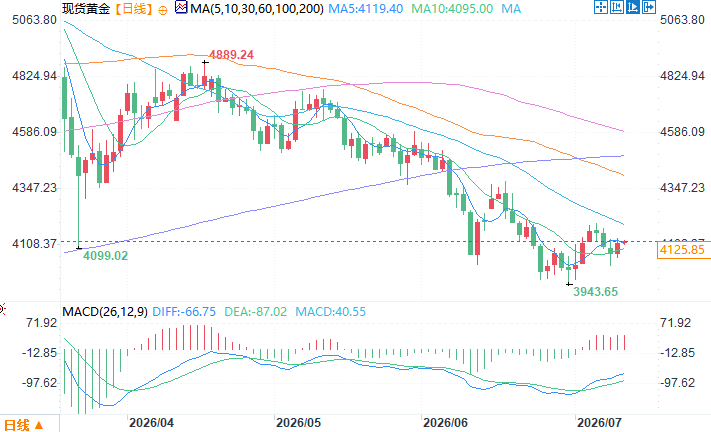
Spot gold daily chart source: EasyForex
At 10:20 AM Beijing time on July 10, spot gold was trading at $4126.85 per ounce.
However, institutions have made it clear that the structural logic supporting the gold bull market in the medium to long term has not collapsed. After the market lowers its expectations for interest rate hikes in the third quarter and physical demand in China and India gradually recovers, gold prices are expected to return to an upward trend.
A combination of negative macroeconomic factors and rising interest rate expectations are putting downward pressure on gold holding costs.
The ongoing geopolitical tensions between the US and Iran continue to disrupt global energy markets. High oil prices are pushing up inflation risks, and the market widely anticipates at least one more interest rate hike by the Federal Reserve this year. The opportunity cost of holding non-interest-bearing gold continues to rise, becoming a core macroeconomic negative factor suppressing gold prices. In addition, the continued high level of investment in the global artificial intelligence industry is driving up the demand for computing power infrastructure, pushing up the costs of high-tech products and electricity, further prolonging the high-inflation cycle and delaying the pace of the Federal Reserve's monetary policy shift.
Analysts suggest that as long as the market maintains its tight monetary policy, gold will lack the momentum for a one-sided rise. The market is likely to continue its wide-range fluctuation pattern throughout the summer, with a significant breakout not expected until the third quarter at the earliest.
Physical demand is entering a seasonal off-season, and the short-term recovery is limited.
Rising real yields are only one of the pressures facing gold. July and August are typically the lowest months for global physical gold demand, and high gold prices further suppress jewelry retail spending. While global retail gold demand saw a rebound in early 2026, it has cooled significantly in recent months, with retail investor interest weakening in major markets.
Following the June gold price correction, while physical demand in the Asian market showed signs of a slight recovery, the base for recovery was low and the improvement was weak. The peak seasonal demand season for the two major gold-consuming countries will not begin until late August or September, making it difficult for physical demand to provide strong support for gold prices in the short term.
The foundation for a medium- to long-term bull market is solid, and the market is expected to reach a turning point at the end of the third quarter.
Despite short-term market pressure, institutions remain bullish on gold's medium- to long-term prospects, predicting a recovery in gold prices after the market reassesses its expectations for US monetary policy by the end of the third quarter. Institutions believe the Federal Reserve is likely to maintain interest rates for the remainder of 2026, and even if inflation fails to fall rapidly, policymakers will tolerate price levels above the 2% target to mitigate the risk of a significant economic slowdown or even recession.
The core factors that drove gold prices to record highs over the previous year have all remained intact: persistent geopolitical uncertainties, market skepticism about the long-term value of the US dollar, and continued overvaluation of global stock markets. This highlights gold's value as a low-correlation, diversified asset and a safe-haven tool. Coupled with policy volatility expected from the upcoming US midterm elections and the ongoing geopolitical maneuvering in the Strait of Hormuz, the medium- to long-term investment logic for gold remains unchanged.
Summarize
In summary, gold is expected to remain range-bound in the short term due to the combined effects of multiple negative factors during the summer. Geopolitical inflationary pressures, expectations of a Fed rate hike, and the off-season for physical consumption will limit upside potential. However, this short-term fluctuation is a healthy adjustment within an upward cycle. Structural positive factors such as global geopolitics, the dollar's credibility, and asset allocation demand remain effective in the long term. With shifts in monetary policy expectations at the end of the third quarter and the arrival of the peak season for physical demand in Asia, the upward trend in gold prices is expected to resume.
Spot gold daily chart source: EasyForex
At 10:20 AM Beijing time on July 10, spot gold was trading at $4126.85 per ounce.
- Risk Warning and Disclaimer
- The market involves risk, and trading may not be suitable for all investors. This article is for reference only and does not constitute personal investment advice, nor does it take into account certain users’ specific investment objectives, financial situation, or other needs. Any investment decisions made based on this information are at your own risk.