The euro is under pressure ahead of the release of US CPI data – could weaker inflation provide a breather for the euro?
2026-07-13 08:42:07
On Monday (July 13) in early Asian trading, the euro weakened against the US dollar, trading around 1.1400.
The renewed escalation of the conflict between the US and Iran last weekend became the core factor weighing on the euro – the US Central Command announced a new round of strikes against Iran, and the Iranian Islamic Revolutionary Guard Corps immediately launched retaliatory attacks on US allies such as Kuwait, Jordan and Qatar.
Escalating geopolitical risks have increased demand for the US dollar as a safe haven, putting downward pressure on the euro against the dollar.
The renewed escalation of tensions in the Middle East last weekend was the direct trigger for the pressure on the euro.
The U.S. Central Command announced a new round of strikes against Iran, targeting Iran's ability to threaten civilian vessels in the Strait of Hormuz.
Iran responded swiftly and forcefully—the Islamic Revolutionary Guard Corps launched retaliatory drone and missile attacks against several U.S. allies in the Middle East, targeting Kuwait, Jordan, and Qatar.
Iran's Foreign Ministry on Sunday condemned the U.S. military action, accusing Washington of violating international law and warning its neighbors against assisting any military action against Iran.
This escalation in the situation impacts the euro against the dollar through two channels: first, rising geopolitical risks directly increase demand for the dollar as a safe haven; second, ongoing tensions in the Strait of Hormuz could push up energy prices, exacerbating inflationary pressures in the eurozone. However, at this stage, the market seems more inclined to trade the former—the boost to the dollar from safe-haven demand.
Judging from the market reaction, the euro fell back to around 1.1400 against the dollar, indicating that the safe-haven logic temporarily outweighed the transmission effect of energy inflation → ECB interest rate hikes. Previously, the market had anticipated potential progress in the US-Iran agreement, thereby easing geopolitical tensions, but weekend developments suggest that a diplomatic breakthrough remains a long way off.
In terms of monetary policy, market expectations for further interest rate hikes by the European Central Bank have increased.
Previous signs have cast doubt on the prospects of an agreement between Washington and Tehran to end the conflict – which could mean that the conflict premium in energy prices will persist, thus exacerbating inflationary pressures in the eurozone.
The European Central Bank raised interest rates at its June policy meeting, and the market expects two more rate hikes in the coming year to curb the impact of the US-Iran conflict on energy prices.
However, the boost to the euro from rising expectations of an ECB rate hike was offset by safe-haven buying of the dollar. The current exchange rate is hovering around 1.1400, reflecting that the short-term impact of geopolitical events has marginally outweighed the supporting effect of policy divergence.
Looking ahead, market focus has shifted to the US June CPI data to be released on Tuesday. The market expects overall CPI to decline by 0.1% month-on-month, while core CPI is expected to rise by 0.3%. Any signs of weakening inflation data could reduce the urgency for the Federal Reserve to raise interest rates, thereby weakening the dollar's interest rate advantage and providing an opportunity for a euro rebound.
Conversely, if the CPI data is stronger than expected, it could reignite expectations of a Fed rate hike, further boosting the dollar and pushing the euro down below the 1.1400 level and testing the 1.1350 area.
In the current environment, the euro/dollar exchange rate is caught in a complex interplay of geopolitical risks, policy divergence between the ECB and the Fed, and key economic data. In the short term, 1.1400 is a crucial psychological level; a decisive break below this level could open up further downside potential. Conversely, if this level holds, the euro is likely to consolidate before the CPI data release.
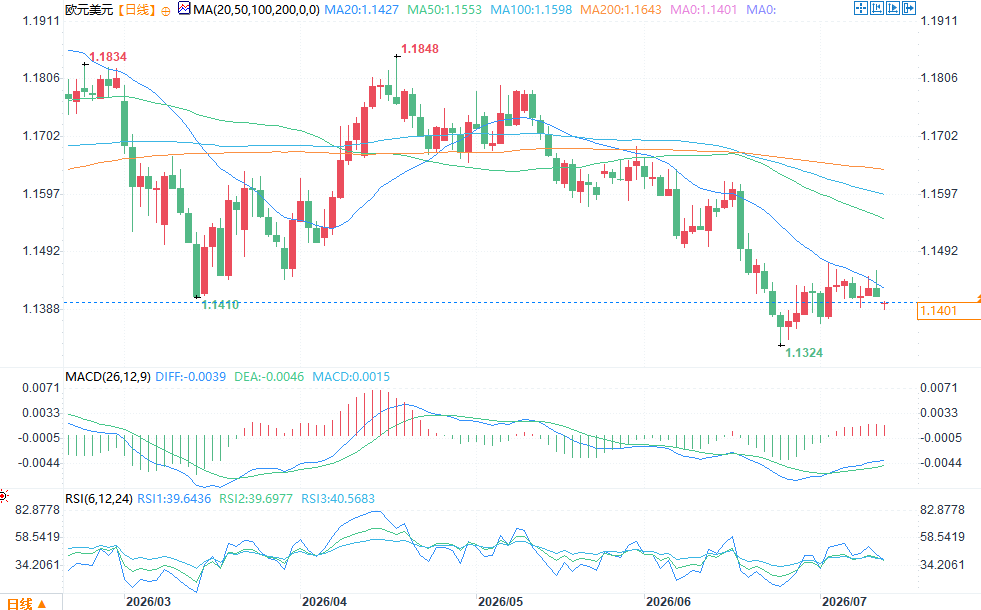
(Euro/USD daily chart, source: FX678)
At 8:30 a.m. Beijing time on July 13, the euro was trading at 1.1401/02 against the US dollar.
The renewed escalation of the conflict between the US and Iran last weekend became the core factor weighing on the euro – the US Central Command announced a new round of strikes against Iran, and the Iranian Islamic Revolutionary Guard Corps immediately launched retaliatory attacks on US allies such as Kuwait, Jordan and Qatar.
Escalating geopolitical risks have increased demand for the US dollar as a safe haven, putting downward pressure on the euro against the dollar.
Geopolitics: New round of fighting between the US and Iran over the weekend boosts the dollar as safe-haven demand rises.
The renewed escalation of tensions in the Middle East last weekend was the direct trigger for the pressure on the euro.
The U.S. Central Command announced a new round of strikes against Iran, targeting Iran's ability to threaten civilian vessels in the Strait of Hormuz.
Iran responded swiftly and forcefully—the Islamic Revolutionary Guard Corps launched retaliatory drone and missile attacks against several U.S. allies in the Middle East, targeting Kuwait, Jordan, and Qatar.
Iran's Foreign Ministry on Sunday condemned the U.S. military action, accusing Washington of violating international law and warning its neighbors against assisting any military action against Iran.
This escalation in the situation impacts the euro against the dollar through two channels: first, rising geopolitical risks directly increase demand for the dollar as a safe haven; second, ongoing tensions in the Strait of Hormuz could push up energy prices, exacerbating inflationary pressures in the eurozone. However, at this stage, the market seems more inclined to trade the former—the boost to the dollar from safe-haven demand.
Judging from the market reaction, the euro fell back to around 1.1400 against the dollar, indicating that the safe-haven logic temporarily outweighed the transmission effect of energy inflation → ECB interest rate hikes. Previously, the market had anticipated potential progress in the US-Iran agreement, thereby easing geopolitical tensions, but weekend developments suggest that a diplomatic breakthrough remains a long way off.
Monetary Policy: The Tug-of-War Between ECB Rate Hike Expectations and Fed Policy
In terms of monetary policy, market expectations for further interest rate hikes by the European Central Bank have increased.
Previous signs have cast doubt on the prospects of an agreement between Washington and Tehran to end the conflict – which could mean that the conflict premium in energy prices will persist, thus exacerbating inflationary pressures in the eurozone.
The European Central Bank raised interest rates at its June policy meeting, and the market expects two more rate hikes in the coming year to curb the impact of the US-Iran conflict on energy prices.
However, the boost to the euro from rising expectations of an ECB rate hike was offset by safe-haven buying of the dollar. The current exchange rate is hovering around 1.1400, reflecting that the short-term impact of geopolitical events has marginally outweighed the supporting effect of policy divergence.
Outlook: Focus on Tuesday's US CPI data
Looking ahead, market focus has shifted to the US June CPI data to be released on Tuesday. The market expects overall CPI to decline by 0.1% month-on-month, while core CPI is expected to rise by 0.3%. Any signs of weakening inflation data could reduce the urgency for the Federal Reserve to raise interest rates, thereby weakening the dollar's interest rate advantage and providing an opportunity for a euro rebound.
Conversely, if the CPI data is stronger than expected, it could reignite expectations of a Fed rate hike, further boosting the dollar and pushing the euro down below the 1.1400 level and testing the 1.1350 area.
In the current environment, the euro/dollar exchange rate is caught in a complex interplay of geopolitical risks, policy divergence between the ECB and the Fed, and key economic data. In the short term, 1.1400 is a crucial psychological level; a decisive break below this level could open up further downside potential. Conversely, if this level holds, the euro is likely to consolidate before the CPI data release.
(Euro/USD daily chart, source: FX678)
At 8:30 a.m. Beijing time on July 13, the euro was trading at 1.1401/02 against the US dollar.
- Risk Warning and Disclaimer
- The market involves risk, and trading may not be suitable for all investors. This article is for reference only and does not constitute personal investment advice, nor does it take into account certain users’ specific investment objectives, financial situation, or other needs. Any investment decisions made based on this information are at your own risk.