Oil prices surged 4% in response: US airstrikes on Iran and Revolutionary Guard attacks on merchant ships fueled concerns about supply disruptions.
2026-07-13 10:30:32
On Monday (July 13) during Asian trading hours, US crude oil futures opened higher and are currently up over 4% to around $74.50 per barrel. The sounds of gunfire in the Strait of Hormuz are the most direct reflection of the geopolitical risk premium being re-incorporated into oil prices.
On Sunday evening (July 12), Iran's Islamic Revolutionary Guard Corps continued its attacks on commercial vessels in the Strait of Hormuz. U.S. Central Command confirmed that the Revolutionary Guard "fired on commercial shipping in this crucial waterway." The U.S. military successfully shot down one Iranian cruise missile and one one-way attack drone.
At the same time, the U.S. military announced a new round of strikes against Iran "to continue to weaken its ability to attack civilian sailors and commercial vessels navigating freely in the Strait of Hormuz."
The U.S. Central Command stated that the strike was carried out under the direction of President Trump and was intended to "hold Iranian forces accountable."
The strikes reportedly targeted missiles, air defense systems, and Revolutionary Guard vessels in an effort to further weaken Iran’s ability to attack commercial shipping.
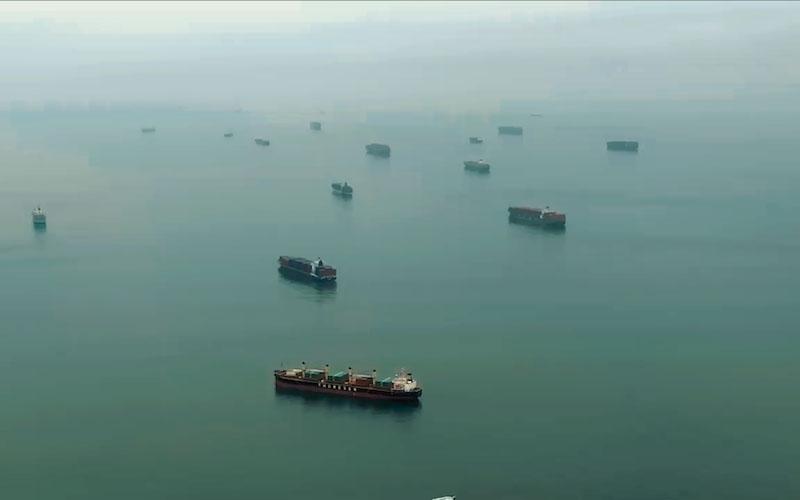
The escalation of the conflict can be traced back to Saturday when Iranian forces attacked a container ship in the Strait of Hormuz, causing it to catch fire and one crew member to go missing. The U.S. military confirmed that the attacked vessel was a Cypriot-flagged container ship named GFS Galaxy, and that its engine room was "severely damaged."
Iran claims the ship attempted to cross the strait using an unauthorized route. Oman's maritime authorities subsequently stated that 23 crew members had been rescued, but one remained missing; the Indian Ministry of External Affairs confirmed the missing crew member was an Indian citizen.
U.S. War Secretary Hergace vowed retaliation, stating, "Iran made a terrible choice, and now they will pay the price." The U.S. military subsequently carried out retaliatory strikes against approximately 140 targets, including missile and drone launch sites, ammunition depots, and communications equipment.
Iran's response was swift and forceful. The Revolutionary Guard launched attacks on Bahrain, Kuwait, Qatar, Jordan, and Oman—the countries across the Strait of Hormuz. Iran has been pressuring these countries to cooperate in managing shipping traffic, but insists that the strait should be entirely under Iranian control, with the right to charge vessels for passage.
Iranian Parliament Speaker and chief negotiator Mohammad Ghalibaf wrote on social media: "The era of unilateral agreements is over. We told you: keep your promises or pay the price. Reality is knocking on the door."
The Revolutionary Guard also announced the Strait of Hormuz would be closed "until further notice" following the weekend attacks, and vowed to attack "additional enemy bases in the area" should further attacks be faced.
The Iranian Foreign Ministry condemned the US military action, accusing Washington of violating international law and stating that "the US has blatantly violated almost all the terms of the agreement."
Despite Iran's claim to close the Strait of Hormuz, U.S. Central Command maintains that the Strait remains open to "all vessels seeking lawful passage" and states that "U.S. forces are ready to ensure freedom of navigation."
In a media interview broadcast on Sunday, Trump also stated that the Strait of Hormuz is open.
However, the severity of the security situation cannot be ignored. The Joint Maritime Information Center, a US-led naval coalition based in Bahrain, confirmed that the southern shipping lanes through Omani waters remain open to traffic, but also warned crew members to remain "extremely vigilant." Missile alerts were sounded in several Gulf Arab states—the Qatari military stated it had intercepted incoming Iranian fire, and the neighboring UAE also heard explosions; missile alerts were also sounded in Bahrain (home of the US Fifth Fleet).
Despite the escalating military conflict, diplomatic efforts have not been completely halted. A regional official involved in mediation stated that efforts to solidify the ceasefire are ongoing. Pakistani officials also indicated that their foreign minister spoke by phone with a senior Iranian diplomat, urging both sides to "de-escalate the situation."
However, Trump stated on social media last Friday that while he agreed to continue negotiations with Iran, "the ceasefire is over!" Iranian Supreme Leader Mojtaba Khamenei subsequently issued a written statement vowing "revenge for the blood of the martyred leader and all the fallen heroes in these two conflicts." Khamenei has not made a public appearance since the conflict began on February 28.
Since July 6, the U.S. military has launched three large-scale strikes against Iran, hitting more than 300 targets. Against the backdrop of this escalating conflict, the safety of passage through the Strait of Hormuz and global energy supplies are facing their most severe test since the conflict began on February 28.
U.S. Central Command announced Sunday evening local time (5:00 AM Monday Beijing time, 0:30 AM Monday Iranian time) that, under the direction of President Trump, the U.S. military had begun further strikes against Iran to "continue to undermine its ability to attack civilian sailors and merchant ships freely transiting the Strait of Hormuz." A U.S. official revealed that some of the targets were Iranian missiles and air defense systems, as well as Revolutionary Guard vessels, and that a "larger-scale" attack on Iranian military targets was expected Sunday evening (Eastern Time).
According to Iranian sources on July 13, the deputy governor of Khuzestan province in southwestern Iran stated that at 1:35 AM that day, two locations near Ahvaz, the provincial capital, were attacked by US artillery fire. Several other cities and counties in the province were also targeted by US forces.
Bahrain sounded air raid sirens again early this morning (July 13) local time. According to Iranian media reports, drones and missiles launched from different regions within Iran in a large-scale retaliatory attack against US military targets in the Gulf region—targets identified following the latest US military movements within the past 48 hours.
Affected by US airstrikes on Iran, attacks on merchant ships by the Revolutionary Guard, and the threat of closing the Strait of Hormuz, geopolitical risk premiums rebounded rapidly, causing US crude oil futures to open higher and continue rising, once climbing more than 4% to $74.66 per barrel. The strait carries about one-third of the world's seaborne crude oil, and the risk of supply disruptions has increased sharply. Coupled with the continued US military strikes on Iran, oil prices received strong short-term support. Future price movements will depend on whether the conflict further escalates to oil-producing areas and the actual extent of the disruption to navigation in the Strait of Hormuz.
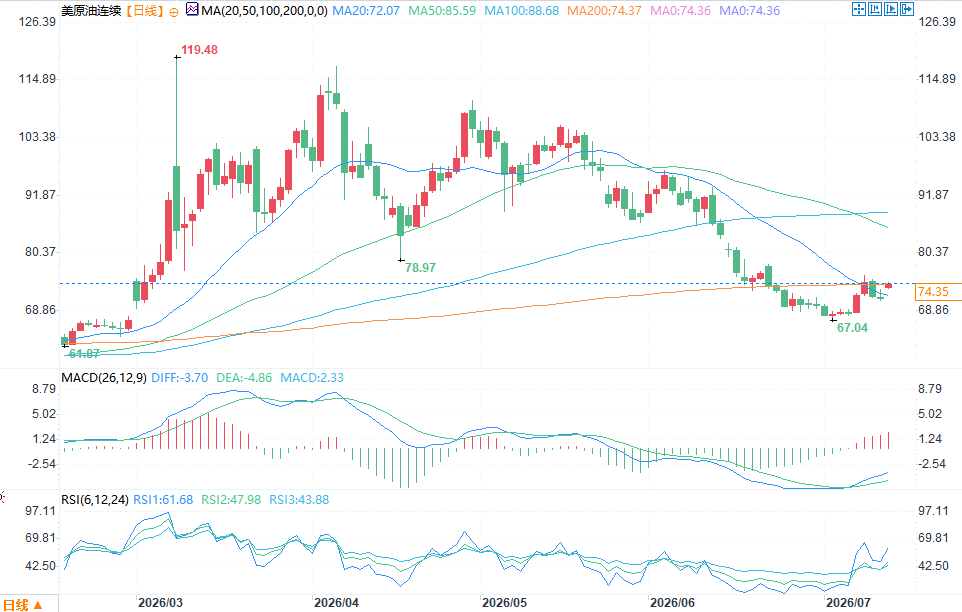
(US crude oil futures daily chart, source: FX678)
At 10:29 AM Beijing time on July 13, US crude oil futures were trading at $74.52 per barrel.
On Sunday evening (July 12), Iran's Islamic Revolutionary Guard Corps continued its attacks on commercial vessels in the Strait of Hormuz. U.S. Central Command confirmed that the Revolutionary Guard "fired on commercial shipping in this crucial waterway." The U.S. military successfully shot down one Iranian cruise missile and one one-way attack drone.
At the same time, the U.S. military announced a new round of strikes against Iran "to continue to weaken its ability to attack civilian sailors and commercial vessels navigating freely in the Strait of Hormuz."
The U.S. Central Command stated that the strike was carried out under the direction of President Trump and was intended to "hold Iranian forces accountable."
The strikes reportedly targeted missiles, air defense systems, and Revolutionary Guard vessels in an effort to further weaken Iran’s ability to attack commercial shipping.
Container ship attack on Saturday: Iran claims the ship used an unauthorized route.
The escalation of the conflict can be traced back to Saturday when Iranian forces attacked a container ship in the Strait of Hormuz, causing it to catch fire and one crew member to go missing. The U.S. military confirmed that the attacked vessel was a Cypriot-flagged container ship named GFS Galaxy, and that its engine room was "severely damaged."
Iran claims the ship attempted to cross the strait using an unauthorized route. Oman's maritime authorities subsequently stated that 23 crew members had been rescued, but one remained missing; the Indian Ministry of External Affairs confirmed the missing crew member was an Indian citizen.
U.S. War Secretary Hergace vowed retaliation, stating, "Iran made a terrible choice, and now they will pay the price." The U.S. military subsequently carried out retaliatory strikes against approximately 140 targets, including missile and drone launch sites, ammunition depots, and communications equipment.
Iran responds: Revolutionary Guard attacks US allies in the region; announces closure of Strait of Hormuz
Iran's response was swift and forceful. The Revolutionary Guard launched attacks on Bahrain, Kuwait, Qatar, Jordan, and Oman—the countries across the Strait of Hormuz. Iran has been pressuring these countries to cooperate in managing shipping traffic, but insists that the strait should be entirely under Iranian control, with the right to charge vessels for passage.
Iranian Parliament Speaker and chief negotiator Mohammad Ghalibaf wrote on social media: "The era of unilateral agreements is over. We told you: keep your promises or pay the price. Reality is knocking on the door."
The Revolutionary Guard also announced the Strait of Hormuz would be closed "until further notice" following the weekend attacks, and vowed to attack "additional enemy bases in the area" should further attacks be faced.
The Iranian Foreign Ministry condemned the US military action, accusing Washington of violating international law and stating that "the US has blatantly violated almost all the terms of the agreement."
US position: The Strait remains open, but the security situation is serious.
Despite Iran's claim to close the Strait of Hormuz, U.S. Central Command maintains that the Strait remains open to "all vessels seeking lawful passage" and states that "U.S. forces are ready to ensure freedom of navigation."
In a media interview broadcast on Sunday, Trump also stated that the Strait of Hormuz is open.
However, the severity of the security situation cannot be ignored. The Joint Maritime Information Center, a US-led naval coalition based in Bahrain, confirmed that the southern shipping lanes through Omani waters remain open to traffic, but also warned crew members to remain "extremely vigilant." Missile alerts were sounded in several Gulf Arab states—the Qatari military stated it had intercepted incoming Iranian fire, and the neighboring UAE also heard explosions; missile alerts were also sounded in Bahrain (home of the US Fifth Fleet).
Diplomatic efforts continue, but the prospects for a ceasefire remain bleak.
Despite the escalating military conflict, diplomatic efforts have not been completely halted. A regional official involved in mediation stated that efforts to solidify the ceasefire are ongoing. Pakistani officials also indicated that their foreign minister spoke by phone with a senior Iranian diplomat, urging both sides to "de-escalate the situation."
However, Trump stated on social media last Friday that while he agreed to continue negotiations with Iran, "the ceasefire is over!" Iranian Supreme Leader Mojtaba Khamenei subsequently issued a written statement vowing "revenge for the blood of the martyred leader and all the fallen heroes in these two conflicts." Khamenei has not made a public appearance since the conflict began on February 28.
Since July 6, the U.S. military has launched three large-scale strikes against Iran, hitting more than 300 targets. Against the backdrop of this escalating conflict, the safety of passage through the Strait of Hormuz and global energy supplies are facing their most severe test since the conflict began on February 28.
Latest news
U.S. Central Command announced Sunday evening local time (5:00 AM Monday Beijing time, 0:30 AM Monday Iranian time) that, under the direction of President Trump, the U.S. military had begun further strikes against Iran to "continue to undermine its ability to attack civilian sailors and merchant ships freely transiting the Strait of Hormuz." A U.S. official revealed that some of the targets were Iranian missiles and air defense systems, as well as Revolutionary Guard vessels, and that a "larger-scale" attack on Iranian military targets was expected Sunday evening (Eastern Time).
According to Iranian sources on July 13, the deputy governor of Khuzestan province in southwestern Iran stated that at 1:35 AM that day, two locations near Ahvaz, the provincial capital, were attacked by US artillery fire. Several other cities and counties in the province were also targeted by US forces.
Bahrain sounded air raid sirens again early this morning (July 13) local time. According to Iranian media reports, drones and missiles launched from different regions within Iran in a large-scale retaliatory attack against US military targets in the Gulf region—targets identified following the latest US military movements within the past 48 hours.
Affected by US airstrikes on Iran, attacks on merchant ships by the Revolutionary Guard, and the threat of closing the Strait of Hormuz, geopolitical risk premiums rebounded rapidly, causing US crude oil futures to open higher and continue rising, once climbing more than 4% to $74.66 per barrel. The strait carries about one-third of the world's seaborne crude oil, and the risk of supply disruptions has increased sharply. Coupled with the continued US military strikes on Iran, oil prices received strong short-term support. Future price movements will depend on whether the conflict further escalates to oil-producing areas and the actual extent of the disruption to navigation in the Strait of Hormuz.
(US crude oil futures daily chart, source: FX678)
At 10:29 AM Beijing time on July 13, US crude oil futures were trading at $74.52 per barrel.
- Risk Warning and Disclaimer
- The market involves risk, and trading may not be suitable for all investors. This article is for reference only and does not constitute personal investment advice, nor does it take into account certain users’ specific investment objectives, financial situation, or other needs. Any investment decisions made based on this information are at your own risk.