Cooling US inflation weighed on the dollar, while expectations of intervention supported the yen, causing the USD/JPY pair to fluctuate around the 162 level.
2026-07-15 13:40:11
The US dollar remained weak against the Japanese yen (USD/JPY) in Asian trading on Wednesday, fluctuating around the 162.00 level , marking its second consecutive day of weakness. Although the pair has rebounded from near this week's lows, it remains influenced by both a weakening dollar and rising risks of yen intervention, suggesting a short-term bias towards consolidation.  The main reason for the pressure on the US dollar stemmed from cooling US inflation data. Data released by the US Bureau of Labor Statistics showed that the Consumer Price Index (CPI) rose 3.5% year-on-year in June, lower than the market expectation of 3.8% and significantly lower than May's 4.2% . Meanwhile, the core CPI rose 2.6% year-on-year in June , lower than previous market expectations and May's level, indicating that US price pressures are gradually easing. Following the release of the inflation data, the market reduced its bets on further interest rate hikes by the Federal Reserve, US Treasury yields fell, and the US dollar index came under downward pressure. Since the USD/JPY exchange rate is highly sensitive to changes in the USD/JPY interest rate differential, adjustments in interest rate expectations directly weakened the short-term upward momentum of the dollar, pushing the exchange rate down from its highs. At the same time, expectations of possible intervention by the Japanese government and central bank also provided some support for the yen. The recent sustained close proximity of the USD/JPY to multi-year highs has raised market concerns about potential action by Japanese authorities to stabilize the exchange rate. The risk of intervention has made investors more cautious about chasing the dollar at high levels, limiting further upside potential for the USD/JPY. However, the yen's rise still faces multiple obstacles. Recent escalating tensions between the US and Iran have reignited geopolitical risks, driving safe-haven flows into US dollar assets. Further US military action against Iran, coupled with Iranian responses to targets in the Gulf region, has raised concerns that an escalating conflict could impact global energy supplies. Energy supply risks are particularly concerning for Japan. Heavily reliant on energy imports, disruptions to shipping through the Strait of Hormuz could drive up energy costs and increase economic pressure, thus diminishing the yen's safe-haven appeal. The Strait of Hormuz handles approximately 20% of global seaborne crude oil shipments ; any supply disruptions could affect Japan's import costs and inflation. Furthermore, the persistent interest rate differential between the US and Japan continues to support the USD/JPY exchange rate. Although the market has lowered its expectations for a near-term Fed rate hike, US interest rates remain significantly higher than Japanese rates, making carry trades attractive. This factor limits the yen's potential for further appreciation and makes the market cautious when positioning short USD/JPY positions. Currently, investors are awaiting the US June Producer Price Index (PPI) and Fed Chairman Kevin Warsh's congressional testimony the following day. If PPI continues to show slowing inflation, the market may further reduce expectations of Fed tightening, and USD/JPY may continue to be under pressure; however, if production-side inflation picks up again, the dollar may gain short-term rebound momentum. From a technical perspective, USD/JPY maintains a high-level consolidation and decline structure on the daily chart, with short-term bullish momentum weakening. Current resistance is seen around 162.80 , with further resistance around 163.50 ; initial support is at 161.50 , and a break below this level could lead to further testing of the 160.80 and 159.80 areas. Daily momentum indicators are gradually weakening, indicating the market has entered a short-term correction phase. The 4-hour chart shows USD/JPY trading below short-term moving averages, with the moving average alignment weakening, indicating a short-term bearish bias. However, a technical rebound is possible after the price approaches support near 161.50. A return above 162.80 would alleviate short-term pressure; a break below 161.50 could open up further downside potential, targeting around 160.80 . Overall, the short-term trend remains one of consolidation and weakness.
 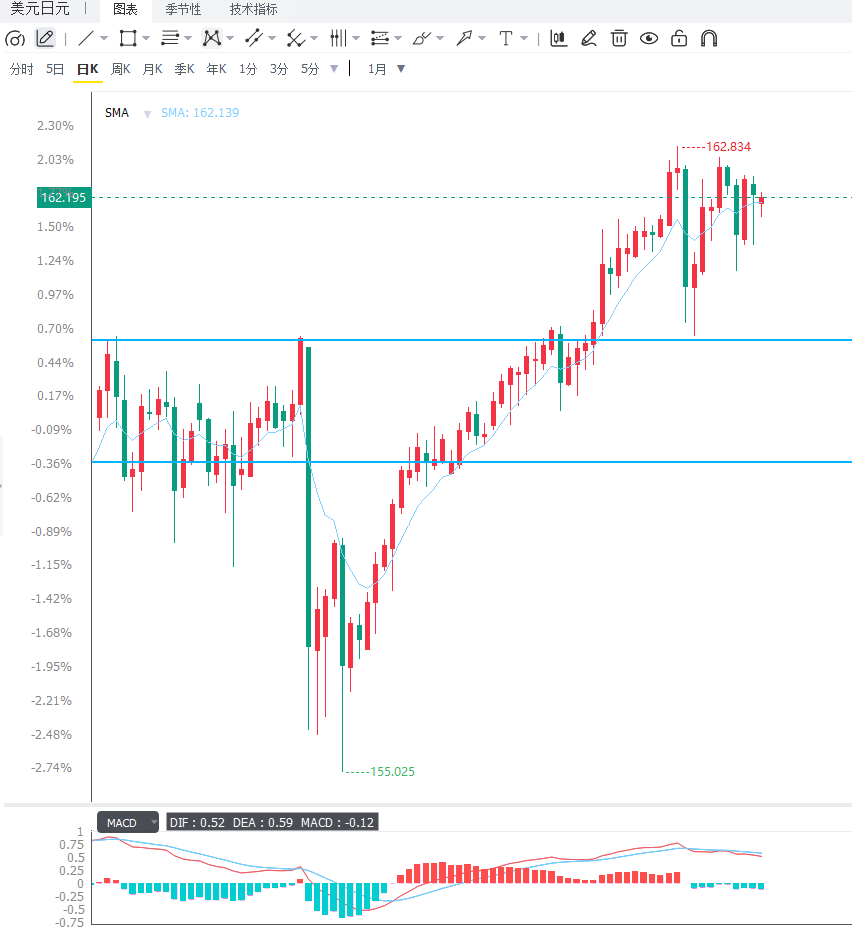 Editor's Summary: Cooling US inflation in June lowered market expectations for a Federal Reserve rate hike, putting pressure on the dollar and causing a continuous decline in the USD/JPY pair. However, safe-haven demand stemming from escalating tensions in the Middle East, the US-Japan interest rate differential, and risks associated with Japanese energy imports continue to limit the yen's potential for significant appreciation. In the short term, the USD/JPY exchange rate will continue to be influenced by US economic data, Fed policy signals, and expectations of Japanese currency intervention. If US inflation continues to improve, the exchange rate may adjust further downwards; however, if geopolitical risks escalate or the US-Japan interest rate differential remains high, the USD/JPY pair may still find support for a rebound.
The main reason for the pressure on the US dollar stemmed from cooling US inflation data. Data released by the US Bureau of Labor Statistics showed that the Consumer Price Index (CPI) rose 3.5% year-on-year in June, lower than the market expectation of 3.8% and significantly lower than May's 4.2% . Meanwhile, the core CPI rose 2.6% year-on-year in June , lower than previous market expectations and May's level, indicating that US price pressures are gradually easing. Following the release of the inflation data, the market reduced its bets on further interest rate hikes by the Federal Reserve, US Treasury yields fell, and the US dollar index came under downward pressure. Since the USD/JPY exchange rate is highly sensitive to changes in the USD/JPY interest rate differential, adjustments in interest rate expectations directly weakened the short-term upward momentum of the dollar, pushing the exchange rate down from its highs. At the same time, expectations of possible intervention by the Japanese government and central bank also provided some support for the yen. The recent sustained close proximity of the USD/JPY to multi-year highs has raised market concerns about potential action by Japanese authorities to stabilize the exchange rate. The risk of intervention has made investors more cautious about chasing the dollar at high levels, limiting further upside potential for the USD/JPY. However, the yen's rise still faces multiple obstacles. Recent escalating tensions between the US and Iran have reignited geopolitical risks, driving safe-haven flows into US dollar assets. Further US military action against Iran, coupled with Iranian responses to targets in the Gulf region, has raised concerns that an escalating conflict could impact global energy supplies. Energy supply risks are particularly concerning for Japan. Heavily reliant on energy imports, disruptions to shipping through the Strait of Hormuz could drive up energy costs and increase economic pressure, thus diminishing the yen's safe-haven appeal. The Strait of Hormuz handles approximately 20% of global seaborne crude oil shipments ; any supply disruptions could affect Japan's import costs and inflation. Furthermore, the persistent interest rate differential between the US and Japan continues to support the USD/JPY exchange rate. Although the market has lowered its expectations for a near-term Fed rate hike, US interest rates remain significantly higher than Japanese rates, making carry trades attractive. This factor limits the yen's potential for further appreciation and makes the market cautious when positioning short USD/JPY positions. Currently, investors are awaiting the US June Producer Price Index (PPI) and Fed Chairman Kevin Warsh's congressional testimony the following day. If PPI continues to show slowing inflation, the market may further reduce expectations of Fed tightening, and USD/JPY may continue to be under pressure; however, if production-side inflation picks up again, the dollar may gain short-term rebound momentum. From a technical perspective, USD/JPY maintains a high-level consolidation and decline structure on the daily chart, with short-term bullish momentum weakening. Current resistance is seen around 162.80 , with further resistance around 163.50 ; initial support is at 161.50 , and a break below this level could lead to further testing of the 160.80 and 159.80 areas. Daily momentum indicators are gradually weakening, indicating the market has entered a short-term correction phase. The 4-hour chart shows USD/JPY trading below short-term moving averages, with the moving average alignment weakening, indicating a short-term bearish bias. However, a technical rebound is possible after the price approaches support near 161.50. A return above 162.80 would alleviate short-term pressure; a break below 161.50 could open up further downside potential, targeting around 160.80 . Overall, the short-term trend remains one of consolidation and weakness. Editor's Summary: Cooling US inflation in June lowered market expectations for a Federal Reserve rate hike, putting pressure on the dollar and causing a continuous decline in the USD/JPY pair. However, safe-haven demand stemming from escalating tensions in the Middle East, the US-Japan interest rate differential, and risks associated with Japanese energy imports continue to limit the yen's potential for significant appreciation. In the short term, the USD/JPY exchange rate will continue to be influenced by US economic data, Fed policy signals, and expectations of Japanese currency intervention. If US inflation continues to improve, the exchange rate may adjust further downwards; however, if geopolitical risks escalate or the US-Japan interest rate differential remains high, the USD/JPY pair may still find support for a rebound.
- Risk Warning and Disclaimer
- The market involves risk, and trading may not be suitable for all investors. This article is for reference only and does not constitute personal investment advice, nor does it take into account certain users’ specific investment objectives, financial situation, or other needs. Any investment decisions made based on this information are at your own risk.