Geopolitical tensions boosted demand for the US dollar as a safe haven, keeping the USD/JPY pair at high levels.
2026-07-17 15:14:12
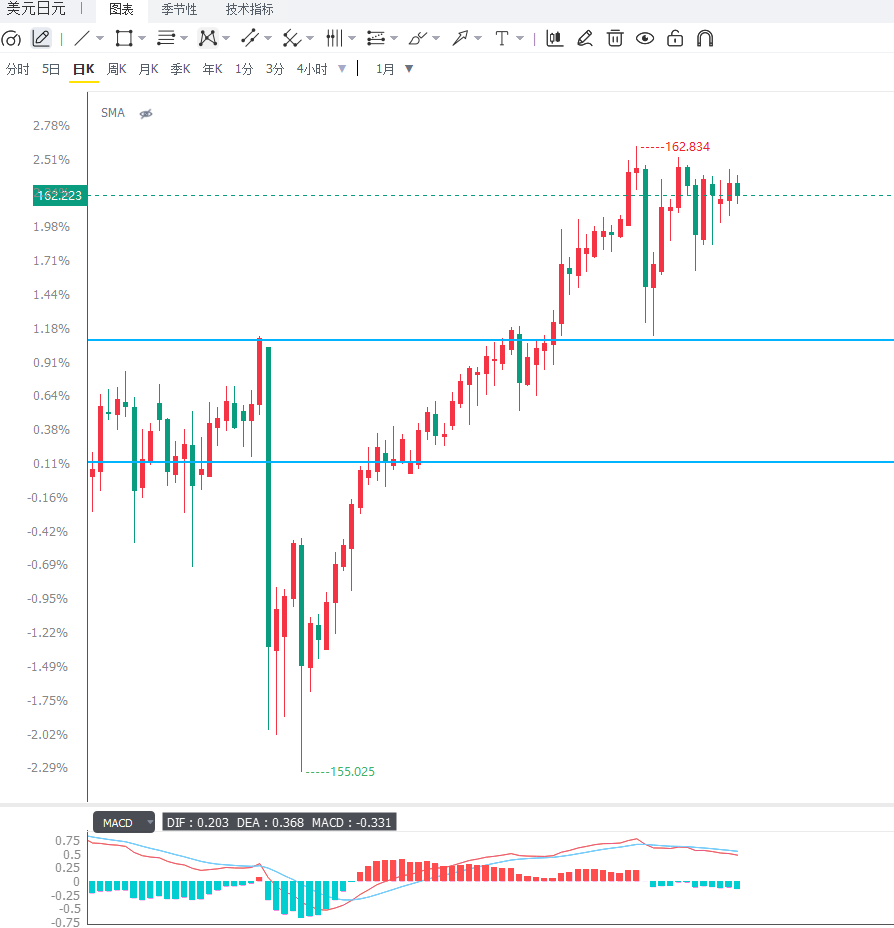
The US dollar (USD/JPY) extended its gains against the Japanese yen in Asian trading on Friday, trading around 162.30 . As the military conflict between the US and Iran escalated further, risk aversion intensified, supporting the dollar with capital inflows, while the yen remained relatively weak, pushing the USD/JPY pair to continue its upward trend.  The conflict between the United States and Iran has entered a new phase of tension. The U.S. Central Command stated that the U.S. military has conducted military strikes against Iran for the sixth consecutive night, aiming to further weaken Iran's military capabilities and continue to strengthen the maritime blockade of the Strait of Hormuz. Meanwhile, market research indicates that the U.S. military has also boarded and inspected relevant vessels during the blockade, further tightening restrictions on Iranian maritime transport. U.S. missiles struck areas near Qeshm Island, close to the Strait of Hormuz, while the port of Bandar Abbas and the Bushehr nuclear power plant in southern Iran were also targeted. Previously, U.S. President Donald Trump stated that if Iran refuses to return to negotiations, the U.S. may further strike its critical infrastructure, including bridges and power plants. As military actions escalate, market concerns about a potential further deterioration of the situation in the Middle East have driven safe-haven funds to continue flowing into the U.S. dollar. Energy transport security remains a key market focus. The Strait of Hormuz handles approximately 20% of global seaborne crude oil transport ; any escalation of military conflict could impact international energy supplies, pushing up global oil prices and inflation expectations. The market believes that continued rises in energy prices may prompt the Federal Reserve to maintain high interest rates for a longer period, thus keeping U.S. Treasury yields high and providing further support for the U.S. dollar. Meanwhile, Japan's domestic policy environment is also attracting market attention. According to Kyodo News, the Japanese government will reiterate in its latest economic policy document that the choice of specific monetary policy tools will continue to be left to the Bank of Japan to decide independently. At the same time, the Japanese government plans to decide in early August whether and to what extent to raise or lower the food consumption tax to alleviate the pressure on residents' cost of living. This means that future fiscal policy may see some adjustments, but the impact on the current exchange rate trend will be relatively limited. On the other hand, the Japanese government continues to strengthen its stance on exchange rate stability. Japanese Finance Minister Satsuki Katayama reiterated on Friday that the government will closely monitor fluctuations in the foreign exchange market and will take appropriate measures to deal with abnormal exchange rate fluctuations if necessary. This statement shows that the Japanese authorities remain highly vigilant about intervention in the foreign exchange market, and also makes the market cautious as the USD/JPY approaches its high level. Currently, the dollar's performance is still supported by the resilience of the US economy and expectations of Federal Reserve policy, while the Bank of Japan maintains a relatively loose monetary environment, and the interest rate differential between Japan and the US continues to favor the USD/JPY maintaining its high level. However, as the exchange rate has climbed back above the 162 level, the risk of official intervention by the Japanese government has increased significantly, which may also suppress the market's willingness to further rise. Investors will now focus on the preliminary reading of the University of Michigan Consumer Sentiment Index for July and consumer inflation expectations, while also paying close attention to developments in the Middle East and speeches by Federal Reserve officials. If US economic data continues to be strong, the dollar is likely to receive further support; if the Japanese government releases clearer signals of intervention, short-term volatility in the USD/JPY pair could intensify significantly. Technically, the USD/JPY pair maintains a clear upward trend on the daily chart, with the price consistently trading above major moving averages, indicating a solid bullish structure. The MACD indicator remains in a golden cross, with the red bars continuing to expand, showing that bullish momentum still dominates. However, as the exchange rate approaches its recent highs, short-term overbought pressure has increased. Currently, the first resistance level to watch is around 163.00 , with further resistance at 164.20 and 165.00 . On the downside, initial support is at 161.50 , with further support at 160.30 and 159.00 . From the 4-hour chart, USD/JPY maintains an upward trend with fluctuations. The MACD remains above the zero line, but the rate of increase in the red bars has slowed, indicating that the short-term upward momentum is moderated. Short-term moving averages remain in a bullish alignment. As long as the exchange rate holds above the support level around 161.50, the overall bullish trend is expected to continue. A break above the resistance level of 163.00 could open up further upside potential. However, if the Japanese government intervenes in the foreign exchange market, a rapid pullback is possible.
  Editor's Summary : In summary, the US's continued military actions against Iran have driven safe-haven funds towards the US dollar, while rising international oil prices have strengthened market expectations that the Federal Reserve will maintain high interest rates, providing sustained support for the USD/JPY exchange rate. However, the Japanese government continues to signal intervention in the foreign exchange market, and with the exchange rate approaching recent highs, market caution has clearly intensified. Future US economic data, developments in the Middle East, and whether the Japanese government takes actual intervention measures will be the core factors influencing the USD/JPY exchange rate. Given the coexistence of fundamentally bullish factors for the US dollar and policy risks, the exchange rate is expected to remain volatile at high levels in the short term, with potential for further increases in volatility.
The conflict between the United States and Iran has entered a new phase of tension. The U.S. Central Command stated that the U.S. military has conducted military strikes against Iran for the sixth consecutive night, aiming to further weaken Iran's military capabilities and continue to strengthen the maritime blockade of the Strait of Hormuz. Meanwhile, market research indicates that the U.S. military has also boarded and inspected relevant vessels during the blockade, further tightening restrictions on Iranian maritime transport. U.S. missiles struck areas near Qeshm Island, close to the Strait of Hormuz, while the port of Bandar Abbas and the Bushehr nuclear power plant in southern Iran were also targeted. Previously, U.S. President Donald Trump stated that if Iran refuses to return to negotiations, the U.S. may further strike its critical infrastructure, including bridges and power plants. As military actions escalate, market concerns about a potential further deterioration of the situation in the Middle East have driven safe-haven funds to continue flowing into the U.S. dollar. Energy transport security remains a key market focus. The Strait of Hormuz handles approximately 20% of global seaborne crude oil transport ; any escalation of military conflict could impact international energy supplies, pushing up global oil prices and inflation expectations. The market believes that continued rises in energy prices may prompt the Federal Reserve to maintain high interest rates for a longer period, thus keeping U.S. Treasury yields high and providing further support for the U.S. dollar. Meanwhile, Japan's domestic policy environment is also attracting market attention. According to Kyodo News, the Japanese government will reiterate in its latest economic policy document that the choice of specific monetary policy tools will continue to be left to the Bank of Japan to decide independently. At the same time, the Japanese government plans to decide in early August whether and to what extent to raise or lower the food consumption tax to alleviate the pressure on residents' cost of living. This means that future fiscal policy may see some adjustments, but the impact on the current exchange rate trend will be relatively limited. On the other hand, the Japanese government continues to strengthen its stance on exchange rate stability. Japanese Finance Minister Satsuki Katayama reiterated on Friday that the government will closely monitor fluctuations in the foreign exchange market and will take appropriate measures to deal with abnormal exchange rate fluctuations if necessary. This statement shows that the Japanese authorities remain highly vigilant about intervention in the foreign exchange market, and also makes the market cautious as the USD/JPY approaches its high level. Currently, the dollar's performance is still supported by the resilience of the US economy and expectations of Federal Reserve policy, while the Bank of Japan maintains a relatively loose monetary environment, and the interest rate differential between Japan and the US continues to favor the USD/JPY maintaining its high level. However, as the exchange rate has climbed back above the 162 level, the risk of official intervention by the Japanese government has increased significantly, which may also suppress the market's willingness to further rise. Investors will now focus on the preliminary reading of the University of Michigan Consumer Sentiment Index for July and consumer inflation expectations, while also paying close attention to developments in the Middle East and speeches by Federal Reserve officials. If US economic data continues to be strong, the dollar is likely to receive further support; if the Japanese government releases clearer signals of intervention, short-term volatility in the USD/JPY pair could intensify significantly. Technically, the USD/JPY pair maintains a clear upward trend on the daily chart, with the price consistently trading above major moving averages, indicating a solid bullish structure. The MACD indicator remains in a golden cross, with the red bars continuing to expand, showing that bullish momentum still dominates. However, as the exchange rate approaches its recent highs, short-term overbought pressure has increased. Currently, the first resistance level to watch is around 163.00 , with further resistance at 164.20 and 165.00 . On the downside, initial support is at 161.50 , with further support at 160.30 and 159.00 . From the 4-hour chart, USD/JPY maintains an upward trend with fluctuations. The MACD remains above the zero line, but the rate of increase in the red bars has slowed, indicating that the short-term upward momentum is moderated. Short-term moving averages remain in a bullish alignment. As long as the exchange rate holds above the support level around 161.50, the overall bullish trend is expected to continue. A break above the resistance level of 163.00 could open up further upside potential. However, if the Japanese government intervenes in the foreign exchange market, a rapid pullback is possible. Editor's Summary : In summary, the US's continued military actions against Iran have driven safe-haven funds towards the US dollar, while rising international oil prices have strengthened market expectations that the Federal Reserve will maintain high interest rates, providing sustained support for the USD/JPY exchange rate. However, the Japanese government continues to signal intervention in the foreign exchange market, and with the exchange rate approaching recent highs, market caution has clearly intensified. Future US economic data, developments in the Middle East, and whether the Japanese government takes actual intervention measures will be the core factors influencing the USD/JPY exchange rate. Given the coexistence of fundamentally bullish factors for the US dollar and policy risks, the exchange rate is expected to remain volatile at high levels in the short term, with potential for further increases in volatility.
- Risk Warning and Disclaimer
- The market involves risk, and trading may not be suitable for all investors. This article is for reference only and does not constitute personal investment advice, nor does it take into account certain users’ specific investment objectives, financial situation, or other needs. Any investment decisions made based on this information are at your own risk.