Will the US and Iran go to peace talks again? Oil prices on a rollercoaster ride.
2026-07-20 21:56:15
Amidst fluctuating geopolitical risks, international crude oil prices experienced a dramatic surge followed by a sharp decline, then a bottoming out and rebound, resulting in significant intraday volatility. Influenced by the ongoing conflict between the US and Iran and anticipated disruptions to shipping supplies through the Strait of Hormuz, crude oil bulls rallied in early trading on Monday, pushing WTI crude to a near one-month high of $84.6, as the market heavily bet on tightening supply due to geopolitical risk aversion. However, the market quickly reversed course. Iran released a new ceasefire proposal for a ten-day comprehensive halt to attacks, aiming to revive the temporary peace agreement reached last month. Coupled with the Iranian Foreign Ministry's statement that it was willing to restart negotiations with the US based on its core interests, market risk aversion cooled rapidly. Crude oil bulls exited the market en masse, and sell orders flooded in, causing oil prices to fall to a low of $79.57, just one cent away from the previously mentioned $79.58. 
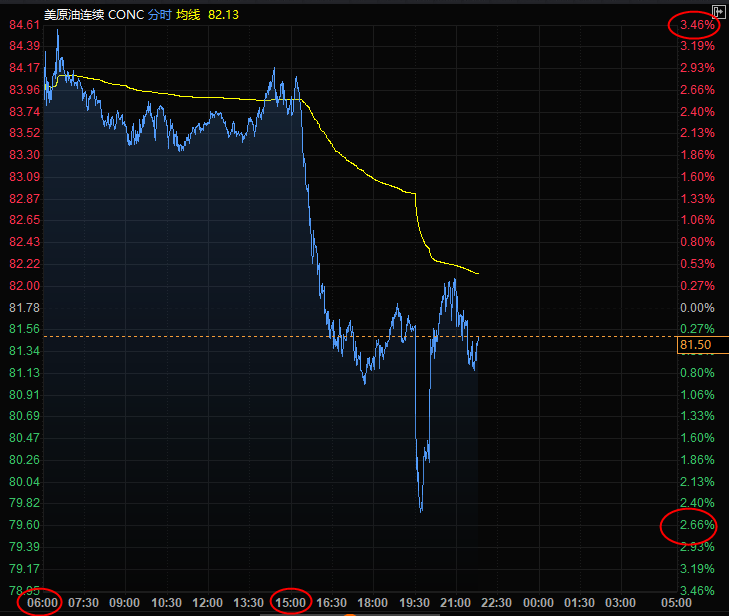 (WTI crude oil futures continuous intraday chart, source: EasyForex)
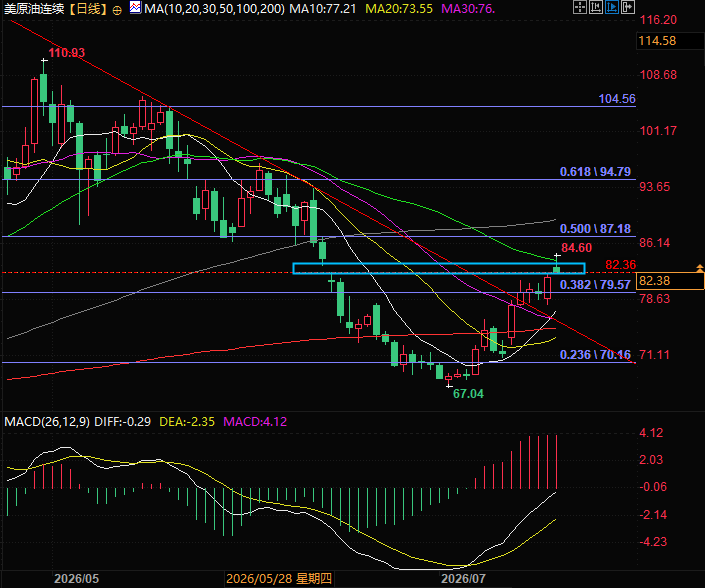 (WTI crude oil futures daily chart, source: FX678) At 21:50 Beijing time, WTI crude oil futures were trading at $81.43 per barrel.
The geopolitical conflict between the US and Iran has been protracted, and risks in the Middle East continue to escalate.
The recent geopolitical tensions in the Middle East remain high, with escalating yet easing military tensions between the US and Iran becoming a key disruptive factor in the commodity market. On the military front, the US has launched nine consecutive nights of military strikes against Iran, aiming to continuously weaken Iran's military capabilities targeting shipping through the Strait of Hormuz. Simultaneously, the US continues to deploy various military aircraft, including aerial refueling tankers, to the Middle East, raising market concerns that the conflict could escalate into a full-blown war. As the situation unfolds, the two sides engage in repeated back-and-forth maneuvering. Iran has formally withdrawn from the existing ceasefire agreement, and the US has declared the old ceasefire invalid. Iran subsequently launched strikes against targets in Jordan, Kuwait, and Bahrain, and accused the US of airstrikes on a nuclear power plant under construction in its southwest region. The risk of conflict continues to escalate, and Iran's attack on Jordan has already resulted in the deaths of two US soldiers and the presumed death of another US personnel. These geopolitical risks continue to disrupt market sentiment. Later, according to foreign media reports on the 20th, citing a senior Iranian official, the Iranian-US mediators had proposed a 10-day ceasefire to Iran in order to seek the resumption of the memorandum of understanding reached between Iran and the US last month, aimed at easing the current situation. Iranian Foreign Ministry spokesman Baghae said at a press conference that day that Iran had received the proposal from the US and Iranian mediators, but declined to disclose specific details. He also stated that the Iranian Interior Minister would visit Pakistan that day to discuss relevant bilateral matters. (WTI crude oil futures continuous intraday chart, source: EasyForex)Concerns about high inflation remain unchanged, and the Federal Reserve maintains high expectations for interest rate hikes.
The continued rise in oil prices has further exacerbated market inflation fears, becoming a significant disruptive variable for the Federal Reserve's monetary policy. Previously rising inflation expectations have led market funds to continuously bet on the Fed keeping interest rates high for an extended period, or even restarting a rate hike cycle. Cleveland Fed President Beth Hammark released hawkish signals, stating that to suppress stubborn, sticky inflation, the Fed is highly likely to begin raising interest rates, meaning the Fed's July 29th policy meeting will see intense policy maneuvering. With a turning point in the US-Iran conflict, market pricing has reacted accordingly. According to CME FedWatch Tool data, the probability of a Fed rate hike in December remains at 82%, a significant increase from last week's 73% expectation. Market expectations of high interest rates and tight monetary policy continue to strengthen, unaffected by the potential US-Iran peace talks.Summarize:
Oil prices were high when negative news emerged, prompting long positions to take profits. However, the market remained pessimistic as the question of whether the US-Iran conflict could see a significant turnaround through 10 days of talks remained unresolved, leading to a rebound in oil prices. The focus now shifts to whether either side makes concessions in the negotiations. Currently, Iran is unlikely to concede on control of the Strait of Hormuz, as this concerns the Revolutionary Guard's funding and its initiative in political activities. (WTI crude oil futures daily chart, source: FX678) At 21:50 Beijing time, WTI crude oil futures were trading at $81.43 per barrel.
- Risk Warning and Disclaimer
- The market involves risk, and trading may not be suitable for all investors. This article is for reference only and does not constitute personal investment advice, nor does it take into account certain users’ specific investment objectives, financial situation, or other needs. Any investment decisions made based on this information are at your own risk.