The US dollar index rebounded near the 101 mark, but expectations of Federal Reserve policy limited its gains.
2026-07-21 14:00:15
The US dollar index (DXY) continued its upward trend in Asian trading on Tuesday, hovering around 101.00. The dollar has recently been driven by safe-haven demand, primarily due to deteriorating global risk sentiment and increased volatility in the energy market. As tensions between the US and Iran persist, investors are refocusing on risks in global supply chains and energy markets. Rising oil prices have reinforced concerns about potential resurgence of inflationary pressures and increased investor expectations that major central banks will maintain tight monetary policies for an extended period.  Safe-haven inflows have been the main driver of the recent dollar strength . During periods of escalating global risk events, the dollar, as the global reserve currency, typically becomes a safe haven, while risk assets and some non-dollar currencies are more vulnerable. Market data shows a shift in investor expectations regarding the Federal Reserve's future policy path. Currently, the market expects a 55% probability of a Fed rate hike in September, up from approximately 51% previously. This rising interest rate expectation provides additional support for the dollar. However, Fed officials are currently in a quiet period before the policy meeting, leaving the market without new policy guidance. Investors generally expect the Fed to maintain the federal funds rate at the next FOMC meeting, with subsequent policy direction still depending on changes in inflation and employment data. Recent US economic data has been complex. On one hand, improved US inflation indicators have kept the market focused on the possibility of future rate cuts; on the other hand, rising energy prices may reignite inflation expectations, prompting the Fed to remain cautious. Meanwhile, global energy transportation risks are further impacting market sentiment. Recent escalation of regional conflicts, with related military operations entering their tenth consecutive day, has raised market concerns that the escalating situation could affect energy supply stability. Furthermore, the announcement of restrictions on Saudi Arabian maritime activities by some armed forces has raised concerns about the security of Red Sea energy transport routes. If energy transport is significantly affected, oil prices may continue to rise, further impacting global inflation expectations. For the US dollar, the current market logic revolves around "safe-haven demand" and "interest rate expectations." If risk events continue to escalate, the dollar may remain strong; however, if market risk appetite improves while US economic data continues to cool, the dollar's upward momentum may weaken. Investors will focus on US economic data, including employment, inflation, and consumer-related indicators, to determine the Fed's future policy path. Meanwhile, changes in the global energy market will continue to influence the dollar's trajectory. Currently, the dollar index remains in a relatively favorable environment, but its upside potential depends on the development of risk events and changes in Fed policy expectations. The daily chart of the dollar index (DXY) shows that it recently rebounded after finding support near the 100 level and has now climbed back above 101.00, indicating a short-term bullish structure. The first resistance level to watch is around 101.50; a break above this level could lead to a test of the 102.00 psychological level; higher resistance is seen in the 102.50 area. On the downside support level, the first thing to watch is the 100.50 area, a key support level for the recent rebound; a break below this level could lead to a retest of the psychological level of 100.00. The daily moving average structure shows that the short-term momentum of the US dollar has improved, but a break above key resistance is still needed to confirm the upward trend. Looking at the 4-hour chart, the US dollar index maintains an upward trend with the price moving along the short-term moving averages. The MACD indicator remains positively divergent, indicating that bullish momentum still dominates; the RSI indicator is in the strong zone but has not yet entered extreme overbought territory. If the DXY breaks through 101.50, it may continue to advance towards 102.00 in the short term; if the price falls below 100.50, a technical correction may occur. The short-term direction still depends on changes in risk aversion, Fed rate expectations, and energy price movements.
 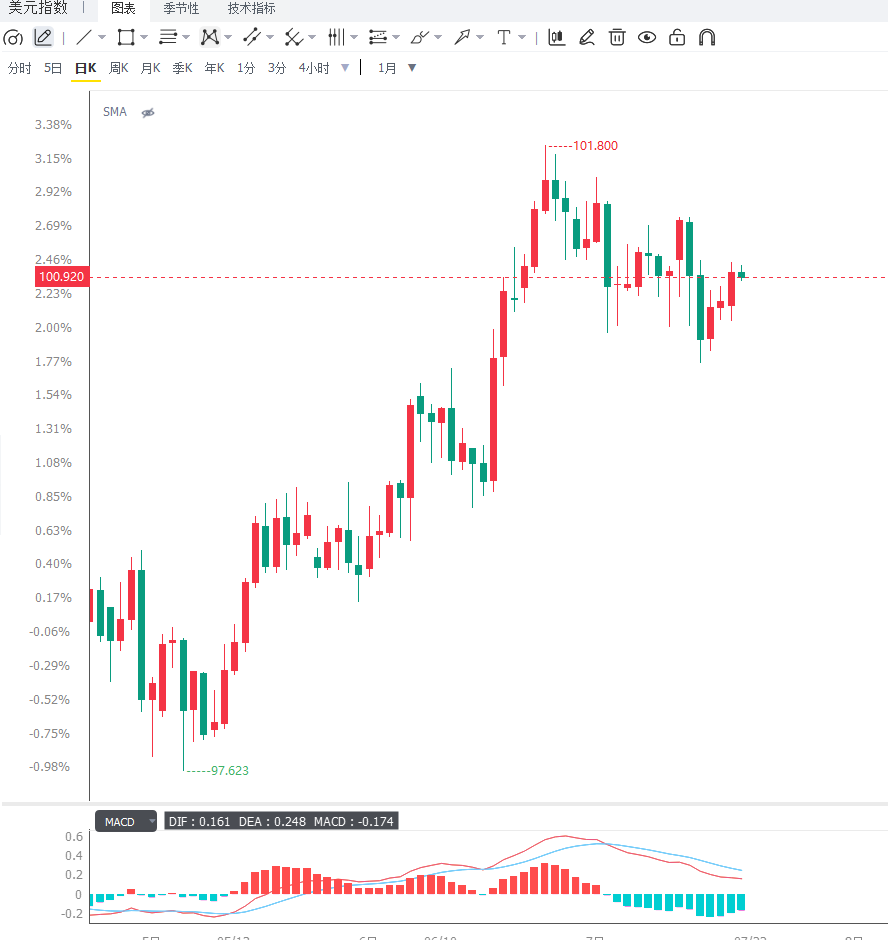 Editor's Summary: The recent rise in the US dollar index has been primarily driven by safe-haven inflows and rising interest rate expectations. Escalating global risk events have increased market concerns about energy supply and inflationary pressures, causing investors to refocus on the possibility of the Federal Reserve maintaining high interest rates. In the short term, the 101.00 area has become a crucial defensive position for dollar bulls. If risk sentiment continues to deteriorate, the dollar may test higher levels; however, if the market stabilizes and US economic data continues its cooling trend, the dollar may face downward pressure. Going forward, the market will focus on Fed policy signals, US economic data, and changes in the global energy market. Against this backdrop of multiple intertwined factors, the dollar is likely to remain highly volatile.
Safe-haven inflows have been the main driver of the recent dollar strength . During periods of escalating global risk events, the dollar, as the global reserve currency, typically becomes a safe haven, while risk assets and some non-dollar currencies are more vulnerable. Market data shows a shift in investor expectations regarding the Federal Reserve's future policy path. Currently, the market expects a 55% probability of a Fed rate hike in September, up from approximately 51% previously. This rising interest rate expectation provides additional support for the dollar. However, Fed officials are currently in a quiet period before the policy meeting, leaving the market without new policy guidance. Investors generally expect the Fed to maintain the federal funds rate at the next FOMC meeting, with subsequent policy direction still depending on changes in inflation and employment data. Recent US economic data has been complex. On one hand, improved US inflation indicators have kept the market focused on the possibility of future rate cuts; on the other hand, rising energy prices may reignite inflation expectations, prompting the Fed to remain cautious. Meanwhile, global energy transportation risks are further impacting market sentiment. Recent escalation of regional conflicts, with related military operations entering their tenth consecutive day, has raised market concerns that the escalating situation could affect energy supply stability. Furthermore, the announcement of restrictions on Saudi Arabian maritime activities by some armed forces has raised concerns about the security of Red Sea energy transport routes. If energy transport is significantly affected, oil prices may continue to rise, further impacting global inflation expectations. For the US dollar, the current market logic revolves around "safe-haven demand" and "interest rate expectations." If risk events continue to escalate, the dollar may remain strong; however, if market risk appetite improves while US economic data continues to cool, the dollar's upward momentum may weaken. Investors will focus on US economic data, including employment, inflation, and consumer-related indicators, to determine the Fed's future policy path. Meanwhile, changes in the global energy market will continue to influence the dollar's trajectory. Currently, the dollar index remains in a relatively favorable environment, but its upside potential depends on the development of risk events and changes in Fed policy expectations. The daily chart of the dollar index (DXY) shows that it recently rebounded after finding support near the 100 level and has now climbed back above 101.00, indicating a short-term bullish structure. The first resistance level to watch is around 101.50; a break above this level could lead to a test of the 102.00 psychological level; higher resistance is seen in the 102.50 area. On the downside support level, the first thing to watch is the 100.50 area, a key support level for the recent rebound; a break below this level could lead to a retest of the psychological level of 100.00. The daily moving average structure shows that the short-term momentum of the US dollar has improved, but a break above key resistance is still needed to confirm the upward trend. Looking at the 4-hour chart, the US dollar index maintains an upward trend with the price moving along the short-term moving averages. The MACD indicator remains positively divergent, indicating that bullish momentum still dominates; the RSI indicator is in the strong zone but has not yet entered extreme overbought territory. If the DXY breaks through 101.50, it may continue to advance towards 102.00 in the short term; if the price falls below 100.50, a technical correction may occur. The short-term direction still depends on changes in risk aversion, Fed rate expectations, and energy price movements. Editor's Summary: The recent rise in the US dollar index has been primarily driven by safe-haven inflows and rising interest rate expectations. Escalating global risk events have increased market concerns about energy supply and inflationary pressures, causing investors to refocus on the possibility of the Federal Reserve maintaining high interest rates. In the short term, the 101.00 area has become a crucial defensive position for dollar bulls. If risk sentiment continues to deteriorate, the dollar may test higher levels; however, if the market stabilizes and US economic data continues its cooling trend, the dollar may face downward pressure. Going forward, the market will focus on Fed policy signals, US economic data, and changes in the global energy market. Against this backdrop of multiple intertwined factors, the dollar is likely to remain highly volatile.
- Risk Warning and Disclaimer
- The market involves risk, and trading may not be suitable for all investors. This article is for reference only and does not constitute personal investment advice, nor does it take into account certain users’ specific investment objectives, financial situation, or other needs. Any investment decisions made based on this information are at your own risk.