The weakness of the yen and the interest rate advantage continued to exert their influence, causing the USD/JPY exchange rate to fluctuate at high levels after approaching the 163 mark.
2026-07-21 13:28:15
The USD/JPY pair remained range-bound in Asian trading on Tuesday, hovering around 162.50 with a daily fluctuation of less than 40 pips. For the past two weeks, the pair has been consolidating around the 162 area, just shy of the recent high near 163.00, but has failed to break through decisively.  This low volatility itself sends an important market signal. Although the recent upward momentum of USD/JPY has slowed, sellers have not found a catalyst sufficient to reverse the trend. In nine of the past ten weeks, USD/JPY has closed flat or higher , indicating that the market as a whole remains biased towards the US dollar. Meanwhile, the daily stochastic oscillator has fallen from overbought territory to around 30, but prices have not fallen significantly, reflecting that the current market is more like digesting gains at high levels than a trend reversal. The core factor currently driving USD/JPY to its high levels remains the US-Japan interest rate differential. The Bank of Japan previously raised its policy rate to 1.00%, but the market believes this adjustment has not significantly changed the attractiveness of yen assets. Japan's potential inflation indicator remains close to 3%, while official inflation data is around 1.5%, resulting in Japanese real interest rates remaining negative. At the same time, the Federal Reserve's policy rate remains at a relatively high level of around 3.75%, and the yield differential between the US and Japan continues to support demand for carry trades. The strategy of investors borrowing low-yielding yen and allocating to dollar assets remains attractive, which is also an important reason for the continued pressure on the yen. Japanese financial authorities are a significant factor limiting further gains in USD/JPY. Previously, the market anticipated that Japan had intervened in the currency market with approximately 5.5 trillion yen to prevent a rapid depreciation of the yen. With the USD/JPY exchange rate rising back above 160, market attention to further intervention has increased significantly. However, the market remains cautious about the effectiveness of such intervention. Since the current yen weakness stems not only from speculative factors but also from Japan's trade structure, relying solely on foreign exchange reserves for intervention is unlikely to change the long-term trend. Especially against the backdrop of rising energy prices, Japan needs to import large quantities of crude oil and natural gas, and the increased import costs further weaken the yen's fundamentals. Japan's upcoming trade data is the focus of market attention. The market expects Japan's import growth to increase significantly, mainly due to rising energy costs; while exports may also maintain growth, the export advantage brought by the yen's depreciation is unlikely to fully offset the pressure of energy imports. The market expects Japan's merchandise trade deficit to narrow, but the overall external account still faces challenges from rising energy prices. Meanwhile, Japan's consumer price index data will also influence market judgments on the Bank of Japan's future policy path. If official inflation data continues to fall below the core inflation trend, the Bank of Japan may maintain a slow pace of interest rate hikes, thereby limiting the yen's appreciation potential. In contrast, the US market is focusing on economic indicators such as the Purchasing Managers' Index (PMI) this week. During the quiet period leading up to the Fed meeting, fewer official speeches and a lack of new policy signals have led to the USD/JPY pair's short-term movements being driven more by expectations of US interest rates and global risk events. The recent escalation of tensions in the Middle East has also failed to provide the yen with traditional safe-haven support. Normally, rising global risks would drive capital inflows into yen assets, but the current market logic has changed. As energy supply risks push up oil prices, and Japan is highly dependent on energy imports, rising oil prices are actually increasing pressure on the Japanese economy, weakening the yen's safe-haven appeal. The market is watching to see if this unique market environment—where "risk events push up energy prices, but instead suppress the yen"—will continue. If oil prices remain high, the USD/JPY pair may continue to receive structural support. The daily chart for USD/JPY shows that the current price is consolidating above 162.00, with the overall trend still upward. The sideways movement at high levels over the past few weeks is more of a consolidation after an upward move than a clear reversal. On the daily chart, the first support level to watch is the 162.00 area, which is also the bottom of the recent trading range. A break below this level would see further support around 161.00, near the 50-day exponential moving average, with further support around 160.50. Resistance is concentrated at the psychological level of 163.00, which is also the recent cycle high. A decisive break above 163.00 could lead to further testing of resistance around 163.50 and 164.00. While current market momentum has cooled somewhat, the bullish structure remains intact. On the 4-hour chart, USD/JPY is in a narrow consolidation phase, with the price hovering around 162.50. The short-term direction awaits confirmation of a breakout. The MACD indicator shows signs of convergence at high levels, indicating weakening upward momentum, but no clear reversal signal has yet formed. The RSI indicator has fallen back to neutral territory, suggesting that the market remains stable after the release of short-term buying pressure. If the price breaks through the 162.80-163.00 area again, it may trigger new upward potential; however, if it falls below 162.00, it may enter a short-term correction phase and test the moving average support near 161.00. Overall, given the continued interest rate differential between USD and Japan and the limited policy adjustments in Japan, the USD/JPY pair remains bullish.
 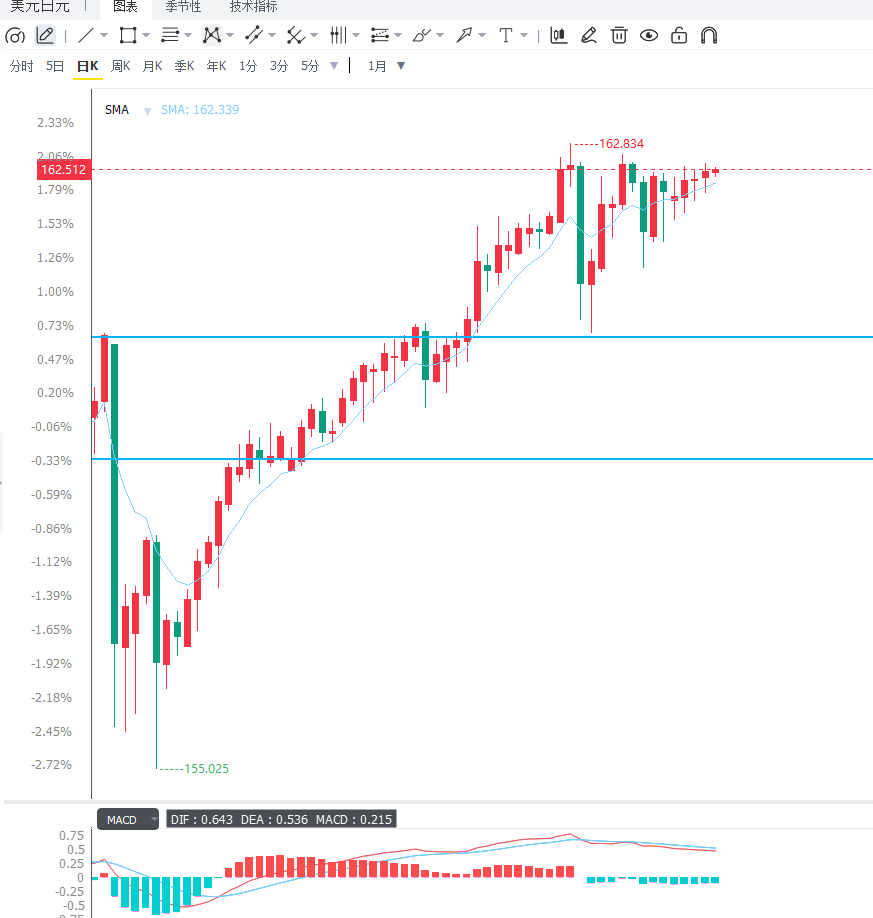 Editor's Summary: The USD/JPY pair is currently consolidating at high levels, with the market awaiting a new catalyst for a breakout. The USD/JPY interest rate differential, carry trade demand, and Japanese energy import pressures are all limiting the yen's rebound, while the potential risk of intervention by Japanese authorities is limiting further rapid gains for USD/JPY. The key to future price movements remains the 163.00 resistance zone. If USD/JPY breaks through and holds above this level, the market may reassess its long-term upside potential; however, stronger Japanese policy signals or significantly weaker US economic data could push the exchange rate lower. The current market environment indicates that USD/JPY is still driven primarily by interest rate differentials, but as the exchange rate approaches a sensitive zone, policy risks and changes in market sentiment could amplify short-term volatility. Investors should pay close attention to the impact of US economic data, Japanese inflation performance, and energy price changes on the yen's fundamentals.
This low volatility itself sends an important market signal. Although the recent upward momentum of USD/JPY has slowed, sellers have not found a catalyst sufficient to reverse the trend. In nine of the past ten weeks, USD/JPY has closed flat or higher , indicating that the market as a whole remains biased towards the US dollar. Meanwhile, the daily stochastic oscillator has fallen from overbought territory to around 30, but prices have not fallen significantly, reflecting that the current market is more like digesting gains at high levels than a trend reversal. The core factor currently driving USD/JPY to its high levels remains the US-Japan interest rate differential. The Bank of Japan previously raised its policy rate to 1.00%, but the market believes this adjustment has not significantly changed the attractiveness of yen assets. Japan's potential inflation indicator remains close to 3%, while official inflation data is around 1.5%, resulting in Japanese real interest rates remaining negative. At the same time, the Federal Reserve's policy rate remains at a relatively high level of around 3.75%, and the yield differential between the US and Japan continues to support demand for carry trades. The strategy of investors borrowing low-yielding yen and allocating to dollar assets remains attractive, which is also an important reason for the continued pressure on the yen. Japanese financial authorities are a significant factor limiting further gains in USD/JPY. Previously, the market anticipated that Japan had intervened in the currency market with approximately 5.5 trillion yen to prevent a rapid depreciation of the yen. With the USD/JPY exchange rate rising back above 160, market attention to further intervention has increased significantly. However, the market remains cautious about the effectiveness of such intervention. Since the current yen weakness stems not only from speculative factors but also from Japan's trade structure, relying solely on foreign exchange reserves for intervention is unlikely to change the long-term trend. Especially against the backdrop of rising energy prices, Japan needs to import large quantities of crude oil and natural gas, and the increased import costs further weaken the yen's fundamentals. Japan's upcoming trade data is the focus of market attention. The market expects Japan's import growth to increase significantly, mainly due to rising energy costs; while exports may also maintain growth, the export advantage brought by the yen's depreciation is unlikely to fully offset the pressure of energy imports. The market expects Japan's merchandise trade deficit to narrow, but the overall external account still faces challenges from rising energy prices. Meanwhile, Japan's consumer price index data will also influence market judgments on the Bank of Japan's future policy path. If official inflation data continues to fall below the core inflation trend, the Bank of Japan may maintain a slow pace of interest rate hikes, thereby limiting the yen's appreciation potential. In contrast, the US market is focusing on economic indicators such as the Purchasing Managers' Index (PMI) this week. During the quiet period leading up to the Fed meeting, fewer official speeches and a lack of new policy signals have led to the USD/JPY pair's short-term movements being driven more by expectations of US interest rates and global risk events. The recent escalation of tensions in the Middle East has also failed to provide the yen with traditional safe-haven support. Normally, rising global risks would drive capital inflows into yen assets, but the current market logic has changed. As energy supply risks push up oil prices, and Japan is highly dependent on energy imports, rising oil prices are actually increasing pressure on the Japanese economy, weakening the yen's safe-haven appeal. The market is watching to see if this unique market environment—where "risk events push up energy prices, but instead suppress the yen"—will continue. If oil prices remain high, the USD/JPY pair may continue to receive structural support. The daily chart for USD/JPY shows that the current price is consolidating above 162.00, with the overall trend still upward. The sideways movement at high levels over the past few weeks is more of a consolidation after an upward move than a clear reversal. On the daily chart, the first support level to watch is the 162.00 area, which is also the bottom of the recent trading range. A break below this level would see further support around 161.00, near the 50-day exponential moving average, with further support around 160.50. Resistance is concentrated at the psychological level of 163.00, which is also the recent cycle high. A decisive break above 163.00 could lead to further testing of resistance around 163.50 and 164.00. While current market momentum has cooled somewhat, the bullish structure remains intact. On the 4-hour chart, USD/JPY is in a narrow consolidation phase, with the price hovering around 162.50. The short-term direction awaits confirmation of a breakout. The MACD indicator shows signs of convergence at high levels, indicating weakening upward momentum, but no clear reversal signal has yet formed. The RSI indicator has fallen back to neutral territory, suggesting that the market remains stable after the release of short-term buying pressure. If the price breaks through the 162.80-163.00 area again, it may trigger new upward potential; however, if it falls below 162.00, it may enter a short-term correction phase and test the moving average support near 161.00. Overall, given the continued interest rate differential between USD and Japan and the limited policy adjustments in Japan, the USD/JPY pair remains bullish. Editor's Summary: The USD/JPY pair is currently consolidating at high levels, with the market awaiting a new catalyst for a breakout. The USD/JPY interest rate differential, carry trade demand, and Japanese energy import pressures are all limiting the yen's rebound, while the potential risk of intervention by Japanese authorities is limiting further rapid gains for USD/JPY. The key to future price movements remains the 163.00 resistance zone. If USD/JPY breaks through and holds above this level, the market may reassess its long-term upside potential; however, stronger Japanese policy signals or significantly weaker US economic data could push the exchange rate lower. The current market environment indicates that USD/JPY is still driven primarily by interest rate differentials, but as the exchange rate approaches a sensitive zone, policy risks and changes in market sentiment could amplify short-term volatility. Investors should pay close attention to the impact of US economic data, Japanese inflation performance, and energy price changes on the yen's fundamentals.
- Risk Warning and Disclaimer
- The market involves risk, and trading may not be suitable for all investors. This article is for reference only and does not constitute personal investment advice, nor does it take into account certain users’ specific investment objectives, financial situation, or other needs. Any investment decisions made based on this information are at your own risk.