Institutions: Geopolitical risks extend from the Strait of Hormuz to the Bab el-Mandeb Strait; oil price adjustments are temporary.
2026-07-27 13:19:03
Market rumors that Pakistan was leading efforts to restart US-Iran nuclear negotiations, coupled with strong support from major Asian powers for mediation, cooled bullish sentiment in the oil market, leading to a significant pullback in international oil prices last Friday. Standard Chartered Bank suggests that this decline is likely only a short-term phenomenon. Currently, shipping risks in the Middle East have spread from the Strait of Hormuz to the Bab el-Mandeb Strait, with Houthi rebels targeting Saudi vessels and attacking oil tankers, drastically reducing the stability of the Red Sea route. If shipping through the Bab el-Mandeb Strait is paralyzed, European distillate fuel supplies will be directly impacted, forcing a restructuring of global oil shipping routes, and the tight balance between oil supply and demand in the medium to long term is unlikely to change fundamentally.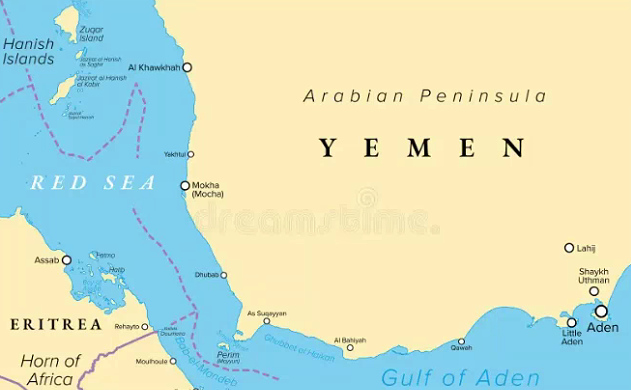
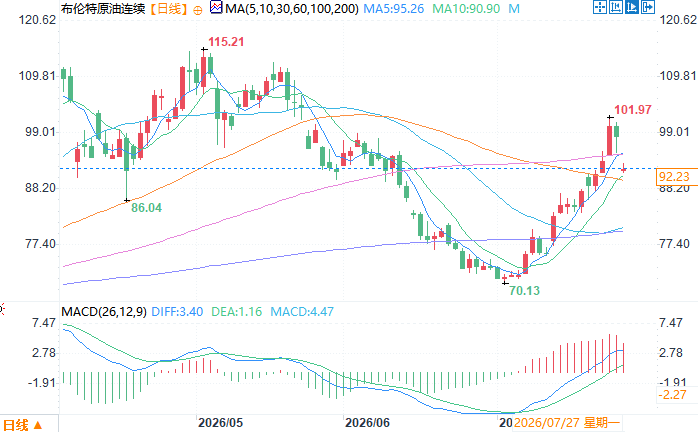 Brent crude oil daily chart source: EasyTrade. At 13:15 Beijing time on July 27, Brent crude oil was trading at $92.09 per barrel.
Expectations of US-Iran negotiations dampened bullish sentiment.
Reports indicate that Pakistan is mediating the resumption of nuclear negotiations between the US and Iran. Major Asian powers are actively supporting this mediation out of consideration for energy security and economic stability. Market expectations of a possible easing of the Middle East conflict have led to profit-taking by long positions. On Friday (July 24), Brent crude oil fell 2.12% for the second consecutive day, closing at $98.37 per barrel, while WTI crude oil fell 2.05% for the same day, closing at $90.47 per barrel. However, institutions do not believe the upward trend has ended, the core logic being the further spread of risks at key oil choke points.Houthi blockade of the Bab el-Mandeb Strait, Saudi Arabia's export route attacked
Last Monday (July 20), the Houthi rebels announced a targeted maritime blockade against Saudi Arabia, prohibiting related Saudi vessels from passing through the Bab el-Mandeb Strait in retaliation for Saudi Arabia's long-standing containment policy in Yemen and the recent airstrikes on Sana'a airport. Many Saudi supertankers were forced to abandon the Red Sea route and instead circumnavigate the Cape of Good Hope, adding up to two weeks to their journey time. Last Thursday (July 23), the Houthis carried out their threat, attacking two Saudi oil tankers with missiles and drones, damaging and setting them on fire. This caused Brent crude oil prices to surge by nearly $20, briefly surpassing $100 per barrel. Previously, due to the unstable navigation in the Strait of Hormuz, Saudi Arabia had been diverting 70% to 75% of its crude oil to the Red Sea port of Yanbu via the East-West Pipeline, with Yanbu's loading capacity reaching 4.5 million barrels per day. Before the attack, approximately 7 million barrels of crude oil passed through the Bab el-Mandeb Strait daily, highlighting the strategic importance of this waterway.The shortcomings of the shipping route system have become apparent, and disruptions to the shipping corridors have spread to the entire oil shipping market.
The Red Sea, the Suez Canal, and the Sumed pipeline form the shortest oil transport corridor between Asia and Europe. However, fully loaded Very Large Crude Carriers (VLCCs) are restricted by draft and cannot pass through the Suez Canal, requiring transshipment or pipeline transport, making the transport chain inherently fragile. Disruption of these routes will trigger a chain reaction: increased war insurance premiums, higher freight rates, fewer available tankers, and continued delivery delays. If the situation deteriorates further, alternative export routes via the Red Sea will become ineffective, potentially forcing Saudi Arabia to reduce production.The European refining industry was the first to be affected.
Standard Chartered's analysis indicates that the disruption of shipping through the Bab el-Mandeb Strait will severely impact European refineries. Ukraine's continued attacks on Russian refining and oil transportation facilities have already strained European diesel supplies; the Red Sea blockage will further delay diesel and jet fuel deliveries to Europe, exacerbating the shortage of middle distillates. Ships detouring around South Africa will extend voyages by 10 to 15 days, lengthening inventory turnover. European refineries will need to shift their crude oil purchases to West Africa, the United States, and Brazil, reshaping global oil trade flows and exacerbating regional price divergences. In comparison, product tankers will be more affected than crude oil VLCCs; many long-haul Asian crude oil tankers regularly detour around the Cape of Good Hope, thus being relatively less affected by the route changes.Summary and Outlook
In summary, the expectation of a resumption of nuclear negotiations between the US and Iran triggered the current oil price correction, but this is a short-term emotional disturbance. The two major Middle Eastern oil transport routes are under pressure, and shipping risks in the Bab el-Mandeb Strait have become a new key variable. If Red Sea transport continues to be disrupted, the supply gap for refined oil products in Europe will further widen, forcing a reshaping of global trade routes. In the short term, oil prices will likely remain volatile, with the key observation point being whether geopolitical conflicts can be substantially de-escalated. As long as the risks to maritime navigation remain, the tight balance between oil supply and demand will persist, limiting the potential for a significant and sustained decline. Brent crude oil daily chart source: EasyTrade. At 13:15 Beijing time on July 27, Brent crude oil was trading at $92.09 per barrel.- Risk Warning and Disclaimer
- The market involves risk, and trading may not be suitable for all investors. This article is for reference only and does not constitute personal investment advice, nor does it take into account certain users’ specific investment objectives, financial situation, or other needs. Any investment decisions made based on this information are at your own risk.