Cooling PCE inflation weakened expectations of interest rate hikes, and the dollar index fluctuated around $100.
2026-07-31 13:36:52
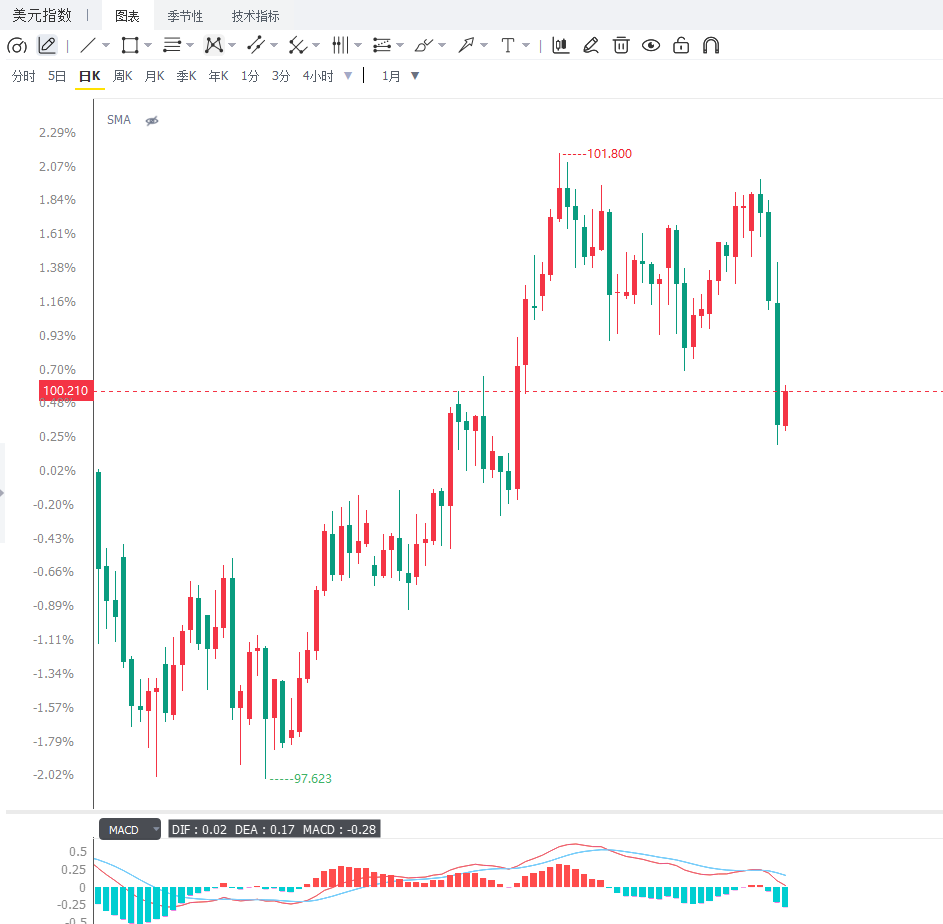
The US dollar index (DXY) strengthened slightly in Asian trading on Friday, regaining the psychological level of 100.00 and temporarily ending a three-day losing streak. Previously, the dollar index had fallen to its lowest level since June 17, but it remains on a clear weekly downtrend, with significant market disagreement regarding the future direction of the dollar.  The dollar's previous pressure was mainly due to cooling US inflation data. The US Personal Consumption Expenditures (PCE) price index fell 0.1% month-on-month in June, the first monthly decline since April 2020. Data showed that lower energy prices and a temporary drop in oil prices eased overall inflation, reducing market expectations for further tightening by the Federal Reserve in the short term. Following the release of the inflation data, the dollar index weakened rapidly as investors reassessed the Fed's future policy path. However, core PCE inflation remains significantly higher than the Fed's 2% target, meaning policymakers are likely to maintain a cautious stance. The market currently still expects at least one more rate hike by the Fed before the end of the year. Especially given that oil prices remain volatile at high levels due to supply risks, energy costs could again push up inflationary pressures, making it difficult for the Fed to quickly shift to an easing policy. Developments in the Middle East are also a significant factor influencing the dollar's performance. Recently, Iran rejected a proposal for joint management of the Strait of Hormuz, which involved partial Iranian participation in navigation management and related cost arrangements. Simultaneously, the US announced the completion of a new round of military operations against Iranian targets, reigniting market concerns about the prospects for diplomatic détente. Furthermore, shipping risks in the Red Sea and surrounding areas continue to escalate. Saudi Arabia is pushing for the establishment of an international cooperation mechanism to protect the safety of vital shipping routes in the Bab el-Mandeb Strait, the Red Sea, and the Gulf of Aden. Previously, actions by the Houthi rebels in Yemen increased risks to commercial shipping and heightened market concerns about the escalation of regional conflict. Increased energy supply risks directly impact the US dollar and global inflation expectations. On the one hand, rising oil prices may strengthen safe-haven demand, supporting the US dollar; on the other hand, high energy prices may prolong the tightening cycles of major central banks, putting pressure on risk assets. The current US dollar market is in a phase of intertwined factors. On the one hand, slowing US economic growth and declining inflation are weakening the dollar's upward momentum; on the other hand, geopolitical risks, energy price volatility, and expectations that the Federal Reserve may still raise interest rates provide a floor for the dollar. Investors will focus on US economic data, speeches by Federal Reserve officials, oil market trends, and developments in the Middle East. If inflation continues to decline, the dollar may continue its downward trend; however, if energy prices rise again and drive up inflation expectations, the dollar may still gain upward momentum. From a daily chart perspective, the US dollar index has experienced a technical rebound after a continuous decline, currently standing above the 100.00 level again, but the overall trend remains weak. The previous pullback from its highs and the short-term rebound is more of a corrective move; the market still needs to pay attention to the resistance areas above. The first resistance level to watch is around 100.50, followed by 101.20 and the 101.80 area. A break above 101.80 could alleviate recent downward pressure. Support levels to watch are around 99.50, followed by the 99.00 and 98.50 areas. The technical structure indicates that the dollar is still in a correction phase; if it cannot effectively break through key resistance, there is still a risk of further decline. From a 4-hour chart perspective, the DXY has formed a short-term rebound, with the price returning above the 100 level, indicating some easing of short-term selling pressure. Technical indicators show that short-term momentum has recovered, but the strength of the upward movement still needs further confirmation. If the US dollar can break through the 100.50 area steadily, it may continue to advance towards the 101.20 area; if the rebound fails and falls below the 99.50 support, it may retest the recent lows. The current 4-hour trend is mainly influenced by expectations of Federal Reserve policy and risk aversion, with the market awaiting new fundamental catalysts.
  Editor's Summary: The US dollar index is currently in a tug-of-war between expectations of cooling inflation and support from geopolitical risks. Improved US PCE data has reduced market expectations for rapid interest rate hikes, putting short-term pressure on the dollar. However, the risk of rising oil prices and the possibility that the Federal Reserve will maintain its tightening policy are providing support for the dollar. In the short term, whether the dollar's rebound can continue will depend on US economic data and changes in the energy market. If inflation continues to decline and the Fed's policy expectations shift towards easing, the dollar may continue to be under pressure; however, if Middle East risks drive up oil prices and reignite inflation concerns, the dollar may regain safe-haven support. Overall, the dollar index remains in a correction phase, with the 100 level becoming a key battleground for bulls and bears in the short term. Investors need to closely monitor Fed policy signals, US inflation trends, and changes in global risk events to determine the dollar's next trend.
The dollar's previous pressure was mainly due to cooling US inflation data. The US Personal Consumption Expenditures (PCE) price index fell 0.1% month-on-month in June, the first monthly decline since April 2020. Data showed that lower energy prices and a temporary drop in oil prices eased overall inflation, reducing market expectations for further tightening by the Federal Reserve in the short term. Following the release of the inflation data, the dollar index weakened rapidly as investors reassessed the Fed's future policy path. However, core PCE inflation remains significantly higher than the Fed's 2% target, meaning policymakers are likely to maintain a cautious stance. The market currently still expects at least one more rate hike by the Fed before the end of the year. Especially given that oil prices remain volatile at high levels due to supply risks, energy costs could again push up inflationary pressures, making it difficult for the Fed to quickly shift to an easing policy. Developments in the Middle East are also a significant factor influencing the dollar's performance. Recently, Iran rejected a proposal for joint management of the Strait of Hormuz, which involved partial Iranian participation in navigation management and related cost arrangements. Simultaneously, the US announced the completion of a new round of military operations against Iranian targets, reigniting market concerns about the prospects for diplomatic détente. Furthermore, shipping risks in the Red Sea and surrounding areas continue to escalate. Saudi Arabia is pushing for the establishment of an international cooperation mechanism to protect the safety of vital shipping routes in the Bab el-Mandeb Strait, the Red Sea, and the Gulf of Aden. Previously, actions by the Houthi rebels in Yemen increased risks to commercial shipping and heightened market concerns about the escalation of regional conflict. Increased energy supply risks directly impact the US dollar and global inflation expectations. On the one hand, rising oil prices may strengthen safe-haven demand, supporting the US dollar; on the other hand, high energy prices may prolong the tightening cycles of major central banks, putting pressure on risk assets. The current US dollar market is in a phase of intertwined factors. On the one hand, slowing US economic growth and declining inflation are weakening the dollar's upward momentum; on the other hand, geopolitical risks, energy price volatility, and expectations that the Federal Reserve may still raise interest rates provide a floor for the dollar. Investors will focus on US economic data, speeches by Federal Reserve officials, oil market trends, and developments in the Middle East. If inflation continues to decline, the dollar may continue its downward trend; however, if energy prices rise again and drive up inflation expectations, the dollar may still gain upward momentum. From a daily chart perspective, the US dollar index has experienced a technical rebound after a continuous decline, currently standing above the 100.00 level again, but the overall trend remains weak. The previous pullback from its highs and the short-term rebound is more of a corrective move; the market still needs to pay attention to the resistance areas above. The first resistance level to watch is around 100.50, followed by 101.20 and the 101.80 area. A break above 101.80 could alleviate recent downward pressure. Support levels to watch are around 99.50, followed by the 99.00 and 98.50 areas. The technical structure indicates that the dollar is still in a correction phase; if it cannot effectively break through key resistance, there is still a risk of further decline. From a 4-hour chart perspective, the DXY has formed a short-term rebound, with the price returning above the 100 level, indicating some easing of short-term selling pressure. Technical indicators show that short-term momentum has recovered, but the strength of the upward movement still needs further confirmation. If the US dollar can break through the 100.50 area steadily, it may continue to advance towards the 101.20 area; if the rebound fails and falls below the 99.50 support, it may retest the recent lows. The current 4-hour trend is mainly influenced by expectations of Federal Reserve policy and risk aversion, with the market awaiting new fundamental catalysts. Editor's Summary: The US dollar index is currently in a tug-of-war between expectations of cooling inflation and support from geopolitical risks. Improved US PCE data has reduced market expectations for rapid interest rate hikes, putting short-term pressure on the dollar. However, the risk of rising oil prices and the possibility that the Federal Reserve will maintain its tightening policy are providing support for the dollar. In the short term, whether the dollar's rebound can continue will depend on US economic data and changes in the energy market. If inflation continues to decline and the Fed's policy expectations shift towards easing, the dollar may continue to be under pressure; however, if Middle East risks drive up oil prices and reignite inflation concerns, the dollar may regain safe-haven support. Overall, the dollar index remains in a correction phase, with the 100 level becoming a key battleground for bulls and bears in the short term. Investors need to closely monitor Fed policy signals, US inflation trends, and changes in global risk events to determine the dollar's next trend.
- Risk Warning and Disclaimer
- The market involves risk, and trading may not be suitable for all investors. This article is for reference only and does not constitute personal investment advice, nor does it take into account certain users’ specific investment objectives, financial situation, or other needs. Any investment decisions made based on this information are at your own risk.