Is a Straits of Hormuz reopening agreement imminent? Iran sets exorbitant demands, with US compensation and troop withdrawal becoming key factors, reigniting tensions in the Red Sea and causing oil prices to surge.
2026-08-10 08:16:54
In the complex geopolitical game in the Middle East, the issue of passage through the Strait of Hormuz has always been a major concern for the global energy market. This narrow waterway connecting the Persian Gulf and the Indian Ocean has long carried about one-fifth of the world's oil shipments. Recently, Iran signaled that its agreement with Oman to redraw the strait's navigation route and gradually reopen the waterway was in its final stages. However, this progress has been hampered by a series of harsh additional conditions. Meanwhile, attacks on UAE vessels and Houthi attacks on Saudi oil refineries in Yemen have further escalated the already fragile regional situation, causing international oil prices to continue their upward trend. On Monday (August 10), oil prices opened higher in early Asian trading and rose nearly 3% at one point, reaching a four-day high of $79.43 per barrel. 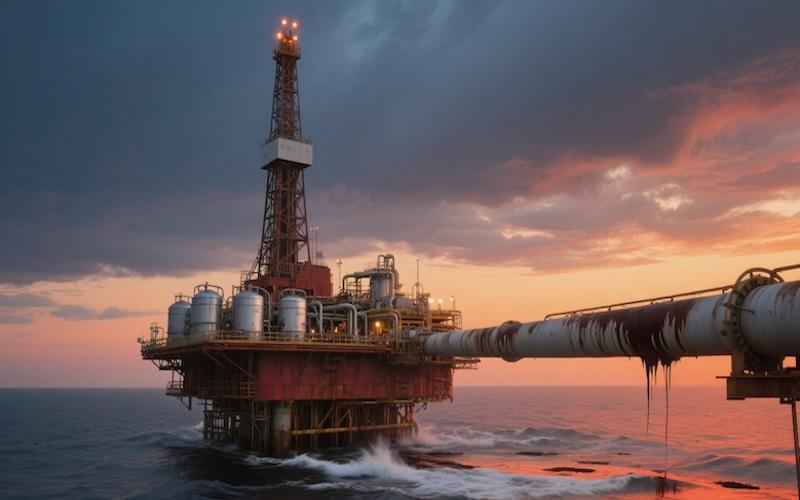
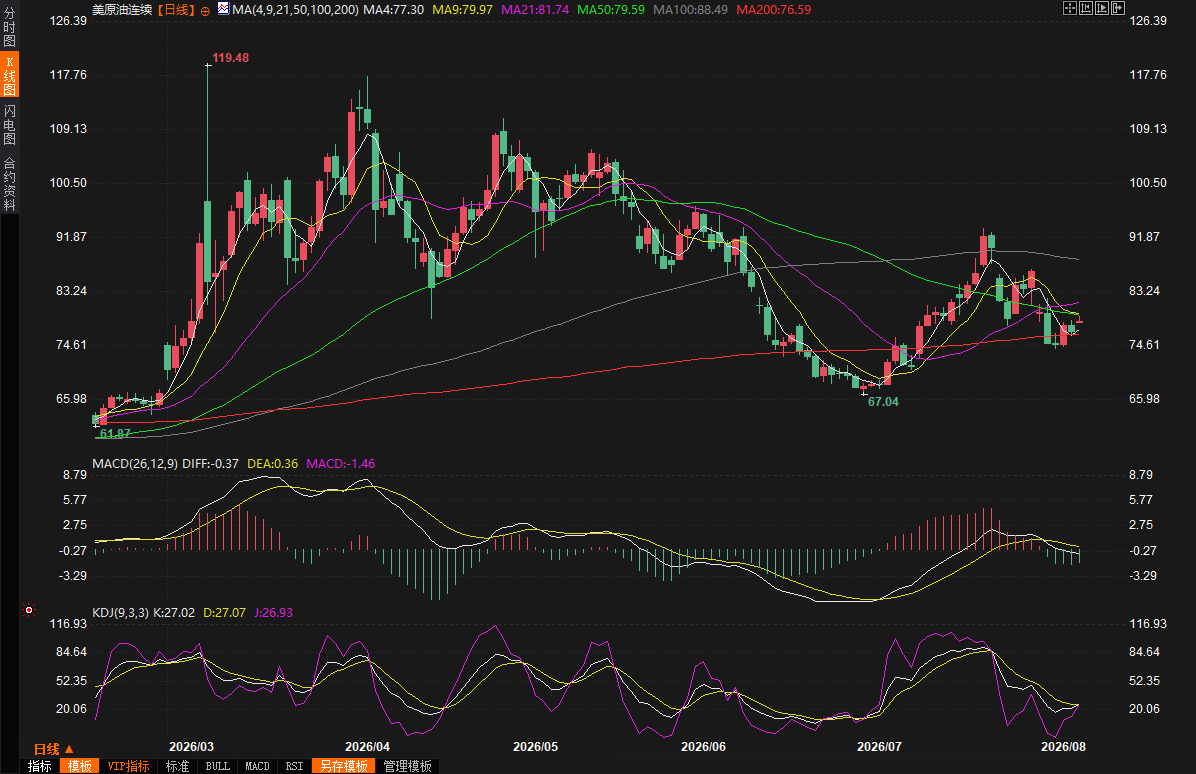 (US crude oil daily chart, source: FX678)
The Straits Settlements Agreement has entered its final stage, but it has been blocked by a series of conditions.
According to multiple sources, negotiations between Iran and Oman on the demarcation of a new shipping route in the Strait of Hormuz are nearing completion. Iranian Foreign Minister Araqchi stated publicly on Sunday (August 9th) that the agreement has entered its final stage, and the new shipping route will be formally established once the United States meets its relevant conditions and allows the strait to reopen. The agreement envisions establishing an entry channel closer to Iran and an exit channel closer to Oman within the strait, granting Iran the right to monitor ships entering the Persian Gulf. US officials have previously indicated that the agreement is imminent, and the strait may soon reopen to traffic. However, Iran has clearly emphasized that reopening the strait is not merely a technical arrangement of the shipping route, but is closely linked to the US fulfilling a series of political and economic conditions. The Secretary of Iran's Supreme National Security Council, Zulghader, has put forward even stronger demands: the United States must completely end the war, lift the naval blockade, withdraw its troops from the region, lift all sanctions, unfreeze Iranian assets, pay war reparations, cease threats and insults, and stop military operations against Iran and its allies in Lebanon, Palestine, Yemen, and Iraq. Araqchi specifically pointed out that the United States must provide compensation to Iran for large-scale attacks. These conditions make the final implementation of the agreement highly uncertain. Iran and the United States are not currently engaged in direct negotiations, exchanging information only through intermediaries. Iran insists that formal negotiations will not begin as long as the United States continues to violate the interim agreement signed in June.The US position and the real obstacles to implementing the agreement
The United States is cautiously observing the agreement. President Trump stated that a low-key approach is currently being taken towards Iran, with negotiations in a semi-formal state, noting severe inflation and a shortage of funds in Iran. US officials revealed that once the agreement is announced and unimpeded commercial shipping resumes, the US will lift the blockade on Iranian ports, but this action depends on Iran's fulfillment of its commitments. The agreement requires a series of interconnected steps, and previous reports suggested it might grant Iran control over ships entering the Persian Gulf, which shipping companies find difficult to implement. The US explicitly rejects any arrangements that would impose restrictions or fees on traffic in the Strait of Hormuz, and is unwilling to see US Navy warships prohibited from passage. Meanwhile, Iran's Supreme Leader Mojtaba Khamenei has not made a public appearance since the US-Israel airstrikes on February 28th. Although reports indicate that President Pezechzian met with him in late July, and paramilitary leaders have promised to release footage of his public appearances, the final decision rests with the Supreme Leader. The hardliner-led Supreme National Security Council is reviewing a draft agreement with Oman, and a Revolutionary Guard spokesman emphasized that the Strait of Hormuz is not only an economic waterway but also a key component of Iran's geopolitical and strategic power. These internal factors further increase the difficulty of quickly implementing the agreement.Regional conflicts continue to escalate, highlighting energy risks once again.
Just as negotiations in the Strait of Hormuz stalled, the UAE accused Iran of attacking one of its state-owned oil company vessels in the Strait of Hormuz on Saturday (August 8). The UAE oil company stated that three ships had been attacked by missiles or drones this week, bringing the total number of ships attacked since the start of the war to fifteen. Saturday's incident caused no casualties, but the situation remains critical. Iran has not yet responded immediately. The Revolutionary Guard severely disrupted shipping in the Strait early in the war and has maintained traffic restrictions through regular attacks. While the US military has assisted several ships in transit, diplomatic and military means have failed to break the deadlock. Meanwhile, the Houthi rebels in Yemen claimed responsibility on Sunday for a drone attack on Saudi Aramco's Jizan refinery. The refinery processes approximately 400,000 barrels of crude oil per day and had been shut down in late July. The Saudi Ministry of Energy confirmed a fire, but it has been extinguished, and no one was injured. The Houthis also claimed responsibility for a missile and drone attack on the Yemeni Red Sea port of Mocha, killing seven people and severely damaging port infrastructure. This operation occurred two days after Saudi Arabia signed a defense agreement with Turkey and Pakistan. This agreement, aimed at addressing regional instability stemming from the US-Israel war in Iraq, stipulates that an armed attack on any member state will be considered an attack on all. The Houthi rebels had previously announced a naval blockade of Saudi Arabia in the Red Sea, a crucial alternative route for Saudi Arabia to bypass the Strait of Hormuz; any disruption to the Red Sea would further exacerbate risks to energy transportation.Market reaction and overall impact
These combined news items propelled international oil prices higher on Monday, with US crude rising nearly 3% to reach $79.43 per barrel. Market analysts pointed out that current pricing is still based on the possibility of supply disruptions rather than the certainty of normalization. Geopolitical risks will continue to support oil prices until actual oil flows resume. The UAE has already transported most of its oil via pipeline to its eastern coast near the Gulf of Oman to circumvent the strait blockade, but the overall vulnerability of energy transportation remains prominent. In summary, while the Straits of Hormuz agreement between Iran and Oman is nearing completion, it is constrained by a series of conditions that are difficult to meet quickly, such as US compensation, lifting of sanctions, and troop withdrawal. Meanwhile, the continued escalation of regional armed conflict further weakens the prospect of reopening the waterway in the short term. The coexistence of risks in the Strait of Hormuz and the Red Sea not only tests the patience of diplomatic maneuvering but also continues to affect the stability of global energy supply and market prices. Whether future negotiations can break the deadlock depends on whether the US is willing to make substantial concessions on key conditions and the balance of power between hardliners and pragmatists within Iran. (US crude oil daily chart, source: FX678)Frequently Asked Questions
Q: What is the current progress of the Straits of Hormuz agreement between Iran and Oman? Why has it been delayed in formally reopening? A: The agreement has entered its final stage. Both sides have reached a basic consensus on the demarcation of a new shipping route, envisioning a two-way passage and granting Iran the right to monitor ships entering the port. However, Iran has made it clear that the Straits will only truly reopen after the United States meets a series of conditions, including compensation, lifting sanctions, unfreezing assets, withdrawing troops, and ceasing threats. These conditions go far beyond simple technical arrangements for the shipping route, causing the agreement to be firmly bound by political and economic demands, making it difficult to implement in the short term. Q: What is the US's attitude in the negotiations? Is it possible that the US will accept the conditions proposed by Iran? A: The US is currently adopting a low-key observation strategy, communicating indirectly through intermediaries, and indicating that it would consider lifting the blockade of Iranian ports once commercial shipping resumes unimpeded. However, the US explicitly rejects any restrictions or charges imposed by Iran on Straits traffic, and is unwilling to accept arrangements prohibiting US warships from passing through. Iran's demands for compensation and a complete withdrawal are extremely harsh for the US, and the possibility of actual acceptance is very low. Fundamental differences remain between the two sides' positions. Q: What is the connection between the attack on UAE ships and the Houthi attack on Saudi oil refineries? A: Both events occurred against the backdrop of the US-Israel war against Iran, reflecting Iran and its regional allies' strategy of exerting pressure through asymmetric means. The attack on UAE ships in the Strait of Hormuz directly impacted the safety of navigation in the strait, while the Houthi attacks on the Jizan oil refinery and Red Sea ports further threatened Saudi Arabia's alternative shipping routes around the strait. These actions, combined, exacerbated the overall vulnerability of the energy supply chain. Q: What actual impact has the long-term blockade of the Strait of Hormuz had on the global energy market? A: The strait was once a shipping route for one-fifth of the world's oil. Long-term restrictions have led to increased shipping costs and insurance premiums, forcing some oil-producing countries to find alternative routes. The UAE has mitigated the risk through overland pipelines, but the possibility of overall supply disruption is still priced in by the market, thus providing sustained support for oil prices. If the Red Sea route is also blocked, the supply shortage will be even more severe. Q: What impact has the long-term absence of Iran's Supreme Leader from public appearances had on the decision-making process? A: Since the airstrikes on February 28, Supreme Leader Mojtaba Khamenei has not made a public appearance, and the final decision-making power remains with him. Despite reports of a presidential meeting and a promise to release video footage, the hardline-dominated security committee is reviewing a draft agreement, and the internal balance of power directly impacts the pace of negotiations. This uncertainty makes it more difficult for external mediators to determine Tehran's true bottom line and timeline. As of 08:11 Beijing time, US crude oil futures are trading at $78.78 per barrel.- Risk Warning and Disclaimer
- The market involves risk, and trading may not be suitable for all investors. This article is for reference only and does not constitute personal investment advice, nor does it take into account certain users’ specific investment objectives, financial situation, or other needs. Any investment decisions made based on this information are at your own risk.