The slowdown in expectations of a Fed rate hike has pressured the dollar lower, with the market awaiting stabilization.
2026-08-10 15:30:55
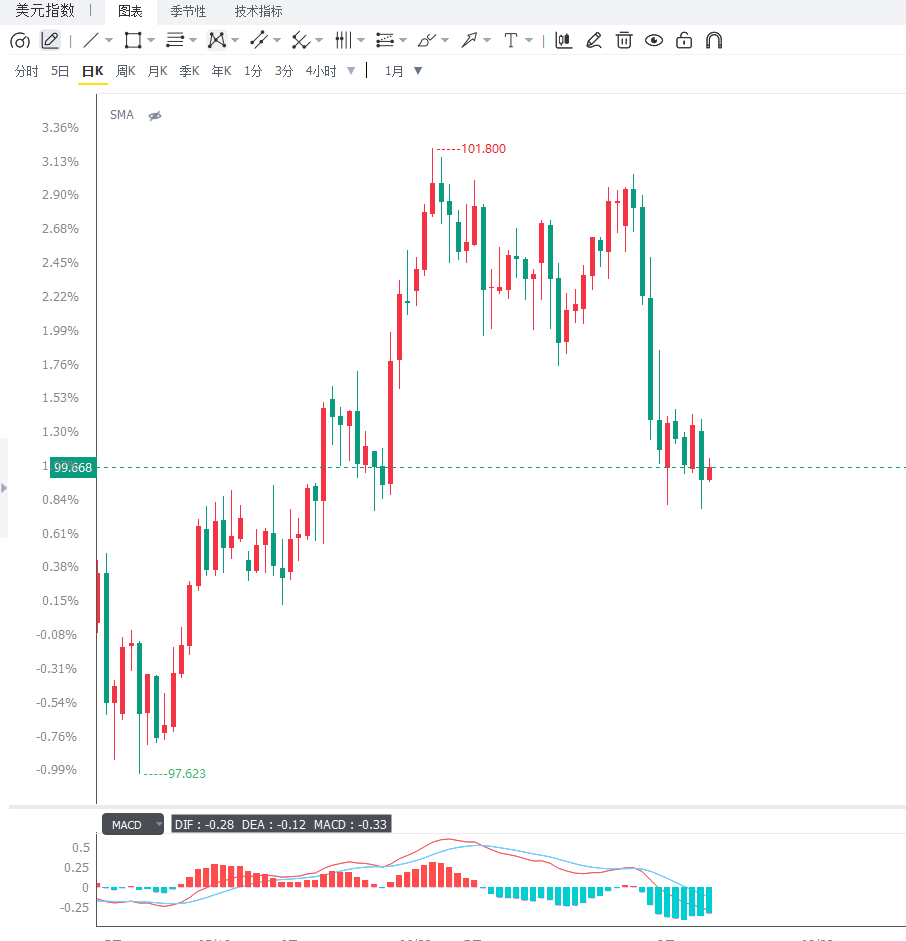
The US dollar index (DXY) opened stronger this week, rebounding after a slight pullback, and traded around 99.70 during the Asian trading session. The recent dollar movement has been influenced by two factors: firstly, a cooling US job market has reduced the likelihood of a near-term interest rate hike by the Federal Reserve; secondly, global risk events have driven safe-haven flows into the dollar, providing support for the dollar index.  The market focus remains on the evolving situation in the Middle East. The situation between the US and Iran has entered a critical phase, with progress in negotiations over the management of the Strait of Hormuz drawing market attention. Although Iran has stated that negotiations are progressing under Oman's coordination, the market remains cautious about the speed of shipping recovery. Energy supply risks and regional uncertainties continue to enhance the safe-haven appeal of the US dollar. US employment data has become a core factor influencing the dollar's recent performance. Data shows that US non-farm payrolls decreased by 23,000 in July, significantly weaker than market expectations, while June's employment data was revised sharply down from an increase of 57,000 to 20,000. The strengthening signs of a weak job market have led investors to reassess the Federal Reserve's future policy path. Following the release of the employment report, the market significantly reduced its expectations for a September rate hike by the Fed. According to market interest rate tools, investors currently expect a 25 basis point rate hike in September with a probability of about 46%, down from 67% a week ago. The cooling of Fed rate hike expectations limits further upside potential for the dollar. However, the dollar has not experienced a sustained sharp decline, mainly due to continued safe-haven demand. Meanwhile, the market believes that changes in energy prices may affect future inflation trends. If crude oil prices continue to rise due to supply risks, inflationary pressures may resurface, limiting the speed of the Federal Reserve's policy shift and providing some support for the dollar. TD Securities believes that the US interest rate market experienced a "bull steepening" trend after the release of weak employment data, with investors reducing their bets on future rate hikes. The market believes that uncertainty surrounding the September policy path is decreasing, but subsequent inflation data will still determine whether the Fed needs to maintain a restrictive policy for a longer period. Recent remarks by Fed official Barkin have released relatively dovish signals. He pointed out that employment data shows the labor market is in a weak equilibrium of "low hiring, low layoffs," not a clear recession. At the same time, he emphasized that corporate earnings remain strong, and if the weakness in employment does not spread further, economic resilience may limit the Fed's rapid shift to easing. Currently, the Fed's overall policy tone remains cautious. Relevant market indicators show that the Fed's policy sentiment index has declined, but remains significantly above the neutral level, meaning the market still believes that monetary policy may remain restrictive for some time to come. Investors are awaiting the US inflation report to determine the direction of future interest rate adjustments. From a daily chart perspective, the dollar index recently rebounded after finding support near 99 and is currently maintaining a slightly bullish trend. The upside resistance level to watch is the 100.20-100.50 area. A break above this area could lead to a further test of the 101.00 area. Support levels to watch are 99.00 and 98.30. The daily chart shows that while the dollar is pressured by employment data, safe-haven flows are helping it maintain some upward momentum. Looking at the 4-hour chart, the DXY has formed a short-term rebound structure, with the price returning to around 99.70. Technical indicators suggest a recovery in short-term buying. However, there is still resistance around the 100 level. If this level fails to break through, the dollar may fall back to test the 99.00 support. A decisive break above 100.20 could open up further upside potential. Future price movements will be closely watched for US CPI data, changes in US Treasury yields, and developments in global risk events.
  Editor's Summary: The US dollar index is currently under the dual influence of weak economic data and safe-haven demand. A cooling US job market has reduced expectations of a short-term Fed rate hike, putting pressure on the dollar. However, geopolitical risks, energy market volatility, and inflation uncertainty continue to provide support for the dollar. In the short term, the dollar may maintain a range-bound trading pattern, with market direction depending on whether US inflation data further strengthens expectations of rate cuts. If inflation continues to decline, the dollar may come under pressure; if energy prices push up inflation risks, expectations of the Fed maintaining high interest rates may strengthen again, thus supporting a dollar rebound.
The market focus remains on the evolving situation in the Middle East. The situation between the US and Iran has entered a critical phase, with progress in negotiations over the management of the Strait of Hormuz drawing market attention. Although Iran has stated that negotiations are progressing under Oman's coordination, the market remains cautious about the speed of shipping recovery. Energy supply risks and regional uncertainties continue to enhance the safe-haven appeal of the US dollar. US employment data has become a core factor influencing the dollar's recent performance. Data shows that US non-farm payrolls decreased by 23,000 in July, significantly weaker than market expectations, while June's employment data was revised sharply down from an increase of 57,000 to 20,000. The strengthening signs of a weak job market have led investors to reassess the Federal Reserve's future policy path. Following the release of the employment report, the market significantly reduced its expectations for a September rate hike by the Fed. According to market interest rate tools, investors currently expect a 25 basis point rate hike in September with a probability of about 46%, down from 67% a week ago. The cooling of Fed rate hike expectations limits further upside potential for the dollar. However, the dollar has not experienced a sustained sharp decline, mainly due to continued safe-haven demand. Meanwhile, the market believes that changes in energy prices may affect future inflation trends. If crude oil prices continue to rise due to supply risks, inflationary pressures may resurface, limiting the speed of the Federal Reserve's policy shift and providing some support for the dollar. TD Securities believes that the US interest rate market experienced a "bull steepening" trend after the release of weak employment data, with investors reducing their bets on future rate hikes. The market believes that uncertainty surrounding the September policy path is decreasing, but subsequent inflation data will still determine whether the Fed needs to maintain a restrictive policy for a longer period. Recent remarks by Fed official Barkin have released relatively dovish signals. He pointed out that employment data shows the labor market is in a weak equilibrium of "low hiring, low layoffs," not a clear recession. At the same time, he emphasized that corporate earnings remain strong, and if the weakness in employment does not spread further, economic resilience may limit the Fed's rapid shift to easing. Currently, the Fed's overall policy tone remains cautious. Relevant market indicators show that the Fed's policy sentiment index has declined, but remains significantly above the neutral level, meaning the market still believes that monetary policy may remain restrictive for some time to come. Investors are awaiting the US inflation report to determine the direction of future interest rate adjustments. From a daily chart perspective, the dollar index recently rebounded after finding support near 99 and is currently maintaining a slightly bullish trend. The upside resistance level to watch is the 100.20-100.50 area. A break above this area could lead to a further test of the 101.00 area. Support levels to watch are 99.00 and 98.30. The daily chart shows that while the dollar is pressured by employment data, safe-haven flows are helping it maintain some upward momentum. Looking at the 4-hour chart, the DXY has formed a short-term rebound structure, with the price returning to around 99.70. Technical indicators suggest a recovery in short-term buying. However, there is still resistance around the 100 level. If this level fails to break through, the dollar may fall back to test the 99.00 support. A decisive break above 100.20 could open up further upside potential. Future price movements will be closely watched for US CPI data, changes in US Treasury yields, and developments in global risk events. Editor's Summary: The US dollar index is currently under the dual influence of weak economic data and safe-haven demand. A cooling US job market has reduced expectations of a short-term Fed rate hike, putting pressure on the dollar. However, geopolitical risks, energy market volatility, and inflation uncertainty continue to provide support for the dollar. In the short term, the dollar may maintain a range-bound trading pattern, with market direction depending on whether US inflation data further strengthens expectations of rate cuts. If inflation continues to decline, the dollar may come under pressure; if energy prices push up inflation risks, expectations of the Fed maintaining high interest rates may strengthen again, thus supporting a dollar rebound.
- Risk Warning and Disclaimer
- The market involves risk, and trading may not be suitable for all investors. This article is for reference only and does not constitute personal investment advice, nor does it take into account certain users’ specific investment objectives, financial situation, or other needs. Any investment decisions made based on this information are at your own risk.