Rising oil prices supported the Canadian dollar, but the US dollar awaited inflation guidance, causing the USD/CAD decline to pause.
2026-08-12 14:10:57
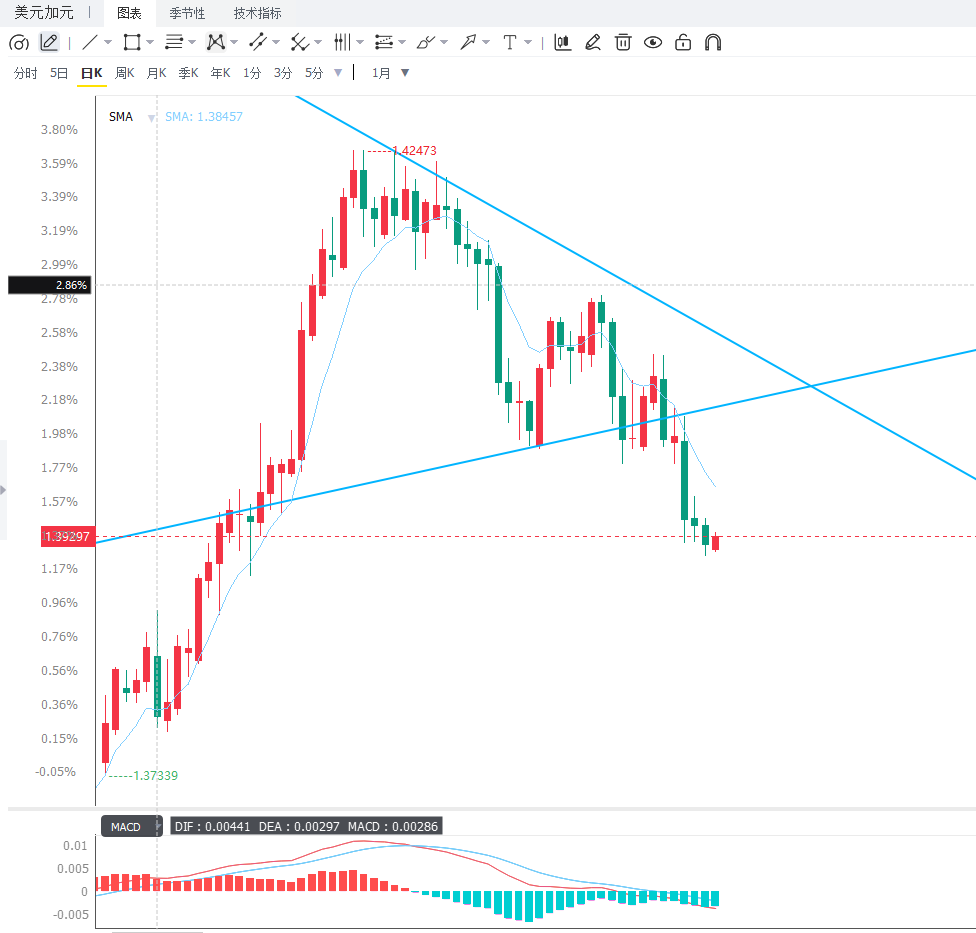
The US dollar rose slightly against the Canadian dollar (USD/CAD) in Asian trading on Wednesday, ending a three-day losing streak. The price rebounded from a low near 1.3915 and is currently trading around 1.3930. However, the upward momentum was limited as investors awaited the latest US inflation data for clues about the Federal Reserve's future monetary policy direction.  The recent USD/CAD exchange rate has been influenced by multiple factors. On the one hand, the Canadian dollar, as a commodity currency, is supported by rising international oil prices; on the other hand, changes in US inflation, expectations of Federal Reserve policy, and the safe-haven demand for the US dollar have limited further downside for the exchange rate. US inflation data will be a key catalyst for the short-term direction of USD/CAD . The market is focused on today's release of the US Consumer Price Index (CPI) and the subsequent Producer Price Index (PPI), which will affect investors' judgments on the future path of Federal Reserve interest rates. If US inflation continues to decline, the market may lower its expectations for the Federal Reserve to maintain high interest rates, putting pressure on the US dollar, and USD/CAD may continue its pullback; however, if rising energy prices drive inflationary pressures back, the probability of the Federal Reserve maintaining a hawkish stance increases, and the US dollar may find support. Changes in the oil market are an important factor affecting the Canadian dollar's performance. Recently, international oil prices have risen to a near one-and-a-half-month high, mainly driven by energy supply risks. Increased uncertainty in shipping through the Strait of Hormuz and increased risks in Red Sea shipping have raised the risk premium in the oil market. Rising oil prices provide support for the Canadian dollar, limiting the rebound of USD/CAD . The Canadian economy is highly dependent on energy exports, so rising oil prices generally benefit the Canadian dollar and reduce upward pressure on the USD/CAD pair. However, high oil prices also increase global inflation risks. Markets are concerned that rising energy costs could slow the decline in inflation and force the Federal Reserve to maintain a tighter monetary policy. Market interest rate tools indicate that the market expects the Fed to raise interest rates further in the future. Higher interest rate expectations have kept US Treasury yields resilient, while providing some support for the US dollar. The market is currently in a state of mixed bullish and bearish factors. Rising oil prices, a stronger Canadian dollar, and safe-haven demand for the US dollar are offsetting each other, leaving the USD/CAD pair without a clear direction for the time being. Going forward, investors will focus on US inflation data, international oil price trends, changes in the US dollar index, and policy signals from Federal Reserve officials. If US data is weaker than expected, USD/CAD may retest recent lows; if inflation is strong, a rebound in the US dollar could drive the exchange rate higher. The USD/CAD daily chart shows that the pair found support near the 100-day moving average after a recent pullback, currently trading near the 1.3919 area, which is also close to the 50% Fibonacci retracement level of the May-June rally, indicating some buying pressure in the market. The first resistance level to watch is around 1.3980, corresponding to the 38.2% Fibonacci retracement, with further resistance at the 1.4080 area. A break above this level could lead to a retest of the highs near 1.4240. On the downside, a break below 1.3898 could open up further downside potential, targeting 1.3817, 1.3700, and 1.3550. The overall trend remains in a consolidation phase, with key support levels determining the subsequent direction. The USD/CAD 4-hour chart shows that the price rebounded after finding short-term support around 1.3915, but the upward momentum was limited. The RSI indicator has rebounded from its lows, indicating weakening short-term selling pressure; the MACD bearish momentum has contracted, suggesting the market has entered a consolidation phase. If the price breaks through 1.3980, it may further challenge the 1.4050-1.4080 area in the short term; if the rebound fails and the price falls below 1.3910, it may retest the support near 1.3820. Short-term trends still depend on the impact of US inflation data on the direction of the US dollar.
  Editor's Summary: The USD/CAD pair is currently in a balancing act between expectations of US dollar policy and support from oil prices. Rising oil prices have strengthened the Canadian dollar's advantage, but US inflation risks and uncertainty surrounding Federal Reserve policy continue to support the US dollar. In the short term, the 1.39 area is a crucial technical watershed for USD/CAD. If oil prices continue to be strong while US inflation cools, USD/CAD may weaken further; however, if inflation data reinforces expectations of a tighter Federal Reserve policy, the exchange rate may rebound back above 1.40. Overall, USD/CAD remains in a consolidation phase, and the market needs to wait for macroeconomic data to confirm the next trend direction.
The recent USD/CAD exchange rate has been influenced by multiple factors. On the one hand, the Canadian dollar, as a commodity currency, is supported by rising international oil prices; on the other hand, changes in US inflation, expectations of Federal Reserve policy, and the safe-haven demand for the US dollar have limited further downside for the exchange rate. US inflation data will be a key catalyst for the short-term direction of USD/CAD . The market is focused on today's release of the US Consumer Price Index (CPI) and the subsequent Producer Price Index (PPI), which will affect investors' judgments on the future path of Federal Reserve interest rates. If US inflation continues to decline, the market may lower its expectations for the Federal Reserve to maintain high interest rates, putting pressure on the US dollar, and USD/CAD may continue its pullback; however, if rising energy prices drive inflationary pressures back, the probability of the Federal Reserve maintaining a hawkish stance increases, and the US dollar may find support. Changes in the oil market are an important factor affecting the Canadian dollar's performance. Recently, international oil prices have risen to a near one-and-a-half-month high, mainly driven by energy supply risks. Increased uncertainty in shipping through the Strait of Hormuz and increased risks in Red Sea shipping have raised the risk premium in the oil market. Rising oil prices provide support for the Canadian dollar, limiting the rebound of USD/CAD . The Canadian economy is highly dependent on energy exports, so rising oil prices generally benefit the Canadian dollar and reduce upward pressure on the USD/CAD pair. However, high oil prices also increase global inflation risks. Markets are concerned that rising energy costs could slow the decline in inflation and force the Federal Reserve to maintain a tighter monetary policy. Market interest rate tools indicate that the market expects the Fed to raise interest rates further in the future. Higher interest rate expectations have kept US Treasury yields resilient, while providing some support for the US dollar. The market is currently in a state of mixed bullish and bearish factors. Rising oil prices, a stronger Canadian dollar, and safe-haven demand for the US dollar are offsetting each other, leaving the USD/CAD pair without a clear direction for the time being. Going forward, investors will focus on US inflation data, international oil price trends, changes in the US dollar index, and policy signals from Federal Reserve officials. If US data is weaker than expected, USD/CAD may retest recent lows; if inflation is strong, a rebound in the US dollar could drive the exchange rate higher. The USD/CAD daily chart shows that the pair found support near the 100-day moving average after a recent pullback, currently trading near the 1.3919 area, which is also close to the 50% Fibonacci retracement level of the May-June rally, indicating some buying pressure in the market. The first resistance level to watch is around 1.3980, corresponding to the 38.2% Fibonacci retracement, with further resistance at the 1.4080 area. A break above this level could lead to a retest of the highs near 1.4240. On the downside, a break below 1.3898 could open up further downside potential, targeting 1.3817, 1.3700, and 1.3550. The overall trend remains in a consolidation phase, with key support levels determining the subsequent direction. The USD/CAD 4-hour chart shows that the price rebounded after finding short-term support around 1.3915, but the upward momentum was limited. The RSI indicator has rebounded from its lows, indicating weakening short-term selling pressure; the MACD bearish momentum has contracted, suggesting the market has entered a consolidation phase. If the price breaks through 1.3980, it may further challenge the 1.4050-1.4080 area in the short term; if the rebound fails and the price falls below 1.3910, it may retest the support near 1.3820. Short-term trends still depend on the impact of US inflation data on the direction of the US dollar. Editor's Summary: The USD/CAD pair is currently in a balancing act between expectations of US dollar policy and support from oil prices. Rising oil prices have strengthened the Canadian dollar's advantage, but US inflation risks and uncertainty surrounding Federal Reserve policy continue to support the US dollar. In the short term, the 1.39 area is a crucial technical watershed for USD/CAD. If oil prices continue to be strong while US inflation cools, USD/CAD may weaken further; however, if inflation data reinforces expectations of a tighter Federal Reserve policy, the exchange rate may rebound back above 1.40. Overall, USD/CAD remains in a consolidation phase, and the market needs to wait for macroeconomic data to confirm the next trend direction.
- Risk Warning and Disclaimer
- The market involves risk, and trading may not be suitable for all investors. This article is for reference only and does not constitute personal investment advice, nor does it take into account certain users’ specific investment objectives, financial situation, or other needs. Any investment decisions made based on this information are at your own risk.