UK Q2 GDP met expectations; pound sterling remained range-bound against the dollar.
2026-08-13 14:46:57
GBP/USD weakened for the second consecutive day in Asian trading on Thursday, falling below the psychological level of 1.3500, while the US dollar continued to find some support after rebounding in the previous session. However, the downside for the pound was temporarily limited, as investors remained cautious ahead of key data releases such as the UK's second-quarter GDP, and had not yet made significant bets on a new direction.  The latest data from the UK Office for National Statistics shows that the UK economy grew by 0.4% quarter-on-quarter in the second quarter, lower than the 0.6% growth rate in the first quarter, but in line with market expectations. Unexpectedly strong economic activity in June grew by 0.3% month-on-month, also supporting overall growth in the second quarter. The data shows that while the UK economy's growth rate slowed compared to the first quarter, it did not experience a significant slowdown. Structurally, the resilience of the UK economy mainly comes from the service sector, with the construction sector also maintaining some growth, while industrial production was relatively weak. This means that the UK economy is not currently experiencing a full-scale expansion, but rather the service sector continues to bear the main driving force of growth. The second-quarter GDP was not significantly lower than expected, so it will not significantly change the market's assessment of the UK economic outlook in the short term. However, after the strong growth in the first quarter, the slowdown in the second quarter still indicates that the foundation of the economic recovery is not solid. Following the release of the UK economic data, the pound did not immediately see a significant upward surge because market focus has shifted from simple economic growth to the Bank of England's future policy path. If the economy continues to grow moderately while inflationary pressures remain high, the Bank of England may need to be cautious about cutting interest rates, which will provide some interest rate support for the pound. However, if energy costs continue to rise and further compress real household income, economic growth may face renewed pressure in the coming quarters. Meanwhile, US inflation data is influencing the medium-term trend of the US dollar. The US July CPI rose 3.4% year-on-year, lower than June's 3.5%, while core CPI rose 2.5% year-on-year, also lower than the previous value of 2.6%, both figures meeting market expectations. Overall moderate inflation means the Federal Reserve has no urgent need to further tighten policy in the short term, a factor that should have put pressure on the dollar. However, the risk of double-dip inflation from rising energy prices is offsetting some of this impact. Continued restrictions on shipping through the Strait of Hormuz and relatively high international oil prices have raised market concerns that energy costs may push up future US inflation. If energy prices continue to rise, the Fed's policy space may be limited again, potentially supporting the dollar. Market expectations for a September rate hike by the Fed have clearly declined, but investors have not completely ruled out the possibility of further tightening. August inflation and employment data will still be released before the September meeting, so the short-term trend of the dollar will still be driven by economic data. If future US producer price and employment data are strong, the market may revise its interest rate expectations upward again, putting further pressure on GBP/USD. In the UK, energy price risks also warrant attention. If the situation in the Strait of Hormuz remains unresolved for an extended period, the UK will face the dual pressures of rising energy costs and slowing economic growth. Previous economic calculations within the UK government have indicated that prolonged supply disruptions could significantly hinder future economic growth. Therefore, energy shocks could become a crucial variable in the medium-term trend of the pound. The next key factors to watch are US producer prices, UK inflation, and statements from Bank of England officials regarding future interest rate policy. If US inflationary pressures resurface while UK economic growth continues to slow, the UK-US interest rate differential may shift back towards the dollar, putting greater pressure on GBP/USD. Conversely, if US price pressures continue to decline while the UK economy remains resilient, the pound may regain upward momentum. From a daily chart perspective, GBP/USD has recently maintained a high-level consolidation. Although it has retreated for two consecutive trading days, it remains within the overall upward structure established since the end of July. While the current price has broken below 1.3500, the short-term bullish advantage has weakened, but as long as the 1.3400-1.3420 area provides effective support, the overall upward structure remains intact. On the upside, the first thing to watch is the rebound strength after 1.3500 has turned into support. Further resistance lies around 1.3570; a decisive break above this level could lead to a retest of 1.3600 or even the 1.3650 area. On the downside, the area around 1.3490 is the current short-term pivot point. If the price continues to trade below this level, technical selling pressure may gradually increase. Further attention needs to be paid to 1.3415, near the 100-period moving average on the 4-hour chart, which is currently a significant dynamic support level. If the price can find support near 1.3415 and rise back above 1.3500, it means this pullback is still within a normal consolidation phase. A decisive break below 1.3415 could open up deeper correction space, with the next targets around 1.3350 and 1.3280. Looking at the 4-hour chart, GBP/USD has been oscillating within a range for about a week, more closely resembling a consolidation structure within an uptrend. The price is still slightly above the 100-period moving average, so the short-term trend has not yet fully turned bearish. However, momentum indicators have weakened significantly, with the RSI hovering around 50, indicating a temporary balance between bullish and bearish forces. The MACD has slightly fallen below the zero line, suggesting increasing short-term bearish pressure. In this situation, the exchange rate is more likely to continue its range-bound trading rather than immediately forming a strong one-sided trend. If the 4-hour chart can regain the 1.3500-1.3520 area, the bulls may retest 1.3570; if it breaks below 1.3415 and continues to trade below that level, the previous bullish consolidation structure may transform into a deeper technical correction. The current market is more suited to focusing on effective breakouts of key support and resistance levels, rather than judging a medium-term trend reversal solely based on short-term intraday fluctuations.
 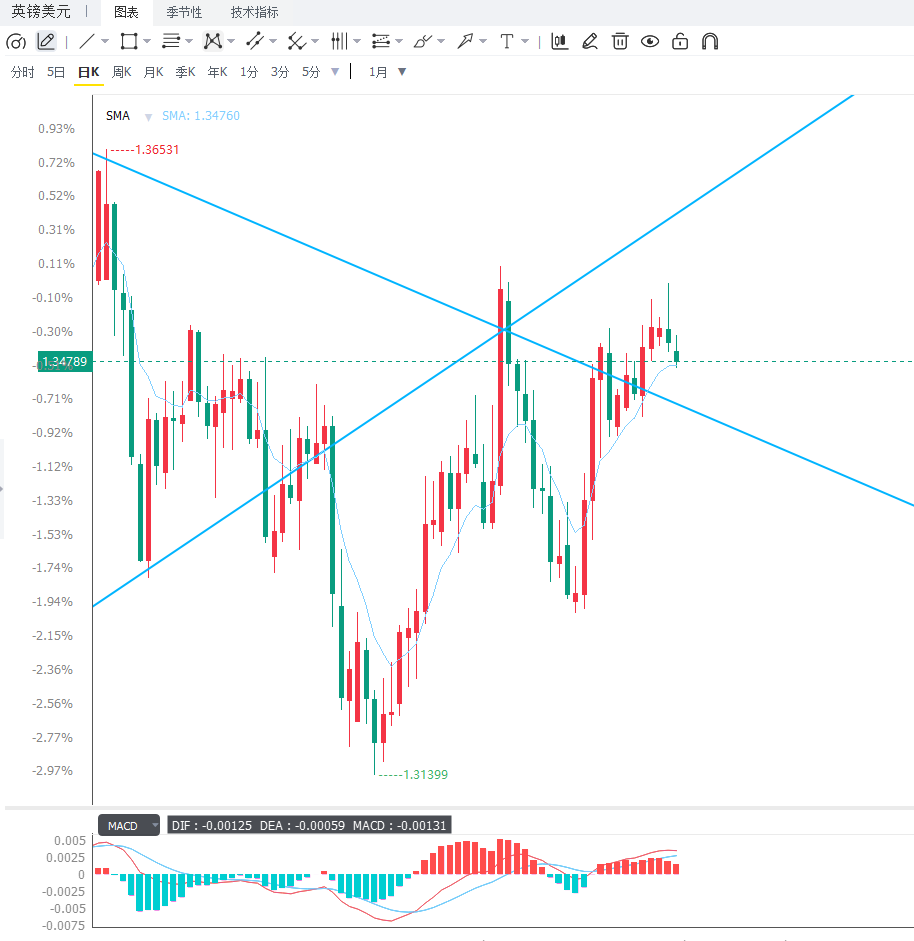 The GBP/USD pair is currently in a tug-of-war between a rebounding US dollar and the resilience of the British pound's fundamentals. Cooling US inflation has reduced the necessity for further tightening by the Federal Reserve, but the potential inflationary risks from rising energy prices limit the downside potential of the dollar. UK Q2 GDP growth was 0.4%, a slowdown from Q1 but still in line with expectations, indicating that the UK economy is temporarily maintaining some resilience. In the short term, 1.3415 is a key support level for GBP/USD to maintain its overall bullish structure, while 1.3500 is a crucial level for the bulls to regain control. If the price stabilizes above 1.3500 and breaks through 1.3570, the pound is expected to resume its upward trend; if 1.3415 is breached, the market may enter a deeper correction phase. In the medium term, UK economic growth, US inflation, and energy prices will jointly determine changes in the UK-US interest rate differential. Particular attention should be paid to the dual impact of continued rising energy prices on the UK economy and US inflation. As long as the UK economy continues its moderate expansion and US inflation continues to cool, the medium-term upside potential for GBP/USD remains intact; however, if an energy shock drives US inflation back up while the UK economy slows significantly, the risk of the US dollar regaining its dominance will increase considerably.
The latest data from the UK Office for National Statistics shows that the UK economy grew by 0.4% quarter-on-quarter in the second quarter, lower than the 0.6% growth rate in the first quarter, but in line with market expectations. Unexpectedly strong economic activity in June grew by 0.3% month-on-month, also supporting overall growth in the second quarter. The data shows that while the UK economy's growth rate slowed compared to the first quarter, it did not experience a significant slowdown. Structurally, the resilience of the UK economy mainly comes from the service sector, with the construction sector also maintaining some growth, while industrial production was relatively weak. This means that the UK economy is not currently experiencing a full-scale expansion, but rather the service sector continues to bear the main driving force of growth. The second-quarter GDP was not significantly lower than expected, so it will not significantly change the market's assessment of the UK economic outlook in the short term. However, after the strong growth in the first quarter, the slowdown in the second quarter still indicates that the foundation of the economic recovery is not solid. Following the release of the UK economic data, the pound did not immediately see a significant upward surge because market focus has shifted from simple economic growth to the Bank of England's future policy path. If the economy continues to grow moderately while inflationary pressures remain high, the Bank of England may need to be cautious about cutting interest rates, which will provide some interest rate support for the pound. However, if energy costs continue to rise and further compress real household income, economic growth may face renewed pressure in the coming quarters. Meanwhile, US inflation data is influencing the medium-term trend of the US dollar. The US July CPI rose 3.4% year-on-year, lower than June's 3.5%, while core CPI rose 2.5% year-on-year, also lower than the previous value of 2.6%, both figures meeting market expectations. Overall moderate inflation means the Federal Reserve has no urgent need to further tighten policy in the short term, a factor that should have put pressure on the dollar. However, the risk of double-dip inflation from rising energy prices is offsetting some of this impact. Continued restrictions on shipping through the Strait of Hormuz and relatively high international oil prices have raised market concerns that energy costs may push up future US inflation. If energy prices continue to rise, the Fed's policy space may be limited again, potentially supporting the dollar. Market expectations for a September rate hike by the Fed have clearly declined, but investors have not completely ruled out the possibility of further tightening. August inflation and employment data will still be released before the September meeting, so the short-term trend of the dollar will still be driven by economic data. If future US producer price and employment data are strong, the market may revise its interest rate expectations upward again, putting further pressure on GBP/USD. In the UK, energy price risks also warrant attention. If the situation in the Strait of Hormuz remains unresolved for an extended period, the UK will face the dual pressures of rising energy costs and slowing economic growth. Previous economic calculations within the UK government have indicated that prolonged supply disruptions could significantly hinder future economic growth. Therefore, energy shocks could become a crucial variable in the medium-term trend of the pound. The next key factors to watch are US producer prices, UK inflation, and statements from Bank of England officials regarding future interest rate policy. If US inflationary pressures resurface while UK economic growth continues to slow, the UK-US interest rate differential may shift back towards the dollar, putting greater pressure on GBP/USD. Conversely, if US price pressures continue to decline while the UK economy remains resilient, the pound may regain upward momentum. From a daily chart perspective, GBP/USD has recently maintained a high-level consolidation. Although it has retreated for two consecutive trading days, it remains within the overall upward structure established since the end of July. While the current price has broken below 1.3500, the short-term bullish advantage has weakened, but as long as the 1.3400-1.3420 area provides effective support, the overall upward structure remains intact. On the upside, the first thing to watch is the rebound strength after 1.3500 has turned into support. Further resistance lies around 1.3570; a decisive break above this level could lead to a retest of 1.3600 or even the 1.3650 area. On the downside, the area around 1.3490 is the current short-term pivot point. If the price continues to trade below this level, technical selling pressure may gradually increase. Further attention needs to be paid to 1.3415, near the 100-period moving average on the 4-hour chart, which is currently a significant dynamic support level. If the price can find support near 1.3415 and rise back above 1.3500, it means this pullback is still within a normal consolidation phase. A decisive break below 1.3415 could open up deeper correction space, with the next targets around 1.3350 and 1.3280. Looking at the 4-hour chart, GBP/USD has been oscillating within a range for about a week, more closely resembling a consolidation structure within an uptrend. The price is still slightly above the 100-period moving average, so the short-term trend has not yet fully turned bearish. However, momentum indicators have weakened significantly, with the RSI hovering around 50, indicating a temporary balance between bullish and bearish forces. The MACD has slightly fallen below the zero line, suggesting increasing short-term bearish pressure. In this situation, the exchange rate is more likely to continue its range-bound trading rather than immediately forming a strong one-sided trend. If the 4-hour chart can regain the 1.3500-1.3520 area, the bulls may retest 1.3570; if it breaks below 1.3415 and continues to trade below that level, the previous bullish consolidation structure may transform into a deeper technical correction. The current market is more suited to focusing on effective breakouts of key support and resistance levels, rather than judging a medium-term trend reversal solely based on short-term intraday fluctuations. The GBP/USD pair is currently in a tug-of-war between a rebounding US dollar and the resilience of the British pound's fundamentals. Cooling US inflation has reduced the necessity for further tightening by the Federal Reserve, but the potential inflationary risks from rising energy prices limit the downside potential of the dollar. UK Q2 GDP growth was 0.4%, a slowdown from Q1 but still in line with expectations, indicating that the UK economy is temporarily maintaining some resilience. In the short term, 1.3415 is a key support level for GBP/USD to maintain its overall bullish structure, while 1.3500 is a crucial level for the bulls to regain control. If the price stabilizes above 1.3500 and breaks through 1.3570, the pound is expected to resume its upward trend; if 1.3415 is breached, the market may enter a deeper correction phase. In the medium term, UK economic growth, US inflation, and energy prices will jointly determine changes in the UK-US interest rate differential. Particular attention should be paid to the dual impact of continued rising energy prices on the UK economy and US inflation. As long as the UK economy continues its moderate expansion and US inflation continues to cool, the medium-term upside potential for GBP/USD remains intact; however, if an energy shock drives US inflation back up while the UK economy slows significantly, the risk of the US dollar regaining its dominance will increase considerably.
- Risk Warning and Disclaimer
- The market involves risk, and trading may not be suitable for all investors. This article is for reference only and does not constitute personal investment advice, nor does it take into account certain users’ specific investment objectives, financial situation, or other needs. Any investment decisions made based on this information are at your own risk.