Gold Trading Alert: Gold Prices Plunge Nearly 2%! US Treasury Yields Soar to Nearly 20-Year Highs, Hormuz Crisis Adds New Uncertainty, Will the Market Return to $4000?
2026-08-19 07:44:57
On Tuesday (August 18), the global gold market experienced significant downward pressure. Spot gold fell 1.85% to close at $4,334.65 per ounce; gold futures for December delivery in New York also fell 1.2% to $4,420.6. While this decline wasn't extreme, it cast a shadow over market sentiment. The core force driving the price drop wasn't a sudden deterioration in gold's fundamentals, but rather the steep rise in US Treasury yields, coupled with concerns about energy inflation stemming from Middle East geopolitical conflicts, which directly suppressed this non-interest-bearing asset. On Wednesday (August 19) in early Asian trading, spot gold fluctuated downwards, currently trading around $4,330 per ounce. Market attention is focused on the Federal Reserve meeting minutes today. 
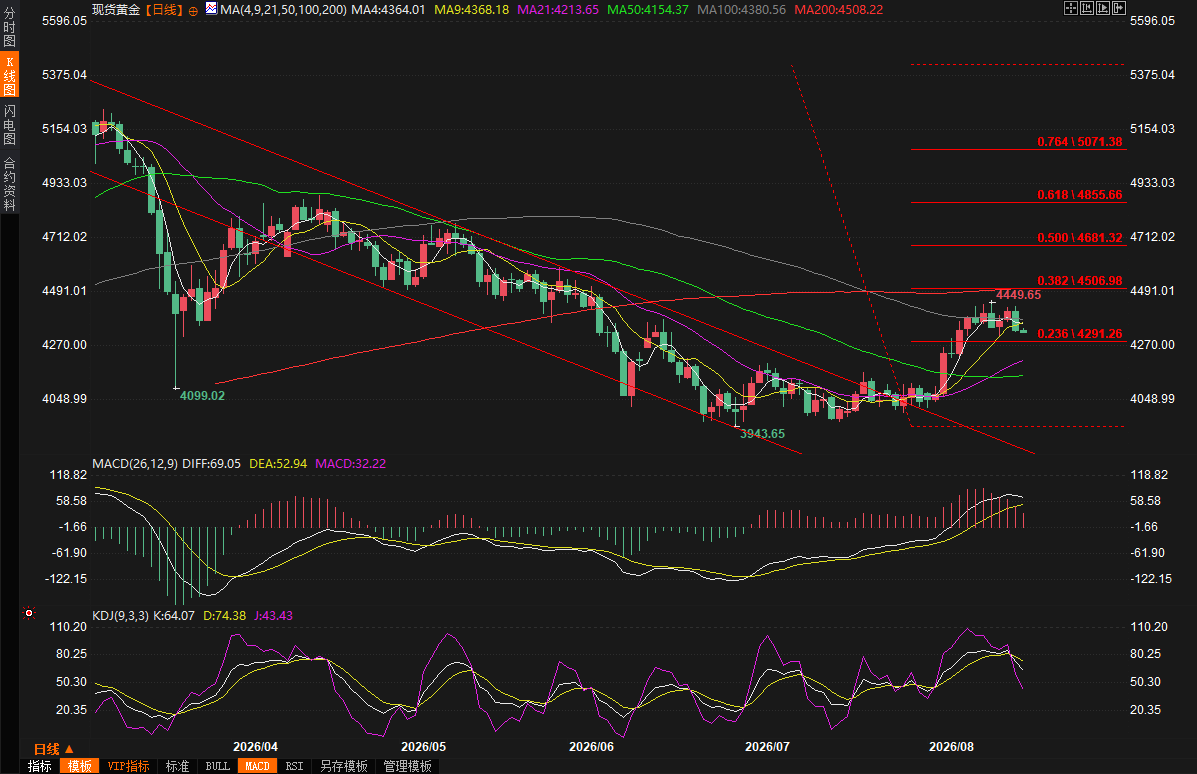 (Spot gold daily chart, source: FX678) At 07:40 Beijing time, spot gold is currently trading at $4328.56 per ounce.
Soaring yields have become the biggest headwind for gold.
From the US to Japan and Germany, global long-term bond markets suffered a near-simultaneous blow. The yield on 30-year US Treasury bonds rose to its highest level since mid-2007, and long-term borrowing costs in other major economies also hit multi-decade highs. For gold, which does not generate interest, the opportunity cost of holding gold is immediately amplified when the real returns on risk-free bonds rise rapidly. Market analysts point out that the steepening yield curve itself is a resistance signal for gold, and the continued strength of oil prices on that day further reinforced this pressure. It is worth noting that recent US economic data does not actually support a narrative of a significant rise in interest rates. Unexpected job losses in July, lower-than-expected inflation data, and weak retail sales should have lowered market expectations for a Fed rate hike. In fact, investors have already priced in nearly 70% of the Fed keeping rates unchanged in September. However, rising energy prices have reignited inflation concerns, making the bond market wary of a "higher and longer" interest rate path. Investors are closely watching the upcoming release of the Fed's latest policy meeting minutes, hoping to find more clues about the interest rate path.The Hormuz crisis and rising oil prices: the lingering shadow of inflation.
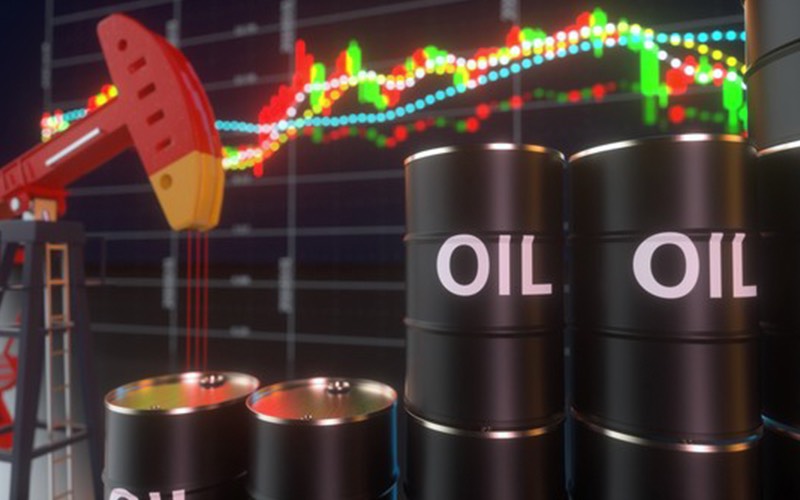
Meanwhile, the escalating tensions between the US and Iran became another important theme in the market. Following the expiration of the temporary ceasefire agreement, both sides hardened their positions significantly. Trump explicitly stated that there were no negotiations being held or arranged with Iran and insisted that the Strait of Hormuz was open; Iran responded that the strait would remain closed until the US met conditions such as lifting port blockades, canceling oil sanctions, unfreezing assets, and ceasing military threats. Shipping data showed that the actual number of ships passing through the strait remained in the single digits. The UK Maritime Trade Organization also reported incidents of ships being hit by unidentified projectiles, and the UAE detected ballistic missile launches and announced a suspension of trade with Iran. All of this directly pushed up oil prices. Brent crude and US crude futures both closed at their highest levels in more than three weeks, at $91.02 and $84.94 per barrel, respectively. Although there were reports that Saudi Aramco had resumed some loading operations, and major Asian shipping companies had begun loading crude oil outside the Gulf, leading to market expectations of "dark market" volumes, the continued uncertainty surrounding the strategic waterway continued to support oil prices. Rising energy prices have not only reinforced inflation expectations but also indirectly increased global long-term borrowing costs, further squeezing the attractiveness of gold.Short-term pressure does not change the medium- to long-term logic; the consolidation period may become a window for buying accumulation.
Despite a significant pullback in gold prices on Tuesday, the market has not turned entirely pessimistic. A senior precious metals strategist explicitly stated that while a steepening yield curve and stronger oil prices are the direct factors contributing to the current weakness in gold prices, the overall outlook for gold remains bullish, believing it still has room for further gains. The market may need a period of consolidation before buying interest is reignited. This assessment is supported by sound logic. On one hand, the fiscal and debt pressures of major global economies have not disappeared, and the surge in long-term interest rates reflects market concerns about future inflation and debt sustainability, concerns that ultimately favor gold's status as a hedging asset. On the other hand, if the US-Iran conflict prolongs, energy supply disruptions and global supply chain disturbances will persist, and the upside potential for real interest rates may be constrained by an economic slowdown. Currently, the US dollar index is trapped in a range-bound trading pattern, and the euro has even risen to a two-month high, indicating that the market is still digesting expectations of a dovish shift by the Federal Reserve. In summary, Tuesday's gold price decline appears more like a technical adjustment driven by the bond market and amplified geopolitical risks, rather than the start of a trend reversal. After a significant rebound of nearly $500, gold's current consolidation is normal. What truly warrants attention is that if US Treasury yields continue to break through key levels, and the situation in the Middle East escalates further, leading to runaway energy inflation, gold's short-term volatility could increase. However, as long as global debt remains high, geopolitical uncertainties persist, and the ambiguity surrounding central bank policy paths persists, gold's medium- to long-term investment value cannot be easily dismissed. The market may be awaiting a clearer catalyst—whether it's a signal from the Federal Reserve meeting minutes or a substantial change in the situation in the Strait of Hormuz—to determine the strength and direction of the next round of buying. (Spot gold daily chart, source: FX678) At 07:40 Beijing time, spot gold is currently trading at $4328.56 per ounce.
- Risk Warning and Disclaimer
- The market involves risk, and trading may not be suitable for all investors. This article is for reference only and does not constitute personal investment advice, nor does it take into account certain users’ specific investment objectives, financial situation, or other needs. Any investment decisions made based on this information are at your own risk.