The Australian dollar is under pressure on the daily chart, and the Fed minutes may be key to breaking the deadlock; the battle for the 0.7080 level is fierce.
2026-08-19 08:26:59
The Australian dollar traded lower against the US dollar in early Asian trading on Wednesday (August 19), currently hovering around 0.7080. Escalating uncertainty in the Middle East – the ongoing US-Iran conflict – is putting upward pressure on energy prices, and renewed concerns that major central banks may be forced to further tighten monetary policy are providing safe-haven buying support for the US dollar. Meanwhile, weaker-than-expected US housing and industrial production data failed to sustain the Australian dollar's upward momentum. The market is now focused on Australia's second-quarter wage price index and the release of the Federal Reserve meeting minutes. 
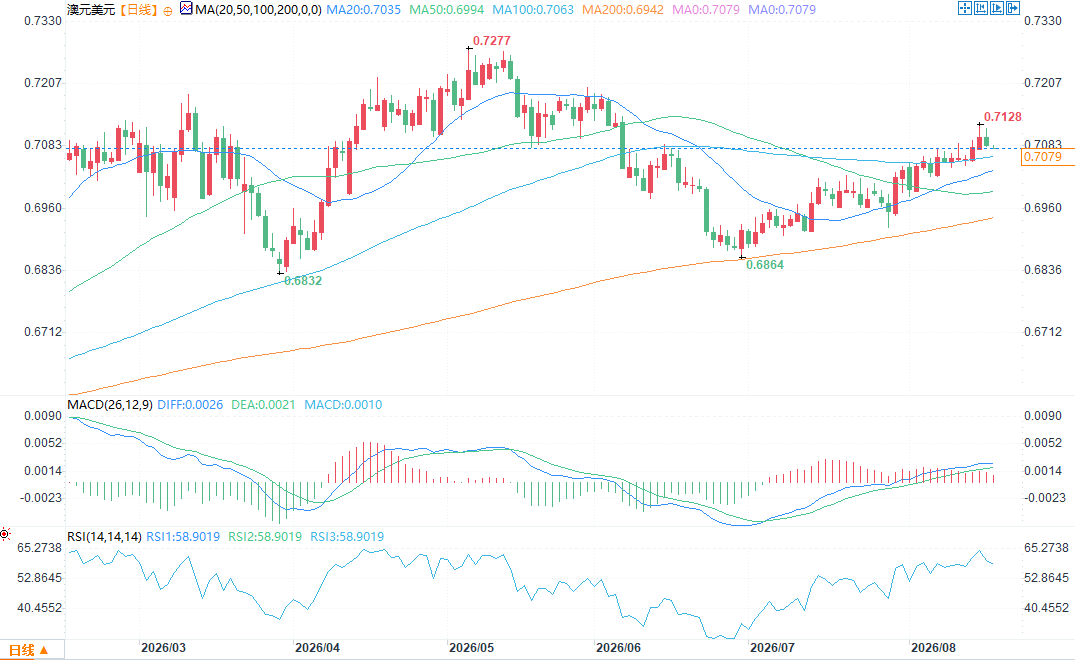 (Australian dollar against US dollar daily chart, source: EasyForex) At 8:09 AM Beijing time on August 19, the Australian dollar was trading at 0.7081/82 against the US dollar.
Geopolitical risks support the US dollar
The Australian dollar edged lower against the US dollar on Wednesday, currently trading around 0.7080. The US-Iran conflict continues to dominate headlines. According to CNN, citing a US official, President Trump has instructed senior officials to halt negotiations with Iran. Trump also confirmed that the US naval blockade remains in effect. The escalating geopolitical tensions pose further upside risks to energy prices, and renewed concerns about more aggressive interest rate hikes by major central banks have fueled safe-haven buying of the US dollar, putting downward pressure on the Australian dollar.US data: Housing starts plummet, industrial output slows.
US economic data failed to provide sustained support for the Australian dollar. Dragged down by high house prices and high mortgage rates, US housing starts plummeted 12.4% in July to 1.239 million units, a drop of 1.4%, far below market expectations. Meanwhile, data released by the Federal Reserve showed that industrial production slowed to 0.2% in July, lower than the expected 0.3%. Although the weak data further confirmed the trend of a slowing US economy and weakened expectations of a Fed rate hike—theoretically a positive for the Australian dollar—risk aversion driven by geopolitical risks outweighed this factor. The US dollar strengthened on the back of safe-haven buying, and the Australian dollar reversed its gains and fell against the US dollar.Domestic in Australia: Wage data pending release; Moody's confirms Aaa rating.
In Australia, the market is focused on the second-quarter wage price index to be released on Tuesday. The market expects the quarterly rate to remain unchanged at 0.8%, while the annual rate is projected to decline slightly to 3.2% from 3.3%. This data will provide an important reference for the Reserve Bank of Australia's (RBA) future policy path—if wage growth exceeds expectations, it could strengthen market expectations that the RBA will maintain a tight stance, thus supporting the Australian dollar. Rating agency Moody's affirmed Australia's sovereign credit rating at Aaa with a stable outlook. Moody's projects Australia's real GDP growth at 1.9% this year and 1.6% in 2027, but also points out that weak productivity, deteriorating housing affordability, rising debt levels, and exposure to external shocks are key challenges facing the country.This week's focus: The Fed meeting minutes take center stage.
This week, market focus will be heavily on the upcoming release of the minutes from the Federal Reserve's July monetary policy meeting. Released early Thursday morning Beijing time, the minutes will be closely scrutinized by investors regarding subtle nuances in the statements about the future policy path, particularly the tone of the committee's discussions on the September interest rate decision and the degree of insistence on continued rate hikes by the three dissenting members. Currently, the market widely expects the Fed to maintain interest rates at the September meeting. However, if the minutes show that most members remain highly vigilant about sticky inflation, or explicitly mention the "necessity of further tightening," it will significantly strengthen hawkish expectations, pushing the US dollar index higher and thus putting downward pressure on the Australian dollar against the US dollar. Conversely, if the minutes reveal more concern about slowing economic growth, or show that dissenters have softened their stance, it could alleviate market concerns about high interest rates and provide temporary support for the Australian dollar. Furthermore, the minutes' assessments of the labor market, inflation expectations, and financial conditions will also be key clues in judging the pace of the Fed's subsequent actions. Combined with the recent divergent performance of US economic data, these minutes are not only a significant catalyst for the direction of the Australian dollar against the US dollar this week, but may also reshape the pricing logic of the entire risk asset market.Summarize
Renewed geopolitical risks provided safe-haven buying support for the US dollar, outweighing the weakening effect of weak US economic data on interest rate hike expectations. Escalating tensions between the US and Iran put upward pressure on energy prices, and market concerns resurfaced that major central banks may need to maintain a tight monetary policy stance. Australia's second-quarter wage price index and the Federal Reserve meeting minutes are the key variables this week—the former will influence expectations for the Reserve Bank of Australia's policy, while the latter will determine whether the US dollar can gain further upward momentum. (Australian dollar against US dollar daily chart, source: EasyForex) At 8:09 AM Beijing time on August 19, the Australian dollar was trading at 0.7081/82 against the US dollar.
- Risk Warning and Disclaimer
- The market involves risk, and trading may not be suitable for all investors. This article is for reference only and does not constitute personal investment advice, nor does it take into account certain users’ specific investment objectives, financial situation, or other needs. Any investment decisions made based on this information are at your own risk.